Starting wetting agent programmes earlier this spring will aid faster recovery of turf quality, and ensure plants remain healthier through the summer, say Syngenta Turf.
The company boast that their new Qualibra technology combines the chance to create firmer, faster playing surfaces, along with improved growing conditions for turf.
Syngenta Turf Technical Manager, Marcela Munoz, highlighted the benefit of deep and even soil moisture holding in the root zone early in the season would be especially important where prolonged dry spring weather in recent years had seriously affected root growth and plant recovery.
"Furthermore, Qualibra will help turf plants make the most effective use of available moisture where turf managers are reluctant to initiate early irrigation, for fear of creating soft surfaces or triggering disease," she added.
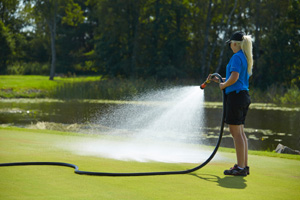
Hand watering
Where the unique formulation of Qualibra performs differently to other wetting agents is the combination of moving surface water down, to maintain firm and fast surfaces, along with holding soil water lower in the root zone to enhance conditions for root and plant health.
New 2016 recommendations for Qualibra use on fairways advises starting the programme at 20 l/ha, and then repeating at six week intervals at a lower rate of 15 l/ha. This early-start approach ensures turf and soils get the same beneficial total application rate, but over an extended season for consistent results.
"The key is to start the Qualibra programme early to prevent stress. It is crucial to maintain a consistent supply of water for healthy turf plants, where the scientifically balanced combination of penetrant and polymer components really helps to make the best use of available early soil moisture and optimise the efficiency of irrigation applied through the summer.
"Once you start to visibly see the onset of stress induced symptoms, the plant is already suffering and damage to playing surface quality will result. It takes time and energy for the plant to recover," she advised. "Every effort should be made to pre-empt stress and alleviate the conditions before it occurs."
Importantly, holding water evenly in the root zone limits the development of hydrophobic zones. Ensuring the turf's root hairs remain in contact with soil moisture is essential to help with efficient water uptake, as well as increase the uptake of nutrients that will further reduce the risk of stress.
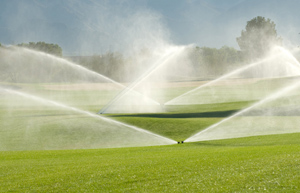
Fairway irrigation
The company says trials have shown that Qualibra programmes can give an 11% improved uptake of applied nutrients - which is beneficial to the plant and reduces any environmental loss through groundwater. "The improved uptake of nutrients is attributed to a greater root mass and soil moisture being held in the root zone for longer," said Ms Munoz.
Syngenta Turf Business Manager, Daniel Lightfoot, pointed out that cumulative effect of the Qualibra programme started in early spring can be especially beneficial in providing the optimal soil conditions for root retention through the summer.
"Hot, dry soil conditions can lead to significant reduction in the root mass, as plants draw on the carbohydrate reserves to maintain growth," he warned. "Long summer growing days can make the problem particularly severe, along with the pressure of longer hours of play."
Better root retention by holding water evenly in the root zone over the summer could allow for a greater build-up of carbohydrate reserves in the autumn, which has been shown to significantly improve over-winter survival.
The experiences of greenkeepers using Qualibra had highlighted the best performance was to make an initial application as soon as turf was growing consistently, and repeated at four to six week intervals.
Mr Lightfoot advocated treatment was best applied in a water volume of 400 litres per hectare, and then watered in as soon as possible with two to three mm of irrigation. If no irrigation was available, it could be beneficial to increase the application water volume, he added.