SURVIVING THE RECESSION: Views from golf course managers, public sector and suppliers
BEST OF BRITISH: Dennis and Sisis, two British brands now together FEATURE: Winter maintenance programme DEALER PROFILE: Longham Garden Machinery, winner of the 2012 Marketing Award COURSE REVIEW: Trump International, winner of 2012 Best New Venue Award ON TEST:Makita brush cutters CONTRIBUTORS INCLUDE Scott MacCallum Chris Biddle James De Havilland Jane McPherson and of course . . Jim Green
The November issue of Turf Pro/Service Dealer is being published w/c 12 November
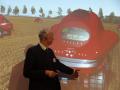
It was refreshing to be taken out of our comfort-zone by Professor Blackmore, to challenge our views on an age-old industry in which he claimed “we have not moved far from Harry Ferguson’s iconic TE20”.
After giving an overview of the challenges facing world leaders to produce enough food in future years, Professor Blackmore first defined the role of agriculutural engineers as those who devise practical solutions, solve problems and develop the answers to new challenges. “But there are big changes ahead, and we simply have to find new ways of doing things” he said.
After years of being ignored by policy makers “We are now getting very good political and commercial support”, he said citing as examples the building of the National Centre for Precision Farming as well as IAgrE’s rapid and well-argued response to the absence of engineering solutions in the recent Foresight Report.
“But our world problems cannot be solved by individuals or single states” he said “The agricultural engineering industry must develop new systems, teach people how to engineer solutions, and put concept into practice. Above all it can lessen the impact of uncontrollable factors”
By these he meant, the weather. “Global warming is a two-edged sword” he said “bad for the climate but good for the future of agricultural production in Europe”.
It was perhaps apt that he should be talking about the impact of weather on a day when much of the country was suffering from excessive rain and widespread floods. For this gave him the ideal opportunity to expand on his vision for crops being grown and harvested using robotic machines.
He argued strongly that we have reached the optimum size for tractors and combines. “300 horsepower tractors are now the norm, but I would argue that we have reached a stage where they are going to do more harm than good”
“Given recent weather, horsepower does not matter, when weight is the problem. Large tractors cause compaction resulting in 90% of the energy being put into cultivation in order to repair the damage caused by the machine in the first place” he said
“Big horsepower tractors are fine - in favourable weather - but we can’t afford to be depended on the weather. Tractors which can’t move because they are stuck up to the axles in mud, sprayers that won’t work because of the wind, none of that will be acceptable in the future”.
“In the future, new mechanisation techniques will be based on the plant’s needs. Professor Blackmore gave us a vision of selective harvesters, robotic machines only picking those plants that are right for harvesting now, and leaving those unfit to ripen for later harvesting”
“As things stand, consumer demands for ‘perfectly-shaped’ fruit and vegetables mean that 40% of that harvested is rejected by the supermarkets. That’s a major issue that has to be addressed if we are to avoid waste”.
He also introduced us to laser weeders, those that simply ‘zap’ the precise part of the plant that need to be destroyed; smart sprayers that ‘over 90% of herbicide’ and precise seeders that guarantee maximum germination. “This new technology is available now” he said “but we still have major issues to overcome”.
“How do we ensure that machines from different suppliers can ‘talk’ to one another? How do we convince the major manufacturers to start proceeding along the robotic route when their future strategy is for bigger and better machines of the current mould”
The 2013 Event Planner in a new, larger size, will once again contain dates of all the national and international industry shows and events. Published with the December issue of Turf Pro/Service Dealer TO ADVERTISE GEORGE MILLER E-mail or 020 3603 7936