During the latter part of May and early June we will start to see many grass roots rugby and football clubs undertaking their end of season renovations, an opportunity to repair and restore their playing pitches after a long season of fixtures.
Generally, the damage done is a heavily compacted pitch with a loss of grass cover. The aim of the end of season renovations is to restore levels, de-compact the pitch and re-sow with new seed.
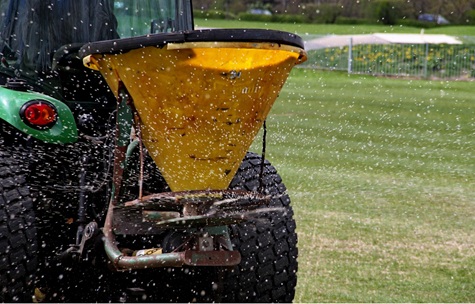
The renovation work will be dependent on several factors; the sheer amount of wear and tear, the extent and quality of maintenance undertaken during the playing season and finally the amount of money the club has or is willing to spend.
These variables are usually associated with the level of sport being played, the desired level of provision and the detailed level of inputs and maintenance operations that need to take place.
We must also take into consideration its expected level of usage, current condition, and problems it may well have in terms of surface drainage porosity and sward composition.
These costs will also be dictated by the way the work may be carried out. Whether it is done in-house, by volunteers, by contractors or by paid employees?
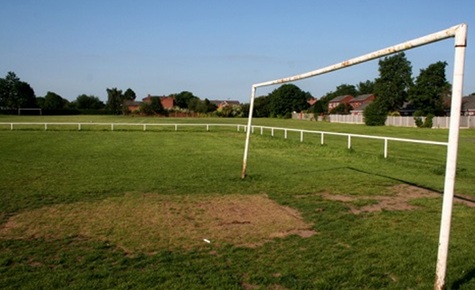
In many cases, the level of budget put aside for general maintenance of grassroots-level playing facilities tend to be way off the mark. One of the reasons for this is often the lack of understanding of groundsmanship and what is required in terms of inputs and resources necessary for the maintenance of the facility. No two sites are the same, Each have their own unique set of requirements, maintenance needs and inputs to either maintain its status or additional work to bring it up to standard.
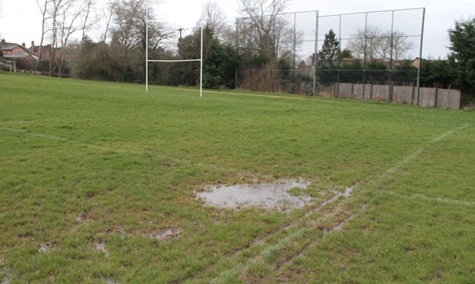
Far too often clubs can tend to do the bare minimum, resulting in a basic set of maintenance inputs. These can generally be mowing, feeding, marking out and some minor repairs when warranted. Quite often they also skimp on end of season renovations which over time leads to a deteriorating playing surface.
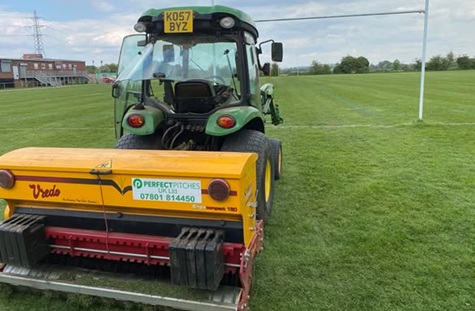
I spoke recently to Keith Exton, an experienced grounds practitioner from Perfect Pitches, a company he set up with his son Alex. I’ve known Keith for many years, and he and Alex are currently extremely busy undertaking pitch renovations. He says that a typical end of season renovation for a single football pitch that involves scarifying, vertidraining, topdressing with at least 60 tonnes of specified sport sand, fertilising and overseeding will cost in the region of £8000 depending on the transport costs. This could be more if you have to dispose of scarified debris.
Effectively that works out at around a £1.40 m2. The biggest cost is the materials alone. Sand is around £50-60 per tonne, seed £90 per bag and fertiliser £40 a bag. Based on these figures the cost of the materials is virtually half the total cost of the renovation.
Out of the labour charge the contractor must pay for the machinery transport costs, repairs, service charges and fuel. But the thing to remember is you are also paying for experience and knowledge when employing a qualified contractor.
We have many good contractors working in the UK it always pays to get three quotes.
However, there are a lot of clubs who now try and take on most of the work themselves, having invested in decent machinery.
For me, one of the biggest issues is the lack of regular maintenance during the playing season. Some clubs in recent years have successfully had machinery grants and have bought machinery. Items such as compact tractor mowers, Quadraplay, Sisis outfield spikers and line markers - but rarely use them to the full potential.
Ideally throughout the growing season we should be cutting the pitch weekly, fertilising every 6-8 weeks and slitting fortnightly - and using the Quadraplay pre and post matches.
We also need to apply a selective weed control programme to reduce weed growth. It is often cheaper to employ a contractor to do this work as they are qualified to spray chemicals.
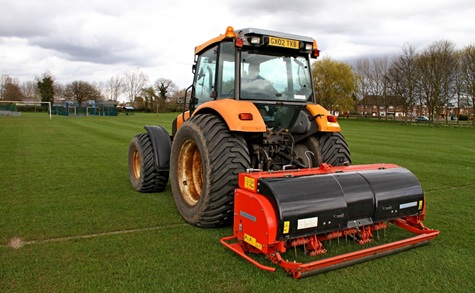
We must promote growth and tillering by carrying out this regular work, along with rotating pitch use and controlling training activities on the pitches.
Again, there will be a cost attributed to these works and the time allocated. The more you can do, the better the outcome and welfare of the pitches.
I firmly believe if clubs recognised the true costs and inputs required to maintain their pitch and produced a business plan to facilitate a way of securing the budgets to run the club, we would then start to see an improvement in club facilities and an increased level of sport participation.
The combination of doing both a decent end of season renovation and regular maintenance will ensure you have safe and consistent playing surfaces.
I am currently mentoring a local rugby club, Telford RFC, and they have a committed team of volunteers, have invested in some machinery and recently acquired the STIGA robotic mowers on offer. They have taken three in fact, to help them reduce the workload. They are cutting the first team and second team pitches, plus the training area, with these robots.
Currently the grounds team consists of several helpers that include the club’s chairman Neil Thomas and first team hooker, James Hudson.
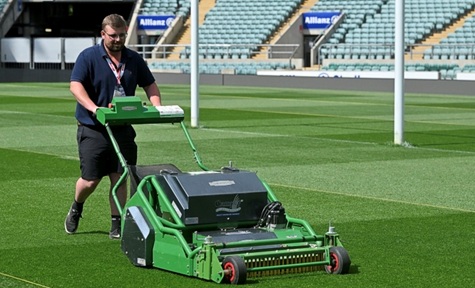
James recently had the opportunity to visit the hallowed turf of the Allianz Stadium Twickenham, where he met head groundsman Jim Buttar and other Rugby Connect volunteers who won the opportunity to go to the stadium as part of the Volunteer Of The Year award.
Neil stated that he had nominated James for the award for his dedication to the club as a player and more recently for helping with the maintenance of the pitches. It all came about after he got injured and has been out of the game for twelve months. To help his rehabilitation Neil thought it would be good for James to get involved with looking after the pitches.
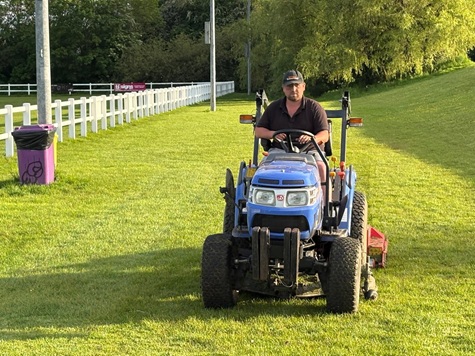
James helps utilise a robotic line marker, that has been a game changer at the club, and regularly mows the pitches with the Trimax mower. He also uses the recently acquired Quadraplay to help prep the pitches.
During his visit to Twickenham, he had the chance to mow the hallowed turf using one of the Dennis electric rotary mowers and got to meet several likeminded volunteers.
James, twenty-six, has recently been taken on as a grounds maintenance operative for a local sports turf contractor, Nobridge Nurseries based in Shropshire. He says he hopes to continue his volunteering role at the club along with playing for the first team.
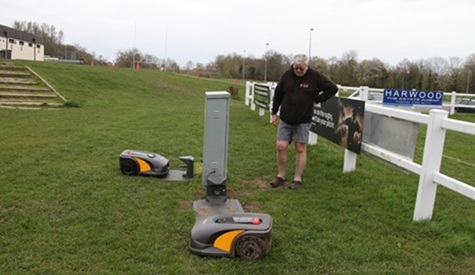
Neil understands the club needs to invest further in their pitches and realises they need to produce a 10-year management plan to clearly define and recognise the work and costs required to invest in their playing facilities to encourage the next generation of players to the club in the coming years.