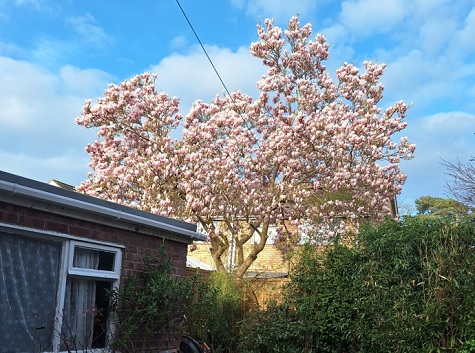
This recent warm, dry spell of weather has been glorious with spring flowers looking their best and the blossom of the cherry trees, camellia and magnolias looking magnificent. What a wonderful spring we are all having.
However, this warm dry spell, coupled with the cold eastly winds, has quickly dried out our playing surfaces and soils, requiring the need to start watering our turfed areas and sports surfaces.
It seems year on year we are constantly seeing a change in our weather patterns, with large bouts of dry weather often followed by heavy downpours. These can tend to run off quickly into our rivers causing flooding – rather than experiencing a period of steady rainfall that has time to soak into the ground.
I can see in the coming years the need for sports clubs to invest in watering systems due to these dramatic changing climatic conditions. Rising temperatures, prolonged droughts, and changing rainfall patterns are making natural grass maintenance increasingly challenging.
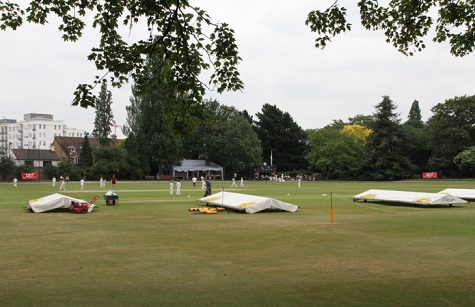
Many regions are already experiencing longer and more intense dry periods, requiring clubs to have efficient irrigation systems. As water scarcity becomes a bigger issue, clubs may need more advanced, water-efficient systems to comply with regulations.
Ideally clubs should start looking at the possibilities of harvesting rainwater, or seek extraction licences for getting water from lakes, streams and boreholes.
In the UK, sports clubs considering the installation of boreholes for water abstraction must adhere to specific regulations and obtain necessary permissions. Key considerations include:
- Abstraction Licensing: If your club plans to abstract more than 20 cubic metres (20,000 litres) of water per day, an abstraction licence from the Environment Agency is required. Abstractions below this threshold are generally exempt from licensing.
- Groundwater Investigation Consent: Before drilling a borehole, especially for significant abstractions, you may need to apply for consent to investigate a groundwater source. This process assesses potential environmental impacts and ensures the proposed abstraction won't adversely affect local water resources.
- Environmental Considerations: The Environment Agency evaluates applications based on local water availability and potential environmental impacts. In areas with water scarcity or sensitive ecosystems, obtaining a licence may be more challenging.
- Water Quality Standards: If the borehole supplies drinking water or is used in food preparation, it must comply with The Private Water Supplies (England) Regulations 2016. This entails regular water quality testing and risk assessments to ensure safety and compliance.
- Planning Permissions: Depending on local council regulations, additional planning permissions may be necessary for borehole installation. It's advisable to consult with your local planning authority to determine specific requirements.
- Monitoring and Compliance: Regular monitoring of water usage and adherence to licence conditions are mandatory. Non-compliance can result in enforcement actions, including fines or revocation of the licence.
Given the complexities and regional variations in regulations, it's recommended to consult directly with the Environment Agency and your local council before proceeding. They can provide tailored guidance to ensure compliance with all legal and environmental obligations.
Demo day
While enjoying this spell of spring weather, I managed last week to attend the annual EGO Press Demo Day in Beaconsfield. Invited here 30-plus members of the trade press and industry influencers.
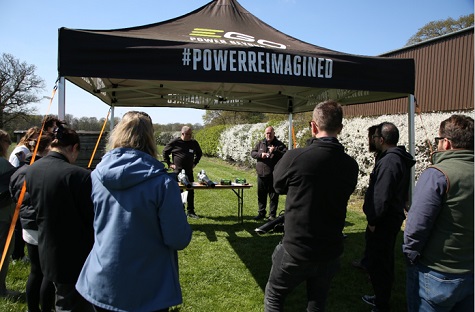
The day focused on the latest range of the manufacturer’s products, that are now sold via 200 plus dealer outlets throughout the UK.
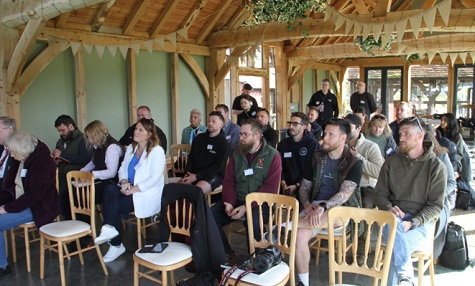
Ravi Skukle from the company's social media and PR team introduced the event's structure, including presentations, live demonstrations, and hands-on sessions. Ego's battery technology, particularly the 56-volt range, was detailed, highlighting its capacity, power delivery, and heat management. The robotic mowers, RN 2000 and RM 4000, were introduced, emphasising their GPS navigation, boundary wire technology, and systematic mowing capabilities. The mowers can handle up to 4000 square meters and feature a 24-volt battery for long charge-discharge cycles.
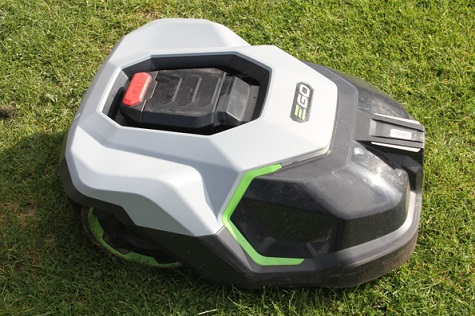
EGO said they were currently working on some non-boundary wire robotic mowers that will coming into the marketplace later in the year.
The group were then split into two groups to be given short talks on the various range of EGO products. Essentially there were some EGO Power lifestyle products that encompassed battery powered outdoor lights; 25 cm and 45 cm misting fans; wet and dry vacuum and an outdoor speaker.
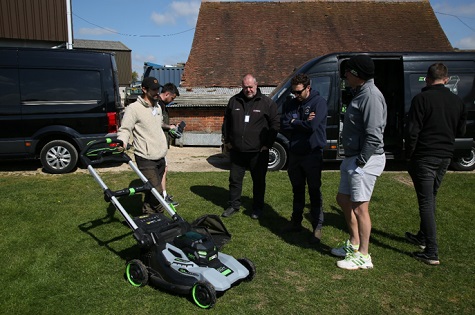
As for professional landscape tools, these came in the form a new 55cm wide pedestrian mower; handheld blowers; strimmers; chainsaw; post hole auger and chemical sprayer.
I am currently trying out the mew LM2230E-SP pedestrian mower and one of the new blowers. I will be writing a technical piece on both items in the coming weeks.
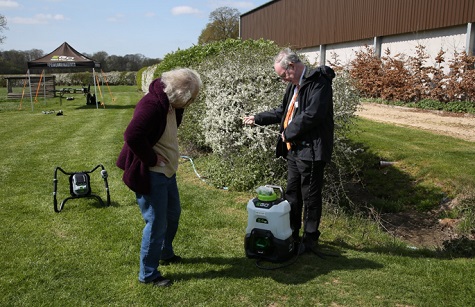
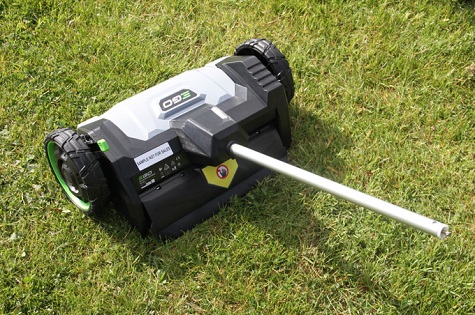
The knapsack sprayer was impressive, however it seemed a tad heavy when fully filled with 15 litres of water. The DA1400 dethatcher tool was an interesting concept. Light and compact, easy to use and would be a good tool for renovating lawns and repairing worn areas, The soil auger made light work of digging a post hole with many of the landscape gardeners equally impressed with its performance.
As always it great to network and meet up with Industry colleagues and I would like to thank EGO for inviting me to attend. It is always useful for me to keep up with all manufacturers’ technical developments. All in all, an informative day out.
This time next week it's Easter Monday, so I'll see you back here on the 28th.