I often wonder why we love this job of being a turf professional, especially knowing that we are tasked with working in all weathers and often having to work weekends, evenings and bank holidays - and quite often Christmas Day, getting the pitches ready for Boxing Day matches.
Spare a thought for the groundsmen, greenkeepers and gardeners who no doubt will be on call during this year’s festive season. While most of us are enjoying the delights of Christmas, many our colleagues will be working.
It goes without saying UK groundstaff are dedicated professionals who often put their job before family and friends, especially when tasked to get a game on during the festive period. See the thoughts of one groundsman seen in this video.
This time of the year brings with it many challenges, especially coping with the weather. Even with all the latest weather forecasting predictions we often do not know what we may be facing in terms of snow, frost and icy conditions.
Mark Hunt’s weather blog is well worth a read. He talks about the recent storms and gives the latest weather for forecasting leading up to Christmas.
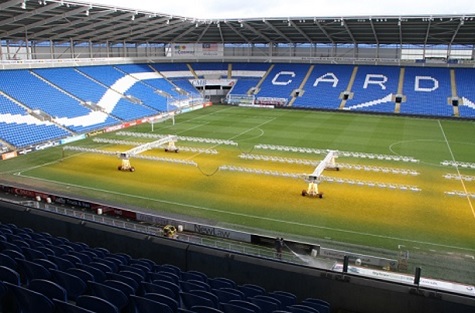
Getting the game on is a skilled operation. Preparation and planning are essential to ensure we can legislate for a window of poor weather. For many of the top-flight or premiership sporting venues, they are now fully prepared with an array of tools and systems to ensure the game goes on.
Depending on the time of the fixture, a Premiership club would require staff to come in the day before the match (Christmas Day) to prep the stadium pitch and any specific training grounds pitches required by the club. Then on the day of the match (Boxing day) five or six staff would be required to prepare the pitch and be on match day duty and after the match stay on to clean the pitch up and then be back working the following day to get pitches ready for any additional training requirements. Truly a busy time for all professional football ground staff.
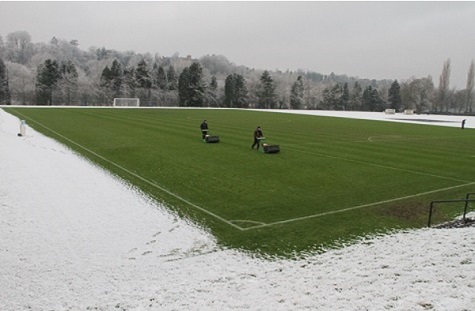
Most topflight professional clubs now have a plethora of systems available such as under soil heating, grow lights, fans, irrigation systems, frost protection covers, sub air systems, inflatable tents and covers, to name but a few. These systems make the life of a turf professional much easier than in days gone by.
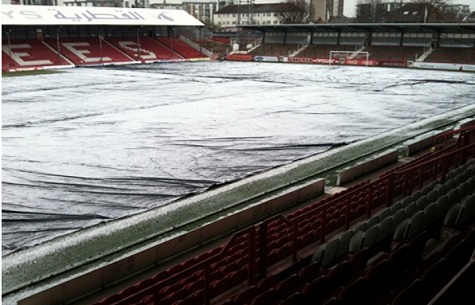
Having said that, there are several issues and time restraints on what can be used to get the game on. The availability of labour and resources will have significant part to play. Also, spare a thought for the clubs who may not have access to, or the money for, these systems. Perhaps having to rely on other means of getting the game on.
For the prevention of frost - until we had the more sophisticated systems such as grow lights, undersoil heating and tents - many groundsmen had to solely rely on the trusted frost sheets to help protect the pitch. Often quite a laborious task in the old days, now we have a number of companies who sell and provide frost sheets that are easier to handle and store. Stuart Canvas are an example of a company that have been supplying frost sheet covers for many years and have now developed a range of products that suit a range of needs.
However, despite products such as these being available, we still see some games being played on frozen and waterlogged pitches. In my opinion this does not help either the players or the pitch.
Whatever the sport, we need to be vigilant during these winter months as to whether the facility is fit for play. This even applies with the advent of the all-weather artificial pitches. They also need inspecting prior to use. Often sold as all-weather pitches, they themselves can be prone to damage from frost, snow and floods.
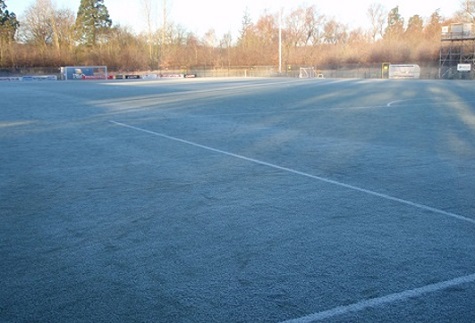
The recent bout of poor weather will have left many grounds saturated and in need of some attention.
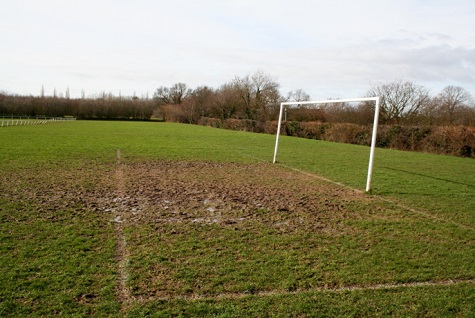
Most pitch problems are caused when soils are saturated and compacted. When saturated, a soil is said to be at its maximum retentive capacity; that is, all soil pores are filled with water. Saturation usually occurs for short periods of time, either during heavy rainfall events or when soil is being irrigated.
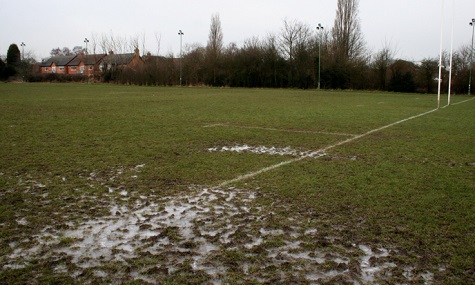
However, the main contributing factor that reduces and damages pore spaces in soil is compaction caused by compression forces, normally associated with play and use of machinery, particularly during wet weather periods. Over time, these compression forces reduce the pore spaces so that air, water and nutrient flow through the soil profile is restricted, and leads to many problems associated with compaction.
The heavier the soil the longer it will take for the pitch to dry out; sandy soils are more free draining than heavy loam or clay soils and, therefore, will dry out more quickly.
Playing on saturated pitches will bring disastrous results. It is often better to postpone a fixture rather than ruin the playing surface for the rest of the season. Scrummage and line out play are the main causes of damage on rugby pitches during wet weather periods. The severity of the damage will be dependent upon the soil type and the ability of the top 100mm to drain quickly.
It is important that, once the game has finished, remedial work is carried out to repair divots and stand the grass back up. Care should be taken not to further damage the pitch by trying to get machinery on when it is wet and saturated.
The GMA also give guidelines on dealing with saturated pitches here.
To help grass roots sports clubs with potential funding to improve their facilities or buy essential machinery the GMA launched The Pitch Advisory Service, formerly the Grounds and Natural Turf Improvement Programme,
The aim of the Pitch Advisory Service is to raise the standards of sports surfaces as well as the understanding of sports turf management practices among grassroots sports clubs across England.