Over the course of the next twelve months, I will be delving into many of my memories, and excursions undertaken, to highlight the management and maintenance our unique sports turf and amenity and landscape sectors.
Here is the next part of my look at golf stewardship through the decades.
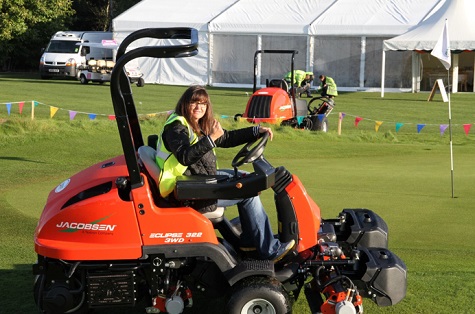
On the mowing front for the golf sector, we now have well engineered, precision pedestrian, ride-on and tractor mounted mowers to choose from.
The frequency of mowing operations on a golf course is now daily, with greens machines. Many new mowers can alter clipping rates – which refers to how frequently the cutting reel interacts with the turf, affecting quality of cut, smoothness, and turf health.
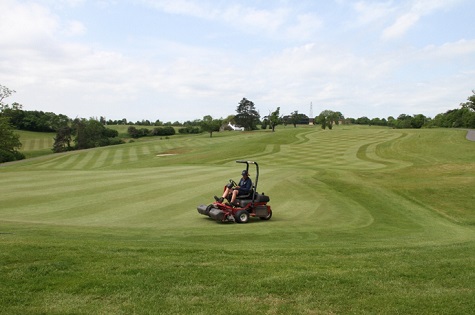
Celtic Manor mowing fairways
Most modern-day greens mowers can change clipping rates and have better tolerances and finesse on setting the height of cut.
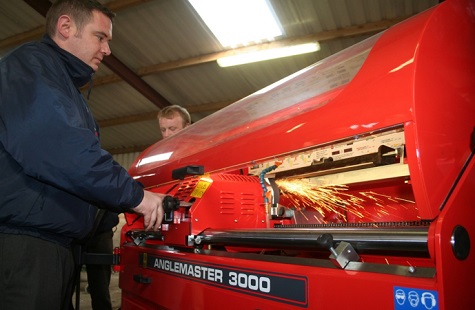
Bernhards Anglemaster 3000
It is important that both the bottom blade and cylinders are kept sharp and, on cut, mowers should be checked every day. Running a mower with poorly adjusted blades and not on cut will affect the presentation, performance and health of the grass plant.
In recent years we have seen many clubs investing in their own cylinder grinding machines with many of the higher end golf clubs employing their own team of designated mechanics to keep their fleet of machinery up and running and ensuring the mowers are kept sharp and on cut.
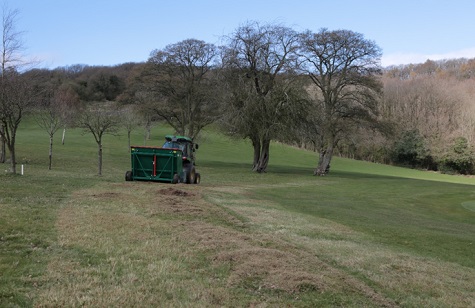
Wessex flail collector
As for fairway and rough mowers, we again have a fine choice of machinery to choose from with rotary deck mowers becoming popular, along with a number of flail collector machines which are now being used for cut and collect operations out on the golf course for managing rough, wildflower and long grass areas.
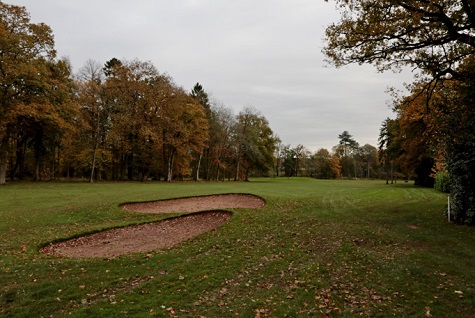
Lilleshall GC bunkers
One of the most time-consuming tasks is maintaining bunkers. Most golf courses will have on average over 40 bunker hazards that need to be maintained on a daily basis. In recent years we have seen the innovation of better bunker designs and installed sub drainage systems to prevent them from flooding.
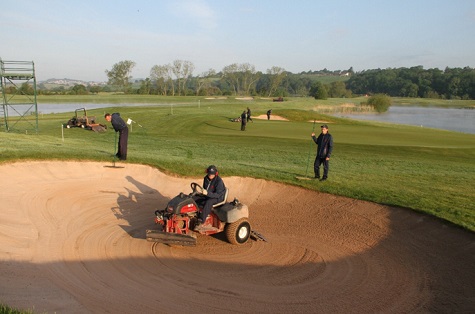
Bunker raking at Celtic Manor
These bunker traps come in all manner of size and shapes; we even have motorised bunker rakes for raking large bunker placements. But generally, most bunkers are raked by hand to keep them free of debris/ and remove footmarks etc.
Since the late 1970s we have also seen tremendous development in the ability to reconstruct (build tees, greens, bunkers and remodel golf courses) along with the ability to install newly efficient designed drainage / irrigation systems.
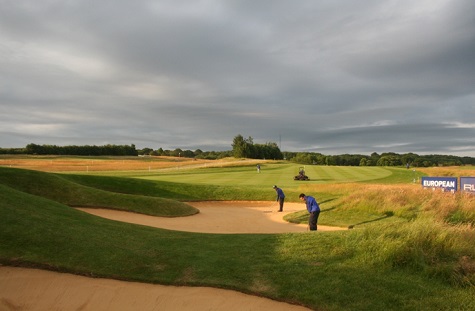
Raking bunkers
In the early 1990s we saw the introduction and use of the first USGA-specification greens in the UK that were constructed at The Wisley Golf Club in 1991.
The Wisley, located in Surrey, was designed by Robert Trent Jones Jr., a renowned American golf course architect. It was among the first courses in the UK to implement USGA green construction standards, which include specific layering techniques for drainage, root zone composition, and turf growth.
These standards have since become widely adopted in the UK, particularly for new golf courses and renovations, due to their superior drainage and consistent playing conditions.
One of the most controversial / challenging jobs for any greenkeeper is setting up the course for play. You are often damned when choosing new hole locations. I remember back in the day when I changed holes at Cocksmoors Woods. If we, during the week, got stick from any members moaning about the course, we would cut holes in some very difficult positions. It soon shut them up. Hole placement on a green can make or break a golfer, especially when maintaining high green speeds.
Many a greenkeeper has fallen foul of producing tough putting greens in regard to green speeds The recommended green speed for an 18-hole golf course depends on the course type, player skill level, and tournament standards. Green speed is measured using the Stimpmeter, which records how far a ball rolls in feet.
Many a greenkeepers job has been challenged when the wrong green speed has been chosen!
The United Kingdom is home to several prominent golf course reconstruction and drainage contractors, each offering specialised services to enhance and maintain golf facilities. These contractors have played significant roles in developing and maintaining the UK's golfing landscape, ensuring courses remain in optimal condition for players year-round.
Likewise, we have several well-respected UK golf course architects that have left their mark on many golf courses in recent years. I have picked out four to mention who, in my view, have contributed immensely to the reconstruction and development of golf course architecture over many years.
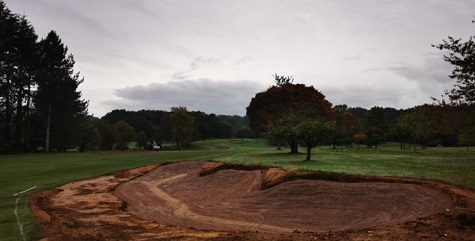
Rowlands Castle GC bunker reconstruction work
Howard Swan is a renowned golf course architect based in the UK, with a career spanning over 40 years. He is the son of Frank Pennink, a celebrated British golf course designer, and has continued his father's legacy through Swan Golf Designs (SGD), a firm specialising in golf course design, renovation, and master planning.

Cavendish GC
Jonathan Gaunt, director of Gaunt Golf Design, has designed over 30 golf courses since 1987, primarily in the UK. His notable projects include Ramside Hall Hotel and Golf Club in Durham and Linden Hall Hotel & Spa in Northumberland. Since establishing his own architectural practice in 1990, Jonathan has designed over 40 new golf courses, including Linden Hall Hotel & Spa in Northumberland (voted in the top 10 new courses by Golf World).
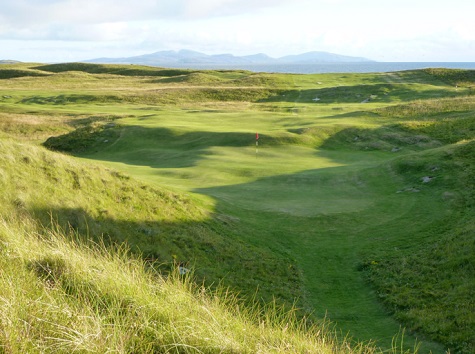
Askernish GC
Co-founder of Mackenzie & Ebert, Tom Mackenzie has worked on numerous classic courses, providing design expertise to ensure they test modern elite players while preserving their historical integrity.
David McLay Kidd of DMK Golf Design is also a well-known golf architect. I was fortunate to visit Machrihanish Dunes in 2012 meeting up with David’s father Jimmy Kidd, a renowned course superintendent, who spent 23 years managing Gleneagles.
The course was exceptional, and I enjoyed the company of Jimmy who took the time to take me around the course and talk golf.
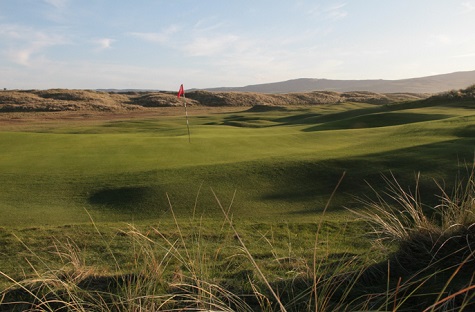
Machrihanish GC
During the last twenty years I’d say we have really embraced the science of golf stewardship. The understanding of plant soil and water relationships has given us the knowledge to deliver better quality playing surfaces. We can also now create and record a lot of data using soil probes, moisture meters, ground penetrating radar and GPS apps. We also have methods of recoding green speeds and smoothness, as well as more accurate weather stations.
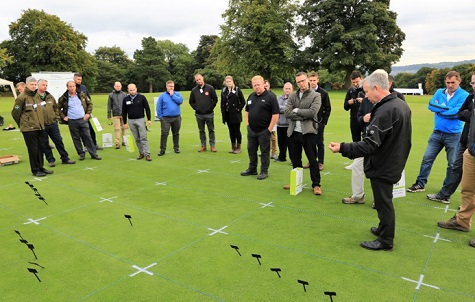
Of great benefit also, we now have a vast range of fertiliser products, turf conditioners, wetting agents, micro biological products, fungicides and pesticides at our disposal.
We have a superb selection of grass cultivars to use, with several national seed suppliers providing a supportive role in developing and bringing to market a wide range of seed products to suit all challenging golf environments.
We also have an annual BSPB Turfgrass seed booklet. This information provides the best available interpretation of correctly designed, accurately analysed and independently supervised seed trials for the professional user.
We also have the support from various sporting bodies and organisations to help improve our working, pay and conditions, with the likes of R&A, BIGGA, Lantra, BASIS and various trade unions to name a few.
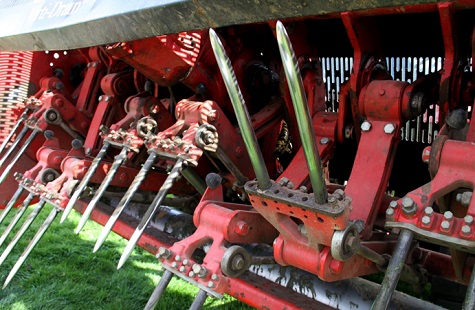
Vertidrain
As for notable work practices that have helped improve golf course these have come in the form of better aeration techniques being employed. We have a wide range of machines that can aerate at a range of depths (sarrel rollers, pro core, VertiDrains, earthquakes, air injection sand injection). We are seeing these methods used on tees, greens, approaches, fairways, rough and around trees.
The ability to clean out the base of the sward using scarifying / verticutting units has become a game changer in improving playing surfaces and turf health.
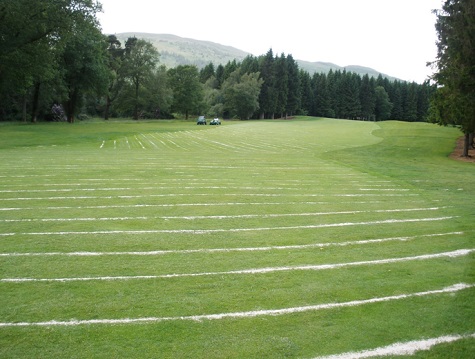
Slit drainage on fairways
New construction techniques and the ability to install drainage systems without causing too much disturbance to the playing surfaces has also helped golf clubs improve course conditions.
The better understanding and use of fully automated irrigation systems for tees, greens and fairways has been a significant help to course managers to produce better playing surfaces offering greater efficiency, precision, and sustainability
This is achieved by targeted watering. Pop-up sprinklers deliver water only where needed, reducing wastage. Systems can be programmed to water at optimal times (e.g., early morning or late evening) to minimise evaporation rates. Advanced systems use weather sensors to adjust watering based on rainfall, humidity, and temperature. Efficient systems reduce overall water usage, cuts costs, helps courses comply with water regulations and promotes eco-friendly management.
Controlled irrigation management also prevents soil erosion and nutrient losses. An important component in the maintenance and management of natural turf surfaces.
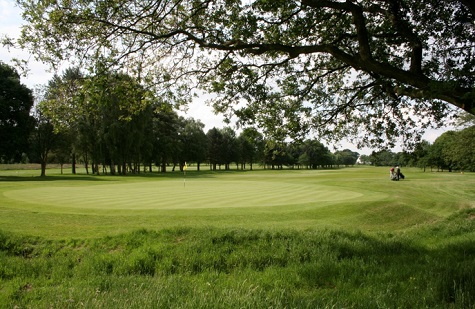
Wilmslow GC green
It also worth remembering the actual total playing surface area (greens, tees, and fairways) on a typical 18-hole golf course can vary depending on the course design, terrain, and maintenance practices.
For many course managers only 50% of the course is designated as playing surfaces that need to be intensely managed. The rest of the golf course requires another set of skills and management techniques. Which are centred around sustaining flora fauna and wildlife habitats.

Nature on a golf course
The maintenance of these woodlands, trees, hedges, shrub, heather plantations and water features ponds, lakes and streams) also need constant maintenance throughout the year.
So, all in all the role and job of a practicing greenkeeper is very varied and consuming but at the same time very rewarding when he gets the support and respect from the club members and owners.
You can also read:
Part one of 50 Years of Golf Stewardship here
Part one of Cricket Through The Decades here.
Part two of Cricket Through The Decades here
Part one of my 50 years of football here
And part two of 50 years of football here.

