This year there seems to be an overwhelming splash of colour in our towns and villages, from all the flowering plants we maintain as part of our spring and summer displays.
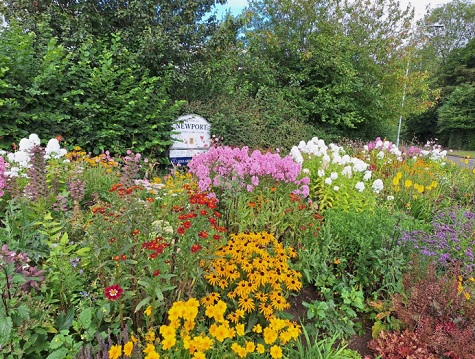
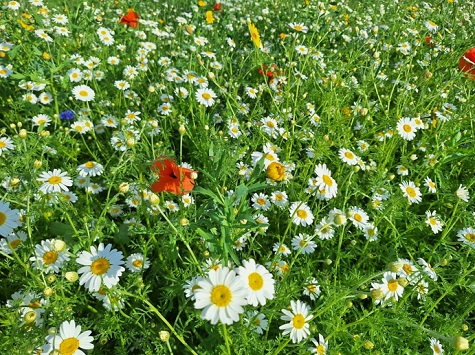
Here in my hometown of Newport, Shropshire, the town centre and surrounding areas are awash with colour from hanging baskets, wildflowers and perennial plantings all looking their best.
For me, it’s well worth the effort and expense to provide these annual flowering displays. It gives the whole town a sense of pride. It also brings many people together and allows people to have a better understanding of plants.
When I was an apprentice gardener with Birmingham City Council, I did my City & Guilds qualifications in plant propagation and nursery practice.
Acquiring the relevant skills to grow and maintain a whole range of trees, shrubs and flowers, it also led to me attaining the chance to work at the Chelsea Flower Show, where Birmingham City Council were to win several Gold and Silver medals.
I believe it is important that we retain these gardening skills in our parks and public open spaces. Unfortunately though, we are seeing fewer spring and summer flowering plantings in our parks due to costs and the fact that parks’ budgets have been decimated for many years now.
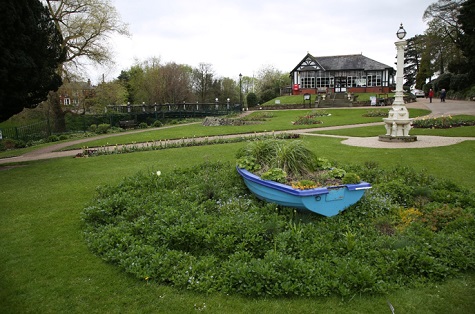
It’s my wholehearted belief that providing spring and summer planting displays in parks and public open spaces offers a variety of environmental, social, and economic benefits. These can be:
Environmental benefits: These displays enhance biodiversity by providing habitats and food sources for pollinators like bees, butterflies, and other beneficial insects. A diverse range of plants can help support local ecosystems and contribute to the overall health of urban environments. Furthermore, plants help to improve air quality by absorbing pollutants and producing oxygen.
Aesthetic and social value: Flower displays create visually appealing spaces that attract visitors and encourage community engagement. Beautifully landscaped areas contribute to the well-being of residents, providing them with spaces to relax, exercise, and connect with nature. The presence of greenery and vibrant flowers can reduce stress and improve mental health, making parks vital for urban populations.
Cultural and educational value: Seasonal planting displays can be educational, offering opportunities for the public to learn about different plant species, gardening techniques, and the importance of biodiversity. They also preserve cultural traditions associated with gardening and horticulture, contributing to a sense of community identity and pride.
Economic impact: Attractive public spaces can boost local economies by drawing tourists and increasing foot traffic in nearby commercial areas. Well-maintained parks can increase property values in the surrounding areas, as people are generally willing to pay more to live near.
As a Green Flag Award judge I know just how important beautiful public spaces to the wellbeing of the nations - and it's great news to read today 2,227 parks and green spaces have achieved the Green Flag Award this year.
Insects on the wain
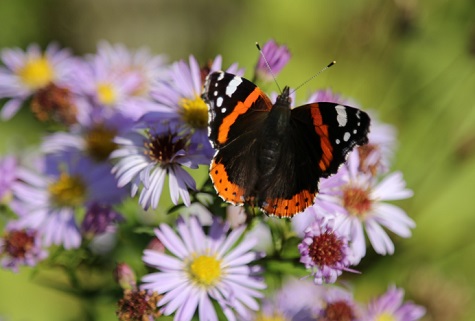
It has come to my attention, and I am sure many of you who work in the amenity sector will have also noticed, there seems to be a demise in insect populations - noticeably the lack of wasps we are seeing during the height of summer. Likewise, there also seems to be a lack of butterflies feeding on buddleia bushes. Many are blaming the fact that maybe this year’s wet spring has had a significant impact on insect populations, with mixed outcomes depending on the species.
I read with interest a fascinating article published in The Guardian recently.
The writer, Tony Juniper, says “Perhaps most noticeable is the near-absence of butterflies. Species that are usually common, such as large and small whites, small tortoiseshells, gatekeepers, ringlets, peacocks and meadow browns, are in many places down to the point of having almost disappeared.
“Bee populations seem to be down here, too, with flowery margins that would at this time of year normally be alive with pollinators now eerily quiet. Hoverflies are depleted, moths scarce and aphids have either appeared very late or not at all.”
Tony’s piece makes for interesting reading. The message for us all is that we need to continue to provide essential habitats, and food sources for these important insects that form an integral food chain for a variety of insects, birds and mammals – all of which make up the important fabric of our unique countryside.