Over the course of the next twelve months, I will be delving into many of my memories, and excursions undertaken, to highlight the management and maintenance our unique sports turf and amenity and landscape sectors.
Here is the second part of my look at cricket management through the decades.
At professional level specifically, I believe the following three bits of kit have helped enormously to ensure cricket pitches are playable and games played,
These are the Stuart Canvas hover cover; breathable flat covers; and the Blotter machine to soak up surface water.
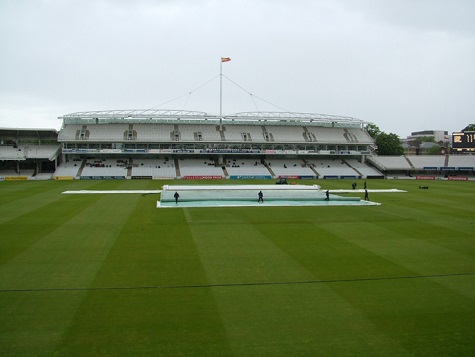
Hover cover at Lord’s
The Stuart Canvas Hover Cover was developed by Stuart Canvas in the 90s, a company that manufactures a range of protection covers for playing surfaces. The beauty of this is that it’s light, easy to manoeuvre and can effectively be put in place in less than three minutes. The old three sectioned roll-on, roll-off covers used to take between 10 and15 minutes to set up.
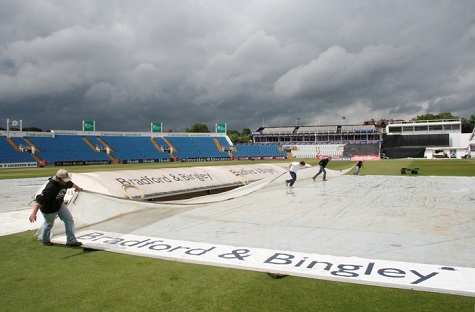
Flat sheets at Headingly
As for the flat sheets, they have become lighter and more breathable and can cover large areas of both the square and outfield.
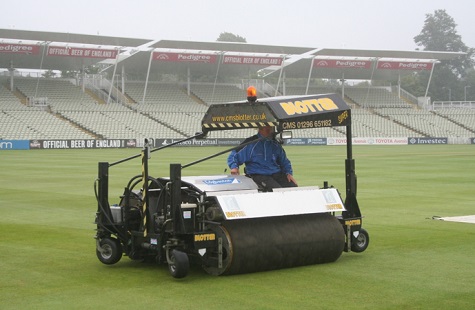
Blotter in use at Edgbaston
The Blotter, developed in 1990, has helped keep games on, especially after a downpour. The machine has two big sponge rollers that soak up the water from the playing surface. The company now also have developed the mini-Blotter.
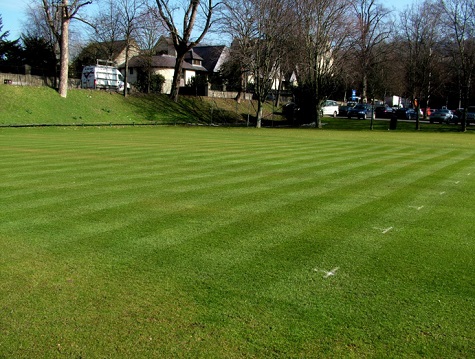
Bath CC net area in March
Over the last twenty years we have seen great strides in the development of a range of tailored products that help keep the grass healthy, reduce the incidence of disease and control weeds. These come in the form of fertilisers, bio stimulants, seaweed extracts, growth retardants and modern seed varieties.
Modern ryegrass seed varieties have significantly improved the quality, durability, and performance of cricket pitches. These advances result from targeted breeding programs and innovations in turfgrass science. They provide enhanced wear tolerance, rapid recovery, faster germination and establishment rates, coupled with resistance to disease and a fine leaf texture plus stronger root systems.
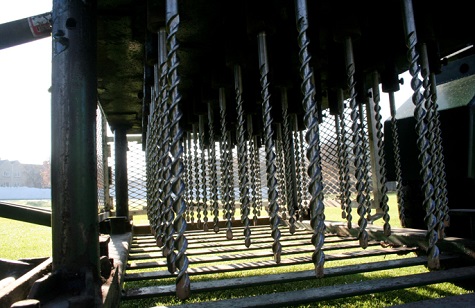
Deep drill machine
When it comes to renovation and improving cricket pitches, I believe there have been come key innovative methods developed, including The Ecosolve Deep Drill N Fill developed by Bretton King.
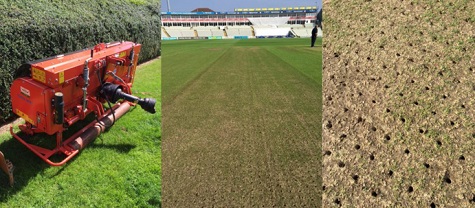
Deep spiking cricket squares
The fraise mower, that has helped clubs renovate the squares more quickly and reset levels.
The ability of fast tining cricket squares, perfected by Keith Exton of Perfect Pitches using a Wiedenmann XF Terraspiker. Keith himself was head groundsman at Glamorgan CCC and over the years has helped renovate and reconstruct hundreds of pitches and developed and installed both natural and artificial cricket net areas.
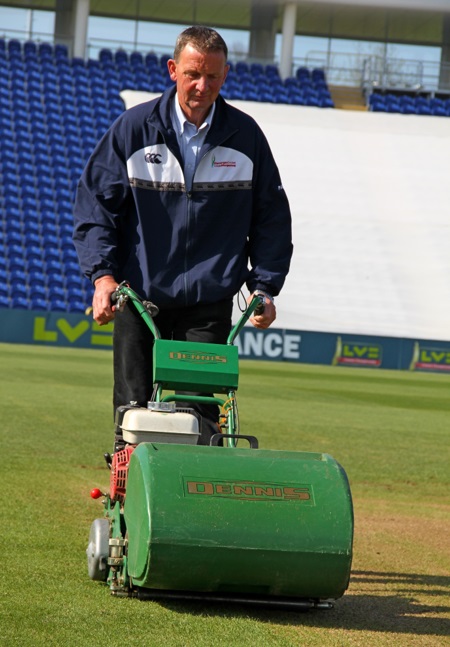
Keith Exton
Other notable contractors include Simon Hutton of Fineturf https://www.fine-turf.co.uk/our-team who has, for the last few years, been responsible for renovation works at Lord’s.
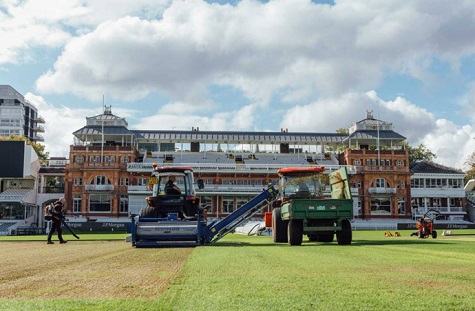
Renovation work at Lord’s - photo courtesy of Fineturf
The game of cricket is now popular with a wide age-range of players, both boys and girls, all of whom can go onto play at senior levels.
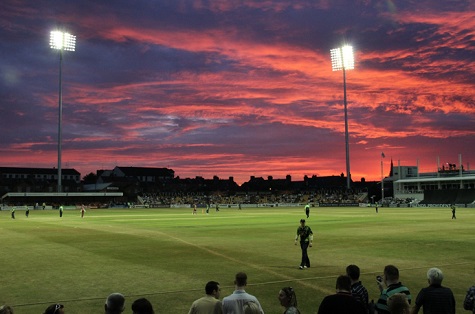
Floodlit game at Northampton CCC
Televised coverage of the sport has enabled the game to grow in popularity, with most grassroots clubs having to host several men’s and women’s senior teams, along with a comprehensive junior section wanting to play games.
Many cricket clubs now have two grounds to accommodate this demand. For clubs that only have one ground and have a standard size square (around 12 pitches), it can be a tall order to accommodate a busy fixture list.
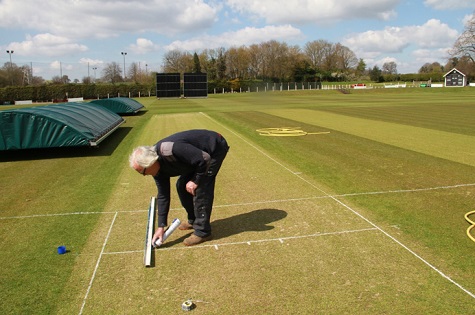
Preparing pitches at Shifnal CC
Talking to many turf professionals and volunteers, the pressure of producing decent playing surfaces for so many fixtures in any one season is becoming harder to facilitate.
Clubs are demanding more games. We have seen in recent seasons the senior clubs starting their preseason training much earlier in the year, with most first-class clubs expecting the pitches to be playable in March. Also, clubs are often asked to prolong the season with games going on until late September.
This late finish to the season often leaves a shorter window for renovations when the weather is favourable, with soil and air temperatures still in double figures to aid germination rates. Likewise, the challenge in the spring is for the ground staff to be able to get on the ground to start their pre-season rolling programme, when often the weather can be quite poor.
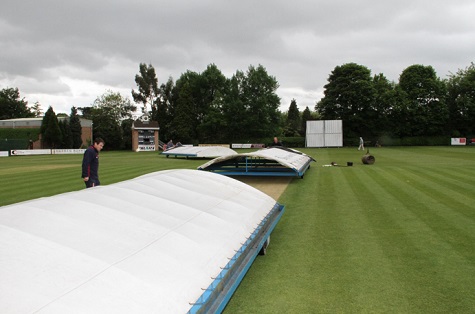
Protecting the pitch at Knowle & Dorridge CC
During the playing season, the challenge is having the resources, time and ability to prepare and keep pitches playable to accommodate the increasing fixture lists.
Many grassroots cricket clubs rely on a core of passionate, unpaid volunteers who often are ex-players who want to give something back and end up working on the grounds.
A couple of years ago I, with the help of some practicing groundsmen, collated the time spent on maintaining a 12-strip cricket facility and outfield. We also accounted for the time prepping wickets, repairing wickets and undertaking end of season renovations. Based on one man working, the total number of man hours to complete these tasks came to around 1200 hours. That’s without the cost of materials and fuel.
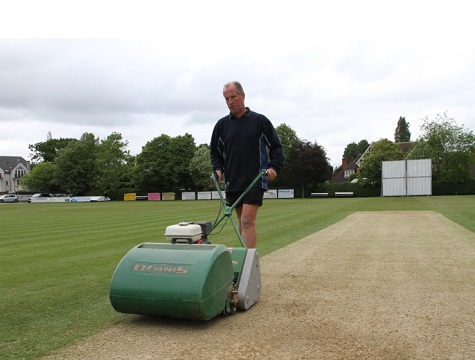
Ian Maddocks at Knowle & Dorridge CC
This time, based on a nine-month working programme centred around the months of February – October, will equate to around 33 hours’ worth of work required a week during the playing season.
The point I am trying to make, is that the job of looking after a cricket facility is full-time for one person and would also need the support of several helpers to achieve the levels required to look after and maintain a grass roots cricket club facility.
I would like to finish this article by remembering some of the fabulous times I have had, and fine people I have met, covering the sport of cricket.
We must not forget the hundreds, if not thousands, of volunteer grounds staff who throughout the year go beyond the call of duty to get the game on. During my time as an editor I have had the opportunity and joy of visiting most of the country’s grounds. Each and every ground has gone through a vast improvement on their facilities, mainly due to their endeavour and ambitions.
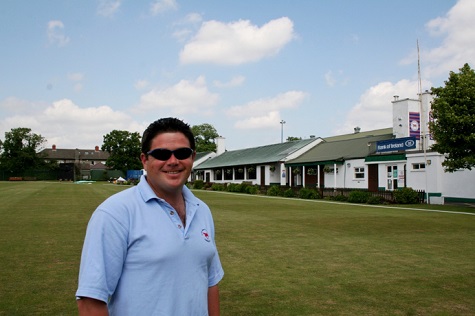
Karl at Clontarf CC
I am personally quite proud to have maybe played a part in encouraging Karl McDermott, now HG at Lord’s, to come from his home club in Clontarf in Ireland to come and work in England.
I had the pleasure of visiting Clontarf CC in 2007 and met up with Karl who was HG at the club. I was over there judging for the Cricket Groundsman of the Year Awards and was totally impressed in what Karl was achieving and the standard of the pitches.
I spent a couple of days with Karl, and we had a great time, finding time to visit Croke Park. It was not long after my visit that Karl came to stay with me in Shropshire and not long after that he took on a role working with Tim Packwood at Worcester CCC. The rest is history. Karl eventually moved to Hampshire and then got the job at Lord’s. A tremendous achievement as these top jobs do not come round very often.
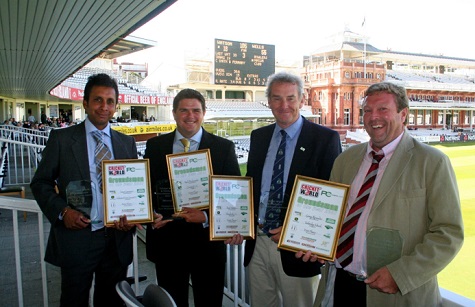
Karl receiving his award along with fellow recipients Simon Lawrence, Paul Tatton and George Alexander in 2007
I was proud to be a judge of the Cricket Groundsman of the Year, meeting so many dedicated practitioners, with the category winners having an invite to Lords’ to receive their awards.
Other notable days out included a match day special at Northampton CCC when Paul Marshall was HG. I was able to see the attention to detail in the work that goes into preparing a pitch for an evening floodlit game of cricket. We were blessed with a fine sunny day, a great game of cricket and a superb sunset to finish the day’s play.

Gordon Gill, Bath CC
As for characters and dedicated grounds practitioners of the game, I think of Gordon Gill at Bath CC, along with the likes of Martin Deans, Lincolnshire CCC advisor; Ian Smith, St Albans School; Paul Tatton; Rodney Heyhoe; and Simon Tremlin. All have produced and promoted the game of cricket for many years.

Left, Professor Bill Adams
As for educating groundsmen, it is important I mention the late professor Bill Adams who I had the chance to meet on several occasions. Bill and coauthor Richard Gibbs, were responsible for writing one of the first decent practical soil science books, Natural Turf for Sport and Amenity (Science & Practice). A game changer for cricket groundsmen.
Bill had also invented the Adams and Stewart soil binding test (ASSB) - or Motty test as it is commonly known. A sure way of measuring soil strength, it enabled cricket ground staff to identify what type of clay loam they have in terms of clay content.
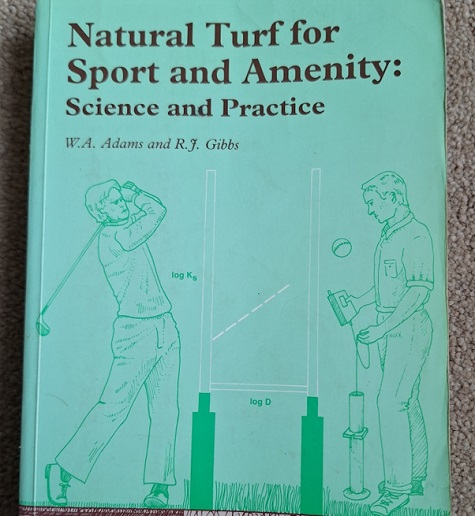
Bill’s book was a revelation for me in terms of aiding me get my Master of Science Degree at Cranfield University in 2003. It was there I met two other influential scientists who have in recent years helped many cricket clubs have a better understanding of how to manage their cricket pitches in terms of soil aeration, maintenance and rolling programmes.

L-R: Geoff Webb CEO GMA and Alex Vickers
Alex Vickers and Iain James were both lecturers during my time at Cranfield and have since gone on to work in our industry as pitch consultants. Alex now works for the GMA, while Iain is working for the ECB.

Chris Woods
Another icon of the game of cricket is Chris Woods who, over many years, contributed lots of new initiatives devoted to improving the education and knowledge of cricket groundsmanship while working for the ECB. Chris recently retired with Andy Mackay taking on his role.

Tim Packwood monitoring his flooded cricket pitches
For me, one of the most difficult grounds to manage must be Worcester CCC. For those who have worked there, the experience of dealing with regular floods must be mind boggling. Most floods happen during the winter months and can occur as late has February / early-March, depending on the rainfall and the capacity of the River Severn.
I have seen the flooding myself and spoken to Tim Packwood the HG at the time to discuss how he copes with it. This flooding was quite disruptive and was several feet deep. The team have developed a particular set of skills to aid the cleaning up of the debris as the water resides, using drag matts to stop the residues capping the playing surface. Luckily for Tim, he and his team are now experts in dealing with the regular floods they get at Worcester CCC.
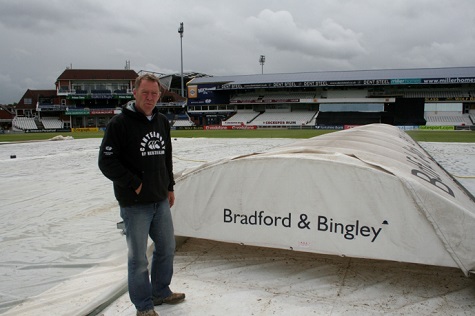
Andy Fogarty waiting for the rain to abate
Another stalwart of the game is Andy Fogarty, HG at Headingly. I had the pleasure of doing a match day special with him and his team. As always, an extremely long day with the worry of rain being forecast. Andy has just retired after 30 plus years working for Yorkshire CCC but still goes in and helps Richard Robinson the new HG at the club.
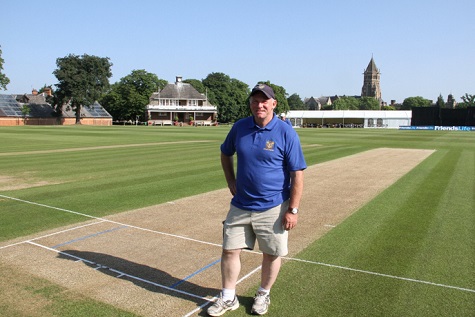
James Mead
Another dedicated Cricket Groundsman is my good friend James Mead, recently retired estates manager at Rugby School. Both he and I started our working careers together as parks apprentices with Birmingham City Council back in 1972. James has held several key managers jobs during his career. After leaving the council he went on to manage King Edward School, then Millfield School and finished his career doing 17 years at Rugby School, where he oversaw all the cricket facilities, improving the pitches so much that Warwickshire were keen to regularly use the first team square for county matches.
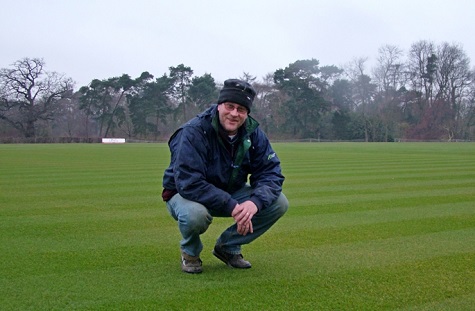
Andrew Clarke, Shenley CC
As for unsung heroes, I have met many who have dedicated their life to the game of cricket. Geoff Calcot was a Warwickshire pitch advisor. Sadly he passed away some years ago but I had many a day out with Geoff talking cricket. There’s also Bob Stretton, Andy Clarke and Adrian Shelly who have spent the best parts of their lives dedicated to producing cricket pitches.
However, I do have some worries where the game is going. Like most sports today, fielding several adult teams has diminished in recent years and club loyalty does not seem the same in terms of players staying on and helping once their playing days are over?
However, due to the success of the UK National Lottery, the game has undeniably seen a dramatic rise in funding opportunities.
In recent seasons we have seen a greater demand for other formats of cricket to be played which has increased the number of people taking up the game. Women’s cricket is becoming very popular and being driven by the ECB.
These demands are bringing extra pressure to clubs, having to facilitate all these extra games and fixtures.
It is a trend affecting most club sports. For me the provision of a safe and consistent cricket pitch is vitally important, in terms of attracting and developing good players.
I mentioned earlier that it usually takes in excess of 1200 man hours to manage and maintain a 12 strip cricket facility over the course of the playing season. If you were to equate that to a cost of £20 per hour it gives you £24,000 worth of labour. Add to that the cost of materials, fuels and servicing of mowers, you are probably looking at a cost in excess of £35,000.
One feels it would cost a cricket club about £35,000 to attract a decent, experienced turf professional. On top of that the additional costs of materials, machinery, etc – and the reality of maintaining a small cricket club is likely to cost the club an investment of around £50.000 to maintain its green infrastructure.
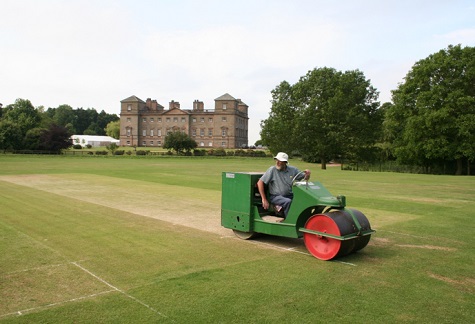
The other major concern for me is that many clubs rely on goodwill and volunteers to undertake the maintenance of the grounds, with ever more pressure and increased workloads being put on these guys.
We are now starting to see a shortage of these dedicated volunteers. with many getting on in life and the younger players not interested in doing this work. I can see in a few years, clubs struggling to find someone to do this work – meaning eventually they will have to pay for it!
As we all know, not many clubs have that sort of money or are able to generate these sorts of figures.I feel it is the time for clubs to raise their membership and playing fees to accommodate the actual costs of running these exceptional cricket facilities.
You can read:
Part one of Cricket Through The Decades here.
Part one of my 50 years of football here
And part two of 50 years of football here.

