EDITOR'S BLOG
SHOW WEEK AGAIN
But shouldn't all our trade events attract more?
by TurfPro Editor, Laurence Gale MSC, MBPR
 
Laurence Gale MSC, MBPR

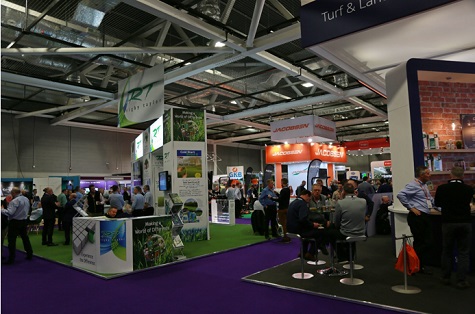
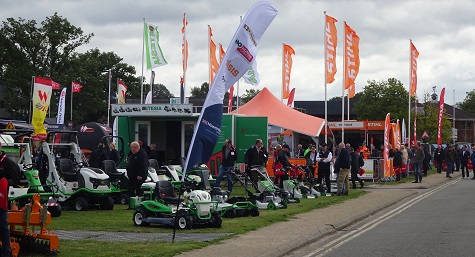
I'm looking forward to BTME in Harrogate this week but for me, the question I think we must ask ourselves, is the attraction of around 4,000 people to any of our major shows enough?


This week I am looking forward to visiting BIGGA’s BTME show in Harrogate from Tuesday to Thursday, 21st-23rd January. It’s a show I have been attending for twenty plus years. 


Harrogate is a wonderful venue for the show, offering so much more than just a trade exhibition. The after-show activities and networking opportunities in the pubs and restaurants around the town has always been a popular and integral part of the experience.


Also, during BTME there is an education programme of seminars and training opportunities for practicing greenkeepers which always seems to be a very well attended element of the event. 


As always, this week in Harrogate will be great opportunity for myself to catch up with many of the diverse manufacturers and exhibitors to learn about their latest products and services on offer. It is also nice to catch up with many visitors to the show who rely heavily on these service providers and suppliers.


For me as an editor and turf consultant, it is important to keep up to date with the latest technologies that help improve turf grass standards.


Our trade shows are an important vehicle. BTME is well liked because of its location and time of the year when it seems convenient for practitioners to attend.


However, it will be interesting to see what the attendance figures will be this year. Last year BIGGA published the following attendance information for BTME:

  • Unique Visitors: 4,234, excluding exhibitors and event personnel.
  • Exhibitors: Approximately 145, a 7% increase from 2023. 
  • Continue to Learn Education Programme: 1,145 tickets sold between Sunday and Wednesday, not including attendees of free seminars.
  • The average visitor stay was about 1.6 days, indicating that many attendees participated over multiple days.
  • These numbers reflect a slight increase compared to the 2023 event, which had 4,174 unique visitors.

For me, the question I think we must ask ourselves, is the attraction of around 4,000 people to one of our industry’s major shows enough?


And bear in mind, not all attendees are greenkeepers. Visitors also come from other working areas of the industry such as football, schools, local authorities, contractors etc.


These figures have been fairly static for a number of years now. Which is strange when we consider the number of golf courses we have in the UK. As of 2019, the United Kingdom and Ireland collectively had approximately 3,100 golf courses. 


The average staffing of greenkeepers on an 18-hole golf course can vary significantly based on factors such as the course's size, level of maintenance required, budget, and whether the course is public or private. However, typical staffing levels include:


Full-Time Staff:


Course superintendent or head greenkeeper: 1
Assistant greenkeepers: 2-4
Specialised staff (e.g., equipment technicians, irrigation specialists): 1-2
Seasonal or part-time staff: - During peak growing seasons, additional part-time or seasonal workers are often employed to handle mowing, bunker maintenance, and general upkeep. This can add 2-4 more staff members during the busy months.


Total:


Year-round average: 4-6 full-time staff
Seasonal peak: 6-10 staff, including part-time workers.


High-end or championship courses may have significantly larger crews, sometimes exceeding 20 greenkeepers, to maintain immaculate conditions.


So, if we take a rough average of saying a golf course has five staff, that equates to around a minimum of 15,500 greenkeepers working in the UK.
So, my question is why are we only seeing around 4000 people attend the show?


And it’s not just BTME. Other major industry shows seem to have the same sort of attendance figures. Should we not be attracting around 10,000 to these events?


Maybe it is time to amalgamate our trade shows? Or attract some new players to the shows to increase footfall?


Maybe we should for the last days of our trade shows invite schools and colleges to attend so they can get a feel for what our industry is about and the opportunities it offers for the next generation industry practitioners?

NEWS
LISTER WILDER CONFIRMED AS NEW IMPORTER
For pneumatic soil aerator
 
Lister Wilder confirmed as new importer

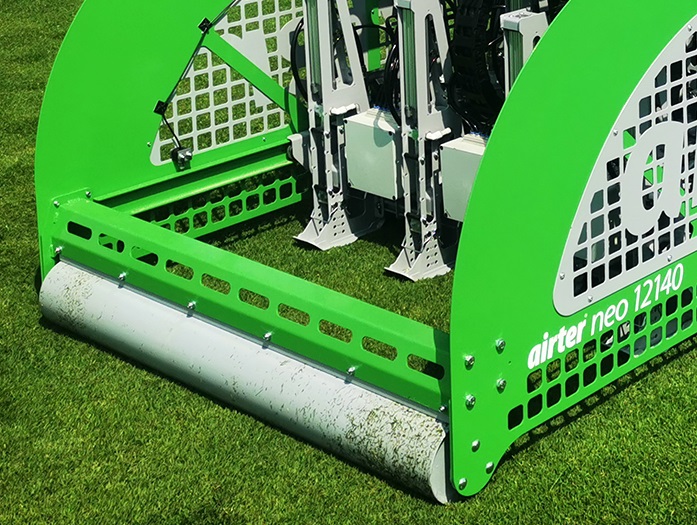
In our first WEB ONLY story the partnership say they will unveil two new machines at BTME in Harrogate this week.


FREE INDUSTRY EDUCATION PROMISED
By trade show
 
GroundsFest

In our next WEB ONLY story, organisers announce a blend of theoretical and hands-on practical education, covering a wide range of topics.


CELTIC MANOR ACHIEVES GEO CERTIFIED STATUS
Numerous new sustainability initiatives
 
Celtic Manor

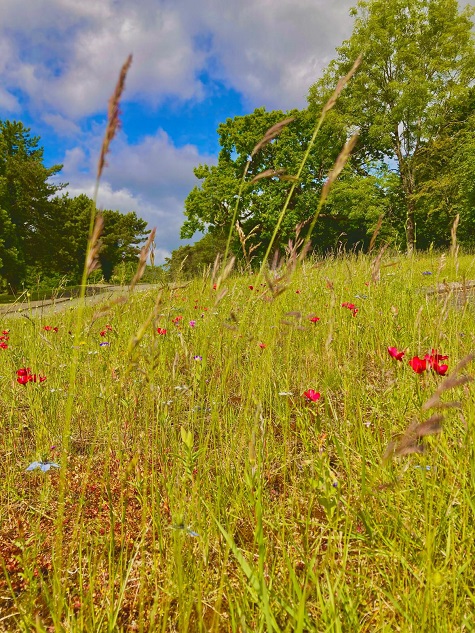
Part of the overall project saw the establishment of new wildflower areas to bring food and habitat for pollinators and other insects.


Following the introduction of numerous new sustainability initiatives, the team at Celtic Manor have received GEO certification on The Twenty Ten Course.


Part of the overall project saw the establishment of new wildflower areas to bring much-needed food and habitat for pollinators and other insects, along with high visual impact for players and staff alike. This has been achieved using mixtures from the DLF ColourBoost collection. 


Overseeing the conservation projects across all three Championship courses is environment and ecology stewardship manager Gary Connell, who has been at the resort for over 25 years. Having worked in head greenkeeping roles on both sites, he is well placed to develop and diversify both the habitat and native wildlife in this new role.


“We’ve always supported a broad range of insects, birds and other fauna here at Celtic Manor but, like most golf clubs, we recognise we can do more,” Gary said. “Working closely with local wildlife groups we have added more bird and bat boxes, introduced bug hotels and even established our own resident honeybees. Introducing wildflowers promised to further support the success of these initiatives as well as bring visual interest to lesser managed areas of the site.” 


With little prior wildflower experience, Gary consulted with DLF regional technical anager, Ian Barnett, on the best and most suitable mixtures for the project. “Our resort and land provide almost limitless opportunities for wildflowers, but we wanted to focus our efforts on a few areas which could be sustainably implemented, maintained and monitored. Ian identified an area near the main entrance and recommended Floral Carpet from the ColourBoost range.


“Our objectives were to bring high impact colour at the resort entrance, provide invaluable insect habitat and a source of pollen and nectar, and I’m pleased to say we achieved all three. We saw a wide array of flowers which attracted honeybees, butterflies and some different moth species. We then let the seed heads drop and supplemented this with some additional seeding with ColourBoost Carnival which should result in earlier flowering in the spring. We also did some ‘seed bombs’ in areas including an embankment in The Twenty Ten car park to boost presentation.” 


Gary concluded, “This work will continue as we work towards GEO certification for the Roman Road and Montgomery courses, collectively known as The Championship courses, to our recent successes on The Twenty Ten.” 

TUCKWELLS STRIKE MAJOR NEW PARTNERSHIP
With Royal St George's
 
Royal St George’s Golf Club

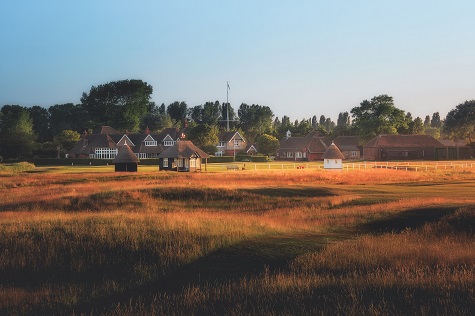
The Royal St George’s Golf Club has confirmed what is described as groundbreaking long-term partnership with local dealer and manufacturer.


The Royal St George’s Golf Club has confirmed what they describe as a "groundbreaking long-term partnership" with John Deere and local dealer Tuckwells


The agreement will see 70 new pieces of machinery installed at the Kent venue by Tuckwells, including a full cutting fleet, tractors and utility vehicles from John Deere alongside other groundscare equipment. 
 
Greenkeepers will be given support from John Deere to complete a wide range of professional training and offered opportunities to travel to other world-renowned courses to grow their expertise.   
 
The latest technology will be deployed across Royal St George’s with machinery connected by satellite and John Deere Operations Center PRO Golf course management software to assign and track the progress of every daily task. 
 
Tuckwells say they will provide The Open venue with all equipment and deliver a full package of operator training as well as rapid parts back-up for essential maintenance for the duration of the initial five-year agreement.


James Tuckwell, dealer principal said, “We are extremely proud and excited to be partnering with Royal St George’s and thank (club secretary) Colin Sinclair, head greenkeeper Greig Easton, and the whole team for putting its trust in us and John Deere. It is an honour to be working with not only one of the region’s best clubs but one of The Open’s most iconic venues.
 
“We are looking forward to helping unlock the potential of the machinery and its technology to the benefit of the course and its members.”
 
John Deere division sales manager for Golf and Turf, Chris Meacock, added, “The Royal St George’s Club has earned an incredible reputation worldwide and needs the best equipment and service to maintain that hard-earned recognition.  
 
“We wanted to form a partnership that showed belief in our machinery and technology while also demonstrating a strong commitment to the operators who will use it daily.”
  
As part of the agreement Tuckwells will provide extra machines and labour to support tournaments held at Royal St George’s. 
 
The Club’s greenkeepers will also be offered the chance to travel to TPC Deere Run to help prepare the course for the John Deere Classic, or see first-hand how the TPC Sawgrass is set up for The Players Championship. 
  
Delivery of the new equipment will begin in 2025 for completion in Spring 2026.

GEORGE BROWNS HAVE TERRITORY EXPANDED
As part of dealer re-shuffle
 
Paul Langford and Tim Mason

Having already added to their remit in mid-2024, manufacturer now confirms further trading areas for dealership.


As part of a wider re-shuffle of their partner network, Redexim UK have announced an expansion of territory for George Browns Ltd.


Redexim's Paul Langford and George Brown's Tim Mason


Having already added the IP postcode to their remit of the central and eastern regions in mid-2024, this has now been further consolidated with the incorporation of Essex and North London areas.  


Service Dealer has confirmed that this new development is a knock-on effect from the Tuckwells departure last year.


Redexim say this extension of the George Browns Ltd area into Suffolk, Essex and North London presents a natural progression for the dealer, and the next stage of a longstanding partnership dating back to the 1980’s. With depots in Buckinghamshire, Essex, Northamptonshire and Oxfordshire, the they say the team are well placed to exceed the requirements of customers across central and Eastern England.

 
Group groundcare sales manager for George Browns Ltd Tim Mason commented, “We are very excited to be given this area expansion. Having enjoyed great success over the years, building trusted relationships with end users in our existing area, this move means we can offer our full core brand line up across all depots. We look forward to getting out and promoting a premier product that’s built to last within the fine turf industry.”


Paul Langford, director of commercial operations for Redexim UK, added, “This move is testament to the ongoing professionalism demonstrated by the George Browns Ltd team, their drive and their determination to deliver sales and industry-leading support.


"We are delighted to be working together even more closely in 2025 and are confident that the strength of our partnership and combined experience will be positive for customers and both parties.” 

Sponsored Content
INTRODUCING THE SNAKE S3
The Turf Specialist’s Secret Weapon
 
Trimax Snake S3

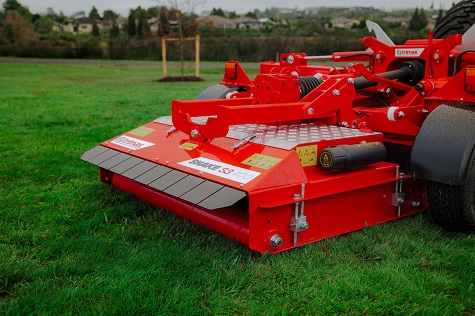
Trimax Mowing Systems is proud to introduce the Snake S3, the latest version of its globally trusted golf and sports turf mower. 


Trimax Mowing Systems is proud to introduce the Snake S3, the latest version of its globally trusted golf and sports turf mower. The Snake S3 builds on the legacy of the Snake series with a range of features designed to deliver zero daily maintenance and enhance ease of use. These improvements allow turf professionals to focus on delivering exceptional results while simplifying maintenance and operation, making their work more efficient and hassle-free.


A Decade of Trusted Performance - Now Better Than Ever


For over ten years, the Snake has been trusted by leading golf courses and sports facilities worldwide.   


Here’s what Damian Beattie, Head Groundskeeper, Helens Bay Golf Club had to say about his experience:


“We are into our 5th year with the Snake S2 now and it’s a fantastic bit of machinery. We went from a dedicated ride-on mower to the Snake and we haven’t looked back.   It has brought down fuel costs, man hours and maintenance.  We are yet to find an area that the Snake can’t get into or won’t cut.  We are able to use it in the winter months to cut fairways by lowering the height… it has just helped us out massively”.


Known for delivering a fine clip and more cuts per forward meter of travel than any other trailed rotary mower, the Snake provides a finish independently validated by the Sports Turf Institute of New Zealand to rival that of cylinder mowers. At the same time, it maintains the versatility and reliability of Trimax’s trailed rotary design.


The Snake S3 builds on this performance and retains its ability to handle tough or wet conditions efficiently. Its unique deck and blade design optimises airflow through the cutting chamber to cleanly cut and distribute grass, ensuring unmatched grass processing ability in a range of conditions.


Zero Daily Maintenance


The Snake S3 eliminates the need for daily greasing thanks to two key design changes:

  • Trimax Titan Roller Bearing System:  Advanced multi-layered seals and a sophisticated ingress channel effectively prevent debris from entering the bearing ensuring smooth operation without regular lubrication. Initially incorporated into the Trimax Pegasus and ProCut mowers first, the Titan system comes with a proven track record of durability and is fully covered under Trimax’s industry-leading three-year warranty.
  • Maintenance-free wheel hubs:  Sealed automotive bearings, engineered for durability, further reduce the need for daily maintenance. 

Together, these innovations drastically cut down on maintenance time,  allowing operators to focus on what matters most—delivering exceptional turf quality.


Ease of Use Meets Practical Design


The Snake S3 incorporates several new features designed to enhance ease of use, ensuring  minimal downtime and maximum efficiency.

  • Removable blade beams:  Simplify blade changes and offer a more practical solution for potential repairs. If damage occurs to the blade system, only the blade beam needs replacing, rather than the entire spindle, helping to minimise downtime and reduce repair costs.
  • Stand-on covers:  Provide safe and convenient access to key areas of the mower.
  • Height adjustment collars:  Enable fast and precise changes to cutting height.

“The Snake S3 was developed in direct response to customer feedback,” said Michael Sievwright, CEO at Trimax Mowing Systems. “Their input has helped us create a mower that addresses the real-world challenges faced by our customers, reinforcing our focus on delivering practical, effective solutions.”


Core Features Operators Trust


The Snake S3 retains the features that have made it a favourite in the industry, including advanced articulation for superior contour following and zero-turn manoeuvrability for tight, complex spaces. 


For more information or to schedule a demo, visit the Trimax Mowers website https://trimaxmowers.co.uk/snake/

JOBS
ADVERTISE YOUR JOBS HERE
Amazing success rates!
 
Advertise your jobs on TurfPro Weekly Briefing

Advertise your recruitment needs on TurfPro Weekly Briefing and reach our targeted audience of recipients every week.

Contact Nikki Harrison for details - 01491 837117


PREVIOUS FEATURES
EDITOR'S BLOG ARCHIVE
Catch up with Laurence Gale's recent blogs
 
TurfPro editor, Laurence Gale

Want to catch up with one of editor Laurence Gale's blogs? Here is the place to do so.


TURFPRO FEATURE ARCHIVE
Find our previous features here
 
TurfPro Feature Archive

If you want to catch up with any of TurfPro's previous features, here is the place to do so.


IMPLEMENTING SUSTAINABLE PRACTICE
Examples from across the year


VINTAGE PUSH MOWER USE
Enthusiast maintains lawn the old fashioned way


SUSTAINABLE AMENITY MANAGEMENT
Principles and practises


PLACING URBAN GREEN SPACES AT THE HEART OF INFRASTRUCTURE
Midlands Parks Forum's annual conference


RAISING THE VOICE
At the Amenity Forum's annual conference


SUSTAINABLE PARKS
Parks For London case study


WHY GRASSROOTS RUGBY IS IN DECLINE
A steady drop off in participation.


SEEDS OF SUSTAINABILITY
Focus on a major supplier of grass seed and related products to the amenity sector


ON TEST
STIHL BGA 300 cordless leaf backpack blower


ON TEST
EGO Multi-tool


PUT THEM ON THE TOOLS!
Time for an attitude change


SUSTAINABILITY IN THE TRAINING SECTOR
Grasping the challenge of encouraging more sustainable practice


SUSTAINABILITY IN LOCAL AUTHORITIES
Lessons learnt and experiences


SKILL SETS NEED RECOGNITION
Turf professionals are underappreciated


GREATER RESPECT FOR GROUNDS STAFF MIGHT MAKE ALL THE DIFFERENCE
To the recruitment crisis


A COMPETITIVE SALARY
Why employers should advertise the salary when recruiting new staff


ON TEST
Makita XGT UV001G lawn scarifier


AN EXAMPLE OF SUSTAINABILITY IN MACHINERY SUPPLY
Focus on Kubota


MY PERSONAL GREENKEEPING PHILOSOPHY HAS NEVER CHANGED
I don't follow any set program


SUSTAINABILITY IN LANDSCAPING
A substantial element of amenity activity


IS IT TIME TO SAY NO TO 'NO MOW MAY'?
Any real benefits?


SUSTAINABILITY IN OUR PARKS & PUBLIC GREEN SPACES
Meeting the challenge


THE PATH TO WIMBLEDON
For groundstaff member, Conrad Cavil


ON TEST
EGO LBP8000E backpack blower


SUSTAINABILITY IN THE LAWN CARE SECTOR
A key consideration


BEEKEEPING IN COMMERCIAL ENVIRONMENTS
The current situation


SUSTAINABLE PRACTICE IN THE AMENITY SUPPLY SECTOR
Optimising land use through integrated solutions


SUSTAINABILITY IN THE GOLF SECTOR
Focus on BIGGA


THE SEARCH FOR SUSTAINABLE PRACTICE
Bringing together key points


DEVELOPING SUSTAINABLE SOLUTIONS FOR GOLF
R&A are supporting clubs


GETTING THE MOST OUT OF EVERY POUND OF BUDGET
A course manager's view


A NEWFOUND APPRECIATION FOR ALL VOLUNTEERS
Who look after grassroots pitches


SUSTAINABILITY & THE UK ACTION PLAN
For weed, pest and disease management


CONCERN FOR PARKS FOLLOWING COUNCIL BANKRUPTCIES
What does the future hold?


TAKING A GLOBAL LOOK AT SUSTAINABILITY
Is the rest of the world also driving towards sustainable practice?


RENOVATIONS, PLAY AND THANKS
On my mind this week


SUSTAINABILITY – IMPLICATIONS FOR TRAINING & EDUCATION
Set to play a crucial role going forward


TULIP TREE
Liriodendron tulipifera


LYDIA BROOM
Genista lydia


THE LAWN AND ITS VALUE
Changing attitudes


GIANT HOGWEED
Invasive and potentially harmful


LIFE-CYCLE ANALYSIS & SUSTAINABILITY
Considering every stage of the journey


NITROGEN USE EFFICIENCY
The most important nutrient


BERBERIS THUNBERGII
A shrub that has stood the test of time


ENSURING FUTURE PROSPERITY
Advice imparted at road shows


INNOVATION & SUSTAINABILITY
A key focus


PHOTINA RED ROBIN
A sensational flowering shrub


VALUING THE GRASSROOTS
We must not overlook those who maintain these grounds


MANAGING WEEDS SUSTAINABLY
In amenity spaces


DETECTING NUTRIENT DEFICIENCY SYMPTOMS
In turf plants


SPRING RENOVATIONS UNDERWAY
A crucial period


SUSTAINABILITY IN SUPPLY
A focus on those who supply essential inputs to our sector


CHANGING CLIMATE
Is a borehole the key for clubs?


SUSTAINABILITY AT THE SHARP END
How to put into practice when budgets are tight?


ANOTHER NAIL IN THE COFFIN OF GRASSROOTS RUGBY
Clubs are struggling


SUSTAINABILITY IN PRACTICE
Seeking transparent and robust supply chains is essential


TIME FOR ACTION
To reverse recruitment crisis


CONTROLLING COSTS
Planning is crucial


THE SEARCH FOR SUSTAINABILITY
What exactly does the term mean?


CARING FOR THE GRASSROOTS
From volunteers to contractors


DEFRA IS LETTING DOWN THE COUNTRY
Complete failure to address the plastic grass debate


WE CAN ALL DO MORE
To aid biodiversity


MY LIFE IN GREENKEEPING
With Bruce Cruickshank


LEVELLING UP, GETTING SMARTER & GETTING AHEAD
Parks require so much more funding


SWITCHED ON FOR HARD WORK
Putting trimmers through their paces


MACHINERY HIGHLIGHTS
At this year's show


MY SALTEX
Daniel Lewis​, Manchester City Football Club


AWASH WITH LEARNING OPPORTUNITIES
Two months till showtime


LOOKING BACK, LOOKING FORWARD
Priorities for the amenity sector


THE DECLINE OF ‘PARKITECTURE’
A symptom of the state of parks in 2022


DEVELOPERS SHIRKING GREEN SPACE RESPONSIBILITIES
Lack of financial commitment


TIME TO COME TOGETHER
For the good of the industry


THE DEATH OF GRASS ROOTS CRICKET
Gathering apace?


ROUTES INTO THE INDUSTRY MUST BE ENSURED
Q&A with David Fisher, Lantra’s head of industry partnerships


STRONG VIEWS ON CRICKET PITCH PERFORMANCE MARKING
A bone of contention


A PREMIUM PRODUCT
Delivered at Naas Golf Club


THE GREEN REVOLUTION
And Esker Hills


MAKING A CHANGE
Laytown and Bettystown Golf Links


A DAY AT THE RACES
Naas Race Course


WORKING TOGETHER AS ONE VOICE
How the industry needs to proceed


OVER 175 YEARS OF EDUCATION
Wesley College


ELECTRIC EXCITEMENT
Dennis's Ian Howard talks electrification


THE HOME OF CORK GAA
Páirc Uí Chaoimh


LONG POLE BATTERY HEDGE TRIMMERS TESTED
STIHL HLA 66 and HLA 86


OVER 800 YEARS OF HISTORY
Johnstown Castle and Gardens


A CLUB GONE WILD
Kilkenny Golf Club


A GOLF COURSE IN THE GARDEN OF IRELAND
Woodenbridge GC


80 YEARS YOUNG
Charleville Golf Club


AN UPLIFTING EXPERIENCE
Bunclody Golf & Fishing Club


GETTING BACK TOGETHER
Albeit gradually . .


GO WEST
Inishturk GAA pitch – one of the most westerly sportspitches in Europe


WORKING ON A TIGHT BUDGET
Nenagh Golf Club


ON A MISSION
Wrekin Golf Club aiming to enrich wildlife and fauna


WILD AND WONDERFUL
Design By Nature


LEARNING HOW TO SURVIVE
Abbey Par 3


TACKLING OBESITY
Vital that schools can provide sport


A LIFETIME OF LEARNING
Vital for turf professionals


CELEBRATING 125 YEARS
Tullamore Golf Club


UNIVERSITY CHALLENGES
At Trinity College Dublin


BLENDING THE OLD WITH THE NEW
Bray Golf Club


A WELL POLISHED COURSE!
Ierne Social And Sports Club


IDENTIFYING THE TRUE VALUES
Of grounds maintenance


THE INDUSTRY WILL CHANGE & ADAPT
But it will survive


WIRRAL GOLF COURSES SAVED
Renewed hope and optimism for the future


GREEN SPACE CONTRIBUTION TO WELLBEING IS UNDERVALUED
Parks invisible on national agenda


A SHINING LIGHT IN IRELAND'S SUNNY SOUTHEAST
Wexford Golf Club


GREEN SPACES DO NOT LOOK AFTER THEMSELVES!
Keith Kent says we must invest in people


WE SHOULD TELL THE WORLD ABOUT THE UK INDUSTRY
Right time for all sides to come together


SOIL LIFE IS PRECIOUS
Good-quality soil can help save the planet


MORE THAN JUST CUTTING GRASS
Encouraging the next generation


A BUZZ FROM DOING THE JOB
Wide experience of the turf grass industry


PAYING THEIR WAY
Low wages is the bane of the industry


AMENITY MANAGEMENT IMPACTS US ALL
Professor John Moverley


CARING FOR PARKS OF ALL TYPES
Mary Worrall


TOP FIVE FRUSTRATIONS FOR CRICKET GROUNDSMEN
What causes you the most frustration in your role?


PROFESSIONALS AT THE CUTTING EDGE
Vic Demain and Phil Sharples


BOWLS CLUBS IN PERIL
A sad decline


A VERY SPECIAL INDUSTRY
Loz looks back


SNEAK PEAK AT A ROBOTIC "GAME CHANGER"
Commercial model capable of covering 50,000 m2 teased


HALESOWEN PICK A BIG ROBOT UP FRONT
Invest in mowers


COMPRESSED AERATION
The new way


PARKS MATTER MORE THAN EVER
Recent sector developments


ON TEST
STIHL blowers


THREE CORE VALUES TO SHAPE OUR INDUSTRY
Real concerns for the future


ENGLAND'S GREEN SPACE GAP
A split along racial lines


ON TEST
EGO STX3800 strimmer with RTX2300 Rotocut head


A SECTOR FACING IMPORTANT TIMES
Review of the National Action Plan


PARKS MATTER
The role of public parks in the recovery: a discussion paper


A UNIQUE SPORTING VENUE
Wormsley private estate


A BTME OUTDOORS?
A good bet for the industry


PARKS NEED APPROPRIATE POLITICAL REPRESENTATION
Q&A with Philippa Reece, Parks and Foreshore Manager at Adur and Worthing Council


CRICKET LOAM
What does it mean?


A HERCULEAN EFFORT TO GET PARKS BACK TO NORMAL
Q&A with Chris Worman, Rugby Borough Council’s parks and ground manager


ON TEST
STIHL battery products


TURFGRASS STRESS MANAGEMENT
Reactive Oxygen Species (ROS) and antioxidants during biotic and abiotic stress in turfgrass plants


AUTUMN DISEASE MANAGEMENT
The coming months are going to prove very difficult


THE ABUSE OF PARKS . .
Is the abuse of society


WHY PARKS MATTER?
A statement from the Parks Management Forum to the Prime Minister


THE 21st CENTURY PARKS MANAGER
Innovative, creative and entrepreneurial


EAT, SLEEP, CUT, REPEAT!
Cricket under covid


TIME FOR A SINGLE SHOW?
Debate brought back into focus


A CHALLENGING TWO MONTHS
Running golf design projects from home


PRESSURE SITUATION
Cementing the reputation


A CLUB TO BE PROUD OF
10 years at the helm of Olton GC


GAME CHANGERS IN TURFCARE
The day the Lord's outfield reconstruction proved its worth


THE ESSENCE OF ESSENTIAL
Finding a sensible way forward on defining "essential maintenance"


THAT WAS THE YEAR THAT WAS
2001


HOW TO LOOK AFTER A GOLF COURSE WITH NO GOLFERS
Fundamental to the survival of almost all courses, if not of the game itself


RAIN STOPPED PLAY WOULD BE WELCOME
. . along with ‘lunch is being taken early’


PHYSICAL CONTROL OF TURFGRASS PESTS
An urgent problem


A DIVERSE & ENTERTAINING WEEK
Successful BTME 2020


INTEGRATED PEST CONTROL
Opportunity to embrace new methods


ENVILLE ON THE UP
Major investments taking place


GREEN FLAG AWARDS 2019
A great success


U.S PROFESSIONAL EQUIPMENT SHOW EXCELS
Buoyant GIE+EXPO


LEGACY OF THE SOLHEIM CUP
At Gleneagles


A DAY OUT WITH THE LADIES
Behind the scenes at the Solheim Cup


COVENTRY UNIVERSITY'S EDIBLE GARDEN SUCCESS
2006 - present


HAIL THE GRASS MASTERS!
Boorish media comments about pitch quality are wide of the mark


CONTRACTOR SEES MULTI-DISCIPLINE SUCCESS
360 Ground Care serving professional facilities


BUSY TIMES
Judging the Green Flag Awards


TAKING AN INTEGRATED APPROACH
What does it all mean in managing turf surfaces?


UNDER PRESSURE
Dry weather conditions continue to keep turf managers focused on moisture management


EDDIE SEAWARD
Death of Wimbledon’s influential grounds manager


MAJOR NEW IRRIGATION PROJECT
At Top 100 classic Berkhamsted Golf Club


NEW HORIZONS FOR THE HATTERS
Investment paying off at Kenilworth Road


ELIZABETHAN RESTORATION
At Castle Bromwich Hall Gardens


WHAT IS BIOPHILIA?
The vital impact of parks and green spaces on health and well-being


WORM CONTROL
Without carbendazim


THE TRUE COST OF PETROL
Battery-powered outdoor power tools are now turning the heads of professionals


SANDS OF TIME
Sand-based pitches are now the norm in professional sports


WHY DO WE DO THE RIGHT THING?
We must maintain industry standards


CHASING GRASS PERFECTION?
11 things you need to know . . .


MAINTAINING STANDARDS
Q&A with BASIS ceo, Stephen Jacobs


STRI RESEARCH DAY 2018
Hosted at research trial grounds in Bingley


THE MECHANIC
Leicester City FC invest in new role


LORD'S 'GRASS-GUVNOR' TO RETIRE
Mick Hunt bows out after 49 years


HOLLOW CORING & DEEP SCARIFICATION
Is it really necessary?

Side Advert Image


PARTNERS
CAMPEY
 
Campey Turf Care Systems
Foley
 
Foley Company
ISEKI UK & IRELAND
 
Iseki
Kubota
 
Kubota
LANTRA
 
LANTRA
MAJOR
 
Major
Garden trader
 
Garden Trader
PRODUCED BY THE AD PLAIN
The Ad Plain
 
TAP
SUSTAINABILITY FOCUS
DEMONSTRATING AND APPLYING AN INTEGRATED APPROACH
New series of articles for 2025


Just as with the term sustainability, it is important to understand what is meant by an integrated approach and, importantly, what is not.


In addressing the need for sustainable practice, core to any actions is taking an integrated approach but what does that mean? Just as with the term sustainability, it is important to understand what is meant by an integrated approach and importantly what is not. The next few monthly articles will seek to address this topic, hopefully producing a simple guide to taking an integrated approach in any amenity situation. We will use primarily the example of weed management but will then develop the theme over other operational areas.

The management of weeds, pests and diseases is central to managing amenity spaces. Weed control on transport networks is vital for safety. Clean pavements and streets are important for safety but also in maintaining healthy conditions. Sports surfaces need to be fit for purpose. In order to deliver on all these requirements, an integrated approach is vital and, indeed, required in relation to current government codes of practice and targets.


Taking a holistic or integrated approach to weed, pest and disease management involves consideration of all three pillars of sustainability – economic, environment and social. It involves, for any given situation, considering all options and actions available to produce the desired outcome. Taking an integrated approach provides the best sustainable practice.


What is an integrated approach?


Adopting an integrated approach is often referred to but exactly what does it mean? Just as there can be misunderstandings of what sustainability means, the same applies to the term integrated. In terms of weed management for example, some jump to a conclusion that it means not using herbicides; some use the language of seeking alternatives. In truth, taking an integrated approach to weed management involves assessment of all the factors and methods involved, including plant protection products, so as to choose the most appropriate mix for a given situation which is economic, efficient and effective and minimises impact upon the environment and protects the public. Taking an integrated approach provides the best sustainable practice and is good practice. 


A formal definition of integrated control is as below along with its more practical meaning when applied to weed management.


“Careful consideration of all available methods and integration of measures that discourage the development of harmful organisms to keep the use of controls to levels that are economically and ecologically justified and reduce risks to human health and the environment.”


In practical terms this means:


Ensuring that, in planning a weed management programme, you consider the level of weed control required for specific areas and circumstances and consider all options available to achieve the required outcome efficiently, effectively & economically.


The integrated approach is often referred to more widely as IPM – Integrated Pest Management and this term is used globally whether it be referring to the control of pests, diseases or weeds.


Taking an integrated approach in any given situation involves careful consideration of all factors that we can influence to avoid build-up of weeds, pests and diseases and hence reduce the need for their control or management. It starts with consideration of how such challenges can be prevented and tolerated. 


Factors to be considered


In terms of weed, pest and disease management, this includes consideration of the following:

  • Choice of plants, for example in public landscaping spaces, plants with ground cover which can reduce the need and frequency of weed control. Recently a local authority re-planted many of its roundabout central areas with such plants and it has resulted in much reduced maintenance requirements. Similar considerations apply to choice of varieties for amenity and sports surfaces which reduce the risk of disease and pest problems.
  • Design is also an important issue in an integrated approach. In hard surface maintenance, seeking to design out areas which can act as traps for detritus build up, encouraging weed growth is important. Designing hedges and fences to be easily accessed for maintenance is another factor. Also, in terms of disease, where possible avoiding unnecessary shading of golf greens which can encourage disease build up.
  • Cultural issues are also very much part of prevention. Keeping plants in the amenity and sports surface as much as possible not under stress. In a sports context, this relates to such factors as irrigation planning, mowing frequencies and heights etc.
  • Considering how much weed, disease or pest damage can be tolerated in any given situation is also clearly a factor. In the 1980s, local authority instructions to contractors were often complete weed eradication across all its surfaces. This has very much changed but still factors such as expected use of the surface and how much infestation can be tolerated are not given sufficient attention. Weed control in a public park situation for example, needs careful consideration on how the various areas are to be used linked to safety and health considerations of users. Different areas could have different tolerance levels for weeds in this case.
  • Also mention should be made of innovative techniques being developed such as gene editing. This can reduce the susceptibility of plants to pests and diseases and can increase vigour of desired plans to increase competitiveness with weeds in a growing situation.

Full consideration of all these factors is important in an integrated approach but of course control or management of the weed, pest and disease remains necessary. It is here where we need to consider the various options open to us and decide upon the right mix to create the required solution for a specific situation.


Integrated Approach to Weed Management


In amenity situations, weed control or management is a major issue and the rest of this article will now focus on this. Many of the considerations can apply to integrated pest and disease control.


How then should we adopt an integrated approach to weed management? Well for any given situation it begins with producing a plan, often referred to as an integrated weed management plan (IWM), which needs to consider the following:

  • Is weed control essential or, as referred to previously, could the need for it be eliminated or minimised by improved management of the site and better planning of its use and requirements?
  • If weed management is needed, what level of control is required?  Does it need complete weed eradication, as in treating invasive plants such as Japanese Knotweed, or could a certain level of weed infestation be tolerated?
  • Having established the need for weed control, the plan will review all the various approaches and methods available, either as single methods or combinations. These include cultural, mechanical and plant protection products both synthetic and biological. These approaches will then be evaluated in terms of cost, effectiveness, safety, health, environmental impact and, ideally, subject to some form of life cycle analysis to measure carbon impact (a subject dealt with in more detail in another article in this series)
  • In creating the plan, it is also important to seek co-ordination of activities across all involved. For example, in urban areas, when controlling weeds on streets and pavements, ensuring those involved in sweeping and keeping areas clean link with those applying plant protection products and other methods.
  • Following this review, an approach will be determined and adopted. If it involves the use of plant protection products, checks will be made to ensure such product is safely stored, meeting legal requirements, and that fully tested and inspected equipment is used by appropriately certificated and trained operatives.
  • The plan will also include a method of review, following implementation, and will be updated regularly to take account of developments and innovations. Such review will consider issues such as re-designing areas to minimise weed growth. An example here is the design of curbing in built up areas. Hard corners create build-up of detritus, difficult to sweep and encouraging weed growth. Another example is how areas are established and kept in the very best conditions, again minimising weed problems.

Conclusion


All of this can seem quite daunting but it really does not need to be complex or involve lengthy documentation. It does however require evidence that all stages have been considered. The outcome is a demonstration of best sustainable practice. After all sustainable practice is just good practice.


Sustainability is not just about doing less harm, it is about doing more good


Next month’s article will look at the options and techniques available and how they might form part of an integrated approach to weed management. A further article will then seek to address just how to put an integrated plan together and apply it.

FEATURE
57 YEARS & COUNTING!
My life in the industry
by Laurence Gale, TurfPro editor
 
TurfPro editor Loz Gale, right, with Alan Ball at Fratton Park in 1981 when he was head groundsman of Portsmouth FC

This year I will be writing a series of articles that will reflect on some of the milestones, machinery innovations and, most importantly, the people who have made my years in the industry so memorable.


This year I will be celebrating 57 years working in this industry.


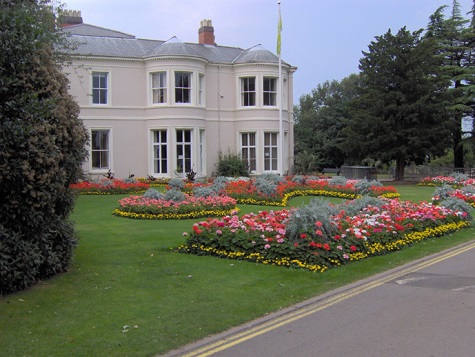
I started my career on the 14th August 1972 as a parks apprentice with Birmingham City Council based in Kings Heath Park, which was home for the Horticultural College. I, along with a couple of other school friends, began a five-year apprenticeship with the council culminating in being awarded several City & Guilds Certificates between 1973 and 1976.


Kings Heath Park / College 


I consider myself lucky to have had this opportunity to work in such a diverse industry and over all these years, have seen many significant milestones achieved in all facets of the sector. 


And above all, I have met thousands of colleagues who have contributed to many of these significant milestones and achievements. 


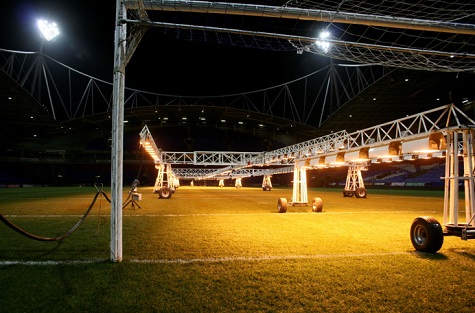
Lighting rigs 


Those of us who have been fortunate to have worked through this time period will have witnessed some radical advancements in machinery, products, technological innovations and work practices. Above all we have witnessed excellent standards being achieved in turf grass management, along with new landscaping and amenity land management practices. 


The scope and scale of the machinery now on offer is totally staggering, along with the technical support we get from computers, apps and other new technologies. In recent years we have seen a dramatic rise in the use of automation to aid efficiencies. This has filtered down to working grounds practitioners.


To help celebrate many of these vast achievements, I will be writing a series of articles throughout the year that reflect on some of the milestones, machinery and product innovations  - and most importantly, celebrate the people who have made these opportunities possible. 


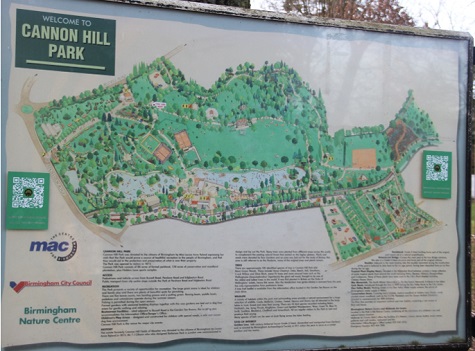
Cannon Hill Park 


The inspiration for this series came about as I spent time looking through many of the photographs, some 10,000 plus, that I have taken over the years via my editorial roles. These began at Pitchcare in 2002 and have been followed by working for other trade titles such as Landscape & Amenity Product Update, Turf Matters and latterly TurfPro and Service Dealer.


Sifting through thousands of photographs, I came across many of places I have visited, people I have met and the many factories, places of work and shows I have attended.


It will be quite something to revisit and bring back some memories to celebrate the achievements that have being created throughout the last 50 plus years.


However, I think it makes sense to give you a taste of how my career unfolded and how I came to become editor of TurfPro, enabling me to help promote this diverse industry.


After getting my City & Guilds qualifications, I spent the next few years working for the council at various key parks around the city - notably their premier facility, Cannon Hill Park covering 250 acres. This consisted of formal, conservation, woodland and sports areas.


When I worked there between 1977-1981, we had over 50 staff, we had glass houses and propagated all our own spring and summer bedding plants. We also provided and grew decorative plants and flowers for display in the council buildings, winning silver and gold medals for our planting displays at Chelsea Flower Shows.  Whilst working for the council I did spells working at other council facilities and Coxmoor’s Golf club as an assistant greenkeeper. 


In 1983 I left the council and moved to Portsmouth to take up the post of head groundsman at Portsmouth FC. Here I had the opportunity to work alongside Alan Ball who was youth team manager at the club and went on to become manager of the club.


Me and Alan Ball at Fratton Park 


Alan use to invite me along to play five-a-side in the club’s gym under the stand. We used to play against the apprentices. During that time I got to know many of the players including Kevin Ball, Alan Biley, Mark Hatley, Neil Webb and David Thomas who I still keep in contact with today.  In 1984 I moved to become assistant HG at Waterlooville Golf Club. 


However, in 1985 I Joined the PSA MOD looking after several military sites that included HMS Dryad, HMS Mercury, Roussillon Barracks Chichester, Tangmere Aerodrome and Thorney Island where I was employed as GMO responsible for everything green and growing. I managed several contractors who were tasked with maintaining these land assets, one being Torin Contractors who at the time had a very young supervisor, David Roberts, working for them. 


This was the very same David Roberts who eventually ended up working at Charterhouse School and Liverpool FC as head groundsman. David has recently left Liverpool and set up a training academy in Portugal. 


After several fantastic years working for the MOD and having started a young family, in 1990 my wife Dawn and I decided to move back to the Midlands to be near family and friends. I took up the post of parks manager with Telford & Wrekin Council overseeing sports pitches, play areas and public open spaces.


In 2001 I left the council as frustrated parks manager and choose to re-educate myself, ending up on a degree of master of science course ( Sports Surface technology ) at Cranfield University. Once qualified I was head hunted by David Saltman of Pitchcare who wanted me to become the editor of the magazine. So in 2003 I joined them, working alongside Dave, John Richards, and Alastair Battrick with the aim to offer a new membership vehicle for grounds professionals at the time there were only a couple of magazines supporting the industry. However, David saw the potential of the world wide web, realising the potential to offer an online  platform / shop for practicing grounds people. In the twelve years I was editor, the company grew considerably from the initial four full time staff to a company boasting well over 100 staff members. In 2020 Pitchcare, part of the Maxwell Amenity group, was sold to Agrovista.


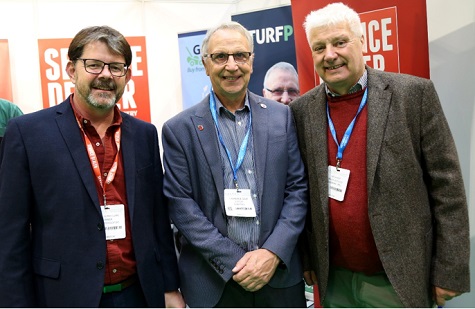
TurfPro owner Duncan Murray-Clarke, me and Keith Kent


Since leaving Pitchcare in 2015, I have gone self-employed and am currently kept busy running my own gardening business, volunteering as a Green Flag Judge, RFU Pitch advisor and now working for TurfPro as editor and Service Dealer magazine as one of their writer contributors.


My role of editor over the last 22 years has been amazing, allowing me to keep up with the latest technologies, see and try-out the latest machinery - and again, most importantly, meet the people who make this industry tick.

 
So, I am looking forward to sharing some of my memories regarding the fascinating journeys and fortunes of many of the practicing turf professionals I have met along this formidable time span.