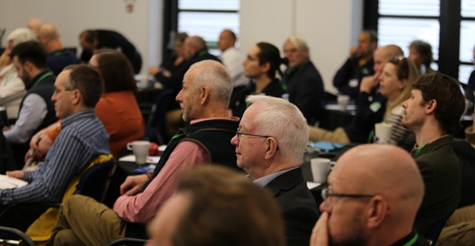
Last week I attended The Amenity Forum’s Annual Conference, held at the British Motor Museum in Gaydon, Warwickshire.
The Amenity Forum is the Voluntary Initiative for the amenity sector, who cover all aspects of weed, pest and disease management.
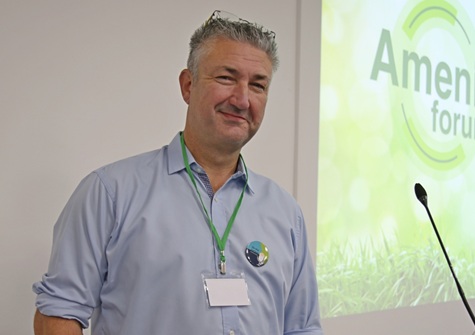
Ian Graham is the Forum’s current Chairman and it was he who welcomed everybody and set the scene for the day’s conference.
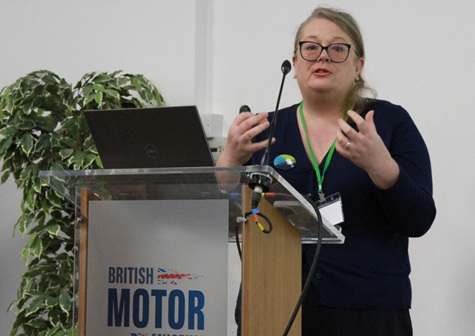
First up to speak was Corrina Urquhart, the new CEO for BASIS - the independent standards setting and auditing organisation for the pesticide, fertiliser and allied industries.
Corrina was keen to talk about the changes taking place to modernise the way BASIS operates. She spoke about their recent structural and staff changes, along with the new developments such as the BASIS CPD app which has gone live. This makes it easier to access and update your CPD information.
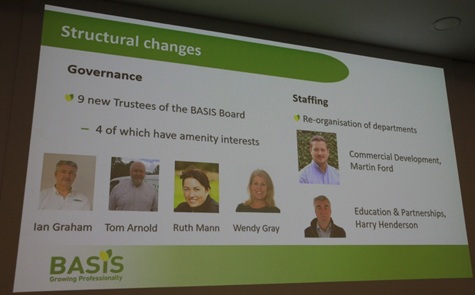
The formation of a new board has allowed BASIS to serve a much broader range of sectors – including amenity, pest control and agriculture.
Corrina also spoke about working more closely with the likes of GMA, BIGGA and BALI and other prominent organisations, to ensure that there is the potential for all training and educational opportunities and CPDs to be brought under the umbrella of BASIS.
I personally believe this would be a good thing for our diverse industry. It would be a game changer for all who work in our sector to have a clear path of education, training and valued CPD points.
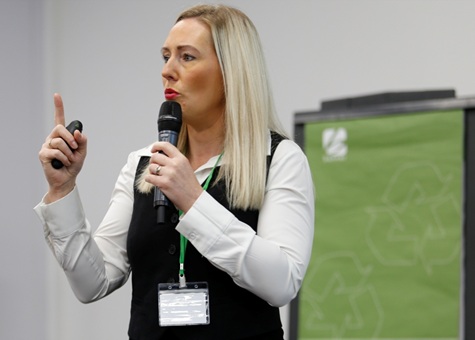
Next up was Kelly Marie Clack, technical & research lead for Origin Amenity who gave a fascinating insight to the challenges faced by professional and volunteer grounds personnel who look after sports and amenity facilities. She focused on the impact of climate change on turf management, highlighting significant changes in temperature, rainfall, and humidity over the past 30 years. She said how spring temperatures rose by 1°C, and rainfall decreased by 30%, affecting grass growth and disease management. The conversation emphasised the need for new technologies and integrated pest management (IPM) strategies to address emerging diseases like pythium and dollar spot. Key points included the importance of using the right nitrogen sources, moisture management, and pigment technologies to improve photosynthesis and stress resistance.
Kelly’s key message was that we as an industry must work together. Collaboration among industry professionals was deemed crucial for our future success.
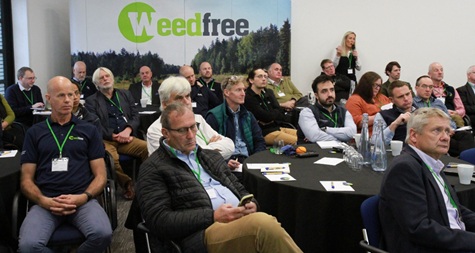
Her key message was “If we're going to look at change, we're going to look at challenge, we're going to look at innovation, and we're going to look at new technologies that we may see coming into the industry. And then think about what that next chapter means, because that next chapter isn't one person alone, it's a collaboration of everybody in our industry, from machinery, from technologies, from fertilisers through to what we're doing on education here today. So, we've got to work together to get to that next chapter and protect the industry that we all love so much”.
Kelly’s presentation really emphasised the complexities of managing a natural turf playing facility. She stressed how it takes much effort, knowledge, experience and investment to overcome the ongoing challenge of expectation faced by our practicing grounds professionals.
She also said how industry collaboration is crucial in addressing changing weather patterns by bringing together expertise from different sectors. Key strategies include:
- Sharing research and data on emerging diseases and climate impacts
- Developing integrated pest management (IPM) strategies that adapt to new environmental conditions
- Collaborating on innovative technologies like disease-resistant grass cultivars, advanced pigments, and bio-control products
- Creating joint research initiatives to understand and mitigate the effects of changing weather on turf management
- Developing comprehensive approaches that combine environmental management, nutrition, and technological solutions
The goal is to create a unified approach that helps turf managers maintain high-quality surfaces despite increasingly unpredictable climate conditions.
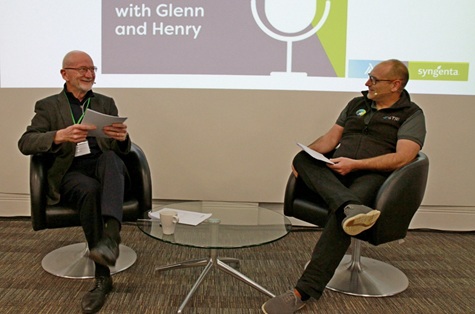
It was then the turn of Henry Brechelet, ICL, and Glenn Kirby, STRI to give us an insight into the success of their recent ICL / Syngenta popular podcast performances. Reconstructing a live podcast in front of the attending conference delegates, both Henry and Glenn talked about the initial impact of the podcast in terms of its value for technical training and agronomy. The podcast, initially aimed at 300 listeners, grew to 600-750 monthly, with 60-70% retention. It was popular among professionals, including reps and lecturers, and influenced agronomy practices. Metrics showed longer episodes were more effective. The podcast led to the development of the Syngenta Turf Advisor app, which has seen significant downloads. It emphasised the importance of data-driven advice and collaboration. The speakers highlighted the podcast's role in personal development, industry challenges, and the need for unified initiatives.
All in all, their live podcast was a refreshing way for two well respected industry agronomists to get across valuable information and guidance for turf practitioners.
We then had an interesting insight into the turf growing and harvesting industry by Richard Owens from Tillers Turf. Richard spoke in depth and provided an overview of the company's operations, highlighting its history, scale, and diversity.
Established in 1987 and now covering nearly 900 hectares, Tillers grows 26 different turf products, including golf turf and wildflower turf. The company employs 29 staff with over 122 years of experience and uses 19 miles of irrigation pipe annually. And have a licence to extract and use 1.6 million cubic metres of water annually if required.

Tillers also emphasised their sustainability efforts, including precision farming, water management, and the use of GPS technology. Challenges include rising costs, labour shortages, and the impact of artificial turf on the environment.
We also had a film of the work involved growing, harvesting and laying a new natural hybrid turf playing surface at the new Tottenham Hotspur stadium.
Just before lunch Ian Graham then gave a short presentation on what is sustainability and are we achieving it? He showed a few photographs of weeds on the public highways / pavements. He said that there is generally a higher cost involved in using alternative methods to pesticides. He also spoke of trials using acetic acid, hot foam and electricity, plus talked about the use of brushing techniques.
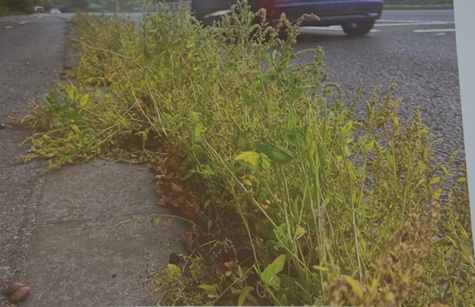
In summary, the discussion focused on sustainability's three pillars: environmental, social, and economic. Key points included the challenges of using organic fertilisers, the push for Integrated Pest Management, and the environmental and cost implications of alternatives like acetic acid and hot foam. The Cardiff trials highlighted glyphosate's cost-effectiveness and high customer satisfaction compared to acetic acid and hot foam. Concerns were raised about a bill in England prohibiting professional plant protection products post-2028. The meeting concluded with a call for better integration of new practices with existing methods to support the sector's core services.
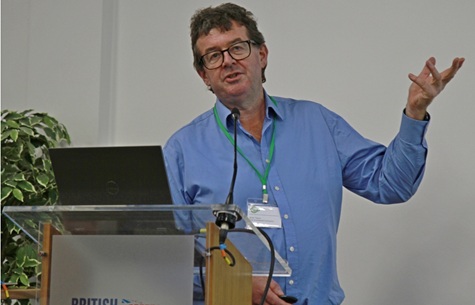
After a refreshing lunch break, the afternoon session began with interesting presentation by Brian Taylor from the Knotweed company who spoke about new techniques for dealing with invasive weeds.
Brian spoke of the success of both the Dutch "roots reset" and Norwegian steam stabilisation techniques. The roots reset method involves cultivating soil, incorporating a special fertiliser to promote soil bacteria and fungi, and sealing it with an airtight barrier for 9-12 months to eradicate weeds like Japanese knotweed. This method is herbicide-free but costly and time-consuming. The steam stabilisation technique uses high-temperature steam to kill weeds, with early results showing effectiveness. Both methods have potential but are expensive and require large-scale application, making them more suitable for construction sites than residential areas.
For me it reminded me of the old soil steam sterilisation methods we used for potting composts back in the 1980s.
The final presentation of the day centred around a new mapping application for documenting and recording spray application works by Andy Hogan of AGTerra Technologies. He spoke about Map It Fast, a mapping solution for field workers, particularly noxious weed sprayers.
The app allows users to collect and view data on a map, including geo-tagged photos and custom forms. It integrates with Bluetooth devices called Action Mappers to track spray data accurately. The software also includes a plugin called Spray Logger for compliance documentation.
Andy demonstrated the app's functionality, including data export to Google Earth. Interested parties inquired about the product's use in the UK and its integration with Rural Green software. Andy offered to connect potential customers with existing users for further insights into the company’s mapping technology.
To wrap the conference, Ian opened the floor for discussion about the role of the Amenity Forum and what its future aims and objectives should be?
The discussion focused on the government's role in pesticide use, emphasising the need for scientific data to support decisions, highlighted the importance of integrated pest management (IPM) and the safety of glyphosate, noting its effectiveness in water.
Some delegates spoke of the practical challenges of maintaining highway networks without glyphosate, citing increased costs and inefficacy. Another delegate spoke of the National Action Plan's 10% reduction target for pesticides by 2028. The consensus was that glyphosate is crucial for IPM and that the industry needs to better communicate its benefits to counteract misinformation from activist groups.
Based on the meeting discussion, the next steps for the Amenity Forum include:
- Actively educate local authorities and the public about integrated pest management, emphasising the scientific evidence supporting responsible pesticide use.
- Develop a proactive communication strategy to counter misinformation from groups like Pan UK, focusing on the safety and necessity of glyphosate in certain contexts.
- Engage with local councils to explain the infrastructure and financial implications of completely eliminating pesticides.
- Create a clear, balanced message that highlights the middle ground approach - integrating sweeping, maintenance, and targeted herbicide use.
- Gather more input from industry members to ensure the forum's messaging represents the collective perspective.
- Be prepared to speak out against extreme positions and provide factual, data-driven information about pesticide use.
The overall goal is to be more vocal, transparent, and educational about the role of pesticides in integrated pest management.
In essence it is vitally important that the Amenity Forum continues to show the value of good practises and must continue to engage with government bodies to demonstrate the value of using the right IPM strategies to control weeds pest and diseases.