FUSARIUM FLARE-UPS REPORTED
Potential pathogen risk from infection sources in thatch
Outbreaks of Microdochium Patch (Fusarium) reported flaring up on turf surfaces over recent weeks has highlighted the potential pathogen risk from infection sources in thatch. As autumn soil temperatures cool, there is now limited opportunity for recovery from disease damage before the winter.
Protecting turf from infection going into the winter will be key to maintaining consistent surface quality through the season, advises Daniel Lightfoot of Syngenta.
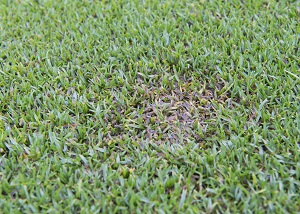
Microdochium spreading on green collar
Speaking at a November breakfast meeting for greenkeepers and groundsmen at Purdis Heath Golf Club near Ipswich, he highlighted the plan for a proactive contact+ fungicide strategy, alongside effective cultural controls.
“Reducing the infection pressure from disease spores cuts the risk of attack, and gives any fungicide application the best chance of delivering longer lasting results,” he said. “Treatment timing and application techniques have huge influence in helping turf resist infection through periods of weather conditions favourable to disease.”
Daniel reported new trials results from STRI that had demonstrated Medallion TL application starting at the onset of periods of increased disease risk, but before serious effects were seen, maintained the best turf quality scores through the winter.
“Using a proactive three-spray trial programme, at 28 day intervals, Medallion TL plots still had zero infection at the end of January – over 50 days since the final application,” he said. “Untreated plots had reached 16% surface infection over the course of the winter.
“With the turf protected, any initial infection cleared up, and then stayed clean right through the winter,” commented Daniel. “It further reinforced the advice to use fungicides preventatively at the very first signs of disease, and to maintain protection through risk periods over the winter.”
He pointed out that the contact+ activity of Medallion TL was especially well suited to the seasonal timing, to both target disease pathogens in the thatch that would reduce infection pressure, and to protect the leaf from attack.
“The unique action of Medallion TL specifically triggers disease spores to absorb water, to the point that they explode,” he explained. “The activity is equally effective against spores already in the thatch, and to hit spores landing on the leaf to prevent them from germinating and getting into the plant.”
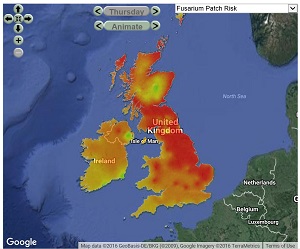
Syngenta's Disease Risk Map for November 2016
The formulation of Medallion TL has been developed to achieve complete coating of the leaf surface when applied, compared to the blocky composition of older contact fungicides that could result in gaps in the surface protection.
In the longer term, Daniel highlighted that Integrated Turf Management practices would help to get the best performance from fungicide applications. Keeping surfaces dry, by physically switching off dew and improving air flow and light, for example, created conditions less conducive for disease. Removing thatch had a double benefit of reducing the host of disease pathogens and also enhancing surface firmness. Appropriate nutrition to maintain plant health would also reduce susceptibility.
“All the ITM practices help to enhance turf health and make plants better able to resist the effects of disease infection. Then, during periods of stress or high risk, the application of fungicides will give longer lasting and more effective results.
“ITM is an essential component of the disease control strategy, and a key part of the Syngenta fungicide philosophy that can be tailored to the needs of each individual situation; to use as little as possible, but as much as necessary,” he added.
Daniel cited Medallion TL is an example of one of the new generation of fungicides for turf from the Syngenta R&D pipeline that offers better results over older chemistry, but at far lower rates of active ingredient applied.
“The company’s commitment to turf R&D and support for the industry has created new and more effective solutions to aid better turf management,” he said. “In the current changing climate, new products, innovation and development will be essential for the aim of continuously getting better in the future.”
|