EDITOR'S BLOG
SQUARE PREPARE
Preseason works
by TurfPro Editor, Laurence Gale MSC, MBPR
 
Laurence Gale MSC, MBPR

To coincide with my feature article published today on cricket through the decades, I thought I would discuss the upcoming spring renovations and pre-season rolling.


To coincide with my feature article published today on cricket through the decades, I thought I would write something about the upcoming spring renovations and pre-season rolling of cricket squares. 


Having read an interesting article called ‘How well do you know your square?”, penned by Bob Stretton, my thoughts turned to the up-and-coming weeks we have left to prepare the square for the start of a new playing season.


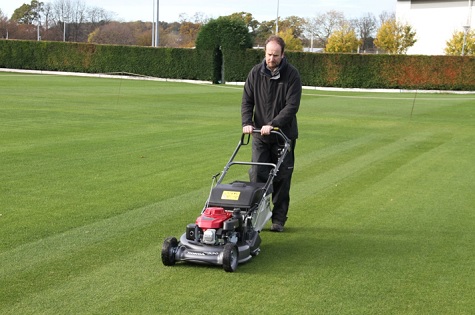
Rotary mowing of the square 


As thoughts turn to preseason preparations maybe there’s one question that we all should be asking: How well have you planned your spring renovations and fixture programmes for the forthcoming season?


As Bob pointed out in his article, cricket squares and their pitches have been the discussion in many circles by people connected with the game since time and immemorial, so, it is inevitable that the controversy over the standard of cricket pitches will continue further into time, gaining momentum.


He also says, “Of course to the layman, and this includes all persons not fully versed on the practicing of 'Groundsmanship;; the idea of preparing a cricket pitch is to approach a 22yd strip of grass with a hose pipe, bag of fertiliser, garden rake and a mower, and, If possible the largest heavy roller to be invented. Unfortunately it is not quite as simple as that as there’s no substitute equal to living turf on which cricket is played."


I firmly believe clubs are better educated and aware of the resources than they used to be. Machinery options and the information that is now available for clubs to ensure they are going about the maintenance of the cricket facilities on a more consistent basis, has much improved.


Geographically every ground is different; the soil type, topography of the site and its levels will be significantly different to other clubs. And the current condition of the square will be generally down to the level of maintenance being achieved. 


It has been normal practice for many years for clubs to undergo spring renovations that help restore grass health and address any winter damage. 

Overseeding helps fill in bare patches, encouraging dense and even growth essential for a smooth, consistent playing surface.


To get the square prepared for the onset of a new playing season, it usually involves applying some iron to kill off any moss, a light scarification / verti-cut to remove thatch, some light top dressings of loam to top up levels, followed by some overseeding and an application of fertiliser.


Once these renovations have been completed, work will then centre on pre-season rolling work to firm up the playing surfaces. All this work, of course, can be compromised by the ever-changing weather we have at this time of the year.


Preparing a square for the start of any season, from an experienced point of view, is subjective. Rolling the square at the right time is just one key to success, finding the right balance is the deciding factor. 


It has been proven though that rolling for too long wears the life out of the turf. The old school of thought was to roll, roll and roll some more. Producing a flat dead pitch with no pace or bounce. A study by Cranfield University on, Guidelines for Rolling in Cricket has shown that this is not the case.


The GMA also have information about rolling cricket pitches.


The popular Turfcare Blog also has guidelines on rolling cricket pitches well worth a read 


Pre-season rolling plays a major part in the successful process of cricket pitch preparation. It can improve the performance by consolidating the soils, reducing live coverage and producing a smoother uniformed surface.  


The maximum achievement for soil density is the function of its clay content. As clay content increases, the soil density increases with compaction. Higher clay content pitches 27- 35% require more intense working regimes. The availability of roll-on, roll-off covers will aid the rolling process during pitch preparation by retaining moisture in the soils, an element in the preparation for that perfect pitch.


At the end of the day, it is important that we carry out these tasks to optimise the performance of the pitches for the forthcoming playing season. All the hard work done in September and in the spring sets up the ground for a challenging summer of cricket. I will follow up this article next time, by talking about a 10-15 day preparation of wickets for matches. 


Good luck with your spring renovations in the coming few weeks.

NEWS
WIMBLEDON TO INSPIRE FUTURE TURF PROFESSIONALS
Iconic venue to host event
 
All England Club

In our first WEB ONLY story Schools Into Stadia initiative aims to inspire the next generation of professionals and showcase the exciting opportunities within the sector.


WELL-KNOWN COURSE SWITCHES BRANDS
Complete machinery overhaul
 
Some of the new fleet

In our next WEB ONLY story golf club says technology, reliability and dealer service drove the decision to remove and replace its existing machines.


GGM TO GROW THIS SPRING
Opening new service centre
 
The GGM team

GGM says the development demonstrates their commitment to service excellence and support for their customers and suppliers.


GGM Group say they are continuing to demonstrate their commitment to service excellence and support for their customer and supplier partners with the announcement of its intention to open a new service centre this Spring, in a move that they say will also bring jobs to the area. 


Chris and Hilary Gibson (right) with GGM sales managers Andy Woolley and Jack Fielding at The Great Yorkshire Show in Harrogate


The forthcoming launch of the new centre, in the Wakefield MBC area, will have a focus on serving customers throughout Yorkshire in groundscare, agriculture and arboriculture with after sales support, including mobile engineers and spare parts supply.


GGM say they have served Yorkshire for many years and with a growing portfolio of Yorkshire-based customers, the service centre aims to localise and improve customer support and their ability to meet customer needs in the region. Drawing on the vast experience and knowledge of the teams in Colne and Haydock, the company aims to create a team to ensure customers will be looked after at every step of their journey.


Chris Gibson, managing director of GGM Group said, “This an extremely exciting time for the GGM Group. We already have a strong customer base in Yorkshire and it seemed the right time to enhance our customer service offering in the region. As a business, our competent team are committed to delivering first class customer service and support and the Yorkshire service centre will only add to this”.


GGM Group were awarded the 2024 Service Dealer UK Professional Turf Care Dealer of the Year award - which they also picked up in 2014 and 2019. The company also achieved the Kubota Gold Plus Service Excellence Standard in 2023.

TECHNICAL ASM APPOINTED
Responsible for supporting golf and sports clubs
 
Philip Mayes

New man says he will be working closely with distributors, greenkeepers, and sports turf managers to provide technical guidance and tailored solutions.


ICL Turf & Landscape has appointed Philip Mayes as technical area sales manager, South.


In this role, Philip will be responsible for supporting golf and sports clubs across southern counties, predominantly Surrey, Berkshire, Hampshire, and West Sussex, working closely with distributors, greenkeepers, and sports turf managers to provide technical guidance and tailored solutions.


Philip brings a wealth of experience in sports turf management, with a strong background in golf course maintenance and education. His career spans both the UK and the Middle East, where he has led high-profile projects in golf and sports turf. He holds an MSc in Horticulture (Sports Turf Management) from the University of Reading and a BSc Honours in Turfgrass Science and Golf Course Management from the University of Central Lancashire.


Philip’s UK-based experience is extensive. He spent 11 years as a senior lecturer and programme manager at Merrist Wood College, training future turf professionals in sports turf, landscaping, and grounds maintenance, as well as golf course architecture and construction. Additionally, he held the positions of deputy head greenkeeper and assistant greenkeeper at golf clubs, alongside other turf management roles at various sporting venues.


Commenting on his new role, Philip said: “I’m excited to join ICL and help golf and sports clubs achieve the highest turf standards. With experience in golf course management, project execution, and education, I understand the challenges turf managers face. I’m looking forward to offering practical, research-driven solutions that improve playing surfaces.”

FIRST INTERNATIONAL MASTER SALESPERSON IN THE UK
Award bestowed by Toro
 
The award was presented recently

This is the first time the manufacturer has presented such an award outside the USA and only three are awarded a year globally.


Richard Wood from Reesink South East has been named Toro International Master Salesperson by Toro. This is the first time the manufacturer has presented such an award outside the USA and only three are awarded a year globally.


Winner Richard Wood, centre, with from left, Reesink Turfcare’s Jon Cole and Alastair Rowell and from The Toro Company Amy Dahl and Greg Lawrence


Amy Dahl, vice president of international business at The Toro Company, presented the award to Richard under the guise of a launch event at BTME, with the Reesink UK team and an extensive Toro international team present. 


She says, “We looked at all salespeople across the international division. Richard’s passion for the Toro products and his customers have seen him achieve over 50 percent market share in his area. With 30 years’ experience in the industry and 12 years at Reesink, he fits all the criteria for this prestigious award.”


The company says the International Master Salesperson of the Year Award is more than just an acknowledgment of high sales; it is a recognition of the ability to understand and anticipate the needs of customers. 


Jon Cole, divisional business manager at Reesink Turfcare, said, “Richard is consistent with his sales and has grown market share in what is a very competitive area. His customers feel he goes the extra mile for them every day. It probably hasn’t sunk in for him yet how much of a big deal this is globally.”


Richard’s three decades of experience prior to Reesink Turfcare come from dealer JSM, four years selling amenity chemicals and fertilisers for Sheriff Amenity, and before that sales jobs for other competitive turfcare machinery manufacturers. 


Richard said, “Winning this award really was totally unexpected - I was shocked! It’s done as part of a team with my depot at Sheffield Park and it’s going to be exciting sharing the news with everyone.”


Amy says: “Richard is so humble. I know he says he just goes out and does his job, but he couldn’t be more deserving.”


Alastair Rowell, managing director of Reesink UK, added, “Richard has an obvious passion for the Toro products and his customers and makes a valuable contribution to the industry. He goes above and beyond in his job and his work and it’s this commitment that has resulted in sales excellence and customer satisfaction for so many years. He’s done himself and the company incredibly proud, and I am proud to be his boss.”

JOBS
ADVERTISE YOUR JOBS HERE
Amazing success rates!
 
Advertise your jobs on TurfPro Weekly Briefing

Advertise your recruitment needs on TurfPro Weekly Briefing and reach our targeted audience of recipients every week.

Contact Nikki Harrison for details - 01491 837117


PREVIOUS FEATURES
EDITOR'S BLOG ARCHIVE
Catch up with Laurence Gale's recent blogs
 
TurfPro editor, Laurence Gale

Want to catch up with one of editor Laurence Gale's blogs? Here is the place to do so.


TURFPRO FEATURE ARCHIVE
Find our previous features here
 
TurfPro Feature Archive

If you want to catch up with any of TurfPro's previous features, here is the place to do so.


A LOOK AT THE OPTIONS
When implementing an integrated approach


50 YEARS OF FOOTBALL MANAGEMENT
Part two


50 YEARS OF FOOTBALL MANAGEMENT
Part one


57 YEARS & COUNTING!
My life in the industry


DEMONSTRATING AND APPLYING AN INTEGRATED APPROACH
New series of articles for 2025


IMPLEMENTING SUSTAINABLE PRACTICE
Examples from across the year


VINTAGE PUSH MOWER USE
Enthusiast maintains lawn the old fashioned way


SUSTAINABLE AMENITY MANAGEMENT
Principles and practises


PLACING URBAN GREEN SPACES AT THE HEART OF INFRASTRUCTURE
Midlands Parks Forum's annual conference


RAISING THE VOICE
At the Amenity Forum's annual conference


SUSTAINABLE PARKS
Parks For London case study


WHY GRASSROOTS RUGBY IS IN DECLINE
A steady drop off in participation.


SEEDS OF SUSTAINABILITY
Focus on a major supplier of grass seed and related products to the amenity sector


ON TEST
STIHL BGA 300 cordless leaf backpack blower


ON TEST
EGO Multi-tool


PUT THEM ON THE TOOLS!
Time for an attitude change


SUSTAINABILITY IN THE TRAINING SECTOR
Grasping the challenge of encouraging more sustainable practice


SUSTAINABILITY IN LOCAL AUTHORITIES
Lessons learnt and experiences


SKILL SETS NEED RECOGNITION
Turf professionals are underappreciated


GREATER RESPECT FOR GROUNDS STAFF MIGHT MAKE ALL THE DIFFERENCE
To the recruitment crisis


A COMPETITIVE SALARY
Why employers should advertise the salary when recruiting new staff


ON TEST
Makita XGT UV001G lawn scarifier


AN EXAMPLE OF SUSTAINABILITY IN MACHINERY SUPPLY
Focus on Kubota


MY PERSONAL GREENKEEPING PHILOSOPHY HAS NEVER CHANGED
I don't follow any set program


SUSTAINABILITY IN LANDSCAPING
A substantial element of amenity activity


IS IT TIME TO SAY NO TO 'NO MOW MAY'?
Any real benefits?


SUSTAINABILITY IN OUR PARKS & PUBLIC GREEN SPACES
Meeting the challenge


THE PATH TO WIMBLEDON
For groundstaff member, Conrad Cavil


ON TEST
EGO LBP8000E backpack blower


SUSTAINABILITY IN THE LAWN CARE SECTOR
A key consideration


BEEKEEPING IN COMMERCIAL ENVIRONMENTS
The current situation


SUSTAINABLE PRACTICE IN THE AMENITY SUPPLY SECTOR
Optimising land use through integrated solutions


SUSTAINABILITY IN THE GOLF SECTOR
Focus on BIGGA


THE SEARCH FOR SUSTAINABLE PRACTICE
Bringing together key points


DEVELOPING SUSTAINABLE SOLUTIONS FOR GOLF
R&A are supporting clubs


GETTING THE MOST OUT OF EVERY POUND OF BUDGET
A course manager's view


A NEWFOUND APPRECIATION FOR ALL VOLUNTEERS
Who look after grassroots pitches


SUSTAINABILITY & THE UK ACTION PLAN
For weed, pest and disease management


CONCERN FOR PARKS FOLLOWING COUNCIL BANKRUPTCIES
What does the future hold?


TAKING A GLOBAL LOOK AT SUSTAINABILITY
Is the rest of the world also driving towards sustainable practice?


RENOVATIONS, PLAY AND THANKS
On my mind this week


SUSTAINABILITY – IMPLICATIONS FOR TRAINING & EDUCATION
Set to play a crucial role going forward


TULIP TREE
Liriodendron tulipifera


LYDIA BROOM
Genista lydia


THE LAWN AND ITS VALUE
Changing attitudes


GIANT HOGWEED
Invasive and potentially harmful


LIFE-CYCLE ANALYSIS & SUSTAINABILITY
Considering every stage of the journey


NITROGEN USE EFFICIENCY
The most important nutrient


BERBERIS THUNBERGII
A shrub that has stood the test of time


ENSURING FUTURE PROSPERITY
Advice imparted at road shows


INNOVATION & SUSTAINABILITY
A key focus


PHOTINA RED ROBIN
A sensational flowering shrub


VALUING THE GRASSROOTS
We must not overlook those who maintain these grounds


MANAGING WEEDS SUSTAINABLY
In amenity spaces


DETECTING NUTRIENT DEFICIENCY SYMPTOMS
In turf plants


SPRING RENOVATIONS UNDERWAY
A crucial period


SUSTAINABILITY IN SUPPLY
A focus on those who supply essential inputs to our sector


CHANGING CLIMATE
Is a borehole the key for clubs?


SUSTAINABILITY AT THE SHARP END
How to put into practice when budgets are tight?


ANOTHER NAIL IN THE COFFIN OF GRASSROOTS RUGBY
Clubs are struggling


SUSTAINABILITY IN PRACTICE
Seeking transparent and robust supply chains is essential


TIME FOR ACTION
To reverse recruitment crisis


CONTROLLING COSTS
Planning is crucial


THE SEARCH FOR SUSTAINABILITY
What exactly does the term mean?


CARING FOR THE GRASSROOTS
From volunteers to contractors


DEFRA IS LETTING DOWN THE COUNTRY
Complete failure to address the plastic grass debate


WE CAN ALL DO MORE
To aid biodiversity


MY LIFE IN GREENKEEPING
With Bruce Cruickshank


LEVELLING UP, GETTING SMARTER & GETTING AHEAD
Parks require so much more funding


SWITCHED ON FOR HARD WORK
Putting trimmers through their paces


MACHINERY HIGHLIGHTS
At this year's show


MY SALTEX
Daniel Lewis​, Manchester City Football Club


AWASH WITH LEARNING OPPORTUNITIES
Two months till showtime


LOOKING BACK, LOOKING FORWARD
Priorities for the amenity sector


THE DECLINE OF ‘PARKITECTURE’
A symptom of the state of parks in 2022


DEVELOPERS SHIRKING GREEN SPACE RESPONSIBILITIES
Lack of financial commitment


TIME TO COME TOGETHER
For the good of the industry


THE DEATH OF GRASS ROOTS CRICKET
Gathering apace?


ROUTES INTO THE INDUSTRY MUST BE ENSURED
Q&A with David Fisher, Lantra’s head of industry partnerships


STRONG VIEWS ON CRICKET PITCH PERFORMANCE MARKING
A bone of contention


A PREMIUM PRODUCT
Delivered at Naas Golf Club


THE GREEN REVOLUTION
And Esker Hills


MAKING A CHANGE
Laytown and Bettystown Golf Links


A DAY AT THE RACES
Naas Race Course


WORKING TOGETHER AS ONE VOICE
How the industry needs to proceed


OVER 175 YEARS OF EDUCATION
Wesley College


ELECTRIC EXCITEMENT
Dennis's Ian Howard talks electrification


THE HOME OF CORK GAA
Páirc Uí Chaoimh


LONG POLE BATTERY HEDGE TRIMMERS TESTED
STIHL HLA 66 and HLA 86


OVER 800 YEARS OF HISTORY
Johnstown Castle and Gardens


A CLUB GONE WILD
Kilkenny Golf Club


A GOLF COURSE IN THE GARDEN OF IRELAND
Woodenbridge GC


80 YEARS YOUNG
Charleville Golf Club


AN UPLIFTING EXPERIENCE
Bunclody Golf & Fishing Club


GETTING BACK TOGETHER
Albeit gradually . .


GO WEST
Inishturk GAA pitch – one of the most westerly sportspitches in Europe


WORKING ON A TIGHT BUDGET
Nenagh Golf Club


ON A MISSION
Wrekin Golf Club aiming to enrich wildlife and fauna


WILD AND WONDERFUL
Design By Nature


LEARNING HOW TO SURVIVE
Abbey Par 3


TACKLING OBESITY
Vital that schools can provide sport


A LIFETIME OF LEARNING
Vital for turf professionals


CELEBRATING 125 YEARS
Tullamore Golf Club


UNIVERSITY CHALLENGES
At Trinity College Dublin


BLENDING THE OLD WITH THE NEW
Bray Golf Club


A WELL POLISHED COURSE!
Ierne Social And Sports Club


IDENTIFYING THE TRUE VALUES
Of grounds maintenance


THE INDUSTRY WILL CHANGE & ADAPT
But it will survive


WIRRAL GOLF COURSES SAVED
Renewed hope and optimism for the future


GREEN SPACE CONTRIBUTION TO WELLBEING IS UNDERVALUED
Parks invisible on national agenda


A SHINING LIGHT IN IRELAND'S SUNNY SOUTHEAST
Wexford Golf Club


GREEN SPACES DO NOT LOOK AFTER THEMSELVES!
Keith Kent says we must invest in people


WE SHOULD TELL THE WORLD ABOUT THE UK INDUSTRY
Right time for all sides to come together


SOIL LIFE IS PRECIOUS
Good-quality soil can help save the planet


MORE THAN JUST CUTTING GRASS
Encouraging the next generation


A BUZZ FROM DOING THE JOB
Wide experience of the turf grass industry


PAYING THEIR WAY
Low wages is the bane of the industry


AMENITY MANAGEMENT IMPACTS US ALL
Professor John Moverley


CARING FOR PARKS OF ALL TYPES
Mary Worrall


TOP FIVE FRUSTRATIONS FOR CRICKET GROUNDSMEN
What causes you the most frustration in your role?


PROFESSIONALS AT THE CUTTING EDGE
Vic Demain and Phil Sharples


BOWLS CLUBS IN PERIL
A sad decline


A VERY SPECIAL INDUSTRY
Loz looks back


SNEAK PEAK AT A ROBOTIC "GAME CHANGER"
Commercial model capable of covering 50,000 m2 teased


HALESOWEN PICK A BIG ROBOT UP FRONT
Invest in mowers


COMPRESSED AERATION
The new way


PARKS MATTER MORE THAN EVER
Recent sector developments


ON TEST
STIHL blowers


THREE CORE VALUES TO SHAPE OUR INDUSTRY
Real concerns for the future


ENGLAND'S GREEN SPACE GAP
A split along racial lines


ON TEST
EGO STX3800 strimmer with RTX2300 Rotocut head


A SECTOR FACING IMPORTANT TIMES
Review of the National Action Plan


PARKS MATTER
The role of public parks in the recovery: a discussion paper


A UNIQUE SPORTING VENUE
Wormsley private estate


A BTME OUTDOORS?
A good bet for the industry


PARKS NEED APPROPRIATE POLITICAL REPRESENTATION
Q&A with Philippa Reece, Parks and Foreshore Manager at Adur and Worthing Council


CRICKET LOAM
What does it mean?


A HERCULEAN EFFORT TO GET PARKS BACK TO NORMAL
Q&A with Chris Worman, Rugby Borough Council’s parks and ground manager


ON TEST
STIHL battery products


TURFGRASS STRESS MANAGEMENT
Reactive Oxygen Species (ROS) and antioxidants during biotic and abiotic stress in turfgrass plants


AUTUMN DISEASE MANAGEMENT
The coming months are going to prove very difficult


THE ABUSE OF PARKS . .
Is the abuse of society


WHY PARKS MATTER?
A statement from the Parks Management Forum to the Prime Minister


THE 21st CENTURY PARKS MANAGER
Innovative, creative and entrepreneurial


EAT, SLEEP, CUT, REPEAT!
Cricket under covid


TIME FOR A SINGLE SHOW?
Debate brought back into focus


A CHALLENGING TWO MONTHS
Running golf design projects from home


PRESSURE SITUATION
Cementing the reputation


A CLUB TO BE PROUD OF
10 years at the helm of Olton GC


GAME CHANGERS IN TURFCARE
The day the Lord's outfield reconstruction proved its worth


THE ESSENCE OF ESSENTIAL
Finding a sensible way forward on defining "essential maintenance"


THAT WAS THE YEAR THAT WAS
2001


HOW TO LOOK AFTER A GOLF COURSE WITH NO GOLFERS
Fundamental to the survival of almost all courses, if not of the game itself


RAIN STOPPED PLAY WOULD BE WELCOME
. . along with ‘lunch is being taken early’


PHYSICAL CONTROL OF TURFGRASS PESTS
An urgent problem


A DIVERSE & ENTERTAINING WEEK
Successful BTME 2020


INTEGRATED PEST CONTROL
Opportunity to embrace new methods


ENVILLE ON THE UP
Major investments taking place


GREEN FLAG AWARDS 2019
A great success


U.S PROFESSIONAL EQUIPMENT SHOW EXCELS
Buoyant GIE+EXPO


LEGACY OF THE SOLHEIM CUP
At Gleneagles


A DAY OUT WITH THE LADIES
Behind the scenes at the Solheim Cup


COVENTRY UNIVERSITY'S EDIBLE GARDEN SUCCESS
2006 - present


HAIL THE GRASS MASTERS!
Boorish media comments about pitch quality are wide of the mark


CONTRACTOR SEES MULTI-DISCIPLINE SUCCESS
360 Ground Care serving professional facilities


BUSY TIMES
Judging the Green Flag Awards


TAKING AN INTEGRATED APPROACH
What does it all mean in managing turf surfaces?


UNDER PRESSURE
Dry weather conditions continue to keep turf managers focused on moisture management


EDDIE SEAWARD
Death of Wimbledon’s influential grounds manager


MAJOR NEW IRRIGATION PROJECT
At Top 100 classic Berkhamsted Golf Club


NEW HORIZONS FOR THE HATTERS
Investment paying off at Kenilworth Road


ELIZABETHAN RESTORATION
At Castle Bromwich Hall Gardens


WHAT IS BIOPHILIA?
The vital impact of parks and green spaces on health and well-being


WORM CONTROL
Without carbendazim


THE TRUE COST OF PETROL
Battery-powered outdoor power tools are now turning the heads of professionals


SANDS OF TIME
Sand-based pitches are now the norm in professional sports


WHY DO WE DO THE RIGHT THING?
We must maintain industry standards


CHASING GRASS PERFECTION?
11 things you need to know . . .


MAINTAINING STANDARDS
Q&A with BASIS ceo, Stephen Jacobs


STRI RESEARCH DAY 2018
Hosted at research trial grounds in Bingley


THE MECHANIC
Leicester City FC invest in new role


LORD'S 'GRASS-GUVNOR' TO RETIRE
Mick Hunt bows out after 49 years


HOLLOW CORING & DEEP SCARIFICATION
Is it really necessary?

Side Advert Image


PARTNERS
CAMPEY
 
Campey Turf Care Systems
DENNIS
 
Dennis
Foley
 
Foley Company
HUNTER GRINDERS
 
Hunter Grinders
ISEKI UK & IRELAND
 
Iseki
Kubota
 
Kubota
LANTRA
 
LANTRA
SISIS
 
Sisis
Syn-Pro
 
Syn-Pro
MAJOR
 
Major
Garden trader
 
Garden Trader
PRODUCED BY THE AD PLAIN
The Ad Plain
 
TAP
FEATURE
CRICKET MANAGEMENT THROUGH THE DECADES
Part one
by Laurence Gale, TurfPro editor
 
Rolling

In my years, I have witnessed some great moments and innovations that have changed the way we manage and maintain cricket facilities.


Over the course of the next twelve months, I will be delving into many of my memories, and excursions undertaken, to highlight the management and maintenance our unique sports turf and amenity and landscape sectors. 


This time I look at cricket management through the decades.

 

County game played at Rugby School


My own first-hand experiences of being involved with the maintenance of cricket pitches began when I was working for the PSA, MOD as grounds maintenance officer (GMO) in 1985, in Hampshire looking after military sports facilities. 


HMS Dryad was blessed with the opportunity of using Hambledon cricket ground. Founded in 1750, the club was once the most powerful club in the country and earned its reputation as the “cradle of cricket”.


The club now plays at the idyllic Ridge Meadow - its home since the 1780s. So what a baptism of fire for me, to manage this unique ground. 
Luckily, I was able to utilise a professional sports turf contractor to manage the grounds for navy matches. My other association with cricket was preparing pitches for a number of local authority venues when working for T&WC.



Me, left, with award winners at Lord’s


However, my role of editor and especially being a judge for the prestigious Cricket Groundsman of the Year Awards run by Cricket World and Pitchcare, offered me the opportunity to visit hundreds of clubs up and down the country. I visited most county and test match grounds, along with many high profile and village cricket clubs, gaining a lot of knowledge from talking to the grounds staff.

  
In my years, I have witnessed some great moments and innovations that have changed the way we manage and maintain cricket facilities.


Without a doubt for me, this is one of the hardest turf surfaces to manage. It takes way more time and effort to produce consistent and safe pitches. It has always been a tough challenge to produce a wicket that is good for both the bowler and batsman.


Cricket players more than other sportspeople, can have the tendency to moan a lot more, especially if they have been bowled out or hit for a six, They can blame the wicket or the grounds staff for not producing a decent pitch. 
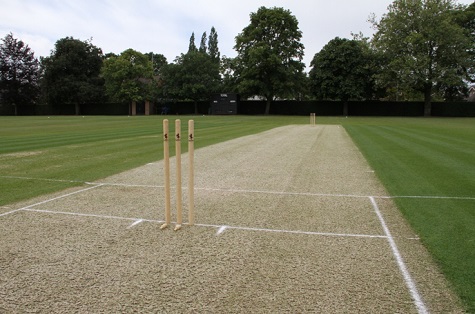


Pitch prepared by Andy Johnson at Bluecote School, Edgbaston 


Having spoken to many turf professionals, it is all part of the job. A they say themselves, they do not know how the wicket will perform until the day of the match. There are too many variables that can influence the condition and playability of the wicket in any given day or time of the year. 


Also the quality of the pitch is influenced by what regimes are carried out and how well the preparation of the wicket has gone, Generally it is expected that most grounds staff like to have a 10-14 day prep programme to prepare a pitch, thus giving them enough time to carry out the necessary rolling, watering and grooming to bring the wicket down from 12mm down to 4mm. Also, in recent years, we have seen turf professionals leaving more grass on and rolling less.


No two cricket groundsmen prepare their wickets in the same way. Each preparation sequence can be dictated by the resources, equipment and time they have to get the job done. Also, the underlying soil type will heavily influence the way the pitch must be maintained and managed. Clay loams can also vary much in clay content.
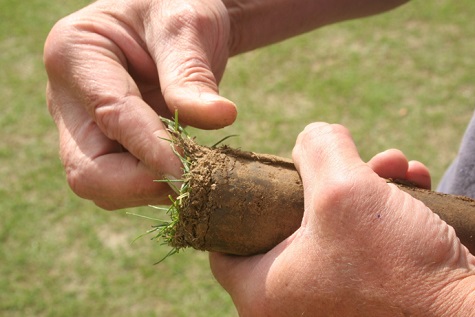


Soil sample 


Soil strength is important when selecting clay loam dressings for cricket pitches. The potential success of the wicket is directly related to the percentage of clay content found in the soil profile of the cricket pitch.


There are several clay loam suppliers in the UK who specialise in blending and mixing loam soils for use in the turf grass industry. The clay content in these products can vary immensely, ranging anything between 22-32%. The larger the percentage of clay content in your soil, the stronger the binding strength will be. However, having the highest clay content is not always the criteria that produces the best pitch.


The extent and quality of work carried out as part of your end of season renovations will have a bearing on how well the wickets will play the following season. The main aims of end of season renovations on a cricket square are to repair damage, remove excess thatch, restore levels and reseed the square.
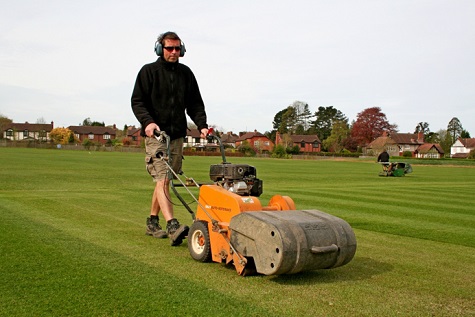


Verti-cutting with Sisis Scarifier 


And finally, several underlying issues could be affecting the performance of the pitches, often caused by excess thatch layers, soil breaks, compaction, levels, dips and hollows, and depth of clay soil in the square. 


Pre-season works programmes will also have a bearing on how well the wickets will play during the season. Quite often the spring weather will dictate what can be achieved.  


The machinery we have today far exceeds what was available in the 1970s. Cricket clubs require some specific machinery or equipment to achieve the appropriate preparation of the square and pitches. 


The square and outfield needs to be cut with a cylinder mower - with a roller required to consolidate the playing surface and a rake/ scarifier to clean out surface debris when preparing a wicket.
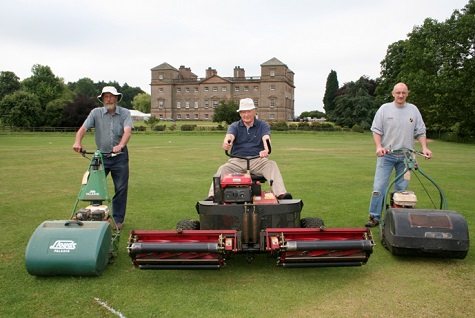


The biggest problem cricket ground staff have is the time they get to prepare and repair wickets between games. The pressures are exacerbated at the professional level, especially with the knowledge that your work is going to be scrutinised heavily for televised matches.


Clubs that seek funding through the sport’s governing body, the ECB, must ensure they have enrolled on the ECB Clubmark accreditation scheme. This demonstrates the club is well run and sustainable and provides the right environment for its members. 


Clubmark accreditation also means your club is recognised as a safe, rewarding and fulfilling place for participants of all ages, as well as assuring parents and carers that they are choosing the right option for their young people. 


However, because of having this accreditation, it means that clubs need to fulfil certain briefs depending on the type of funding they are applying for.
In most cases the club will need to ensure its facilities are used to generate a larger programme of matches to meet the needs of junior sections, senior men’s and women’s cricket.


This without doubt puts a lot of additional pressure on the ground staff to produce enough quality pitches to fulfil these needs. At county levels we are already seeing the pressure being placed to find time and pitches to fulfil not only matches, but practice facilities for these additional fixtures. This can mean county clubs having to utilise out grounds to accommodate this rise in matches. A given size facility can only accommodate so much wear and tear. 


These problems are now filtering down to grass roots clubs, whereby many are struggling to accommodate the demand for cricket pitches.
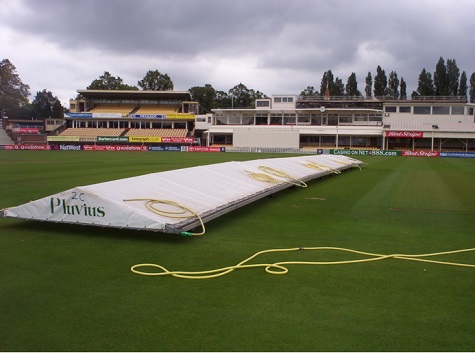


Roll-on and off covers 


At professional level expectations are vastly higher and there is a specific skill in preparing pitches when using covers and sheets knowing how much to allow the pitch to dry out, or how much water to give it, to ensure the right moisture levels are in the profile to achieve maximum rolling affects. 


Too little or too much rolling can be influential in how the pitch plays. Also, the amount of grass cover you leave on will influence the bounce and carry of a cricket ball.
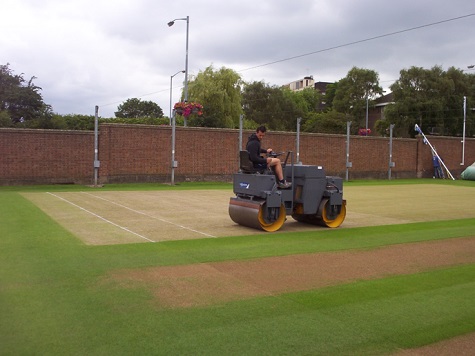


Rolling net areas 


When I was at Cranfield University doing my master of science, one of my fellow students, Peter Shipton, went on to research and help write a published paper on guidelines for rolling in cricket.


All of the above, and the personality and experience of the head groundsperson,  set the standards of what type of pitch you can produce. 
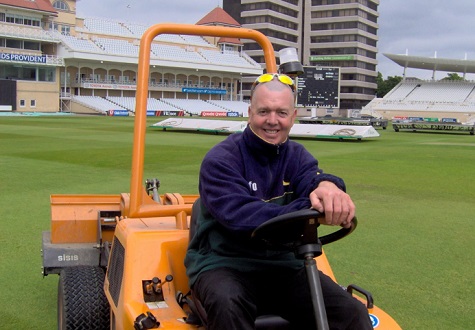


Steve Birks, Trent Bridge 


I have been fortunate to meet many head county groundsmen during the years I have been associated with the industry. These include the likes of Phil Frost, Somerset, since retired; Simon Tremlin, Wormsley CC; Tim Packwood, ex Worcestershire; Vic Domain, Durham; Gary Barwell, Edgbaston; Jim Mead, Rugby School; Karl Mcdermot, Lord’s; Steve Birks, Trent Bridge; Andy Forgaty at Headingley; Will Relf, Loughborough University; Steve Rouse, retired Edgbaston;  as well as some industry legends who are no longer with us such as Harry Brind, Pete Marron and Mick Hunt.


A number of them are renown for producing certain types of pitches in terms of their performance traits, Back in the late 1970s and 80s, grounds were said to be of a certain type - turning , fast, hard , slow. However, today there seems to be more consistency in the construction and maintenance practises carried out in top class cricket.  



Andy Mackay 


This has mainly come about because all the HG at county level meet regularly and discuss work practices, and are policed and inspected by Andy Mackay, ECB Pitch inspector. Andy recently took over from Chris Woods who was responsible for bringing many of the testing criteria to the table in terms of monitoring pitch performance. Chris worked closely with Dr Alex Vickers and Dr Iain James at Cranfield University. 


Andy’s role is to support the first-class counties and their head grounds managers; to oversee turf management practices at all levels of the game; and to generally provide technical support with respect to pitches and turf for the first-class game and Team England. He is also there to support the National Cricket Performance Centre at Loughborough University and direct research projects on future innovations for the game. 


I was also pleased to read that The Grounds Management Association and the England and Wales Cricket Board have joined forces to launch the ‘Apprenticeship Support Scheme’, designed to enhance the experience of grounds people apprentices in First Class Counties. 


Without a doubt there has been a significant change in work practises over the years driven by better understanding of soil science and because we now have a plethora of machines, equipment and aids to help deliver better, consistent and safe pitches. 


Mowers are more efficient and we now have a choice of both rotary and cylinder type mowers. We also have powered scarifiers and, one of the biggest game changers for cricket especially at domestic club level, the development of the cassette mower - which a number of manufacturers  (Dennis, Allett, Infinicut) have perfected of the years. These types of mowers offer a range of cassettes enabling one machine to multitask.
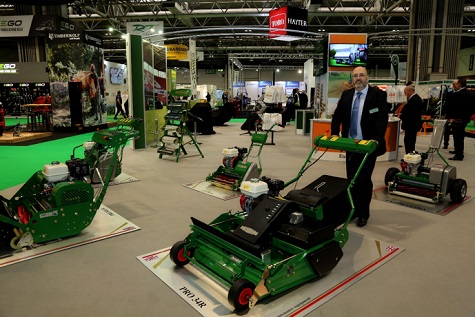


Roger Moore on Dennis' stand 


For example, Dennis offers 16 different cassettes for both their FT510 and FT610 mowers delivering professional-level cutting, scarifying, brushing, vertical-cutting, sorrel rolling, slitting and raking. You can have a range of 5-10 bladed cylinder cassettes, several types of brush attachments and different width scarifying blades.


We have also seen the development of self-powered scarifiers with both the Graden and SISIS being a popular choice with grounds professionals. 
Scarifiers are a key machinery requirement for end of season renovations, There are a plethora of machines to choose from with the SISIS  Rotorake Mk. 5 I a popular self-propelled heavy duty scarifier and de-thatcher for removal and control of thatch on fine and other quality turf. 
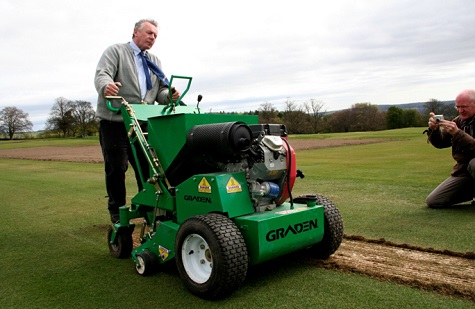


Keith Kensett with the Graden 


The Graden GS04 Verticutter was also a game changer when it was first introduced to the UK market by Keith Kensett . This tried and tested machine has proven to be extremely durable while providing excellent results. 
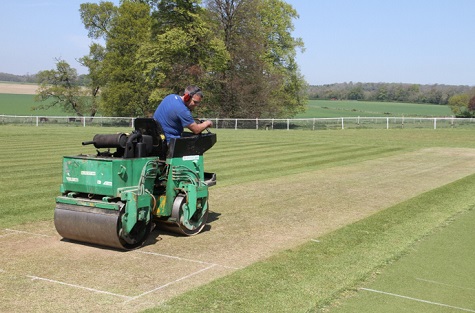
 

Cricket roller 


As for rollers, they come in all sorts of shapes and sizes. There are a few  companies that specialise in bespoke cricket roller production including Auto -Roller who have been trading since 1921, and Power Roll whose first roller came off the production line in 1997. Other established manufacturers of roller include the likes of Stothert & Pitt, Vibroll and Swillinton Rollers. 
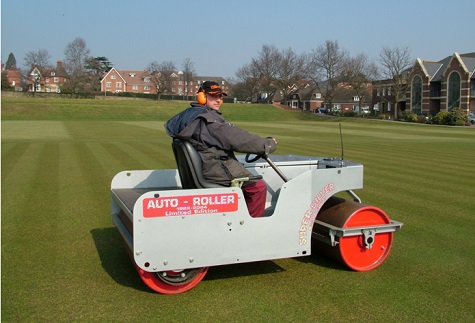


Auto Roller rolling at Tonbridge School 


We also have a wide range of roll-on and roll-off covers to protect pitches. There are also grow lights and in recent years we have seen clubs investing in the use of heated tents to allow early use of practice net areas. There are even mobile heated tents that can be used out on the square. 


As in football, several cricket clubs are now investing in sown in cricket pitches, where artificial fibres are stitched into the soil profile to help stabilise it. This has been another game changer in that pitches are lasting a lot longer, allowing more games to be played. 
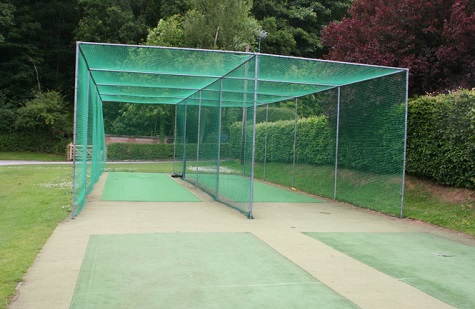


Artificial net practice areas


The first trials of these pitches were at Loughborough University and once they proved to be a success, many clubs including Lord’s are now investing in these sown in cricket pitches. 


Speaking of artificial pitches, for many years cricket clubs have been utilising complete all weather artificial grass pitches. The development of better materials has allowed manufactures to develop some great systems, which are used in practice net areas and as wickets out on the squares.  


And like football, the use of lighting rigs and covered tents areas are being used to encourage grass growth at difficult times of the year, particularly to aid pre-season preparations during the months of February and March. 
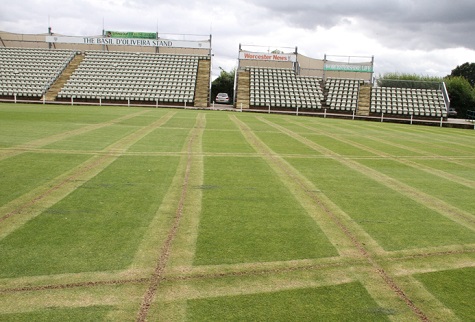


Outfield drainage improvements at Worcester CCC


As for other major investments seen at the county grounds, there has been the vast improvement in the drainage of outfields. The use of modern drainage techniques has helped improve the porosity of these areas, ensuring they remain playable after a downpour. In fact, Lord’s went to the extent of building the largest golf green construction of their outfield in 2002, removing all the existing soil and replacing with a sand / rootzone construction. Also, in recent years we have seen major investment in floodlighting at all county grounds, with the aim of increasing the number of games that can be played. 


You can read part one of my 50 years of football here


And part two of 50 years of football here.