I recently read with interest that our youth unemployment figures are rising.
In the BBC’s report Alan Milburn is quoted as saying the number of people in their twenties who are claiming benefits for anxiety and depression amounted to a “moral crisis”.
It seems that this trend is a growing concern for government, who are now looking at trying to find ways to halt these increases in unemployment.
For me, we have seen a decline in young people wanting to come and work in our sector for a few years now.
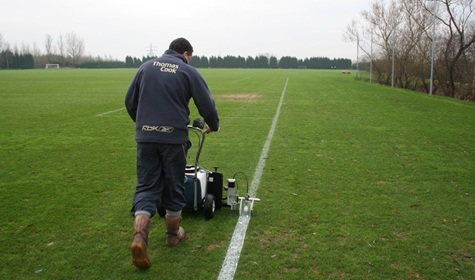
I have written several articles in the past about this issue and the fact we as an industry must start working together and convince government to finance a new educational career path. I believe we need one that essentially offers a two year apprentice / academy course where candidates are offered placements, education and qualifications while gaining working experience that is totally paid for (wages and training cost) by the government. We should be looking at processing 5,000 apprentice academy students per year for the next five years to solve this problem.
To attract more people into gardening, sports turf, and horticulture, the industry must solve three linked problems simultaneously:
- perception (“this isn’t a serious career”)
- visibility (“I didn’t know these jobs existed”)
- progression (“where does this lead?”)
Our sectors often compete against tech, finance, logistics, and other trades that market themselves far more aggressively. Yet horticulture and turf management offer tangible work, environmental impact, entrepreneurship, science, and increasingly advanced technology. The challenge is packaging that reality effectively.
Perception
I feel we must look to rebrand our industry. Many younger workers associate horticulture with low pay, seasonal labour, limited advancement and physically exhausting work.
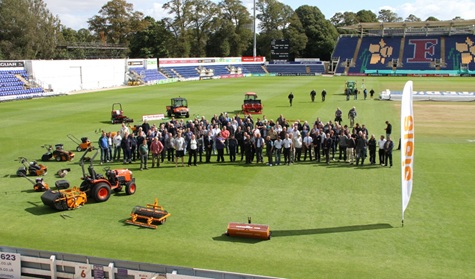
Our industry needs a modern identity built around, environmental stewardship, climate resilience, urban greening, biodiversity, sports science, technology, robotics, design and wellbeing.
For example, sports turf is not “grass cutting” - it is elite surface engineering. Horticulture is not “gardening” alone - it includes plant science, controlled-environment agriculture, landscape architecture, ecological restoration, and green infrastructure.
Visibility
We need to continue and improve the awareness of what job roles and responsibilities we bring to the table when managing our landscape, amenity and sports facilities. We are good at preaching to ourselves the value of our work. However, we need to get across to the wider public via TV, news and the wider media the real value of the work of greenkeepers, turf professionals and horticulture practitioners.

I am sure if we did not manage and maintain our beautiful landscape heritages such as parks, estates, urban landscapes, schools grounds etc, we would soon be living in a toxic environment.
Progression
Young people need to see a clear career path that provides a range of entry routes, salary growth, qualifications and entrepreneurship potential. Without defined progression, industries appear temporary rather than professional.
No recruitment campaign can compensate for wages that lag behind comparable skilled trades though.
Retention is recruitment
As an industry, we should be engaging with schools earlier. Speaking to a friend of mine who is a teacher, he says many school pupils are not aware of the opportunities that prevail in our vast horticultural / sports turf / amenity industry.
I am conscious that the likes of BIGGA, GMA and other industry associations are fully aware of the problem and in their own way have been for many years trying to address these issues.
I firmly believe however, it is time that we as an industry finally come together collectively to promote and secure a way of enticing the next generation to come and work in our diverse industry.
Is it not now the time for our industry leading lights and businesses to start working together to form a brand-new career pathway, working with colleges and government to formulate a clear and securely funded pathway for the next generation to come and work in our industry?
I’ve heard there is over £3.5 billion sitting in a government levy apprenticeship pot. This money could be used to pay for both the training and wages of those on the scheme.
Younger workers increasingly want meaningful work and to see the results of their labour. Over time their working contribution would improve their own mental wellbeing as well as benfit climate adaptation, create greener cities, assist biodiversity recovery and lead to healthier communities.
People are attracted to industries with visible pride and status. For me it is time to stop the talking on get on with working together to tackle this serious problem facing our industry.
I have had a fabulous 54 year career working in this industry starting as an apprentice working for Birmingham City Council in 1972, principally working in parks, propagating plants and exhibiting at Chelsea Flower Shows. I subsequently became a greenkeeper, a groundsman at Portsmouth FC, worked for the MOD and Telford and Wrekin Council as parks manager and cemetery /events officer – before going back to university to get a Master of Sciences in sports surface technology at Cranfield University. Finally I became editor of a number of our industry trade magazines.
I personally have been promoting and seeing the many benefits for those who work in our industry. I have met many dedicated individuals who have prospered and become recognised leaders and role models.
It is now time to position our sector as a ‘future industry’, not a legacy one. Our strongest message is: “You’re not maintaining the past - you’re building the future environment that people will live, play, and recover in.”