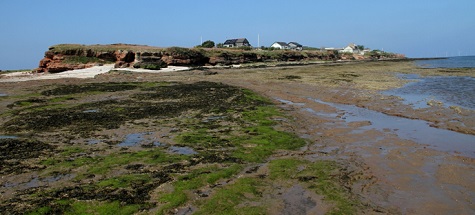
Recently, I had the opportunity to judge an unusual Green Flag Site in the Wirral area: the Hilbre Islands Local Nature Reserve, nestled within the Dee Estuary on the northwest coast of England.
The Dee Estuary is a Site of Special Scientific Interest (SSSI), a Special Protection Area, a Ramsar Site (a Wetland of International Importance), and a candidate EU Special Area of Conservation. The three tidal islands - Little Eye, Middle Eye, and Hilbre Island - along with the surrounding foreshores, are managed by the Metropolitan Borough of Wirral, supported by the Friends of Hilbre.
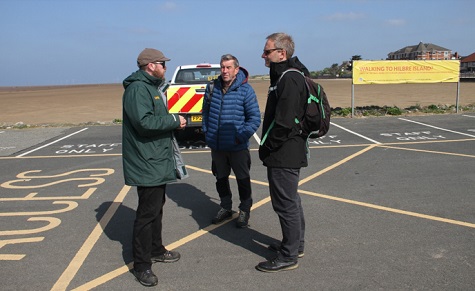
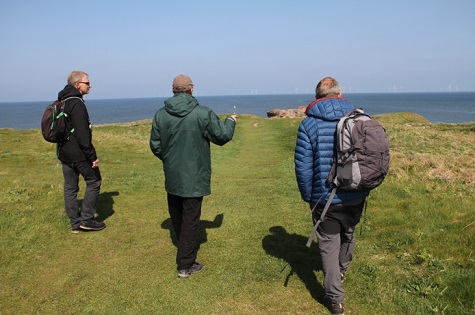
I was joined by fellow judge Harvey. We were met by Matthew Thomas, the council’s nature warden, and David Gregson, chair of the Friends of Hilbre. Normally, access to the island is on foot at low tide. We met at 11 a.m. with a five-hour window to walk the two-mile route there and back. It typically takes about an hour to reach Hilbre from the mainland, but we were fortunate to get a lift in Matt’s four-by-four. The weather was glorious - sunny with just a light breeze.
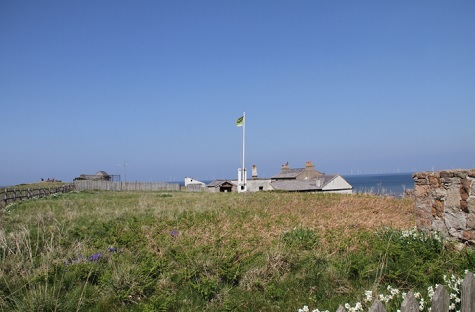
Hilbre Island has a rich history. In the 12th century, it was gifted to the Benedictine monks of St. Werburgh’s Abbey in Chester. They built a chapel on the island, the ruins of which, along with traces of medieval fish ponds, still remain.
In the 19th century, Hilbre became a refuge for shipwrecked sailors with the establishment of a lifeboat station. During both World Wars, it played a defensive role, with gun emplacements and observation posts guarding the coast. Today, remnants of these structures bear silent witness to its wartime past.
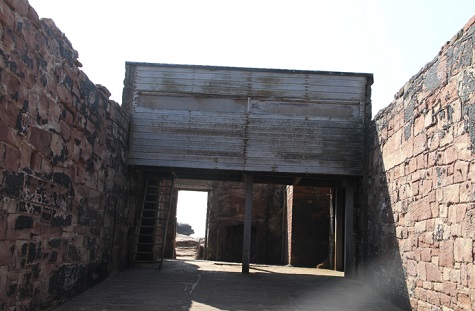
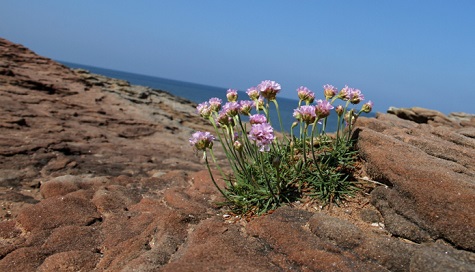
Now designated a Local Nature Reserve, the island is home to a wide variety of wildlife, including seals and numerous bird species. The surrounding mudflats are essential feeding grounds for migratory birds, making Hilbre a vital ecological site.
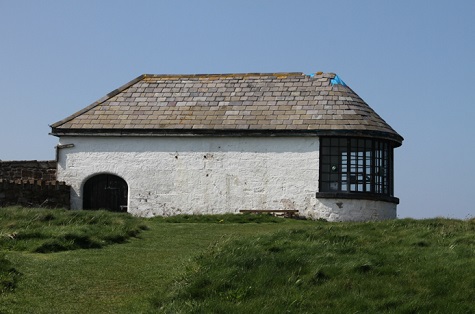
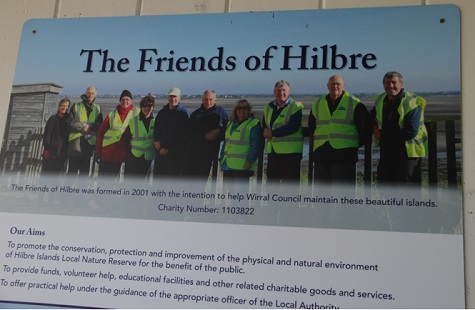
Matt and David were enthusiastic guides. Matt has worked as a countryside ranger with Wirral Council for over 24 years, serving as Hilbre’s main warden for the last 15. Dave has been involved with the Friends of Hilbre since 2014 and has chaired the group since 2021. The charity has around 250 members and is helping to form The Hilbre Island Community Trust Ltd., which now holds a lease to improve the island’s historic buildings.
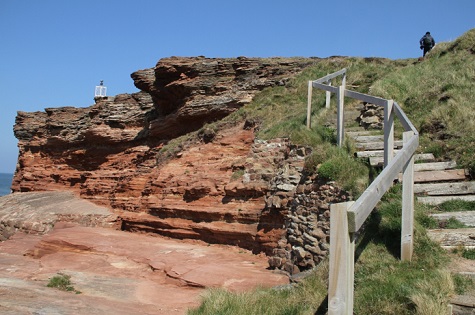
Hilbre is one of only a few tidal islands in the UK accessible on foot at low tide, alongside the likes of Lindisfarne and St Michael’s Mount. The islands were formerly owned by the Mersey Docks & Harbour Company and were transferred to local authority ownership in 1945. They are now maintained as a nature reserve and popular visitor destination.
Several volunteer groups, including the Friends of Hilbre and the Hilbre Island Bird Observatory (HiBO), work with Matt and his team to protect the island’s landscape and wildlife. Matt’s main role is to manage the site and ensure visitors enjoy it responsibly without harming the environment.
Recently, the council secured a three-year lease with the newly formed Hilbre Island Community Land Trust, created by the British Art & Design Association (BADA), HiBO, and the Friends of Hilbre. Their shared aim is to secure a sustainable future for the island’s heritage buildings and sensitive landscape.
Four of the buildings - each listed as Grade II - will be restored to create a centre for the study of art, science, and sustainability. The aim is to expand bird monitoring efforts and create stronger ties with the community through educational activities. A restoration strategy, in collaboration with the council, ensures that the ecological value of the area is preserved while providing new facilities for researchers, artists, and scientists.
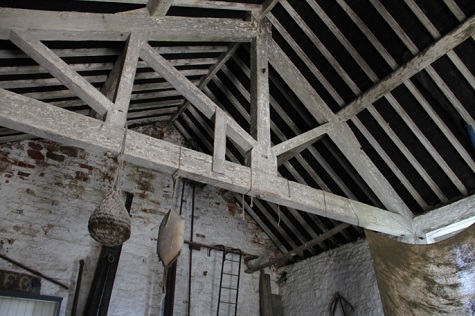
Within the project area, three buildings (the Bouymaster’s House, Store, and Workshop) will be adapted by BADA into artists’ studios, a shared research space, and a communal area. Telegraph House will be used by HiBO to support its work in ringing and tracking migratory birds. HiBO, part of an international network of bird observatories, has been active on Hilbre since 1957.
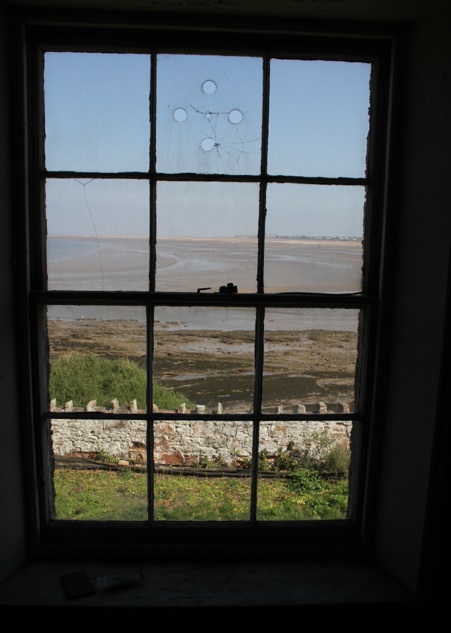
BADA ART is working with Liverpool John Moores University to identify current users of the island for research and creative study and to design facilities that meet their needs.
The goal of the three-year lease is to demonstrate the Trust’s ability to deliver on its vision, ultimately securing a 30-year lease. This would open up access to significant funding from external organisations and secure the long-term future of this heritage and ecological site.
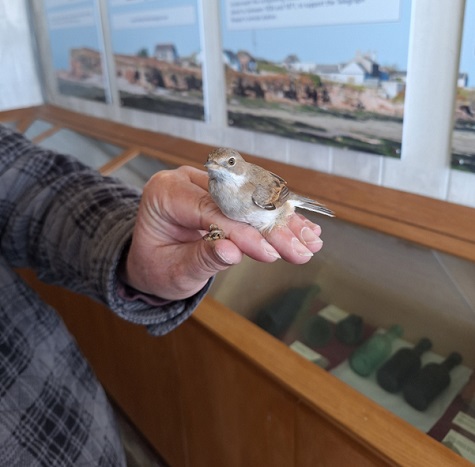
During our visit, we toured the buildings set to be refurbished as art studios and met with members of the Trust. We also spent time with a member of HiBO who showed us a baby whitethroat he had just ringed before releasing it back into the wild. We even spotted a large group of seals basking in the sunshine on the sand flats.
All in all, it was a fascinating day exploring a truly unique Local Nature Reserve and witnessing the passion and dedication of those working to protect and enhance Hilbre Island.