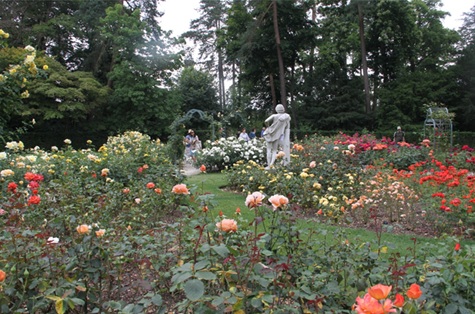
This year, exceptionally warm spring weather has helped develop and produce a fine display of flowers in our open spaces - and none more spectacular that our wonderful British rose varieties. The month of June provides the ideal opportunity to see them flowering at the best.
Roses are exceptionally popular in the UK because they sit at the intersection of climate suitability, gardening tradition, symbolism, and breeding history.
Regarding breeding roses, I am lucky that in Shropshire where I live, we are only a few miles away from one of the UK’s most prolific breeders of roses, David Austin Roses, in Albrighton.
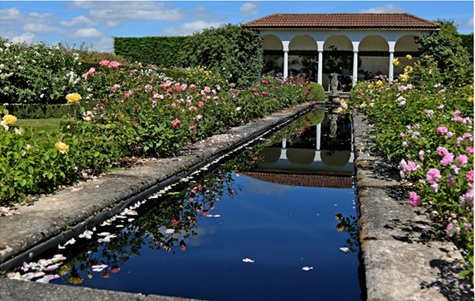
His nursery is well worth a visit, with hundreds of varieties of roses to choose from. I generally try to visit most years. It is an amazing sight to see them all in full bloom.
Roses are now popular green space plant. I have myself bought several David Austin Roses that provide a vivid display in my garden every summer. Our UK climate suits roses very well, providing as it does moderate summer temperatures, adequate rainfall and cool winters that provide dormancy and relatively few periods of extreme heat.
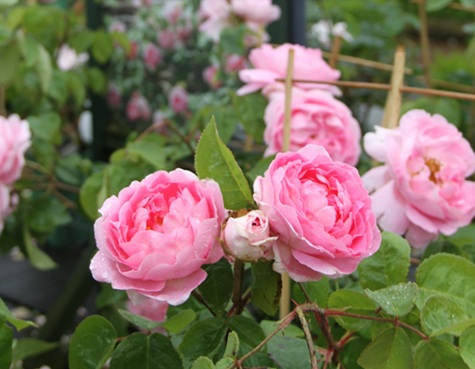
Unlike Mediterranean climates where roses can suffer from prolonged drought, or very cold continental climates where winter damage can be severe, much of Britain offers a favourable balance.
From the Victorian era onwards, roses were a status symbol and a centerpiece of ornamental gardens. Large country estates, public parks, and cottage gardens all featured roses. By the late 19th and early 20th centuries, rose growing had become a major hobby, supported by specialist nurseries and rose societies.
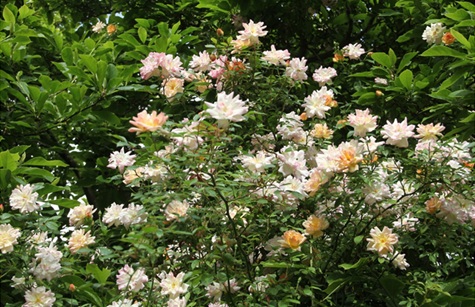
The influence of organisations such as the Royal National Rose Society helped spread knowledge and enthusiasm for rose cultivation.
Roses are remarkably versatile. They can be grown as:
- Shrub roses
- Climbing roses
- Rambling roses
- Patio roses
- Standard (tree-form) roses
- Formal bedding displays
British horticulturalists have historically valued scented plants, and roses are among the most fragrant garden flowers. In British culture, roses have deep associations with love and romance, beauty, remembrance and have been used for national identity. The red rose is particularly associated with England through the Wars of the Roses, later becoming a widely recognised national floral emblem.
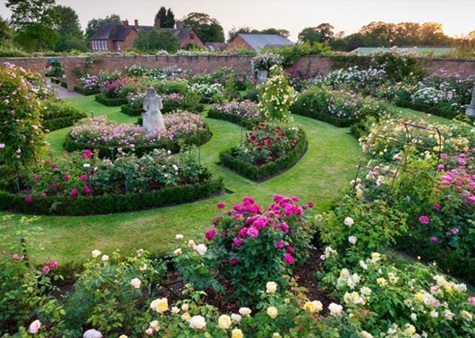
As for growing roses there are a few tips to ensure they establish well and thrive in your green spaces. The best conditions for planting roses depend on the type of rose and the season.
Roses need plenty of sunlight and perform best with at least 6 hours of direct sun per day, ideally morning sun, which helps dry dew from leaves. Roses need to be situated in good open positions with good air circulation.
They need to be planted in a well-drained fertile soil; roses dislike waterlogged roots. Preferred soils are loamy, sandy loam and some clay loam soils.
Roses prefer slightly acidic to neutral soil, ideally pH: 6.0–7.0. Most UK garden soils fall within an acceptable range.
You should bare-root roses from November to March (while plants are dormant). Try to avoid planting into frozen or waterlogged ground though. Container-grown roses can be planted almost any time of year, although autumn and spring remain best times for planting - and avoid planting during droughts or extreme heat.
When planting, dig a wide hole rather than a narrow deep one. Incorporate well-rotted compost or organic matter and break up any compacted soil.
The recommended planting distances for bush roses 60-90 cm, for English Shrub roses 90-150 cm, for climbing roses 2-4 m, and ramblers 3-6m.
As for watering, during planting and establishment water deeply rather than little and often. A newly planted rose should focus on root development first.
Ideal UK rose planting recipe
For a typical green space in southern or central Britain:
- Choose a sunny site (6+ hours direct sun).
- Plant bare-root roses between November and March.
- Dig a hole about twice the width of the root system.
- Add compost or well-rotted manure to the surrounding soil.
- Position the graft union just at or slightly below soil level.
- Firm the soil gently.
- Water thoroughly.
- Apply a mulch, keeping it away from the stem.
Under these conditions, many modern roses can thrive for decades and produce abundant blooms from late spring through autumn.