EDITOR'S BLOG
CONTROLLING WEEDS
Flourishing in the warm weather
by TurfPro Editor, Laurence Gale MSC, MBPR
 
Laurence Gale MSC, MBPR

Weeds can be prolific and cause damage to infrastructures, especially when they are not managed. 


Weed growth has been significant this year, both on hard and natural grass surfaces.


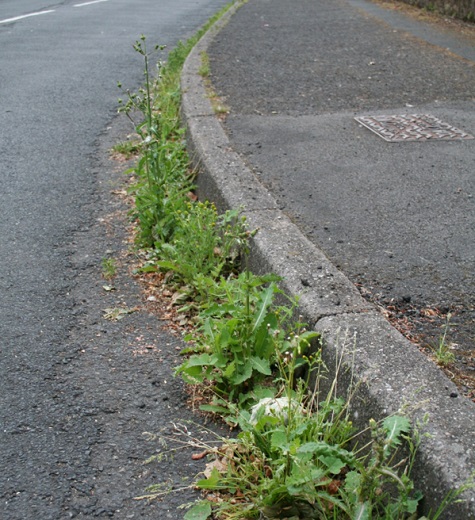
The recent period of warm and wet weather has undoubtedly increased the growth of weeds in our environment. Seen on natural grass playing surfaces, it can however be more of a problem when they appear in other surfaces such as roads, road verges, parks and playing fields - not to mention, paths, car parks, railway lines, gardens and building sites.


Weeds can be prolific and cause damage to infrastructures, especially when they are not managed. 
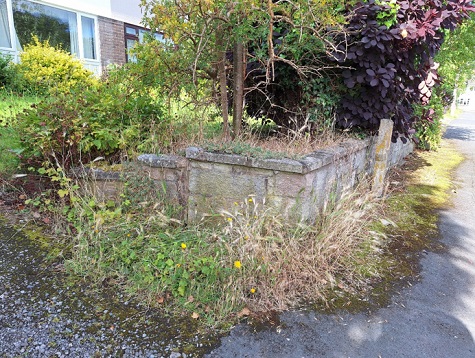


By definition a weed is a plant that is growing in the wrong place. Weeds take valuable space, water, sunlight and nutrients that may otherwise be accessible to important crops, in our case turf grasses. Weeds not only compete for these resources they can disfigure and cause problems to playing surfaces.


Weeds are very good competitors and take advantage of any opportunities to colonise turf situations, particularly when the sward is under stress and weak, leaving bare soil areas for weeds to populate.


Weeds have many mechanisms and characteristics that enable them to do this, having thick waxy cuticle leaves that can be resistant to some chemicals, fast reproduction methods, the ability to reseed in six week cycles and deep tap roots enabling the weed to survive in compacted dry ground conditions.
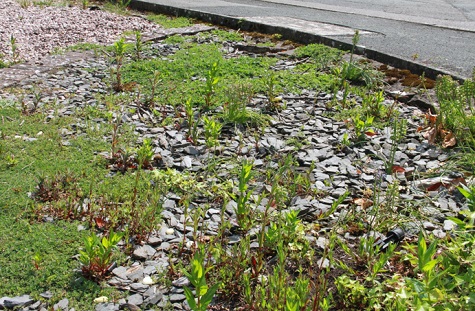


Weeds have one of three life cycles: annual; biennial or perennial.


Annual weeds: Live for a single season. These weeds germinate from seed in the spring or summer, flower and then die.


Biennial weeds: Live for two seasons. During the first growing season, these weeds remain in a vegetative stage and, in the following year, produce flowers, set seed and die.


Perennial weeds: Live for multiple seasons and flower more than once. Perennial structures (rhizomes, stolons, crowns, entire plants or roots) survive from year to year.


We now have a plethora of methods both chemical and mechanical to control weeds in given environments. This booklet produced by Pesticide Action Network is a good read and offers several methods of weed control.


All weeds (plants) require light, food and water to survive. - remove any one of these and a plant will suffer. In general, soil or detritus is a medium which stores the water and food for a plant.


Soil is not an intended constituent of a hard surface. Therefore, plants do not grow on hard surfaces!


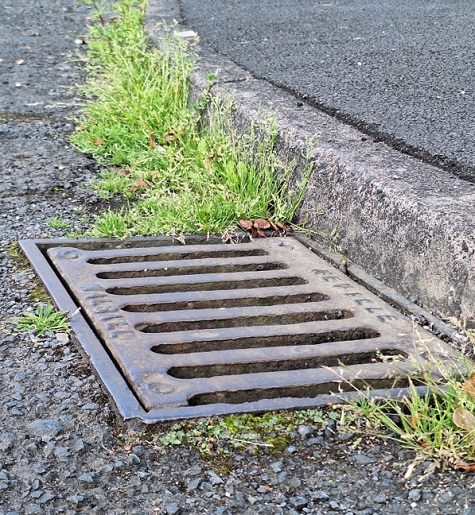
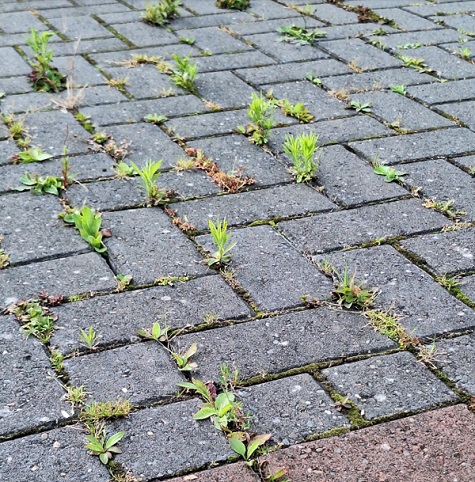
However, we know that plants may be found growing on or in hard surfaces. Therefore, soil must be on or in the hard surface.  Causes of this include, soils migrating from adjacent organic surfaces; soils being formed from detritus remaining on the surface; broken and unsealed hard surfaces allowing soil pockets; or access to soil layer below hard surface. Even If we use a chemical herbicide or any other method to simply kill the plant the causes remain, and regrowth is inevitable.


However, if we remove the soil and, importantly, the cause of the soil, we short circuit the cycle.


Statutory provision is made for this in The Environmental Protection Act 1990 which imposes duties under section 89(1) and (2) on certain landowners and occupiers to keep specified land clear of litter and refuse, and on local authorities and the Secretary of State to keep clean public highways for which they are responsible. 


Code of Practice on litter and refuse published by DEFRA April 2006 and modified 2019 Part 1 Section 5 lists detritus as refuse and litter and must be removed from the highway under section 89 of the act and recommends detritus should be removed from all other hard surfaces as well.

Chemicals have their place, but they have been hijacked to cover the cracks in our pavements. Prevention is often better than a cure, therefore we must look at programmed effective maintenance regimes to reduce this unwanted weed growth.


The greater the depth of soil available to the weed, the greater chance of allowing deeper rooted perennial weeds to establish themselves. 


Deep rooted perennials are far more difficult to kill once established. Shallower soil will only sustain annual weeds which are easier to control with methods such as heat or sweeping. A maintenance specification may be designed to prevent detritus from building up on hard surfaces. This not only requires thought for the surface but also the surrounding environment which may affect the surface.


We now have a number of good mechanical aids that can be used to remove weeds from hard standing areas, these include some of the following :-


Weed Torches, hot Flame devices essentially a propane torch is used to apply direct heat to the weeds, causing them to wilt and die.


Pros: Environmentally friendly (no chemicals), effective on all types of weeds, and quick results.


Cons: Requires careful handling to avoid fire hazards and may need multiple applications.


Hot foam weed control is an innovative method that combines hot water and a biodegradable foam to kill weeds. 


Pros: Effective Weed Control : Environmentally Friendly: Residual Effect,  Non-Chemical: Safe for Surrounding Plants and Soil:


The heat from the hot foam kills weeds by denaturing proteins and causing cellular damage, effectively killing the plant down to the root.


The foam is usually made from biodegradable materials, such as plant oils or sugars, making it safe for the environment and non-toxic to humans and pets.


The foam acts as an insulator, keeping the heat on the weeds for a longer period, enhancing the effectiveness of the treatment.


This method avoids the use of harmful chemicals, making it suitable for organic gardening and environmentally sensitive areas.


Because it targets only the weeds directly treated, it doesn't harm surrounding plants or soil health.


Cons: Cost: The equipment required for hot foam weed control can be expensive, making it less accessible for small-scale or individual use. Also, this method might not be as readily available as traditional chemical herbicides, and finding a service provider or equipment can be challenging.


Heating the water to produce hot foam requires energy, which can make this method less energy-efficient compared to some other weed control methods.


Like other thermal weed control methods, multiple applications may be necessary to achieve long-term weed control, especially for deeply rooted or particularly resilient weeds.


Using hot foam equipment requires some level of training and safety precautions, which may add to the complexity of its use compared to simpler methods.


Hot foam weed control is an effective and environmentally friendly method suitable for hard surfaces. It combines efficiency with safety, making it an attractive option for those seeking non-chemical weed control solutions. However, the higher cost, equipment requirements, and need for multiple applications can be drawbacks to consider. For those willing to invest in the technology, it offers a sustainable and effective way to manage weeds on hard surfaces.


An assortment of powered strimmers, blades and brushes can be affective in removing surface vegetation but operations would be need to be repeated on perennial weeds.


Pros: Effective for removing tough weeds and debris, non-chemical, can reach narrow spaces.


Cons: Can be labour-intensive, may cause wear on hard surfaces over time.


Power Washers have been used to blast weeds out from cracks and crevices.


Pros: Effective for removing weeds and cleaning surfaces simultaneously, non-chemical.


Cons: Requires access to water and power, may damage delicate surfaces or wash away joint sand in pavers.


Finally, hand weeding using hoes and scrapers can be effective on small areas but can be labour intensive. 


It's important to assess the extent of the weed problem, the type of hard surface, and your own physical ability before choosing the best method. Combining these methods might provide the most comprehensive solution. 
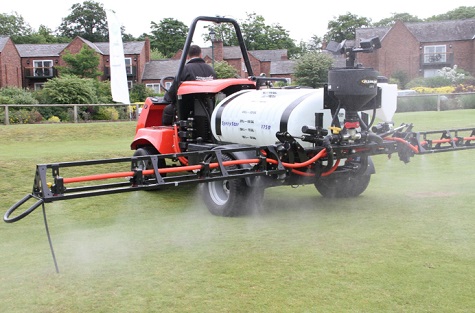


Weeds in turf are a generally a different proposition other than hand pulling them certain weeds the most effective method would be an application of selective herbicide.


However, again there some pro and cons of using chemical products 


Pros: Professional herbicides are formulated to effectively control a wide range of weeds, ensuring a more manageable and healthier garden or agricultural area.


These herbicides often work faster and require fewer applications compared to non-professional alternatives, saving time and labour.

Many professional herbicides are designed to target multiple types of weeds, reducing the need for multiple products. They also usually offer extended weed control, reducing the frequency of reapplication.


Professional herbicides are developed with advanced chemical formulations to enhance their performance and minimise damage to desired plants.


For large-scale operations, buying professional herbicides in bulk can be more cost-effective than purchasing smaller quantities of consumer-grade products.


Cons: Professional herbicides can be expensive, especially for small-scale or home use, making them less accessible for some individuals.


There is a potential for health risks if not used properly, including skin irritation, respiratory problems, and other health issues related to chemical exposure.


These herbicides can harm non-target plants, wildlife, and beneficial insects, and may contaminate water sources if not applied correctly.


Overuse of herbicides can lead to weed resistance, making future control efforts more difficult and requiring stronger or more chemicals.


Professional herbicides are often subject to strict regulations, requiring specific licensing or certification to purchase and use them legally.


Proper application often requires specialised knowledge and equipment, making it challenging for untrained individuals to use them effectively and safely.


Professional herbicides can offer significant benefits in terms of effectiveness and efficiency for weed control, particularly in large-scale operations. However, they come with higher costs, potential health and environmental risks, and regulatory requirements that need careful consideration. Users should weigh these factors and consider proper training and safety measures to mitigate potential downsides.

NEWS
£5m GRASS PITCH IMPROVEMENT FUND
Launched by the ECB
 
Grass pitch improvement fund launched

In our next WEB ONLY story, the fund intends to provide more cricket pitches across England and Wales.


RECORD BREAKING ATTENDANCE
At countryside event
 
Boss ORV's Phil Everett with TurfPro's Duncan Murray-Clarke

Machinery exhibitors give good feedback at event that welcomed a record number of visitors.


The Game Fair took place at Blenheim Palace from Friday 26th - Sunday 28th July 2024, with organisers reporting record-breaking attendance.


According to their post-show report, 136,000 visitors attended across the three days and over 700 exhibitors and organisations took space at the show.


Boss ORV's Phil Everett with TurfPro's Duncan Murray-Clarke


TurfPro owner, Duncan Murray-Clarke, attended on the Friday and said that despite the machinery exhibitors being slightly tucked away, those he spoke to gave good feedback regarding the interest they had received.


Duncan with Iseki UK's David Withers and Richard Tyrrell


James Gower, event director of The Game Fair said, “What a fantastic time we have had here at Blenheim. We were very happy to see the sunshine at this mega Game Fair where we celebrated all aspects of the rural community and demonstrated the importance of the great British countryside.


"It has been a privilege to return to Blenheim after ten years and to have the ongoing support from our sponsors, partners, exhibitors and visitors who enjoyed a fun-filled day out.”


The Game Fair returns to Ragley Hall for its 67th celebration of the countryside next year, 25 – 27 July 2025.

CONSISTENT QUALITY PRAISED
At Came Down Golf Club
 
Came Down Golf Club

Head greenkeeper says they have been using a nutritional programme on their greens for over 30 years that continues to give growth, colour and plant health.


Came Down Golf Club in Dorchester say they have been using a nutritional programme from Suståne on their greens for over 30 years and explain that it continues to offer growth, colour and plant health.


James Lockwood who has been at the venue for 18 years, and head greenkeeper for the last three, says that the club’s relationship with Suståne goes much further back. “We think Suståne has been used here for roughly 35 years, making us one of the first clubs in the UK to use their products.”


James’ current programme, constructed in conjunction with the company's Russell Riley and local distributors Agrovista, includes Suståne 10-1-4 as a spring starter, 5-2-10+Fe applied at lower rates and regular intervals throughout the summer and 5-2-4 to keep the greens ticking over in winter. “This is the tried and tested combination which works perfectly for us,” he says. 


“Firstly it’s great that it’s all organic. The club are keen to utilise more sustainable solutions and this programme, in conjunction with some of our cultural practices, has helped us to pretty much eliminate the use of fungicides. Secondly we like the control it gives us - no massive flushes of growth, just a steady, healthy growth pattern that leaves the greens looking immaculate and playing well year-round.” 


James adds, “We have a couple of greens in shaded spots that have previously struggled with Fusarium. With a bit of trial and error, we’ve found that upping the rate of Suståne 5-2-10 through the back end of the summer, and 5-2-4 in the winter has helped us to limit the impact on these specific areas. It’s becoming increasingly important that we all try and resolve these issues using science and clever microbiology rather than relying on chemicals.


“Another thing we like is that the granules are nice and fine which means we can apply it exactly when we need to without risking any interruption to play.” He concludes, “It’s testament to the continual quality and results that we rarely have to stray away from the programme that has been so pivotal to things here at Came Down for so long.” 

DEALER DELIVERS GPS SPRAYER FIRST
Satellite guidance
 
Head greenkeeper, Dan Kendle with Masons Kings' David Barnes and Elliot Prior

Local dealer supplies the state-of-the-art unit, which is the first of its kind to be installed in the region.


A Cornish golf club has become the first in south-west England to invest in a satellite-guided John Deere sprayer to help keep its course the in the best possible condition. 


Head greenkeeper, Dan Kendle with Masons Kings' turf area consultant, David Barnes and turf business manager, Elliot Prior


Newquay Golf Club took delivery of the John Deere HD200 ProGator precision sprayer during July after identifying the machine as a tool to reduce costs and enhance its environmental profile. 


The state-of-the-art unit is the first of its kind to be installed in the region and was supplied by local dealer Masons Kings
 
Head greenkeeper Dan Kendle said the purchase was all about sustainability. 


“We like to keep up with advancements in technology because they can make us more efficient and do things more accurately,” he said. “Sustainability is the big thing on golf courses as far as I’m concerned and the GPS functionality in the sprayer allows us to be more targeted in our applications and therefore reducing the impact on the environment. 


“Over time, it will enable us to use fewer chemicals, less water and save on fuel and time which are also big plus points.” 


Masons Kings’ dedicated Integrating Technologies Team carried out the installation with Dan and the club’s greenkeeping staff, ensuring that the sprayer is fully operational and ready to deliver top-tier performance. 


Dan added: “We are extremely grateful for the support from entire Masons Kings team which has been instrumental in bringing this revolutionary equipment to Newquay Golf Club.” 

MULTI-FACETED APPROACH REQUIRED
To maintain neighbouring courses
 
Newmachar course manager, Christopher Lamb, and his greenkeeping team with their new machinery fleet

Course manager says maintaining the two historic - but very different - courses requires a strategic and dynamic greenkeeping approach.


Newmachar Golf Club golf in North East Scotland, features two historic - but very different - courses. 


Newmachar course manager, Christopher Lamb, and his greenkeeping team with their new machinery fleet


Course manager, Christopher Lamb, says this variety requires a strategic and dynamic greenkeeping approach: “What’s interesting about our Hawkshill and Swailend courses is that, although they’re right next to each other, they’re completely different - both in terms of their topography and what they’re like to play on.


“For us as greenkeepers, this represents a unique challenge,” he adds. “We have to work as efficiently as possible, which is why we’ve brought in a huge new fleet of 24 Toro machines to ensure we’re covering each course’s unique maintenance needs.”


Recently ranked as one of the Top 100 Scottish golf clubs by Today’s Golfer, Newmachar’s Hawkshill Championship Course and Swailend Course were designed by renowned architect Dave Thomas and built during the 1990s. 


Hawkshill is a heathland course with USGA specification greens; while Swailend is a birch- and pine-heavy parkland course built through farming land.


Newmachar’s new fleet includes the Greensmaster Triflex Hybrid 3420 and Groundsmaster 4000-D, as well as lightweight fairway mowers, utility vehicles, renovation equipment, and a Toro Sand Pro 3040 bunker rake. 


Christopher, who joined Newmachar as an apprentice in 2014 and has since worked his way up to course manager, described his new fleet as " . . dynamic in their useability, making them just as effective on a parkland course as on a heathland one."


He concluded, “We’ve all noticed significant improvements in the quality of cut, especially tee-side. Without a shadow of a doubt, the new machines will be instrumental in not just maintaining the standard of play our members have come to expect, but also in making improvements to both courses year-on-year, as we look to raise our profile even further.”

JOBS
ADVERTISE YOUR JOBS HERE
Amazing success rates!
 
Advertise your jobs on TurfPro Weekly Briefing

Advertise your recruitment needs on TurfPro Weekly Briefing and reach our targeted audience of recipients every week.

Contact Nikki Harrison for details - 01491 837117


PREVIOUS FEATURES
EDITOR'S BLOG ARCHIVE
Catch up with Laurence Gale's recent blogs
 
TurfPro editor, Laurence Gale

Want to catch up with one of editor Laurence Gale's blogs? Here is the place to do so.


TURFPRO FEATURE ARCHIVE
Find our previous features here
 
TurfPro Feature Archive

If you want to catch up with any of TurfPro's previous features, here is the place to do so.


SUSTAINABILITY IN LOCAL AUTHORITIES
Lessons learnt and experiences


SKILL SETS NEED RECOGNITION
Turf professionals are underappreciated


GREATER RESPECT FOR GROUNDS STAFF MIGHT MAKE ALL THE DIFFERENCE
To the recruitment crisis


A COMPETITIVE SALARY
Why employers should advertise the salary when recruiting new staff


ON TEST
Makita XGT UV001G lawn scarifier


AN EXAMPLE OF SUSTAINABILITY IN MACHINERY SUPPLY
Focus on Kubota


MY PERSONAL GREENKEEPING PHILOSOPHY HAS NEVER CHANGED
I don't follow any set program


SUSTAINABILITY IN LANDSCAPING
A substantial element of amenity activity


IS IT TIME TO SAY NO TO 'NO MOW MAY'?
Any real benefits?


SUSTAINABILITY IN OUR PARKS & PUBLIC GREEN SPACES
Meeting the challenge


THE PATH TO WIMBLEDON
For groundstaff member, Conrad Cavil


ON TEST
EGO LBP8000E backpack blower


SUSTAINABILITY IN THE LAWN CARE SECTOR
A key consideration


BEEKEEPING IN COMMERCIAL ENVIRONMENTS
The current situation


SUSTAINABLE PRACTICE IN THE AMENITY SUPPLY SECTOR
Optimising land use through integrated solutions


SUSTAINABILITY IN THE GOLF SECTOR
Focus on BIGGA


THE SEARCH FOR SUSTAINABLE PRACTICE
Bringing together key points


DEVELOPING SUSTAINABLE SOLUTIONS FOR GOLF
R&A are supporting clubs


GETTING THE MOST OUT OF EVERY POUND OF BUDGET
A course manager's view


A NEWFOUND APPRECIATION FOR ALL VOLUNTEERS
Who look after grassroots pitches


SUSTAINABILITY & THE UK ACTION PLAN
For weed, pest and disease management


CONCERN FOR PARKS FOLLOWING COUNCIL BANKRUPTCIES
What does the future hold?


TAKING A GLOBAL LOOK AT SUSTAINABILITY
Is the rest of the world also driving towards sustainable practice?


RENOVATIONS, PLAY AND THANKS
On my mind this week


SUSTAINABILITY – IMPLICATIONS FOR TRAINING & EDUCATION
Set to play a crucial role going forward


TULIP TREE
Liriodendron tulipifera


LYDIA BROOM
Genista lydia


THE LAWN AND ITS VALUE
Changing attitudes


GIANT HOGWEED
Invasive and potentially harmful


LIFE-CYCLE ANALYSIS & SUSTAINABILITY
Considering every stage of the journey


NITROGEN USE EFFICIENCY
The most important nutrient


BERBERIS THUNBERGII
A shrub that has stood the test of time


ENSURING FUTURE PROSPERITY
Advice imparted at road shows


INNOVATION & SUSTAINABILITY
A key focus


PHOTINA RED ROBIN
A sensational flowering shrub


VALUING THE GRASSROOTS
We must not overlook those who maintain these grounds


MANAGING WEEDS SUSTAINABLY
In amenity spaces


DETECTING NUTRIENT DEFICIENCY SYMPTOMS
In turf plants


SPRING RENOVATIONS UNDERWAY
A crucial period


SUSTAINABILITY IN SUPPLY
A focus on those who supply essential inputs to our sector


CHANGING CLIMATE
Is a borehole the key for clubs?


SUSTAINABILITY AT THE SHARP END
How to put into practice when budgets are tight?


ANOTHER NAIL IN THE COFFIN OF GRASSROOTS RUGBY
Clubs are struggling


SUSTAINABILITY IN PRACTICE
Seeking transparent and robust supply chains is essential


TIME FOR ACTION
To reverse recruitment crisis


CONTROLLING COSTS
Planning is crucial


THE SEARCH FOR SUSTAINABILITY
What exactly does the term mean?


CARING FOR THE GRASSROOTS
From volunteers to contractors


DEFRA IS LETTING DOWN THE COUNTRY
Complete failure to address the plastic grass debate


WE CAN ALL DO MORE
To aid biodiversity


MY LIFE IN GREENKEEPING
With Bruce Cruickshank


LEVELLING UP, GETTING SMARTER & GETTING AHEAD
Parks require so much more funding


SWITCHED ON FOR HARD WORK
Putting trimmers through their paces


MACHINERY HIGHLIGHTS
At this year's show


MY SALTEX
Daniel Lewis​, Manchester City Football Club


AWASH WITH LEARNING OPPORTUNITIES
Two months till showtime


LOOKING BACK, LOOKING FORWARD
Priorities for the amenity sector


THE DECLINE OF ‘PARKITECTURE’
A symptom of the state of parks in 2022


DEVELOPERS SHIRKING GREEN SPACE RESPONSIBILITIES
Lack of financial commitment


TIME TO COME TOGETHER
For the good of the industry


THE DEATH OF GRASS ROOTS CRICKET
Gathering apace?


ROUTES INTO THE INDUSTRY MUST BE ENSURED
Q&A with David Fisher, Lantra’s head of industry partnerships


STRONG VIEWS ON CRICKET PITCH PERFORMANCE MARKING
A bone of contention


A PREMIUM PRODUCT
Delivered at Naas Golf Club


THE GREEN REVOLUTION
And Esker Hills


MAKING A CHANGE
Laytown and Bettystown Golf Links


A DAY AT THE RACES
Naas Race Course


WORKING TOGETHER AS ONE VOICE
How the industry needs to proceed


OVER 175 YEARS OF EDUCATION
Wesley College


ELECTRIC EXCITEMENT
Dennis's Ian Howard talks electrification


THE HOME OF CORK GAA
Páirc Uí Chaoimh


LONG POLE BATTERY HEDGE TRIMMERS TESTED
STIHL HLA 66 and HLA 86


OVER 800 YEARS OF HISTORY
Johnstown Castle and Gardens


A CLUB GONE WILD
Kilkenny Golf Club


A GOLF COURSE IN THE GARDEN OF IRELAND
Woodenbridge GC


80 YEARS YOUNG
Charleville Golf Club


AN UPLIFTING EXPERIENCE
Bunclody Golf & Fishing Club


GETTING BACK TOGETHER
Albeit gradually . .


GO WEST
Inishturk GAA pitch – one of the most westerly sportspitches in Europe


WORKING ON A TIGHT BUDGET
Nenagh Golf Club


ON A MISSION
Wrekin Golf Club aiming to enrich wildlife and fauna


WILD AND WONDERFUL
Design By Nature


LEARNING HOW TO SURVIVE
Abbey Par 3


TACKLING OBESITY
Vital that schools can provide sport


A LIFETIME OF LEARNING
Vital for turf professionals


CELEBRATING 125 YEARS
Tullamore Golf Club


UNIVERSITY CHALLENGES
At Trinity College Dublin


BLENDING THE OLD WITH THE NEW
Bray Golf Club


A WELL POLISHED COURSE!
Ierne Social And Sports Club


IDENTIFYING THE TRUE VALUES
Of grounds maintenance


THE INDUSTRY WILL CHANGE & ADAPT
But it will survive


WIRRAL GOLF COURSES SAVED
Renewed hope and optimism for the future


GREEN SPACE CONTRIBUTION TO WELLBEING IS UNDERVALUED
Parks invisible on national agenda


A SHINING LIGHT IN IRELAND'S SUNNY SOUTHEAST
Wexford Golf Club


GREEN SPACES DO NOT LOOK AFTER THEMSELVES!
Keith Kent says we must invest in people


WE SHOULD TELL THE WORLD ABOUT THE UK INDUSTRY
Right time for all sides to come together


SOIL LIFE IS PRECIOUS
Good-quality soil can help save the planet


MORE THAN JUST CUTTING GRASS
Encouraging the next generation


A BUZZ FROM DOING THE JOB
Wide experience of the turf grass industry


PAYING THEIR WAY
Low wages is the bane of the industry


AMENITY MANAGEMENT IMPACTS US ALL
Professor John Moverley


CARING FOR PARKS OF ALL TYPES
Mary Worrall


TOP FIVE FRUSTRATIONS FOR CRICKET GROUNDSMEN
What causes you the most frustration in your role?


PROFESSIONALS AT THE CUTTING EDGE
Vic Demain and Phil Sharples


BOWLS CLUBS IN PERIL
A sad decline


A VERY SPECIAL INDUSTRY
Loz looks back


SNEAK PEAK AT A ROBOTIC "GAME CHANGER"
Commercial model capable of covering 50,000 m2 teased


HALESOWEN PICK A BIG ROBOT UP FRONT
Invest in mowers


COMPRESSED AERATION
The new way


PARKS MATTER MORE THAN EVER
Recent sector developments


ON TEST
STIHL blowers


THREE CORE VALUES TO SHAPE OUR INDUSTRY
Real concerns for the future


ENGLAND'S GREEN SPACE GAP
A split along racial lines


ON TEST
EGO STX3800 strimmer with RTX2300 Rotocut head


A SECTOR FACING IMPORTANT TIMES
Review of the National Action Plan


PARKS MATTER
The role of public parks in the recovery: a discussion paper


A UNIQUE SPORTING VENUE
Wormsley private estate


A BTME OUTDOORS?
A good bet for the industry


PARKS NEED APPROPRIATE POLITICAL REPRESENTATION
Q&A with Philippa Reece, Parks and Foreshore Manager at Adur and Worthing Council


CRICKET LOAM
What does it mean?


A HERCULEAN EFFORT TO GET PARKS BACK TO NORMAL
Q&A with Chris Worman, Rugby Borough Council’s parks and ground manager


ON TEST
STIHL battery products


TURFGRASS STRESS MANAGEMENT
Reactive Oxygen Species (ROS) and antioxidants during biotic and abiotic stress in turfgrass plants


AUTUMN DISEASE MANAGEMENT
The coming months are going to prove very difficult


THE ABUSE OF PARKS . .
Is the abuse of society


WHY PARKS MATTER?
A statement from the Parks Management Forum to the Prime Minister


THE 21st CENTURY PARKS MANAGER
Innovative, creative and entrepreneurial


EAT, SLEEP, CUT, REPEAT!
Cricket under covid


TIME FOR A SINGLE SHOW?
Debate brought back into focus


A CHALLENGING TWO MONTHS
Running golf design projects from home


PRESSURE SITUATION
Cementing the reputation


A CLUB TO BE PROUD OF
10 years at the helm of Olton GC


GAME CHANGERS IN TURFCARE
The day the Lord's outfield reconstruction proved its worth


THE ESSENCE OF ESSENTIAL
Finding a sensible way forward on defining "essential maintenance"


THAT WAS THE YEAR THAT WAS
2001


HOW TO LOOK AFTER A GOLF COURSE WITH NO GOLFERS
Fundamental to the survival of almost all courses, if not of the game itself


RAIN STOPPED PLAY WOULD BE WELCOME
. . along with ‘lunch is being taken early’


PHYSICAL CONTROL OF TURFGRASS PESTS
An urgent problem


A DIVERSE & ENTERTAINING WEEK
Successful BTME 2020


INTEGRATED PEST CONTROL
Opportunity to embrace new methods


ENVILLE ON THE UP
Major investments taking place


GREEN FLAG AWARDS 2019
A great success


U.S PROFESSIONAL EQUIPMENT SHOW EXCELS
Buoyant GIE+EXPO


LEGACY OF THE SOLHEIM CUP
At Gleneagles


A DAY OUT WITH THE LADIES
Behind the scenes at the Solheim Cup


COVENTRY UNIVERSITY'S EDIBLE GARDEN SUCCESS
2006 - present


HAIL THE GRASS MASTERS!
Boorish media comments about pitch quality are wide of the mark


CONTRACTOR SEES MULTI-DISCIPLINE SUCCESS
360 Ground Care serving professional facilities


BUSY TIMES
Judging the Green Flag Awards


TAKING AN INTEGRATED APPROACH
What does it all mean in managing turf surfaces?


UNDER PRESSURE
Dry weather conditions continue to keep turf managers focused on moisture management


EDDIE SEAWARD
Death of Wimbledon’s influential grounds manager


MAJOR NEW IRRIGATION PROJECT
At Top 100 classic Berkhamsted Golf Club


NEW HORIZONS FOR THE HATTERS
Investment paying off at Kenilworth Road


ELIZABETHAN RESTORATION
At Castle Bromwich Hall Gardens


WHAT IS BIOPHILIA?
The vital impact of parks and green spaces on health and well-being


WORM CONTROL
Without carbendazim


THE TRUE COST OF PETROL
Battery-powered outdoor power tools are now turning the heads of professionals


SANDS OF TIME
Sand-based pitches are now the norm in professional sports


WHY DO WE DO THE RIGHT THING?
We must maintain industry standards


CHASING GRASS PERFECTION?
11 things you need to know . . .


MAINTAINING STANDARDS
Q&A with BASIS ceo, Stephen Jacobs


STRI RESEARCH DAY 2018
Hosted at research trial grounds in Bingley


THE MECHANIC
Leicester City FC invest in new role


LORD'S 'GRASS-GUVNOR' TO RETIRE
Mick Hunt bows out after 49 years


HOLLOW CORING & DEEP SCARIFICATION
Is it really necessary?

Side Advert Image


PARTNERS
CAMPEY
 
Campey Turf Care Systems
Etesia
 
Etesia / Pellenc
Foley
 
Foley Company
Greenbest
 
Greenbest
ISEKI UK & IRELAND
 
Iseki
Kubota
 
Kubota
LANTRA
 
LANTRA
Price Turfcare
 
Price Turfcare
Techneat
 
Techneat
Garden trader
 
Garden Trader
PRODUCED BY THE AD PLAIN
The Ad Plain
 
TAP
SUSTAINABILITY FOCUS
SUSTAINABILITY IN THE TRAINING SECTOR
Grasping the challenge of encouraging more sustainable practice


In our first WEB ONLY story, I focus on LANTRA, an important organisation in terms of education and training.