To coincide with my feature article published today on cricket through the decades, I thought I would write something about the upcoming spring renovations and pre-season rolling of cricket squares.
Having read an interesting article called ‘How well do you know your square?”, penned by Bob Stretton, my thoughts turned to the up-and-coming weeks we have left to prepare the square for the start of a new playing season.

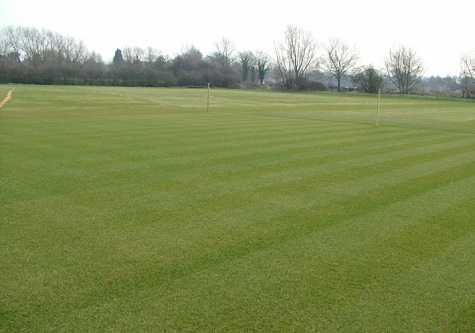
Rotary mowing of the square
As thoughts turn to preseason preparations maybe there’s one question that we all should be asking: How well have you planned your spring renovations and fixture programmes for the forthcoming season?
As Bob pointed out in his article, cricket squares and their pitches have been the discussion in many circles by people connected with the game since time and immemorial, so, it is inevitable that the controversy over the standard of cricket pitches will continue further into time, gaining momentum.
He also says, “Of course to the layman, and this includes all persons not fully versed on the practicing of 'Groundsmanship;; the idea of preparing a cricket pitch is to approach a 22yd strip of grass with a hose pipe, bag of fertiliser, garden rake and a mower, and, If possible the largest heavy roller to be invented. Unfortunately it is not quite as simple as that as there’s no substitute equal to living turf on which cricket is played."
I firmly believe clubs are better educated and aware of the resources than they used to be. Machinery options and the information that is now available for clubs to ensure they are going about the maintenance of the cricket facilities on a more consistent basis, has much improved.
Geographically every ground is different; the soil type, topography of the site and its levels will be significantly different to other clubs. And the current condition of the square will be generally down to the level of maintenance being achieved.
It has been normal practice for many years for clubs to undergo spring renovations that help restore grass health and address any winter damage.
Overseeding helps fill in bare patches, encouraging dense and even growth essential for a smooth, consistent playing surface.
To get the square prepared for the onset of a new playing season, it usually involves applying some iron to kill off any moss, a light scarification / verti-cut to remove thatch, some light top dressings of loam to top up levels, followed by some overseeding and an application of fertiliser.

Once these renovations have been completed, work will then centre on pre-season rolling work to firm up the playing surfaces. All this work, of course, can be compromised by the ever-changing weather we have at this time of the year.
Preparing a square for the start of any season, from an experienced point of view, is subjective. Rolling the square at the right time is just one key to success, finding the right balance is the deciding factor.
It has been proven though that rolling for too long wears the life out of the turf. The old school of thought was to roll, roll and roll some more. Producing a flat dead pitch with no pace or bounce. A study by Cranfield University on, Guidelines for Rolling in Cricket has shown that this is not the case.
The GMA also have information about rolling cricket pitches.
The popular Turfcare Blog also has guidelines on rolling cricket pitches well worth a read
Pre-season rolling plays a major part in the successful process of cricket pitch preparation. It can improve the performance by consolidating the soils, reducing live coverage and producing a smoother uniformed surface.
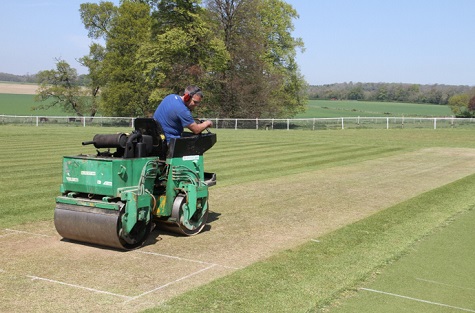
The maximum achievement for soil density is the function of its clay content. As clay content increases, the soil density increases with compaction. Higher clay content pitches 27- 35% require more intense working regimes. The availability of roll-on, roll-off covers will aid the rolling process during pitch preparation by retaining moisture in the soils, an element in the preparation for that perfect pitch.
At the end of the day, it is important that we carry out these tasks to optimise the performance of the pitches for the forthcoming playing season. All the hard work done in September and in the spring sets up the ground for a challenging summer of cricket. I will follow up this article next time, by talking about a 10-15 day preparation of wickets for matches.
Good luck with your spring renovations in the coming few weeks.