I would like to take this opportunity to wish all turf professionals a very happy Christmas. This is our final TurfPro of the year and we'll be back with our first edition of 2026 on January 5th.
We are aware, though, that whilst most of us are enjoying the delights of the festive break, a few of our colleagues will be hard at work - particularly those grounds teams and greenkeepers who must prepare sports pitches for the Christmas season sports calendar.
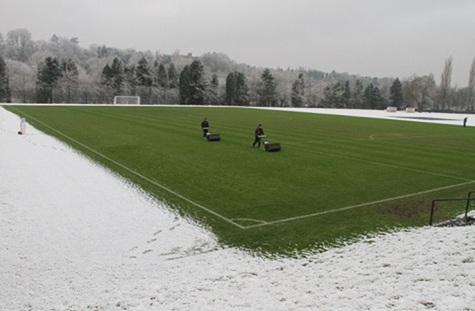
This time of the year brings with it many challenges, especially coping with the weather. Even with all the latest weather forecasting predictions, we often do not know what we may be facing in terms of snow, frost and icy conditions.
Getting the game on is a skilled operation. Preparation and planning are essential to ensure we can legislate for a window of poor weather. For many of the top-flight or Premiership sporting venues, they are now fully prepared with an array of tools and systems to ensure the game goes on.
This comes in a plethora of systems now available such as under soil heating, grow lights, fans, irrigation systems, frost protection covers, sub air systems, inflatable tents and covers to name a few. These systems make the life of a turf professional much easier than in days gone by.
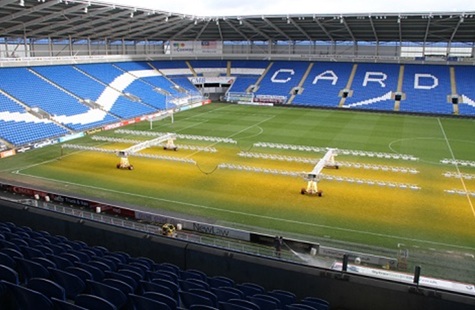
Having said that, there are several issues and time restraints on what can be used to get the game on. The availability of labour and resources will have significant part to play.
Also, spare a thought for the clubs who may not have access to, or the money for, these systems, and perhaps must rely on other means of getting the game on.
For the prevention of frost - until we had the more sophisticated systems such as grow lights, undersoil heating and tents - many groundsmen had to solely rely on the trusted frost sheets to help protect the pitch.
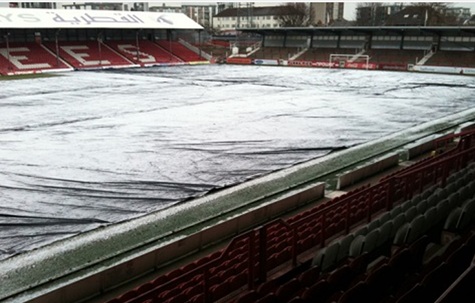
Often quite a laborious task in the old days, now we have several companies who sell and provide frost sheets that are easier to handle and store. Stuart Canvas are an example of a company that have been supplying frost sheet covers for many years and have now developed a range of products that suit a range of needs.
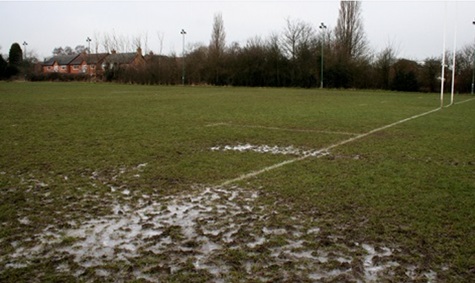
However, despite products such as these being available, we still see several games being played on frozen and waterlogged pitches. In my opinion this does not help either the players or the pitch.
Frost on the grass leaf blades tells us that the water inside the leaves is frozen. Remember that 80+% of plant tissue is made up of water. When this water is frozen, foot traffic on the turf causes the ice crystals in the cells to puncture through the plant's cell walls, thus damaging plant tissue.
More long-term damage can be caused when play takes place as the turf is thawing after a prolonged freeze. Under these conditions the top surface of the turf may be soft, but the underlying soil can still be frozen. Root damage occurs easily from a shearing action as players’ feet move the soft top surface against the frozen sub soil.
Having checked some UK weather forecasts, it seems the weather during the Christmas period will remain wet and mild with the likelihood of some snow and frost on higher ground during the festive period.
It will be no surprise, however, when many winter sport pitches inevitably become saturated. We are already starting to hear of some matches being postponed due to the wet weather.
Many of these postponements could be prevented if clubs were to invest more into their pitches, both during the construction phase and post construction - plus having a robust maintenance regime in place.
However, for many natural soil-based pitches it is more about the lack of maintenance and understanding about the type of pitches being managed.
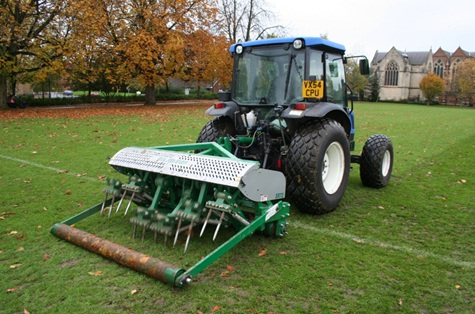
Most pitch problems are caused when soils are saturated and compacted. When saturated, a soil is said to be at its maximum retentive capacity; that is, all soil pores are filled with water. Saturation usually occurs for short periods of time, either during heavy rainfall events or when soil is being irrigated.
Once a pitch becomes saturated, that is to say all the pore (air) spaces in the soil profile remain filled with water, then we are in a situation of the pitch being in a poor state and will be prone to damage. However, the main contributing factor that reduces and damages pore spaces in soil is compaction - caused by compression forces, normally associated with play and use of machinery, particularly during wet weather periods. Over time, these compression forces reduce the pore spaces so that air, water and nutrient flow through the soil profile is restricted, leading to many problems associated with compaction.
The heavier the soil the longer it will take for the pitch to dry out; sandy soils are more free draining than heavy loam or clay soils and, therefore, will dry out more quickly.