EDITOR'S BLOG
AUTUMN DISEASE PRESSURES
What to look out for
by TurfPro Editor, Laurence Gale MSC, MBPR
 
Laurence Gale MSC, MBPR

The combination of early morning dews, warm and wet weather and diminishing daylight hours increases the risk of fungal disease outbreaks.


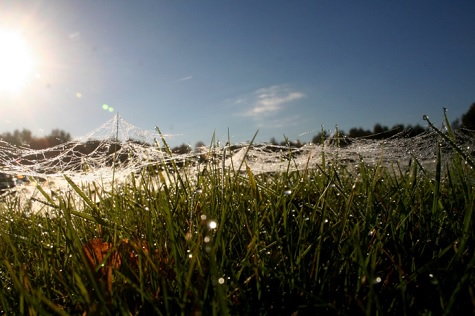
We are now entering the time of the year when we are likely to see the formation of morning dews on our grass surfaces. This generally occurs when evening air temperatures start dropping dramatically, especially when we have clear cloudless nights.


On a clear day, water evaporates from the warm ground into the atmosphere. When night falls, the ground radiates the day's warmth into the skies. Warm air can hold more moisture which precipitates out onto the leaf as the temperatures plummet overnight. The ground becomes much cooler, causing the water vapour to condense. This condensed vapour is dew. When the nights get colder, this dew gets transformed into frost.  


The combination of early morning dews, warm and wet weather and diminishing daylight hours increases the risk of fungal disease outbreaks. The right conditions to trigger these disease attacks are weakened or susceptible plants, a disease-producing organism (pathogen usually fungi) and weather conditions which favour the formation of fruiting bodies and spores (moist, mild wet conditions).


Most cool season turfgrass diseases spread via water droplets. Plants also release excess nutrients via their stomata's (gutation) during night hours when there is no sun and rarely any wind to evaporate it. These exudates become mixed with the dew water and become the perfect food source for disease pathogens in their early stages of development.


Many diseases that are occurring now have responded to the unusually warm, autumn weather conditions. Boundary layers around the leaves have stayed moist and humid. Relative humidity is important for spore germination and penetration of leaf tissues and constant wet conditions will allow the development and transportation of active fungi spores.


Most fungi grow well between 10°C - 40°C and function best at a pH range of 4-7pH. The current lack of cooler weather and sharp frosts has not helped in reducing these active pathogens.


The first step in turfgrass disease management is identifying the true nature of the problem. Diseases are only one cause of turf loss, and disease control measures will do nothing to alleviate damage from other causes such as management, wear or plant stress. It is therefore essential to determine whether the problem is disease, and if so, which disease.


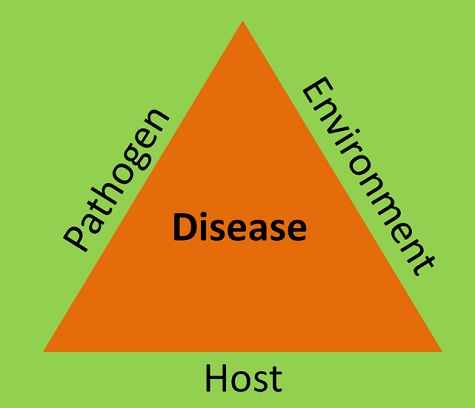
Disease Triangle 


The three disease factors: susceptible grass / host, pathogen, and environment, provide the evidence for disease diagnosis. Symptoms are the expression of the susceptible grass to the disease and can take on a variety of forms.


Symptoms may appear on the leaves as small, circular, tan-coloured lesions surrounded by brown or purple borders (leaf spotting); as yellow, red, or tan blotches over most or all of the leaf blade (blighting); stunting; wilting; or as a brown or black rot on the crowns and roots. The appearance of these symptoms will also vary depending on the type of disease, the severity of the attack and the developing stage of the disease.


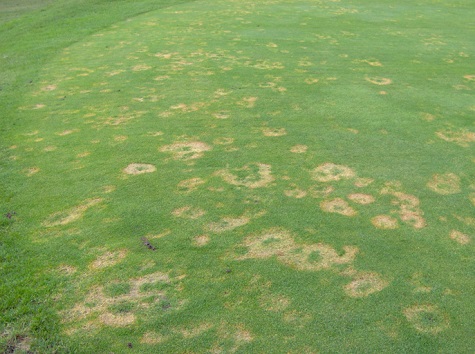
Fusarium disease 


Early identification of the symptoms is essential for good disease management; however the best form of management is using preventive, cultural turf maintenance methods that reduce the ideal environmental factors that these diseases require for development. E.g. regular brushing/switching of the grass to remove excess moisture, regular aeration to allow gaseous exchange and water percolation.


Turf grass diseases refer to a variety of fungal, bacterial, or viral infections that affect the health and appearance of grass in lawns, sports fields, golf courses, and other turf areas. These diseases can cause discoloration, thinning, wilting, and even death of the turf grass if left untreated. Different types of grasses are susceptible to specific diseases, and the severity of the disease can vary depending on environmental conditions and cultural practices.
Some common turf grass diseases include:


Brown Patch: This fungal disease primarily affects cool-season grasses during hot and humid conditions, causing circular patches of brown or tan grass.


Dollar Spot: Dollar Spot is another fungal disease that creates small, silver-dollar-sized spots on the turf, usually during warm and humid weather.
Pythium Blight: This disease is caused by a water mould and can quickly kill large areas of turf, especially in hot and wet conditions. It appears as irregularly shaped patches of discoloured, greasy-looking grass.


Leaf Spot: Leaf Spot is a fungal disease that causes small, circular spots on the grass blades. It is commonly seen in warm-season grasses during periods of high humidity or excessive moisture.


Rust: Rust is a fungal disease that gives the grass a rusty or orange appearance. It is often found in lawns with poor fertility or during cool and wet weather.


Snow Mould: Snow Mould is a fungal disease that develops under snow cover during winter. It appears as circular patches of matted, straw-colored grass when the snow melts.


Red Thread disease 


Red Thread: Red thread turf disease, also known as pink patch, is a common fungal infection that affects various types of grass, particularly fine fescues, ryegrasses.


Fusarium turf disease: also known as Fusarium patch or Fusarium blight, is a common fungal disease that affects turfgrass species. It is caused by various species of the Fusarium fungus, particularly Fusarium culmorum and Fusarium oxysporum.


Site characteristics and turf management practices have a large influence on disease management. Factors such as air movement, drainage, soil conditions, and the amount of sun or shade, slope, fertilisation and aeration programmes are important in influencing the development of turf diseases.
It is important to remember that pathogenic fungi can survive and remain in a dormant state in plant debris and soil until favourable conditions arrive again to stimulate another disease outbreak.


The Pathogens that cause these diseases are always around lying dormant in the thatch layers waiting for the ideal conditions to become active. Once these spores are activated and have found an appropriate host they are able to grow and reproduce themselves, spreading new spores and infections to other areas of turf. This cycle continues whilst favourable conditions prevail.


Understanding the disease cycle and implementing works that can break up the disease cycle will help reduce the opportunities for disease development and outbreak.


When it comes to disease identification, there is as much emphasis on you as the turf manager to provide appropriate turf samples for analysis as there is for the lab to accurately identify the problem. In most cases, the best place to remove a turf sample for analysis is from the leading edge of the symptoms, where the affected or discoloured plants give way to healthy turf.


However, we must recognise that by achieving good cultural practices to reduce thatch, improve air movement in soils, balanced feeding and correct mowing regimes will play an important part in promoting a vigorous healthy turf that can fight off and reduce the chance of disease attack.


We have also seen in recent years a trend towards more use of alternative products, such as organic fertilisers, compost teas, use of phosphite as well as tonics and bio stimulants to improve turf grass quality and help reduce disease incidence.


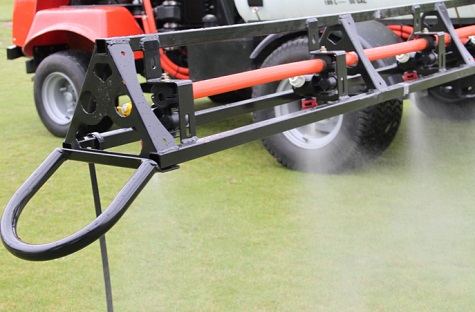
Good cultural practices may be the only option for disease control in the future especially as there are moves to reduce the amount of chemicals and fungicides available for use in the coming years. However, at the moment we are still able to reduce fungi pathogen populations by applying fungicides, which either kill off the pathogen or slow down the production of fungal spores.


Again, it is important to have identified the disease correctly, so that an appropriate fungicide can be selected. Using the wrong fungicide or wrong application rates can lead to a number of problems, not only would it be a waste of time and money, but the effect on the disease is also likely to be negative and may well exacerbate the problem by making the disease more resilient to the Active Ingredient applied.


Fungicides can be divided into two broad categories: contact fungicides and systemic fungicides. The contact fungicides generally are applied to the leaf and stem surfaces of grass plants. These materials may or can be washed or mowed off easily, which implies that they often only have a short term active durations, between 7-10 days. These fungicides are usually used to control foliar diseases and not diseases of the root and crown structures of the plant. Contact fungicides are used throughout the twelve months of the year.


Systemic fungicides have a different mode of action; the chemicals are absorbed and translocated within the plant’s tissues. Thus, they are not as likely to be removed from the plant by rainfall and mowing. Therefore, they are active for longer periods and can protect plants for up to 4 weeks. Most systemic fungicides can control both foliar and root / crown diseases. Use of systemic fungicides during colder months is not advised, as the plant is either dormant of slow growing and will not rapidly uptake the fungicide-greatly reducing its effectiveness.


Remember, prevention is key when it comes to disease outbreaks. By implementing these practices and maintaining good turf management practices, you can reduce the risk of diseases and keep your turf healthy and vibrant. If you encounter persistent or severe disease issues, consult with a local turfgrass professional or extension service for guidance tailored to your specific situation.


Please keep in mind that the use of fungicides should be done according to the instructions provided by the manufacturer and local regulations. It's also important to consider integrated pest management (IPM) practices, such as proper mowing, irrigation, and fertilisation, to maintain a healthy turf and reduce the need for fungicide applications.

NEWS
VOTE FOR YOUR FAVOURITE PROFESSIONAL DEALER
In Service Dealer's 2024 Dealer of the Year Awards
 
Service Dealer Awards 2024

We want to hear from the readers of TurfPro, telling us who the dealerships are that you use, who go above and beyond.


TurfPro's sister title for the specialist outdoor powered machinery dealer sector, Service Dealer, each year runs a series of awards, designed to highlight the incredible work carried out across the industry.


The organisers of 2024's Dealer Of The Year Awards now want to hear from the readers of TurfPro, to let us know the dealerships that you use, who go above and beyond to meet your new machinery and servicing needs.


Owner of TurfPro and Service Dealer, Duncan Murray-Clarke said, "When it comes to professional groundcare we are looking for a dealership who is a cut above the rest. We want to hear all about the dealership who’s firing on all cylinders for their customers and a worthy nominee for the Professional Turfcare Dealer of the Year."


Below you will find the link for you to tell us which dealership deserves the title of Professional Turfcare Machinery Dealer of the Year.


You may also feel you'd like to vote for a company which may be more accurately described as a Garden Machinery, a Forestry Machinery, an ATV / Utility Vehicle, or a Farm Machinery dealership, if those are the businesses you use locally.


A judging panel will review all the nominations prior to the Awards Ceremony on the 28th November. All entries for the categories below will be considered by the judging panel for the prestigious Overall Dealer of the Year award (sponsored by Kress).


Below are the categories which we'd like to hear our TurfPro readers' thoughts on. Nominations close this Friday, October 18th.


Professional Turfcare Dealer of the Year - sponsored by Toro UK


NOMINATE PROFESSIONAL TURFCARE DEALER OF THE YEAR

Garden Machinery Dealer of the Year - sponsored by Husqvarna


NOMINATE GARDEN MACHINERY DEALER OF THE YEAR


Farm Machinery Dealer of the Year - sponsored by Ibcos


NOMINATE FARM MACHINERY DEALER OF THE YEAR


Forestry Equipment Dealer of the Year - sponsored by Societe Generale Equipment Finance


NOMINATE FORESTRY EQUIPMENT DEALER OF THE YEAR


ATV/Quad Dealer of the Year - sponsored by Yamaha


NOMINATE ATV/QUAD DEALER OF THE YEAR


The Awards will be presented at the Gala Dinner following the Service Dealer Conference that takes place on Thursday 28th November 2024 at the Crowne Plaza, Stratford upon Avon. The theme for this year's event is Driving Success.

GMA ANNOUNCE PANEL
To judge their awards
 
GMA Awards

In our first WEB ONLY story, this year’s panel consists of ten leading turf professionals tasked with selecting seventeen award winners across a variety of categories.


AUTUMN WORKSHOPS UNVEILED
Designed to provide essential skills
 
New courses unveiled

In our next WEB ONLY story, provider says these workshops will cover key topics of interest to professionals in the sports turf management sector.


OVER 120 ATTEND CONFERENCE
Successful event held
 
Dealers attend company's conference

Supplier's dealer conference sees the introduction of new spare parts system.


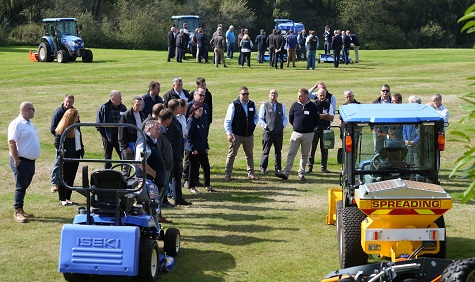
Iseki UK & Ireland welcomed over 120 attendees from across the UK, Ireland and Europe to their 2024 Dealer Conference recently, for a combination of outdoor training, seminars and product announcements.


Sixty dealers representing the UK, Ireland and Iceland were joined by the managing director of Iseki Europe, Mr Ota, and Mr Suzuki from Iseki Japan at the Forest of Arden Hotel & Country Club for the one-day conference.


The company says the event provided a platform for dealers to engage in hands-on and practical demonstrations of the company's latest machinery. On either side of the practical demonstrations, attendees also participated in a series of seminars led by Iseki's technical and commercial experts. 


David Withers, managing director of Iseki UK and Ireland, said, "We are thrilled with the level of engagement and enthusiasm from our dealers at this year's conference. The demonstrations and seminars have hopefully empowered our dealers with the tools and knowledge they need to better serve their customers and win against our competitors."


The conference also saw the introduction of Iseki's new PartSmart spare parts system, which the company said was brought in as part of their commitment to ensuring dealer success. They said the new system promises to streamline ordering processes, reduce downtime, and improve overall customer service across the dealer network.

TECH LEADS CLUB'S FLEET
Invested in "practical and progressive" machinery
 
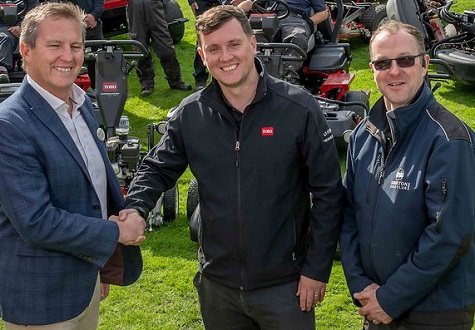
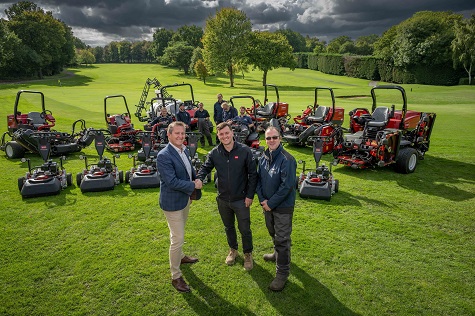
L-R: Clint Whittaker, general manager; Joshua Nash, Reesink Turfcare; and Andrew Kerr, course manager

Golf club says they have invested for the first time in "environmentally friendly" technology.


In its latest Toro fleet deal with Reesink Turfcare, Surbiton Golf Club has invested for the first time in what it describes as "environmentally friendly technology" with two Greensmaster 3360 hybrid mowers and in new spraying technology with the GeoLink system.


L-R: Clint Whittaker, general manager; Joshua Nash, Reesink Turfcare; and Andrew Kerr, course manager


Course manager Andrew Kerr says the reasons for these choices are progressive as well as practical; “We’ve been evolving and adapting to golf technology and the needs of golfers since we began, and this is the next step. We’ve noticed in recent years that members use Surbiton as a destination location, to enjoy the environment it provides, not just for playing golf. 


“With reduced emissions and lower operating noise these mowers contribute to creating a better and more relaxed place to be. And for the same reasons, are pleasing to the residents around us.” Andrew says he is also noticing a reduction in fuel consumption too. 


Based on the outskirts of Southwest London, Surbiton Golf Club is one of the first clubs to take advantage of the latest GeoLink spray system.


“The level of accuracy it provides you just wouldn’t be able to achieve manually no matter how good or experienced the operator,” he says. “It’s reducing how much product we use and lowering our costs because we’re only using what we need to, there’s no wastage. We don’t have square greens or fairways here and that had made spraying tricky but now we cover every inch with no over or under spraying.”


Also included in the order are two Groundsmaster 3500-D with Sidewinders, seven Greensmaster 1021 pedestrian mowers, two Reelmaster 3575-D fairway mowers and a Groundsmaster 4700-D rough mower in what is the club’s second Toro fleet deal.


“We got our last fleet about six years ago and we would usually replace it after five years, but we’ve been waiting for the machines to be available,” explains Andrew.


“Our members love striped greens and complexes and having the combination of the cylinders and Sidewinders makes delivering eye catching stripes easy.” 

SUZUKI ADD TO DEALER NETWORK
New appointment announced
 
Suzuki have appointed to their dealer network

New authorised dealer takes on the KingQuad all-terrain vehicles.


Suzuki have appointed ARK ATVs as an authorised dealer in the southwest of England for its KingQuad all-terrain vehicles.


The ARK ATVs team


ARK is a well-established specialist ATV sales and service centre based near Minehead in Somerset. Family-owned and run since 1997, the business was originally set up by Rob and Kathy Blomfield-Richards alongside Tony Leader and it is still going strong to this day. Rob and Tony have over 75 years of ATV experience between them, selling over 10,000 ATVs during this time.


James Westwood from ARK ATVs said, “We are so pleased to be adding Suzuki KingQuads to our product range. These machines are so robust and reliable we know they are already popular among farmers, and we are looking forward to being able to offer them exclusively to our customers.”


Mark Beeley, head of ATV & Marine for Suzuki GB said, “It is great to welcome ARK ATVs to the Suzuki family. We know they will do a great job in representing our brand and we are looking forward to working with them.”

Sponsored Content
MAJOR TO LAUNCH UPGRADED TDR
At Saltex 2024
 
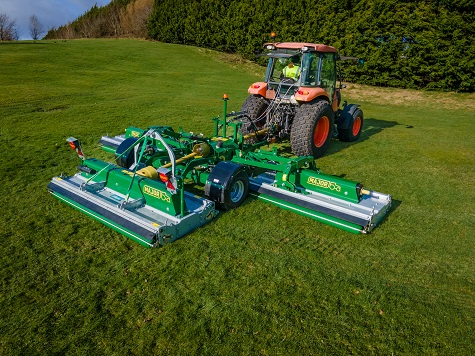
TDR Rotary Mower

Major Equipment Ltd, a leading innovator in professional tractor-powered groundcare mowers, is delighted to announce the launch of its upgraded TDR Rotary Mower, at this year’s SALTEX.


Major Equipment Ltd, a leading innovator in professional tractor-powered groundcare mowers, is delighted to announce the launch of its upgraded TDR Rotary Mower, at this year’s SALTEX. 


Designed for the management of parklands, sports pitches and semi-rough golf course grass, this new model delivers enhanced durability, precision and efficiency in maintaining expansive green spaces. 


The upgraded TDR stands out with several key improvements over its predecessor including:

  • Galvanised Body: The entire body of the Major TDR is now galvanized, offering superior resistance to rust and corrosion, ensuring longevity and reducing maintenance costs.
  • 5mm Blades: The new model is equipped with 5mm blades, designed to deliver a cleaner, more precise cut. These robust blades enhance the mower's ability to handle tougher grass and vegetation, resulting in a consistently professional finish, adding an aesthetic appeal to any public space.
  • Hydraulic brakes: Safety is paramount, and the inclusion of hydraulic brakes as standard ensures that operators have better handling and can operate the mower with increased confidence particularly when travelling between sites.
  • Heavy duty driveline: The gearbox drive line delivers consistent cutting rates, even in heavy and wet conditions, eliminating the belt slippages and inconsistent cutting associated with belt driven mowers.
  • Simple height adjustment: Operators can easily adjust the cutting height from 10-140mm, allowing for a wide range of applications and delivering the perfect cut every time.

The upgraded Major TDR is available in two working widths; 4.90m and 6.1m and is the ideal solution for local authorities responsible for maintaining parks, sports fields and other public spaces, as well as private contractors who require reliable, high-performance equipment for large-scale landscaping projects.  The rear deck can be detached from the chassis and used independently. This feature allows for greater operational flexibility, making the TDR a multi-purpose tool for any grounds maintenance team.


Major Equipment will be showcasing the TDR at stand J112 at Saltex 2024, October 30th and 31st 2024.  Visitors to the stand can also see the Major CS-Pro, a 3m tractor-mounted mower ideal for smaller compact tractors and the MJ2000 Flail Collector, a versatile machine designed for cutting and collecting grass and perfect for areas with infrequent mowing cycles.


Major TDR Launch


For more information about the upgraded Major TDR or to schedule a demonstration call Major Equipment Ltd on 01524 850501 or visit www.major-equipment.com

JOBS
ADVERTISE YOUR JOBS HERE
Amazing success rates!
 
Advertise your jobs on TurfPro Weekly Briefing

Advertise your recruitment needs on TurfPro Weekly Briefing and reach our targeted audience of recipients every week.

Contact Nikki Harrison for details - 01491 837117


PREVIOUS FEATURES
EDITOR'S BLOG ARCHIVE
Catch up with Laurence Gale's recent blogs
 
TurfPro editor, Laurence Gale

Want to catch up with one of editor Laurence Gale's blogs? Here is the place to do so.


TURFPRO FEATURE ARCHIVE
Find our previous features here
 
TurfPro Feature Archive

If you want to catch up with any of TurfPro's previous features, here is the place to do so.


SUSTAINABLE PARKS
Parks For London case study


WHY GRASSROOTS RUGBY IS IN DECLINE
A steady drop off in participation.


SEEDS OF SUSTAINABILITY
Focus on a major supplier of grass seed and related products to the amenity sector


ON TEST
STIHL BGA 300 cordless leaf backpack blower


ON TEST
EGO Multi-tool


PUT THEM ON THE TOOLS!
Time for an attitude change


SUSTAINABILITY IN THE TRAINING SECTOR
Grasping the challenge of encouraging more sustainable practice


SUSTAINABILITY IN LOCAL AUTHORITIES
Lessons learnt and experiences


SKILL SETS NEED RECOGNITION
Turf professionals are underappreciated


GREATER RESPECT FOR GROUNDS STAFF MIGHT MAKE ALL THE DIFFERENCE
To the recruitment crisis


A COMPETITIVE SALARY
Why employers should advertise the salary when recruiting new staff


ON TEST
Makita XGT UV001G lawn scarifier


AN EXAMPLE OF SUSTAINABILITY IN MACHINERY SUPPLY
Focus on Kubota


MY PERSONAL GREENKEEPING PHILOSOPHY HAS NEVER CHANGED
I don't follow any set program


SUSTAINABILITY IN LANDSCAPING
A substantial element of amenity activity


IS IT TIME TO SAY NO TO 'NO MOW MAY'?
Any real benefits?


SUSTAINABILITY IN OUR PARKS & PUBLIC GREEN SPACES
Meeting the challenge


THE PATH TO WIMBLEDON
For groundstaff member, Conrad Cavil


ON TEST
EGO LBP8000E backpack blower


SUSTAINABILITY IN THE LAWN CARE SECTOR
A key consideration


BEEKEEPING IN COMMERCIAL ENVIRONMENTS
The current situation


SUSTAINABLE PRACTICE IN THE AMENITY SUPPLY SECTOR
Optimising land use through integrated solutions


SUSTAINABILITY IN THE GOLF SECTOR
Focus on BIGGA


THE SEARCH FOR SUSTAINABLE PRACTICE
Bringing together key points


DEVELOPING SUSTAINABLE SOLUTIONS FOR GOLF
R&A are supporting clubs


GETTING THE MOST OUT OF EVERY POUND OF BUDGET
A course manager's view


A NEWFOUND APPRECIATION FOR ALL VOLUNTEERS
Who look after grassroots pitches


SUSTAINABILITY & THE UK ACTION PLAN
For weed, pest and disease management


CONCERN FOR PARKS FOLLOWING COUNCIL BANKRUPTCIES
What does the future hold?


TAKING A GLOBAL LOOK AT SUSTAINABILITY
Is the rest of the world also driving towards sustainable practice?


RENOVATIONS, PLAY AND THANKS
On my mind this week


SUSTAINABILITY – IMPLICATIONS FOR TRAINING & EDUCATION
Set to play a crucial role going forward


TULIP TREE
Liriodendron tulipifera


LYDIA BROOM
Genista lydia


THE LAWN AND ITS VALUE
Changing attitudes


GIANT HOGWEED
Invasive and potentially harmful


LIFE-CYCLE ANALYSIS & SUSTAINABILITY
Considering every stage of the journey


NITROGEN USE EFFICIENCY
The most important nutrient


BERBERIS THUNBERGII
A shrub that has stood the test of time


ENSURING FUTURE PROSPERITY
Advice imparted at road shows


INNOVATION & SUSTAINABILITY
A key focus


PHOTINA RED ROBIN
A sensational flowering shrub


VALUING THE GRASSROOTS
We must not overlook those who maintain these grounds


MANAGING WEEDS SUSTAINABLY
In amenity spaces


DETECTING NUTRIENT DEFICIENCY SYMPTOMS
In turf plants


SPRING RENOVATIONS UNDERWAY
A crucial period


SUSTAINABILITY IN SUPPLY
A focus on those who supply essential inputs to our sector


CHANGING CLIMATE
Is a borehole the key for clubs?


SUSTAINABILITY AT THE SHARP END
How to put into practice when budgets are tight?


ANOTHER NAIL IN THE COFFIN OF GRASSROOTS RUGBY
Clubs are struggling


SUSTAINABILITY IN PRACTICE
Seeking transparent and robust supply chains is essential


TIME FOR ACTION
To reverse recruitment crisis


CONTROLLING COSTS
Planning is crucial


THE SEARCH FOR SUSTAINABILITY
What exactly does the term mean?


CARING FOR THE GRASSROOTS
From volunteers to contractors


DEFRA IS LETTING DOWN THE COUNTRY
Complete failure to address the plastic grass debate


WE CAN ALL DO MORE
To aid biodiversity


MY LIFE IN GREENKEEPING
With Bruce Cruickshank


LEVELLING UP, GETTING SMARTER & GETTING AHEAD
Parks require so much more funding


SWITCHED ON FOR HARD WORK
Putting trimmers through their paces


MACHINERY HIGHLIGHTS
At this year's show


MY SALTEX
Daniel Lewis​, Manchester City Football Club


AWASH WITH LEARNING OPPORTUNITIES
Two months till showtime


LOOKING BACK, LOOKING FORWARD
Priorities for the amenity sector


THE DECLINE OF ‘PARKITECTURE’
A symptom of the state of parks in 2022


DEVELOPERS SHIRKING GREEN SPACE RESPONSIBILITIES
Lack of financial commitment


TIME TO COME TOGETHER
For the good of the industry


THE DEATH OF GRASS ROOTS CRICKET
Gathering apace?


ROUTES INTO THE INDUSTRY MUST BE ENSURED
Q&A with David Fisher, Lantra’s head of industry partnerships


STRONG VIEWS ON CRICKET PITCH PERFORMANCE MARKING
A bone of contention


A PREMIUM PRODUCT
Delivered at Naas Golf Club


THE GREEN REVOLUTION
And Esker Hills


MAKING A CHANGE
Laytown and Bettystown Golf Links


A DAY AT THE RACES
Naas Race Course


WORKING TOGETHER AS ONE VOICE
How the industry needs to proceed


OVER 175 YEARS OF EDUCATION
Wesley College


ELECTRIC EXCITEMENT
Dennis's Ian Howard talks electrification


THE HOME OF CORK GAA
Páirc Uí Chaoimh


LONG POLE BATTERY HEDGE TRIMMERS TESTED
STIHL HLA 66 and HLA 86


OVER 800 YEARS OF HISTORY
Johnstown Castle and Gardens


A CLUB GONE WILD
Kilkenny Golf Club


A GOLF COURSE IN THE GARDEN OF IRELAND
Woodenbridge GC


80 YEARS YOUNG
Charleville Golf Club


AN UPLIFTING EXPERIENCE
Bunclody Golf & Fishing Club


GETTING BACK TOGETHER
Albeit gradually . .


GO WEST
Inishturk GAA pitch – one of the most westerly sportspitches in Europe


WORKING ON A TIGHT BUDGET
Nenagh Golf Club


ON A MISSION
Wrekin Golf Club aiming to enrich wildlife and fauna


WILD AND WONDERFUL
Design By Nature


LEARNING HOW TO SURVIVE
Abbey Par 3


TACKLING OBESITY
Vital that schools can provide sport


A LIFETIME OF LEARNING
Vital for turf professionals


CELEBRATING 125 YEARS
Tullamore Golf Club


UNIVERSITY CHALLENGES
At Trinity College Dublin


BLENDING THE OLD WITH THE NEW
Bray Golf Club


A WELL POLISHED COURSE!
Ierne Social And Sports Club


IDENTIFYING THE TRUE VALUES
Of grounds maintenance


THE INDUSTRY WILL CHANGE & ADAPT
But it will survive


WIRRAL GOLF COURSES SAVED
Renewed hope and optimism for the future


GREEN SPACE CONTRIBUTION TO WELLBEING IS UNDERVALUED
Parks invisible on national agenda


A SHINING LIGHT IN IRELAND'S SUNNY SOUTHEAST
Wexford Golf Club


GREEN SPACES DO NOT LOOK AFTER THEMSELVES!
Keith Kent says we must invest in people


WE SHOULD TELL THE WORLD ABOUT THE UK INDUSTRY
Right time for all sides to come together


SOIL LIFE IS PRECIOUS
Good-quality soil can help save the planet


MORE THAN JUST CUTTING GRASS
Encouraging the next generation


A BUZZ FROM DOING THE JOB
Wide experience of the turf grass industry


PAYING THEIR WAY
Low wages is the bane of the industry


AMENITY MANAGEMENT IMPACTS US ALL
Professor John Moverley


CARING FOR PARKS OF ALL TYPES
Mary Worrall


TOP FIVE FRUSTRATIONS FOR CRICKET GROUNDSMEN
What causes you the most frustration in your role?


PROFESSIONALS AT THE CUTTING EDGE
Vic Demain and Phil Sharples


BOWLS CLUBS IN PERIL
A sad decline


A VERY SPECIAL INDUSTRY
Loz looks back


SNEAK PEAK AT A ROBOTIC "GAME CHANGER"
Commercial model capable of covering 50,000 m2 teased


HALESOWEN PICK A BIG ROBOT UP FRONT
Invest in mowers


COMPRESSED AERATION
The new way


PARKS MATTER MORE THAN EVER
Recent sector developments


ON TEST
STIHL blowers


THREE CORE VALUES TO SHAPE OUR INDUSTRY
Real concerns for the future


ENGLAND'S GREEN SPACE GAP
A split along racial lines


ON TEST
EGO STX3800 strimmer with RTX2300 Rotocut head


A SECTOR FACING IMPORTANT TIMES
Review of the National Action Plan


PARKS MATTER
The role of public parks in the recovery: a discussion paper


A UNIQUE SPORTING VENUE
Wormsley private estate


A BTME OUTDOORS?
A good bet for the industry


PARKS NEED APPROPRIATE POLITICAL REPRESENTATION
Q&A with Philippa Reece, Parks and Foreshore Manager at Adur and Worthing Council


CRICKET LOAM
What does it mean?


A HERCULEAN EFFORT TO GET PARKS BACK TO NORMAL
Q&A with Chris Worman, Rugby Borough Council’s parks and ground manager


ON TEST
STIHL battery products


TURFGRASS STRESS MANAGEMENT
Reactive Oxygen Species (ROS) and antioxidants during biotic and abiotic stress in turfgrass plants


AUTUMN DISEASE MANAGEMENT
The coming months are going to prove very difficult


THE ABUSE OF PARKS . .
Is the abuse of society


WHY PARKS MATTER?
A statement from the Parks Management Forum to the Prime Minister


THE 21st CENTURY PARKS MANAGER
Innovative, creative and entrepreneurial


EAT, SLEEP, CUT, REPEAT!
Cricket under covid


TIME FOR A SINGLE SHOW?
Debate brought back into focus


A CHALLENGING TWO MONTHS
Running golf design projects from home


PRESSURE SITUATION
Cementing the reputation


A CLUB TO BE PROUD OF
10 years at the helm of Olton GC


GAME CHANGERS IN TURFCARE
The day the Lord's outfield reconstruction proved its worth


THE ESSENCE OF ESSENTIAL
Finding a sensible way forward on defining "essential maintenance"


THAT WAS THE YEAR THAT WAS
2001


HOW TO LOOK AFTER A GOLF COURSE WITH NO GOLFERS
Fundamental to the survival of almost all courses, if not of the game itself


RAIN STOPPED PLAY WOULD BE WELCOME
. . along with ‘lunch is being taken early’


PHYSICAL CONTROL OF TURFGRASS PESTS
An urgent problem


A DIVERSE & ENTERTAINING WEEK
Successful BTME 2020


INTEGRATED PEST CONTROL
Opportunity to embrace new methods


ENVILLE ON THE UP
Major investments taking place


GREEN FLAG AWARDS 2019
A great success


U.S PROFESSIONAL EQUIPMENT SHOW EXCELS
Buoyant GIE+EXPO


LEGACY OF THE SOLHEIM CUP
At Gleneagles


A DAY OUT WITH THE LADIES
Behind the scenes at the Solheim Cup


COVENTRY UNIVERSITY'S EDIBLE GARDEN SUCCESS
2006 - present


HAIL THE GRASS MASTERS!
Boorish media comments about pitch quality are wide of the mark


CONTRACTOR SEES MULTI-DISCIPLINE SUCCESS
360 Ground Care serving professional facilities


BUSY TIMES
Judging the Green Flag Awards


TAKING AN INTEGRATED APPROACH
What does it all mean in managing turf surfaces?


UNDER PRESSURE
Dry weather conditions continue to keep turf managers focused on moisture management


EDDIE SEAWARD
Death of Wimbledon’s influential grounds manager


MAJOR NEW IRRIGATION PROJECT
At Top 100 classic Berkhamsted Golf Club


NEW HORIZONS FOR THE HATTERS
Investment paying off at Kenilworth Road


ELIZABETHAN RESTORATION
At Castle Bromwich Hall Gardens


WHAT IS BIOPHILIA?
The vital impact of parks and green spaces on health and well-being


WORM CONTROL
Without carbendazim


THE TRUE COST OF PETROL
Battery-powered outdoor power tools are now turning the heads of professionals


SANDS OF TIME
Sand-based pitches are now the norm in professional sports


WHY DO WE DO THE RIGHT THING?
We must maintain industry standards


CHASING GRASS PERFECTION?
11 things you need to know . . .


MAINTAINING STANDARDS
Q&A with BASIS ceo, Stephen Jacobs


STRI RESEARCH DAY 2018
Hosted at research trial grounds in Bingley


THE MECHANIC
Leicester City FC invest in new role


LORD'S 'GRASS-GUVNOR' TO RETIRE
Mick Hunt bows out after 49 years


HOLLOW CORING & DEEP SCARIFICATION
Is it really necessary?

Side Advert Image


PARTNERS
CAMPEY
 
Campey Turf Care Systems
Etesia
 
Etesia / Pellenc
Foley
 
Foley Company
ISEKI UK & IRELAND
 
Iseki
Kubota
 
Kubota
LANTRA
 
LANTRA
MAJOR
 
Major
Garden trader
 
Garden Trader
PRODUCED BY THE AD PLAIN
The Ad Plain
 
TAP