Over the course of the next twelve months, I will be delving into many of my memories, and excursions undertaken, to highlight the management and maintenance our unique sports turf and amenity and landscape sectors.
I will begin the series with a selection of articles about the progress and development seen in many of our sporting pastimes. This will include football, rugby, cricket, golf, bowls, tennis and horse racing.
After covering these sports, I will talk about the changes seen in local authorities, manufacturers, contracting and other service providers.
Each article will portray what I believe are significant developments seen in each sector over the last 50 years in terms of people, skills, machinery, products and services.
The first of this series will delve into the transformation of football playing surfaces and their management, as well as the innovation of certain products and services that have helped attain these near on perfect playing surfaces at most professional football clubs.
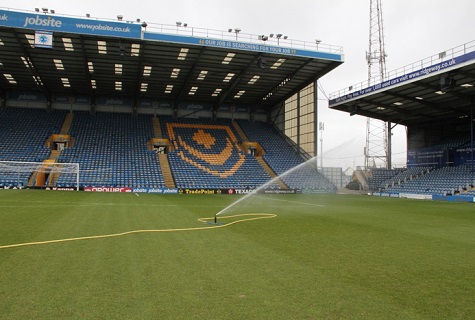
Portsmouth FC
Things were very basic when I was HG at Portsmouth FC back then in 1983. Portsmouth had just been promoted back into the second division, with Bobby Cambell the manager at the time. I remember joining the club and was working with assistant Brian Regan who had been at the club for several years, working under the legend player-come-groundsman, Douggie Reid, who was said to be able to take a mean penalty wearing wellies. Dougie played for Portsmouth from 1946 -1956 and in 1958 he returned to Pompey as a groundsman until he retired in 1978.
Maintenance of the pitch was very basic back then, effectively mowing every other day, spiking and brushing and feeding with some very limited fertiliser products, generally a 20.10 10, NPK ratio fertilise. We had two very old Dennis mowers and an Atco as a spare mower. We did not have a line marker; we marked the pitch using a four-inch paint brush and a can of whiting. One of the first purchases I made was a dimple line marker. After matches we would spend three days devoting, mowing and prepping for the next game.
Most clubs back then were operating under similar regimes and, with most pitches being soil based, they were prone to waterlogging and cutting up during the winter months.
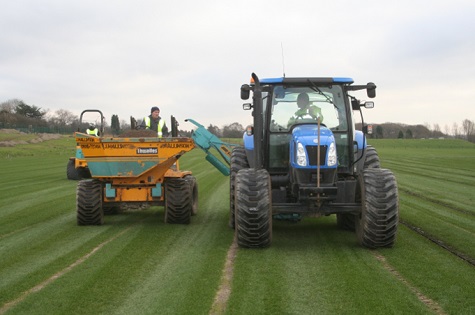
Mallinsons contractors draining a football field
It was from the mid-1980s that we started to see clubs’ pitches improve with investment in new construction and drainage schemes that were coming onto the market. In 1982 we saw the first club, QPR, to invest in a complete artificial pitch at Loftus Road. A sand filled carpet system that provided many talking points. After several complaints and concerns it was removed in 1988 and replaced with a natural turf pitch.
New, efficient ways of installing drainage pipes were being developed, with specialist machines that could excavate narrow trenches and lay a perforated length of pipe, speeding up the process with less surface damage being caused by the work being undertaken. In fact, once the pipes were in and backfilled, the pitch was essentially playable within a couple of weeks of the work being completed.
From the 1990s we saw a plethora of new pitch innovations with the development of sand / soil rootzones pitches being laid over comprehensive drainage systems. We saw the use of fibre sand, hybrid pitches with the invention of the Desso pitches and latterly with SIS pitches and others bringing to the other reinforced stabilised pitch systems.
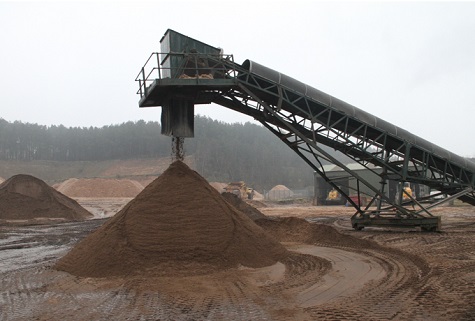
Mansfield Sand quarry
Mansfield Sand have for over 30 years, provided a wide range of sand, fibre sand and rootzone products for the amelioration and construction of natural grass pitches.
The principle of a hybrid pitch is simple. A small amount of synthetic, twisted yarn is stitched into a traditional, natural grass pitch to reinforce it. As the grass grows, it intertwines with the synthetic fabric, strengthening the surface and improving stability. The yarn also speeds up the recovery of the grass sward, allows better drainage and increases durability – enabling the pitches to be used more frequently.
We also saw the investment from several land drainage contractors setting up to cope with this new demand.
Rob McDonald ( White Horse Contractors ) and Roger Longin (Agripower) along with MJ Abbott and Speedcut were some of the first contractors to get involved. The likes of Brian D Pierson and John Mallison, as well as others like Phil Day, Keith Porter, Simon Hutton (Fine Turf), Carl Pass (Premier Pitches) and Melvyn Taylor (Turfdry) all took up the mantel of providing specialist services, including construction, renovation and maintenance regimes to ensure pitches were fit for purpose.
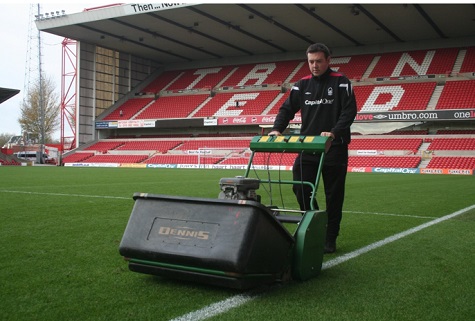
Ewan Hunter, Nottingham Forrest mowing the stadium pitch with a Dennis mower
These pitch improvements were further helped by the fact that new and better machinery was being brought to market.
The predominate choice of mowers that were and are still used in stadium environments include Dennis, Atco, Allett and more recently, Infinicut. All tend to be walk behind cylinder mowers, as they leave a lighter footprint than other types of mower, such tractor mounted, trial gang mowers or triple mowers.
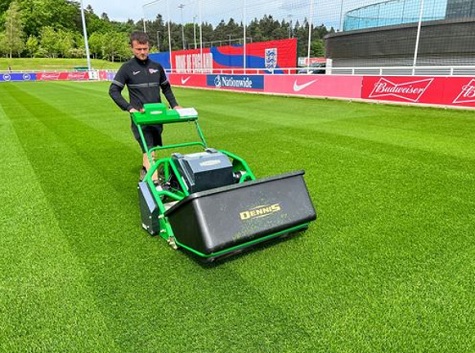
Dennis ES Mower at St Georges Park courtesy of Dennis Mowers
One of the most popular mowers used in stadiums all around the world are the Dennis G660, G760 and G860. Dennis now offers both petrol and battery powered versions of their popular G series cylinder mowers, along with the twin rotary Pro 34R and battery equivalent ES34R mowers that are used for both cutting and cleaning up surface debris after games.
Also the Dennis G series has the ability to change cassettes, offering the user a brush, scarifying and verticut reels. In 2005 successful entrepreneur John Coleman developed and brought to market a range of Infinicut cylinder mowers that are now also a popular choice for stadium pitches.
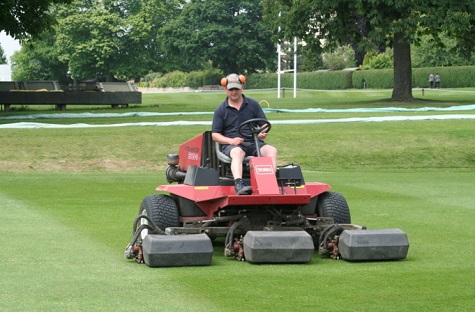
Toro triple mower
However, away from the stadiums people have a wider choice of mowers to use on training pitches and football fields. These come in the form of tractor mounted, tractor drawn and ride-on types of both cylinder and rotary mowers.
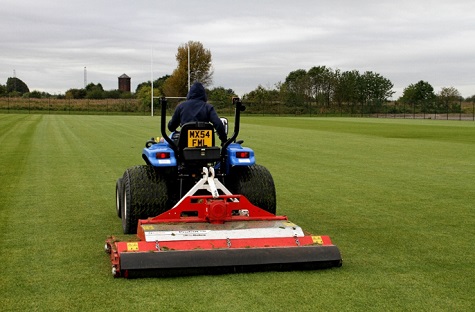
Trimax rotary mower
Toro, John Deere and Ransomes Jacobsen (Textron) all manufacture both cylinder and rotary ride-on triple mowers that have become popular with football clubs. And in recent years we have seen Trimax offer a range of rotary tractor mounted mowers offering different working widths and performances that come in the form of the Striker, Snake, Stealth, Procut and Pegasus.
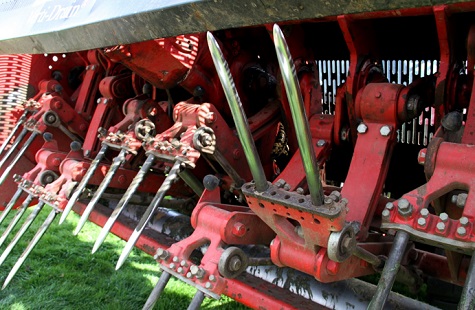
VertiDrain aerator
The introduction of a fast-acting tractor mounted punch aerator, the Redexim Verti Drain, was a game changer in 1980. Then in 2003 we saw the popular Toro ProCore 648 pedestrian aerator become a significant innovation in turf management due to its ability to provide superior aeration for sports fields and golf courses.
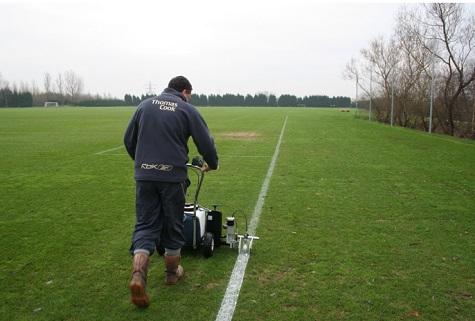
Laser-guided Beamrider line marking machine
Line marking technologies have also improved greatly over the years with the wheel-to-wheel transfer marker being the staple choice for many years until Fleet brought to market a landmark product the KOMBI spray jet linemaker and later, the first laser guided line marker, the Beamrider.
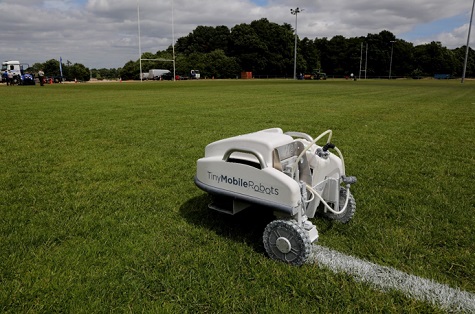
Tiny Mobile robotic linemarker
Since them we have a plethora of marking machines at our disposal and in the last few years several companies have developed a range of robotic line markers, making their mark in the industry (excuse the pun), reducing drastically the time required to mark out pitches. This can now be down to around 20 minutes.
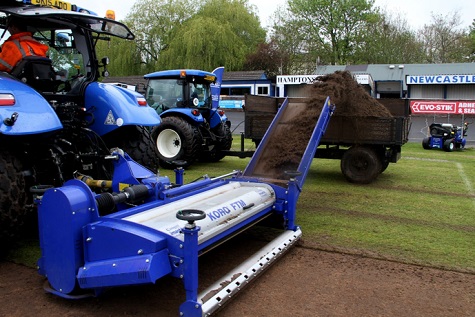
Koro Field Topmaker (Fraise Mower) in action
However, one of the industry’s biggest game changers was when Richard Campey introduced the Koro Field TopMaker (fraise mower) to the UK in 1997. This machine revolutionised turf management by providing an effective way to remove the top layer of vegetation, thatch, and organic matter from natural grass playing surfaces.
This innovation allowed for faster turf renovation and recovery, making it a game-changer for maintaining high-quality playing surfaces. Its adoption transformed practices in both football and golf, setting new standards for turf health and performance.
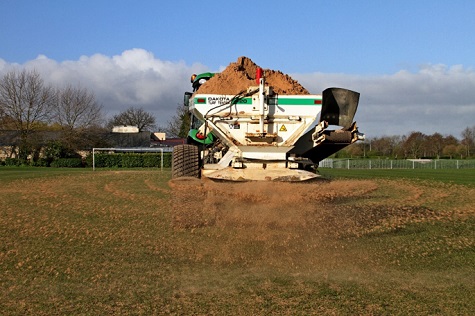
Dakota spreader
Richard also brought to the market place the Dakota spreader, the VREDO direct seed drill and the AIR2G2 compressed pedestrian aerator, plus a range of complimentary tools, such as outfield slitters, brushes and harrows.
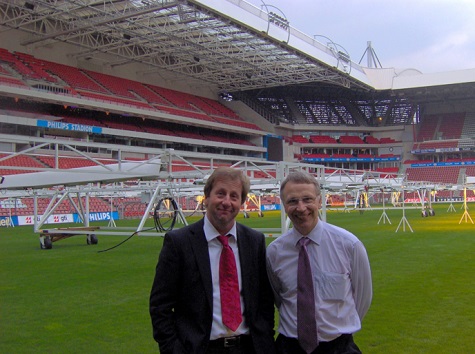
Me and Nico Van Vuuren looking at his lighting rig system at Bayer Leverkusen 2004.
And finally, the other major contributor to this equation was the innovation of the lighting rigs, whereby both the light wavelengths and warmth generated by the lamps provides a means to enable grass to grow in the depths of winter and in shaded areas.
This invention was the work of a rose grower Nico van Vuuren, who in the late 1990s started researching the benefits of using lighting rigs to grow grass.
He developed a system that consisted of metal rigs with HPS lighting armatures. That first system was trialled at the Stadium of Light (how fitting), home of Sunderland A.F.C.
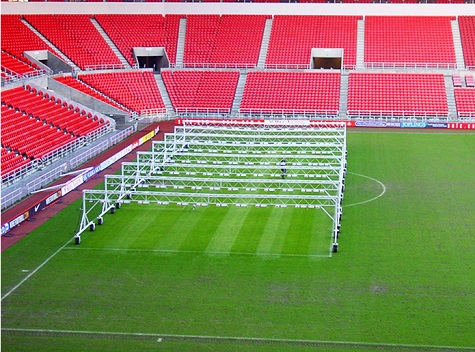
SGL lighting rigs at Sunderland's Stadium Of Light
The results were simply mind blowing. The grass was growing in winter like it had never done before. This was the beginning of what a few years later proved to be a revolution in pitch management. And now we see almost every Premiership and Championship club with grow lighting systems to enhance grass growth in their stadium environments all year round.
The clubs were starting to see the importance of investing in their pitches and this was further improved by the dedication and work ethic of the groundstaff who were keen to embrace these new technologies and work hard to produce near perfect playing surfaces. This really only came about with new ways of working, which centred on being more focused and educated about the biology of the grass plant and soil science.
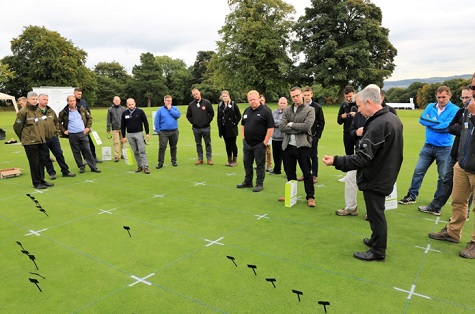
Turf product trials at the STRI
It was through the late 1990s and onwards we saw a lot of new products being introduced to aid the groundsmen to produce healthy turf. Better fertiliser products that came in a plethora of action and modes, slow release, liquid/ granular, seaweed extracts, biostimulants, soil life products, surfactants, growth retardants, herbicides and fungicides.
Also, we have seen a greater emphasis on the selection of grass cultivars with many established seed companies such as DLF, Barenbrug and Germinal offering some superb seed products to cope with the extreme environments and stadium environments we have in the UK.
Developments in agronomy have led to the introduction of more resilient grass species and hybrids that can withstand wear and tear better than traditional varieties. For example, dwarf perennial ryegrasses are commonly used for their durability and quick recovery.
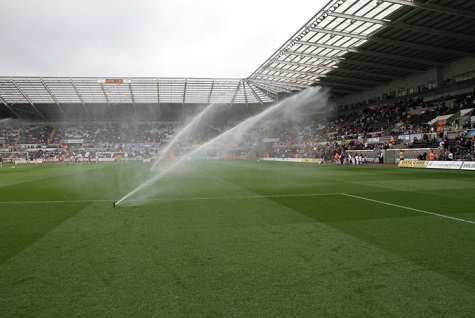
This was also complemented with better management techniques the fact they had efficient automated watering systems, undersoil heating and a plethora of evaluation aids to monitor the heath of the sward. These came in the form of ball roll, ball bounce, clegg hammers, compaction meters, soil testing kits, weed grids, moisture probes, theta probes, temperature and rain gauges.
In the early 2000s we saw the invasion of nematodes being prevalent in sand profiles and we learnt a lot about counting numbers and thresholds of these pests with the aim of keeping their numbers down to prevent root damage.
At Leicester in 2008 David Rennie one of their physios undertook a trial of monitoring pitch hardness using the clegg hammer to record the hardness of the pitch in gravities (G). After collecting and evaluating the correlation between the hardness of a playing surface and types of injuries players where getting, they came up with a measurement, that showed that pitches measuring above 90 Gravities could increase the risk of injury to players.
With this information it enabled the grounds staff to ensure that pitch hardness was kept below the thresholds of 90 Gravities to safeguard against potential injuries. See here for details.
Most professional club grounds staff now monitor their pitch for hardness, and traction to ensure their pitches are fit for purpose.
The combination of appropriate watering, feeding, aeration, Verti cutting and mowing enables the provision of a playable safe and consistent playing surface.
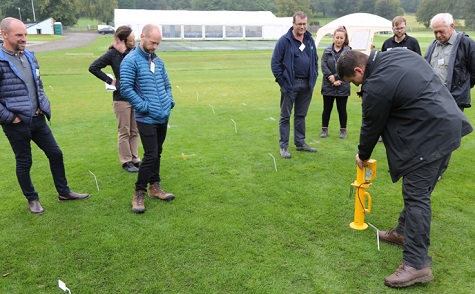
Clegg hammer testing at the STRI
Also, the accuracy of weather forecasting has improved vastly with many clubs investing in their own weather stations along with the fact that most ground staff generally have a weather app on their phones.
We have also perfected efficient end-of-season and in-season renovation programmes that sees the pitch renovated within a few days, thus allowing a quicker recovery time.
Many clubs generally have less than eight weeks before the start of a new season and using these new renovation techniques are able to meet these windows of opportunity.
And finally turf professionals are generally more highly qualified and have a greater thirst for knowledge and attention to detail. We again have a lot of education courses to choose from provided by a range of educational institutions / organisations such as the GMA, BIGGA, Groundsman Training, Lantra, BASIS and the many land-based colleges up and down the country.

