EDITOR'S BLOG
THE TRUE VALUE OF PARKS
And public green spaces
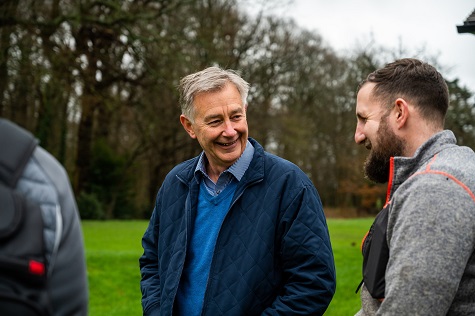
by TurfPro Editor, Laurence Gale MSC, MBPR
 
Laurence Gale MSC, MBPR

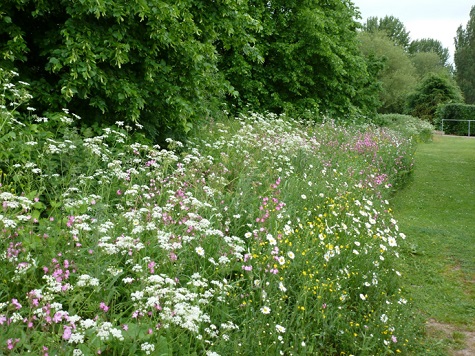
I believe it is time that Government recognised the value of parks and public open spaces, making them a statutory service.


Last week I read an interesting piece about the success of Parkrun on the BBC and how it has galvanised local communities to take up running in their local park

Just in London for example, where it all began, the article says there are now nearly 750,000 registered parkrunners and about 100 events each weekend. With scenes like this repeated in towns and cities across the world.


So why am I interested in this story. Well, to be it illustrates so clearly the value of our local parks and public open spaces. 


At a time when local authorities are strapped for cash to maintain these wonderful assets, I think there is a real risk that the powers that be are forgetting the real value and benefits of these facilities.


The value of the services provided by green spaces is not recognised in part because local authorities are unable to attribute an economic value to them. 


A helpful source of information regarding the running of public green spaces is the Parks for London website.


It says that although the concept of natural capital accounting is gaining traction it has not yet been fully embraced by Government or accepted by those with responsibility for financial accounting. 


Furthermore, there is a lack of robust data regarding green space and number of green space users, which affects the reliability of economic data derived from natural capital accounting. 


This affects green space’s priority on a council’s agenda. For example, proving value for money is difficult when a green space-related project goes before the council’s finance committee. 


A lack of data to show the value of green spaces also affects decisions about green space management and planning. 


Some London Boroughs are considering disposing of excess green space and looking for alternative uses for some or part of their parks. 


This is driven by the need for short-term capital receipts and revenue savings. Being able to clearly articulate the value of the services provided by green space would influence such decisions.


The contributions green space makes to other, often statutory, council strategies is also not acknowledged, or benefits are not attributed to green space. 


For example, green space contributes to physical and mental health and well-being, which can reduce the burden on other services, such as adult and social care. 


Also, we must be aware of the value of accounting for the naturalistic values of a green space commonly known as Natural Capital.


'Natural' capital is made up of the elements of nature that benefit people directly or indirectly. These assets include ecosystems, species, fresh water, land, minerals, the air and oceans, as well as natural processes and functions. Benefits can include goods (such as timber and food) and services (such as clean air and water). In an urban context, these assets are our parks, rivers, trees, and features such as green roofs that collectively form an essential green infrastructure. Designed and managed as green infrastructure, natural capital can:

  • promote healthier living
  • lessen the impacts of climate change
  • improve air quality and water quality
  • encourage walking and cycling
  • store carbon
  • improve biodiversity and ecological resilience

Carbon storage


Regarding carbon storage, we must find a way of calculating the amount of carbon storage value of our parks and open spaces.


The grass and trees in a local park play an important role in carbon storage through a process known as carbon sequestration. Here's a breakdown of how grass and trees contribute to carbon storage:


Carbon Sequestration through Photosynthesis: Trees absorb carbon dioxide (CO₂) from the atmosphere during photosynthesis and store it in their biomass (trunks, branches, leaves, and roots). A portion of this carbon remains stored for long periods, particularly in the wood of trees.


The amount of carbon stored by a tree depends on the species, age, size, and health of the tree. Larger, mature trees store more carbon than younger ones.


A large mature tree can sequester about 22 kg (48 lbs) of CO₂ per year on average, and over its lifetime (e.g., 50–100 years), it can store several tons of CO₂.


Grass sequesters carbon primarily through its root system. While grass does not store as much carbon as trees, it plays a role in soil carbon storage by stabilising the soil and increasing organic matter over time.


Depending on the grass species and management practices (such as mowing and fertilisation), lawns or grassy areas can sequester approximately 0.5 to 2 tons of CO₂ per hectare (2.47 acres) per year. This is far less than trees, but it is still significant in terms of soil health and carbon storage.


If a park has 100 mature trees, and each tree sequesters an average of 22 kg of CO₂ annually, the park's trees alone would sequester about 2,200 kg (2.2 metric tons) of CO₂ per year.


If the park spans 2 hectares (approximately 5 acres) of grassy area, and the grass sequesters about 1 ton of CO₂ per hectare annually, the grass would add 2 tons of CO₂ per year in soil storage.


In this example, the trees and grass together could sequester around 4.2 tons of CO₂ annually. Over time, this contribution can accumulate to help mitigate carbon emissions and combat climate change.


The actual amount for your local park depends on its specific size, tree species, age distribution, and management practices. 


Green spaces fall short of realising their full potential largely because of the issues discussed above: lack of strategic approach, and resource challenges that focus on immediate budgets and revenue potential, rather than long-term investment and benefits. 


Is it not time that the government recognised the value of parks and public open spaces and made them a statutory service?

NEWS
OFFERING GOLFERS A DEEPER APPRECIATION 
Of the role of greenkeepers
 
 Ryder Cup player turned television personality, Ken Brown

In our first WEB ONLY story BIGGA are making efforts to inform golfers about what it takes to maintain a modern golf course and the challenges faced by the greenkeepers at their own facility.


MEET THE NEXT GEN OF PROFESSIONALS
At upcoming show
 
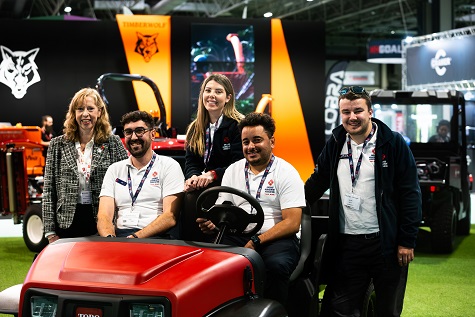
The NextGen team

In our next WEB ONLY story, a dynamic group of committed young professionals serving as ambassadors for the industry, will be on hand to meet visitors.


CRICKET SURFACE GUIDE LAUNCHED
Highlights the pros and cons of all types of pitch
 
Hybrid surface

Guide has come from the team behind the first England Cricket Board-sanctioned hybrid cricket pitch.


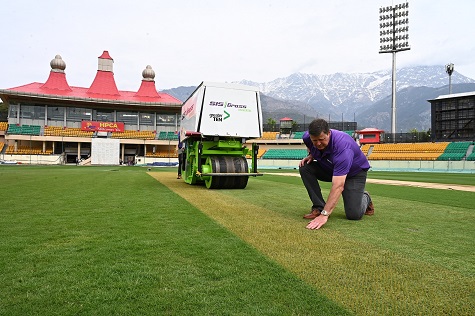
The team behind the first England Cricket Board-sanctioned hybrid cricket pitch has launched a comprehensive guide to cricket surfaces for professionals groundspeople.


Published by SIS Pitches, which produces SIS Grass Hybrid, a hybrid grass technology, the Guide to Cricket Pitch Systems was designed to help tackle the unique maintenance challenges that come with an increasingly diverse range of options for cricket stadium owners and groundspeople. 
 
The report goes on to highlight pros and cons for all types of cricket surfaces, including options to encourage stakeholders to think beyond the traditional all-natural grass pitch.
 
Among the solutions the guide showcases are artificial carpet pitches and hybrids, including carpet, artificial and stitched.
 
Back in 2019, the SIS Pitches team installed the first-ever ECB-sanctioned hybrid pitch at the National Cricket Performance Centre in Loughborough. Last year, it was also announced that hybrid pitches would be used for the first time in the 2024 County Championship season to help allow grounds to cope with higher volumes of games.
 
Globally, the International Cricket Council also sanctioned the use of hybrid surfaces for T20 and 50-over competitions earlier this year. With both formats being well-known for putting a strain on the pitch surface, hybrids could provide an attractive alternative.
 
Paul Taylor, former England international and SIS’s International Cricket Director, said: “Demand for high-quality, durable cricket pitches is on the rise and shows no signs of slowing down - especially with cricket being reintroduced at the Los Angeles Olympics in 2028.
 
“The cricket landscape is -evolving, and we know just how challenging it can be to select the right surface. All-natural grass once reigned supreme, but it comes with its own set of demands. Now, other options, such as stitched hybrid, offer similar levels of performance while providing a more durable, consistent and cost-effective surface, ideal for club at all levels.
 
“Our goal was to provide a one-stop, comprehensive guide for anyone involved in the management and upkeep of cricket surfaces so they can make an informed decision based on budget and volume of play. We’d like to encourage anyone considering a change in their sports surface to get in touch with our team for advice.”


View the guide here.

CELEBRATING 25 YEARS AT DEALERSHIP
Engineer honoured
 
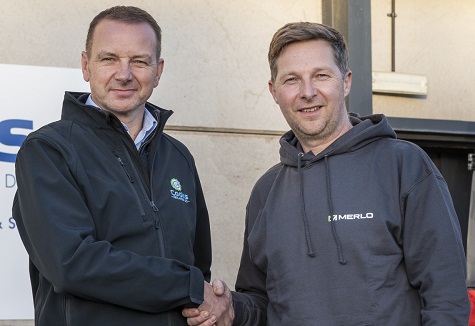
Darren Cook and Ryan Yorke

Ryan Yorke's dedication and expertise have earned him deep respect from colleagues and customers. 


This November, Cooks Midlands celebrates a significant milestone as Ryan Yorke marks his 25th anniversary with the dealership. 


Darren Cook, managing director of Cooks Midlands and Ryan Yorke


Over the past quarter of a century, Ryan has played a key role in shaping the company’s success. His dedication and expertise have earned him deep respect from colleagues and customers. 


Ryan is also Cooks Midlands' go-to expert when it comes to Merlo telehandlers. Over the years, he has built an extensive knowledge of the machines and is one of the few engineers in the UK with significant hands-on experience with the manufacturer's ROTO series. As a trained specialist, Ryan’s dedication hasn’t gone unnoticed - Merlo UK recently sent him a box of merchandise in recognition of his 25 years of outstanding support for their machines.


Reflecting on his time with Cooks Midlands, Ryan says he has witnessed the company evolve from a small business with just three employees into the thriving dealership it is today with 25 staff. “The biggest change I've seen is how we’ve grown over the years,” Ryan said. “When I first joined, it was a tight-knit team of just a few of us. Now, we’ve expanded so much, and it’s incredible to see how far we’ve come.”


In recognition of his commitment and long service, Cooks Midlands rcently thanked Ryan with the presentation of a limited edition Bremont timepiece.
 
Darren Cook, managing director of Cooks Midlands, summed up, saying “Ryan was our first employee, as my apprentice, and he has been with us through many changes - through the growth and challenges. He’s also been our go-to guy for anything Merlo. He’s more than just a key player; he’s part of the family, and I couldn’t imagine Cooks Midlands without him.”

SUCCESSFUL CONTRACTOR AND DEALER DAYS HELD
At the Carden Park Resort
 
Successful demo day

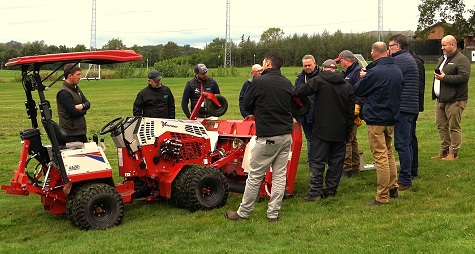
Managers from some of the largest groundscare contractors in the UK and over 50 representatives from the UK dealer network attended demonstration days recently,


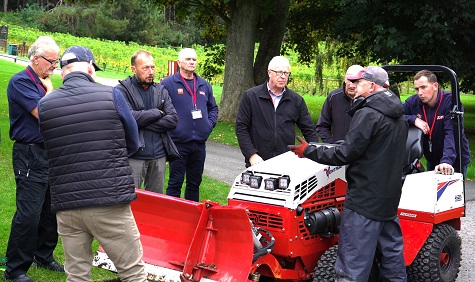
Managers from some of the largest groundscare contractors in the UK and over 50 representatives from Ventrac’s UK dealer network attended demonstration days at the Carden Park Resort in Cheshire recently.


Hosted by the UK importer, Price Turfcare, the event was split into two days; the first day exclusively for contractors and the following day for the dealer staff. 


This was the largest gathering of Ventrac equipment ever assembled in the UK. Both days followed a similar format with a mid-morning ‘meet & greet’ over coffee followed by a presentation on the Price Turfcare company and the Ventrac product offering from managing director Rupert Price. Following a light lunch, the afternoon sessions were dedicated to demonstrations of the numerous attachments in the range and the opportunity for delegates to operate some of the equipment. 


Commenting at the conclusion of the second day, Rupert Price said, “I was absolutely delighted with the success of the meeting. We had eight tractor units and over 20 attachments and it was the biggest gathering of equipment we’ve ever had at one location.


“The second day was the first time, since we launched the business back in 2017, that we were able get our UK dealers together. We have had unprecedented success with this product, in fact there are now well over 400 machines operating in the UK today. Many of the dealer staff present have sold multiple machines and I wanted to remind some of the others that this a unique piece of equipment and once demonstrated, there’s a high percentage of a sale.


“Carden Park was the ideal venue and Peter Pattenden, the Golf Courses and estate manager, and his team were very accommodating in allowing us to use their facilities. They could not have been more helpful and they allowed us to use the trencher, stump grinder and power rake; pieces of equipment that are quite aggressive, enabling some of the delegates to see them in action for the first time.


“All in all, a very successful couple of days.”

Sponsored Content
STIHL LAUNCHES POWERFUL BATTERY-POWERED BLOWER
The new BGA 250
 
STIHL BGA 250

STIHL has launched the new BGA 250, a battery-powered blower that offers professional users an impressive power-to-weight ratio and a new standard of performance and efficiency. 


STIHL has launched the new BGA 250, a battery-powered blower that offers professional users an impressive power-to-weight ratio and a new standard of performance and efficiency. 


Thanks to the constant power output technology, the BGA 250 offers 100% power even as the battery discharges, making it the world’s most powerful handheld battery-powered blower throughout the full battery charge.


Weighing only 2.7kg, the BGA 250 is lighter than its BGA 86 counterpart and boasts a significantly higher blowing output of 26 newtons. The battery is located inside the BGA 250, making the new handheld blower practical for smaller jobs that require high power. 


The maximum blowing force can be selected from the simple-to-use speed level controls, allowing for efficient energy management and longer working times. Boost mode may also be selected to provide maximum power for the toughest clearing jobs. Furthermore, the new blower features an LED power display and a cruise control function to maximise battery use. 


In addition to excellent performance, the BGA 250 features an improved battery location directly under the handle, which not only gives the blower perfect balance, but also improves the manoeuvrability of the machine thanks to its shortened design. The BGA 250 also features a nozzle with a shallow bend which directs the ‘push back’ force through the handle, ensuring the blower stays in place during operation with no wrist strain.


Other features include an IPX4 rating, ensuring the new blower can be used in all weathers. The BGA 250 is also compatible with STIHL’s Smart Connector 2 A, a device that plugs directly into the control module and collects useful working time and maintenance information.


For more information on the BGA 250 and STIHL’s wide range of professional battery tools, please visit www.stihl.co.uk.  

JOBS
ADVERTISE YOUR JOBS HERE
Amazing success rates!
 
Advertise your jobs on TurfPro Weekly Briefing

Advertise your recruitment needs on TurfPro Weekly Briefing and reach our targeted audience of recipients every week.

Contact Nikki Harrison for details - 01491 837117


PREVIOUS FEATURES
EDITOR'S BLOG ARCHIVE
Catch up with Laurence Gale's recent blogs
 
TurfPro editor, Laurence Gale

Want to catch up with one of editor Laurence Gale's blogs? Here is the place to do so.


TURFPRO FEATURE ARCHIVE
Find our previous features here
 
TurfPro Feature Archive

If you want to catch up with any of TurfPro's previous features, here is the place to do so.


WHY GRASSROOTS RUGBY IS IN DECLINE
A steady drop off in participation.


SEEDS OF SUSTAINABILITY
Focus on a major supplier of grass seed and related products to the amenity sector


ON TEST
STIHL BGA 300 cordless leaf backpack blower


ON TEST
EGO Multi-tool


PUT THEM ON THE TOOLS!
Time for an attitude change


SUSTAINABILITY IN THE TRAINING SECTOR
Grasping the challenge of encouraging more sustainable practice


SUSTAINABILITY IN LOCAL AUTHORITIES
Lessons learnt and experiences


SKILL SETS NEED RECOGNITION
Turf professionals are underappreciated


GREATER RESPECT FOR GROUNDS STAFF MIGHT MAKE ALL THE DIFFERENCE
To the recruitment crisis


A COMPETITIVE SALARY
Why employers should advertise the salary when recruiting new staff


ON TEST
Makita XGT UV001G lawn scarifier


AN EXAMPLE OF SUSTAINABILITY IN MACHINERY SUPPLY
Focus on Kubota


MY PERSONAL GREENKEEPING PHILOSOPHY HAS NEVER CHANGED
I don't follow any set program


SUSTAINABILITY IN LANDSCAPING
A substantial element of amenity activity


IS IT TIME TO SAY NO TO 'NO MOW MAY'?
Any real benefits?


SUSTAINABILITY IN OUR PARKS & PUBLIC GREEN SPACES
Meeting the challenge


THE PATH TO WIMBLEDON
For groundstaff member, Conrad Cavil


ON TEST
EGO LBP8000E backpack blower


SUSTAINABILITY IN THE LAWN CARE SECTOR
A key consideration


BEEKEEPING IN COMMERCIAL ENVIRONMENTS
The current situation


SUSTAINABLE PRACTICE IN THE AMENITY SUPPLY SECTOR
Optimising land use through integrated solutions


SUSTAINABILITY IN THE GOLF SECTOR
Focus on BIGGA


THE SEARCH FOR SUSTAINABLE PRACTICE
Bringing together key points


DEVELOPING SUSTAINABLE SOLUTIONS FOR GOLF
R&A are supporting clubs


GETTING THE MOST OUT OF EVERY POUND OF BUDGET
A course manager's view


A NEWFOUND APPRECIATION FOR ALL VOLUNTEERS
Who look after grassroots pitches


SUSTAINABILITY & THE UK ACTION PLAN
For weed, pest and disease management


CONCERN FOR PARKS FOLLOWING COUNCIL BANKRUPTCIES
What does the future hold?


TAKING A GLOBAL LOOK AT SUSTAINABILITY
Is the rest of the world also driving towards sustainable practice?


RENOVATIONS, PLAY AND THANKS
On my mind this week


SUSTAINABILITY – IMPLICATIONS FOR TRAINING & EDUCATION
Set to play a crucial role going forward


TULIP TREE
Liriodendron tulipifera


LYDIA BROOM
Genista lydia


THE LAWN AND ITS VALUE
Changing attitudes


GIANT HOGWEED
Invasive and potentially harmful


LIFE-CYCLE ANALYSIS & SUSTAINABILITY
Considering every stage of the journey


NITROGEN USE EFFICIENCY
The most important nutrient


BERBERIS THUNBERGII
A shrub that has stood the test of time


ENSURING FUTURE PROSPERITY
Advice imparted at road shows


INNOVATION & SUSTAINABILITY
A key focus


PHOTINA RED ROBIN
A sensational flowering shrub


VALUING THE GRASSROOTS
We must not overlook those who maintain these grounds


MANAGING WEEDS SUSTAINABLY
In amenity spaces


DETECTING NUTRIENT DEFICIENCY SYMPTOMS
In turf plants


SPRING RENOVATIONS UNDERWAY
A crucial period


SUSTAINABILITY IN SUPPLY
A focus on those who supply essential inputs to our sector


CHANGING CLIMATE
Is a borehole the key for clubs?


SUSTAINABILITY AT THE SHARP END
How to put into practice when budgets are tight?


ANOTHER NAIL IN THE COFFIN OF GRASSROOTS RUGBY
Clubs are struggling


SUSTAINABILITY IN PRACTICE
Seeking transparent and robust supply chains is essential


TIME FOR ACTION
To reverse recruitment crisis


CONTROLLING COSTS
Planning is crucial


THE SEARCH FOR SUSTAINABILITY
What exactly does the term mean?


CARING FOR THE GRASSROOTS
From volunteers to contractors


DEFRA IS LETTING DOWN THE COUNTRY
Complete failure to address the plastic grass debate


WE CAN ALL DO MORE
To aid biodiversity


MY LIFE IN GREENKEEPING
With Bruce Cruickshank


LEVELLING UP, GETTING SMARTER & GETTING AHEAD
Parks require so much more funding


SWITCHED ON FOR HARD WORK
Putting trimmers through their paces


MACHINERY HIGHLIGHTS
At this year's show


MY SALTEX
Daniel Lewis​, Manchester City Football Club


AWASH WITH LEARNING OPPORTUNITIES
Two months till showtime


LOOKING BACK, LOOKING FORWARD
Priorities for the amenity sector


THE DECLINE OF ‘PARKITECTURE’
A symptom of the state of parks in 2022


DEVELOPERS SHIRKING GREEN SPACE RESPONSIBILITIES
Lack of financial commitment


TIME TO COME TOGETHER
For the good of the industry


THE DEATH OF GRASS ROOTS CRICKET
Gathering apace?


ROUTES INTO THE INDUSTRY MUST BE ENSURED
Q&A with David Fisher, Lantra’s head of industry partnerships


STRONG VIEWS ON CRICKET PITCH PERFORMANCE MARKING
A bone of contention


A PREMIUM PRODUCT
Delivered at Naas Golf Club


THE GREEN REVOLUTION
And Esker Hills


MAKING A CHANGE
Laytown and Bettystown Golf Links


A DAY AT THE RACES
Naas Race Course


WORKING TOGETHER AS ONE VOICE
How the industry needs to proceed


OVER 175 YEARS OF EDUCATION
Wesley College


ELECTRIC EXCITEMENT
Dennis's Ian Howard talks electrification


THE HOME OF CORK GAA
Páirc Uí Chaoimh


LONG POLE BATTERY HEDGE TRIMMERS TESTED
STIHL HLA 66 and HLA 86


OVER 800 YEARS OF HISTORY
Johnstown Castle and Gardens


A CLUB GONE WILD
Kilkenny Golf Club


A GOLF COURSE IN THE GARDEN OF IRELAND
Woodenbridge GC


80 YEARS YOUNG
Charleville Golf Club


AN UPLIFTING EXPERIENCE
Bunclody Golf & Fishing Club


GETTING BACK TOGETHER
Albeit gradually . .


GO WEST
Inishturk GAA pitch – one of the most westerly sportspitches in Europe


WORKING ON A TIGHT BUDGET
Nenagh Golf Club


ON A MISSION
Wrekin Golf Club aiming to enrich wildlife and fauna


WILD AND WONDERFUL
Design By Nature


LEARNING HOW TO SURVIVE
Abbey Par 3


TACKLING OBESITY
Vital that schools can provide sport


A LIFETIME OF LEARNING
Vital for turf professionals


CELEBRATING 125 YEARS
Tullamore Golf Club


UNIVERSITY CHALLENGES
At Trinity College Dublin


BLENDING THE OLD WITH THE NEW
Bray Golf Club


A WELL POLISHED COURSE!
Ierne Social And Sports Club


IDENTIFYING THE TRUE VALUES
Of grounds maintenance


THE INDUSTRY WILL CHANGE & ADAPT
But it will survive


WIRRAL GOLF COURSES SAVED
Renewed hope and optimism for the future


GREEN SPACE CONTRIBUTION TO WELLBEING IS UNDERVALUED
Parks invisible on national agenda


A SHINING LIGHT IN IRELAND'S SUNNY SOUTHEAST
Wexford Golf Club


GREEN SPACES DO NOT LOOK AFTER THEMSELVES!
Keith Kent says we must invest in people


WE SHOULD TELL THE WORLD ABOUT THE UK INDUSTRY
Right time for all sides to come together


SOIL LIFE IS PRECIOUS
Good-quality soil can help save the planet


MORE THAN JUST CUTTING GRASS
Encouraging the next generation


A BUZZ FROM DOING THE JOB
Wide experience of the turf grass industry


PAYING THEIR WAY
Low wages is the bane of the industry


AMENITY MANAGEMENT IMPACTS US ALL
Professor John Moverley


CARING FOR PARKS OF ALL TYPES
Mary Worrall


TOP FIVE FRUSTRATIONS FOR CRICKET GROUNDSMEN
What causes you the most frustration in your role?


PROFESSIONALS AT THE CUTTING EDGE
Vic Demain and Phil Sharples


BOWLS CLUBS IN PERIL
A sad decline


A VERY SPECIAL INDUSTRY
Loz looks back


SNEAK PEAK AT A ROBOTIC "GAME CHANGER"
Commercial model capable of covering 50,000 m2 teased


HALESOWEN PICK A BIG ROBOT UP FRONT
Invest in mowers


COMPRESSED AERATION
The new way


PARKS MATTER MORE THAN EVER
Recent sector developments


ON TEST
STIHL blowers


THREE CORE VALUES TO SHAPE OUR INDUSTRY
Real concerns for the future


ENGLAND'S GREEN SPACE GAP
A split along racial lines


ON TEST
EGO STX3800 strimmer with RTX2300 Rotocut head


A SECTOR FACING IMPORTANT TIMES
Review of the National Action Plan


PARKS MATTER
The role of public parks in the recovery: a discussion paper


A UNIQUE SPORTING VENUE
Wormsley private estate


A BTME OUTDOORS?
A good bet for the industry


PARKS NEED APPROPRIATE POLITICAL REPRESENTATION
Q&A with Philippa Reece, Parks and Foreshore Manager at Adur and Worthing Council


CRICKET LOAM
What does it mean?


A HERCULEAN EFFORT TO GET PARKS BACK TO NORMAL
Q&A with Chris Worman, Rugby Borough Council’s parks and ground manager


ON TEST
STIHL battery products


TURFGRASS STRESS MANAGEMENT
Reactive Oxygen Species (ROS) and antioxidants during biotic and abiotic stress in turfgrass plants


AUTUMN DISEASE MANAGEMENT
The coming months are going to prove very difficult


THE ABUSE OF PARKS . .
Is the abuse of society


WHY PARKS MATTER?
A statement from the Parks Management Forum to the Prime Minister


THE 21st CENTURY PARKS MANAGER
Innovative, creative and entrepreneurial


EAT, SLEEP, CUT, REPEAT!
Cricket under covid


TIME FOR A SINGLE SHOW?
Debate brought back into focus


A CHALLENGING TWO MONTHS
Running golf design projects from home


PRESSURE SITUATION
Cementing the reputation


A CLUB TO BE PROUD OF
10 years at the helm of Olton GC


GAME CHANGERS IN TURFCARE
The day the Lord's outfield reconstruction proved its worth


THE ESSENCE OF ESSENTIAL
Finding a sensible way forward on defining "essential maintenance"


THAT WAS THE YEAR THAT WAS
2001


HOW TO LOOK AFTER A GOLF COURSE WITH NO GOLFERS
Fundamental to the survival of almost all courses, if not of the game itself


RAIN STOPPED PLAY WOULD BE WELCOME
. . along with ‘lunch is being taken early’


PHYSICAL CONTROL OF TURFGRASS PESTS
An urgent problem


A DIVERSE & ENTERTAINING WEEK
Successful BTME 2020


INTEGRATED PEST CONTROL
Opportunity to embrace new methods


ENVILLE ON THE UP
Major investments taking place


GREEN FLAG AWARDS 2019
A great success


U.S PROFESSIONAL EQUIPMENT SHOW EXCELS
Buoyant GIE+EXPO


LEGACY OF THE SOLHEIM CUP
At Gleneagles


A DAY OUT WITH THE LADIES
Behind the scenes at the Solheim Cup


COVENTRY UNIVERSITY'S EDIBLE GARDEN SUCCESS
2006 - present


HAIL THE GRASS MASTERS!
Boorish media comments about pitch quality are wide of the mark


CONTRACTOR SEES MULTI-DISCIPLINE SUCCESS
360 Ground Care serving professional facilities


BUSY TIMES
Judging the Green Flag Awards


TAKING AN INTEGRATED APPROACH
What does it all mean in managing turf surfaces?


UNDER PRESSURE
Dry weather conditions continue to keep turf managers focused on moisture management


EDDIE SEAWARD
Death of Wimbledon’s influential grounds manager


MAJOR NEW IRRIGATION PROJECT
At Top 100 classic Berkhamsted Golf Club


NEW HORIZONS FOR THE HATTERS
Investment paying off at Kenilworth Road


ELIZABETHAN RESTORATION
At Castle Bromwich Hall Gardens


WHAT IS BIOPHILIA?
The vital impact of parks and green spaces on health and well-being


WORM CONTROL
Without carbendazim


THE TRUE COST OF PETROL
Battery-powered outdoor power tools are now turning the heads of professionals


SANDS OF TIME
Sand-based pitches are now the norm in professional sports


WHY DO WE DO THE RIGHT THING?
We must maintain industry standards


CHASING GRASS PERFECTION?
11 things you need to know . . .


MAINTAINING STANDARDS
Q&A with BASIS ceo, Stephen Jacobs


STRI RESEARCH DAY 2018
Hosted at research trial grounds in Bingley


THE MECHANIC
Leicester City FC invest in new role


LORD'S 'GRASS-GUVNOR' TO RETIRE
Mick Hunt bows out after 49 years


HOLLOW CORING & DEEP SCARIFICATION
Is it really necessary?

Side Advert Image


PARTNERS
CAMPEY
 
Campey Turf Care Systems
Etesia
 
Etesia / Pellenc
Foley
 
Foley Company
ISEKI UK & IRELAND
 
Iseki
Kubota
 
Kubota
LANTRA
 
LANTRA
MAJOR
 
Major
Garden trader
 
Garden Trader
PRODUCED BY THE AD PLAIN
The Ad Plain
 
TAP
SUSTAINABILITY FOCUS
SUSTAINABLE PARKS
Parks For London case study


This month we focus on Parks For London and their work across the capital city interacting with and supporting those managing green spaces.


In this series of articles, I am taking the opportunity each month to look in more depth at individual organisations. How are they seeking to be more sustainable and, importantly, how are they seeking to advise and support members or customers?  


This month we focus on Parks For London and their work across the capital city interacting with and supporting those managing green spaces. 


Parks For London is a charity supported by funding partners. The charity does not deliver, own or manage green spaces, rather it supports those who do, and a key aim of the work is helping them achieve more sustainable practice. Parks For London has four directly employed staff. Tony Leach has headed up the team until recently. I had an extremely interesting discussion with Tony in compiling this article. The charity was originally based in City Hall but now all staff work from home.


Vision, Mission & Role


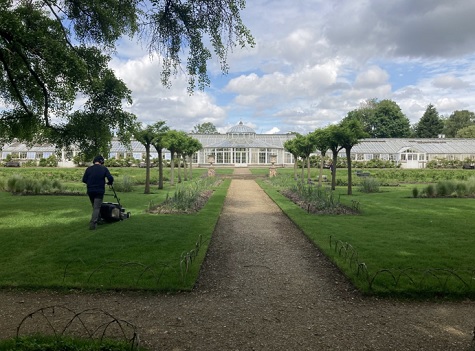
Chiswick House & Gardens 


Parks for London’s raison d’etre is advancing green space excellence and it has grown to be the leading strategic voice and champion for London’s green space sector. They work with, and support, landowners and managers of London’s green infrastructure to share and develop good practice, improve standards and maximise resources. In doing this, they work to statements of vision, mission and role summarised as follows. 

  • Their vision is for a London that is a healthy and sustainable world city, with parks and green spaces integrated into all areas of urban living.
  • Their mission is to ensure that London has a well-resourced network of sustainable high quality, thriving, safe, innovative and stimulating parks and green spaces that are accessible and inclusive for all.
  • And, finally, their statement of role is to support the people who own, design and manage London’s green infrastructure. They do this by sharing and developing both good practice and resources to improve quality and consistency across London. Key to the charitable objectives is the aim to make London greener and a better place to work, study and live.

In delivering on this and achieving change, Parks for London seeks an impact focussed approach using its influence, and providing positive and pro-active encouragement to partners. They organise topical events and meetings to bring together the people who own, plan, design and manage London’s parks and green spaces to address issues, share experience and engage with statutory bodies and councillors. They work collaboratively with universities, the private sector and local authorities to support new research, technologies and projects, and they provide strategic advice to policymakers and land managers, and offer consultations to support London Boroughs to help identify areas of improvement based upon their performance against their ten good parks criteria. 
 
Good Parks Criteria


The latter is an established benchmarking process across the 33 London boroughs and they seek information from each of these bi-annually. There is much data collected which is extremely informative. Publishing the results is not judgemental but seeks to encourage improvements by peer review. Good Parks for London reports upon, promotes and celebrates the work that London boroughs and other land managers do to maintain and develop London’s parks and green spaces. The aim of the reports is to promote good sustainable practice, raise quality standards and help lobby to protect park budgets and resources. The reports assesses how London borough parks services perform against the ten Good Parks criteria and showcases examples of good practice and case studies. 


Ed Stannard was Development Officer Parks for London and now heads up the team of staff. The following is extracted from discussion with him. 
Much is said about the creation of high-quality and publicly accessible green and open spaces in London and the multiple benefits these bring to communities, wildlife, and the environment. To this end, significant capital investment is made each year to create such spaces—a trend which shows no sign of abating. But what thought, and resource is given to the long-term management and maintenance of these spaces? What can be done to embed these places into the communities they serve, and ensure they change and adapt to constantly changing needs, challenges, and the environment? With each passing year Ed sees and hears of organisations in their network putting increasing emphasis on placekeeping and making the case for revenue funding, development, and engagement—actively contributing to sustainable and vibrant communities, better realising the long-term impacts of capital projects, and building positive and meaningful relationships with those that live, work, and play near their spaces.


In their work, Parks for London share a selection of case studies showcasing good place-keeping across London and aim to help landowners and managers create a sense of belonging, attachment, enjoyment, and pride for both users and visitors. Those responsible for such spaces need to engage and integrate the needs of multiple user groups into long-term planning and development. At Parks for London, they help managers of green spaces to reflect on the wider benefits that green spaces offer and identify further opportunities for them and the communities they serve. 


Sustainable Practice


A key category in the benchmarking is sustainability with ten specific criteria, including measuring the extent of use of ‘green’ equipment, route planning, recycling, use of integrated weed management plans, specific actions taken to reduce carbon foot print etc. The overriding objective is to push forward best practice and the results over time are improving across all areas. Once the data is collected and analysed, one to one follow up meetings take place, before publication on the web site and normally an event to announce outcomes. The last report was in 2023 and a further one is planned for 2025. Parks for London also provide quality manuals to help those on the ground deliver good sustainable practice.


Camden skyline 


An example of sustainable action is in Hammersmith and Fulham where the vital role tree planting plays in creating habitats for a wide range of species was recognised, increasing biodiversity, helping with the urban cooling effect, and capturing carbon. To overcome some of the challenges of planting trees in an urban setting, the Council began working with residents in late 2020 to identify a site in the borough to create London’s first Tiny Forest with the sponsorship of local company Fever-Tree. The selected site was a former bowling green in Hammersmith Park which had been inaccessible following the demolition of its pavilion. In early 2021 to regenerate this piece of derelict park land covering 200 square metres, 600 trees were planted. This densely packed forest of 16 native species including oak, holly, and hawthorn, is growing rapidly and will provide a range of canopy heights - from shrub vegetation to trees - and ecological habitats.


Not only is it believed that the Tiny Forest can provide a nature-rich habitat to support wildlife but the Council also hopes it will act as a natural anchor for informal recreation and relaxation and provide the social and environmental support required, especially in urban environments. The forest hosts a small outdoor classroom which can be used by charities and school groups. The forest is monitored and maintained by the Tree Keeper team made up of volunteers. . Additionally, there are periodic community science days held at the site, where local schools can get involved.


Queen Elizabeth Olympic Park 


Conclusion


Parks for London are strong supporters of the UK Amenity Forum and directly collaborated with them in producing a series of documents focussed upon integrated planning for weed, pest and disease management. This provides templates to help the process and achieve practical outcomes. Plans are being developed to update these once, and if, the new UK national Action Plan is published. In our discussion, Tony Leach is keen to emphasise that they work with a wide range of organisations involved in green spaces, including housing associations. They provide information and support on topics such as tree management, the creation and maintenance of sustainable urban spaces, green rooves and blue space. They also seek to help and influence developers and work closely with over 100 London Friends groups.


It is clear that much has already been achieved by Parks for London but they admit that it is not always easy sailing. Councils are always under financial pressures and other challenges. However what is clear is that once again sustainable practice is very much to the fore and they feeling learning from others is invaluable. 


‘’Create a climate for change, not climate change’’, is a quote from one of their members.


Next month’s article will focus on the principles and practice of amenity management based upon a forthcoming presentation by the author at SALTEX.


Previous articles in this series


SEEDS OF SUSTAINABILITY


SUSTAINABILITY IN THE TRAINING SECTOR


SUSTAINABILITY IN LOCAL AUTHORITIES


AN EXAMPLE OF SUSTAINABILITY IN MACHINERY SUPPLY


SUSTAINABILITY IN LANDSCAPING


SUSTAINABILITY IN THE GOLF SECTOR


SUSTAINABLE PRACTICE IN THE AMENITY SUPPLY SECTOR


SUSTAINABILITY IN THE LAWN CARE SECTOR


SUSTAINABILITY IN OUR PARKS & PUBLIC GREEN SPACES