The recent spell of dry, sunny weather will have raised soil and air temperatures into double figures, thus stimulating a flush of grass growth.
This initiates the need to increase grass cutting regimes to keep on top of growth and maintain desired heights of cut. Once temperatures have risen above 8 degrees the grass plant will begin to photosynthesise, making use of any available plant nutrients in the soil.

Depending on soil type, the nutrient status of the soil will soon change once the grass plant starts depleting these nitrogen reserves. Sandy soils are more prone to the loss of nutrients by leaching and plant uptake, than heavier clay and clay loam soils.
Therefore, it is important to keep the soil replenished with the appropriate NPK fertilisers. A soil test will help determine your nutrient status and provide you with the information to choose and apply the correct balance of NPK fertilisers for your course.
Most turf professionals tend to follow a traditional spring fertiliser programme which may be applied in either granular or liquid formulations. Some may well have already applied some slow-release products, which will activate when soil and air temperatures rise.
An application of a liquid iron fertiliser may be applied to the greens to give them some early season colour and harden them up a bit. Some seaweed meal can also be applied. Take care when applying fertilisers, ensuring you have calibrated your spreaders/sprayers to ensure they are applying the designated rate of product. Also ensure you do not overlap when applying, thus double dosing your sward.

Machrihanish Dunes GC
Greenkeepers will have hopefully completed their spring renovation works and will be preparing the course for the coming playing season.
Mowing operations will have begun in earnest, however the frequency and height of cut will be dependent on the areas being mown and the type of sward composition you have to maintain.
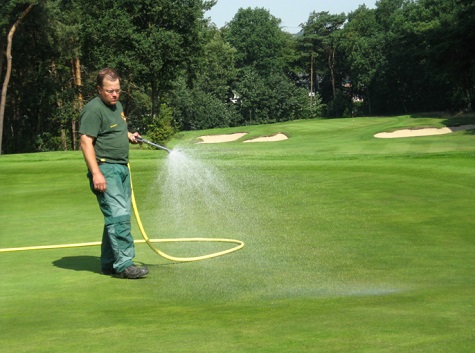
It is also time to recommission your watering systems. Make sure you have trimmed around all sprinkler heads removing any grass growth that may affect their operation. Also, there may be some heads that have sunk and will require relevelling.
It is also important to ensure you have all your serviced machinery back ready for the new season.
The month of April also sees, the opportunity to complete any spring renovations to rejuvenate lawns. This generally involves applying a lawn sand to kill moss, scarifying, aerating and applying some top dressing and fertilising.
Spring lawn renovations offer several benefits that improve the overall health, appearance, and resilience of your lawn.

A decent renovation will help grass recover from winter dormancy and promotes vigorous new growth. It increases root development, leading to a stronger, more drought-resistant lawn. Aeration relieves compacted soil, allowing water, nutrients, and oxygen to reach the roots more effectively. Adding topdressing or compost enriches the soil with organic matter and restores levels.

Me scarifying a lawn with battery-powered Makita scarifier
A dense, healthy lawn naturally suppresses weeds by outcompeting them and removing thatch (dead grass and debris), minimising hiding spots for pests and diseases.
And finally, overseeding rejuvenates an aging lawn by introducing new, hardy grass varieties.
By Mid April, the grass should be growing vigorously and in need of some regular mowing. As for choice of mowing equipment, we now have a vast range to choose from.
In recent years we have seen the demise of cylinder mowers with many people now using rotary mowers as they are easier to maintain and use.
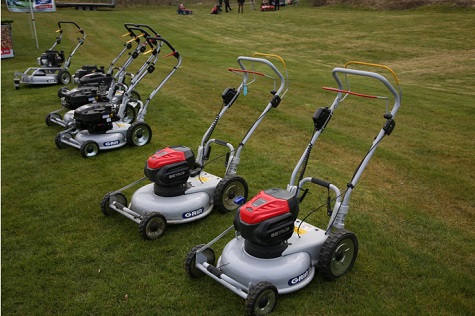
Grin mowers
Mowing technologies have advanced tremendously in recent years with all manner of blade refinements to improve cutting / mulching qualities. Only recently I had the opportunity to see a Grin mower in action that been designed to pulverise the grass into very small fragments, thus, leaving no arisings on the mown surface. It was impressive, reducing the need to collect and dispose of grass clippings.
We also, now have a vast range of robotic mowers to choose from many manufacturers. Their popularity is being driven by the fact that you now do not need to have a permitter wire to control the mower. More advanced mowers are offered with GPS / RTK mapping software. The efficiency and cutting quality of these latest offerings are getting better all the time.
We are also seeing a large range of battery powered mowers being manufactured by established tools manufacturers. To be honest we are spoilt for choice. Decisions will basically come down to what you are prepared to spend or indeed the type of mower that suits your requirements. This will be based up the quality of lawn / grass area you are maintaining.
Height of cut and frequency will make all the difference to lawn quality. Ideally you need to be mowing at least once a week and cutting between 20-30mm.
You will also need to feed and water as and when required to maintain colour and vigour. I do hope your spring renovations went well and your lawns prosper this coming growing season.