EDITOR'S BLOG
FLUSH OF SPRING
With accompanying jobs
by TurfPro Editor, Laurence Gale MSC, MBPR
 
Laurence Gale MSC, MBPR

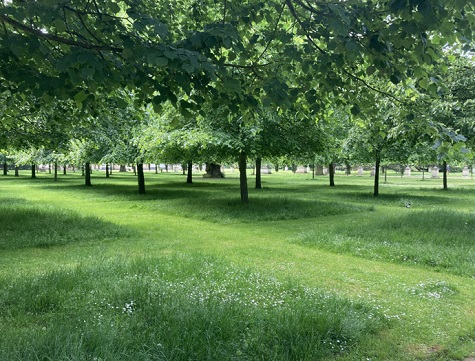
The much needed warm weather has encouraged the grass to start growing - and I visited a couple of manufacturer's events to check out their latest tools to help us deal with this.


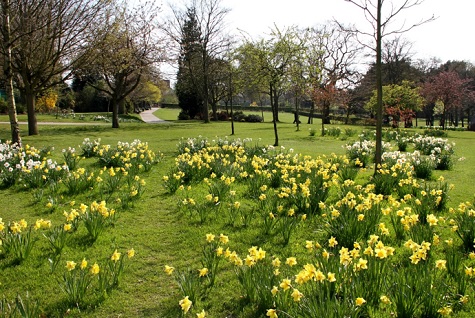
The recent spell of warm weather has initiated a flush of spring flowering bulbs with snow drops, crocus and daffodil coming into flower and providing a great display of spring colours in our parks and gardens. This much needed warm weather has also encouraged the grass to start growing with many people wanting to start looking after their lawns and grassed areas.


Spring sees the beginning of the mowing season with people undertaking their first cut of the year. 


March is also a good time to undertake lawn renovations with the aim of removing the thatch and moss that has accumulated during the winter months. This work usually involves the application of some lawn sand / iron sulphate that kills the moss, scarifying in several directions, top dressing with some sand and soil top dressing materials, fertilising and overseeding.


Soil and air temperatures climbing into double figures will no doubt promote some growth, with the need to start your lawn mowing regimes. Hopefully you will have had your mowers serviced and sharpened for the new mowing season. 


This nice weather will have also encouraged the need to go out into the garden and begin the process of tidying up. 


We now have a plethora of battery powered mowers and hand tools to help us undertake the wide range of jobs demanded of turf professionals. We are spoilt for choice with vast range of manufacturers providing a staggering array of products for this market.


Only last week I had an invite, along with other members of the trade press, to visit one of these manufacturers’ new distribution centre to catch up with the company’s latest product developments and battery powered technologies.


The venue was STHIL GB’s Contra House in Surrey, their new purpose-built head office and distribution centre that was officially opened last  May.
The 11,500m2 facility is home to more than 100 staff, and the company says it is designed to enhance operational efficiency, customer service and employee well-being.


The new site features dealer training facilities and a studio, collaborative workspaces, an on-site restaurant, and a technical workshop, ensuring support for STIHL GB's 700-strong approved dealer network.


At the heart of the operation lies the 9,000m2 distribution centre, which boasts next-generation picking and storage systems.


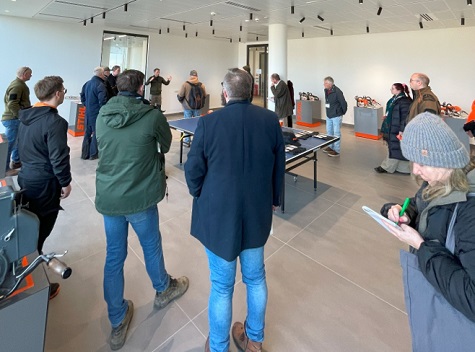
Simon Hewitt, head of marketing and Paul Hicks, marketing and product manager for STHIL GB were on hand to welcome us all to this impressive facility. After a short introduction we were then given a full tour of the distribution centre. We began by visiting the Training Suite that was being used to update and offer refresher training for dealer technicians. We also saw their film studio where they can create a wealth of podcasts and product videos. We also shown around the distribution centre, which combines storage and packing areas with its impressive robotic picking station.


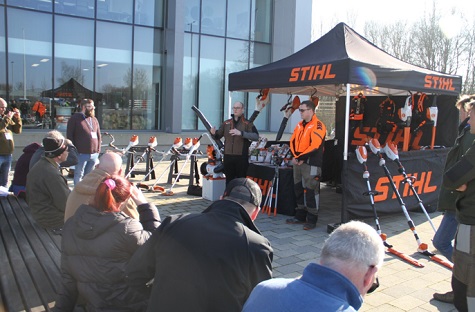
To complete the day the members of the press were then split into three groups with each taken to see four different workstations where we were given a talk about the specific set of products on each stand. 

  • Stand 1 featured some of the latest battery powered pedestrian mowers, strimmers and hedge trimmers.
  • Stand 2 included battery powered chainsaws and blowers.
  • Stand 3 was battery powered hand tools, pruners, saws, vacuums and jet washers.
  • Stand 4 featured commercial solutions. Here we learned how the STIHL Commercial Solutions team focuses on promoting and selling  professional-grade products, including those with battery technology and robotics, to businesses and professionals. 


We were able to try a few of the products on display and I am very much looking forward to trialling some of these products throughout the coming year. All in all, it was an informative day. I personally would like to thank STHIL for the invite and no doubt will be seeing a lot of these new products being sold through their extensive dealer network.


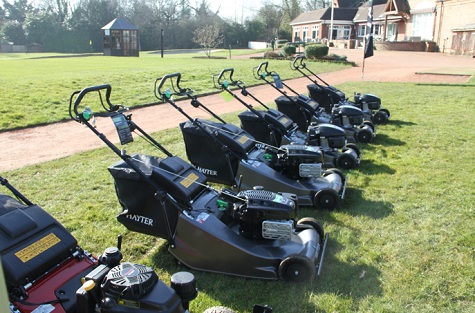
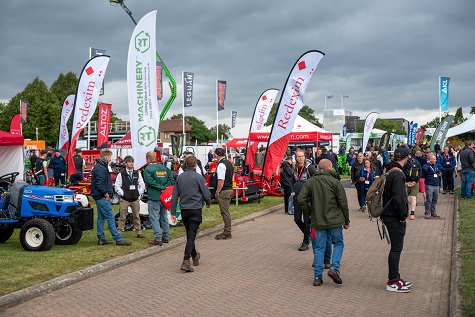
The following day on my way back from Surrey I had the opportunity to call in to Fulford Heath Golf Club, Wythall nr Birmingham to see Kim Blake the head greenkeeper. The golf club was hosting a Toro / Hayter  road show, one of seven planned for the month of March. 


The remaining tour dates are as follows :- 

  • 11th March - Heyrose Gold Club, Knutsford
  • 12th March - Pavillions of Harrogate, Harrogate
  • 13th March - Newark Showground, Newark


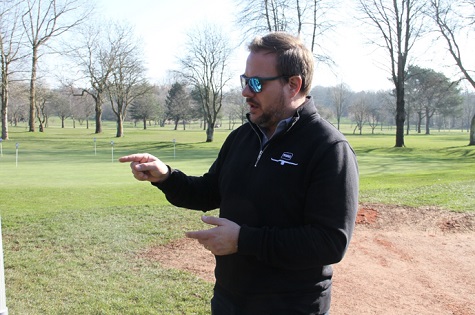
I met up with Craig Hoare, sales and marketing manager for Toro, who welcomed several invited local dealers, with staff from Cutting Edge Machinery, TH Whites and Buxtons in attendance. 


The company announced the launch of the upgraded Harrier Pro variants.  A popular mower, that has recently been upgraded with new features – including new  3-Speed Transmission for the 56 Pro,  improved grass bag design, and a lighter sail material making it easier to see when the bag is full.


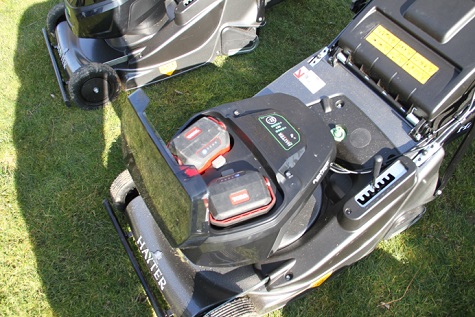
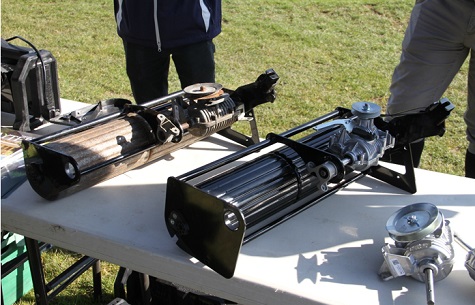
A completely newly designed roller and drive system, to enhance traction on wet and short grass surfaces was also introduced.  They also talked about the performance of the battery powered products mentioning the innovative dual-battery system that empowers professionals to mow up to 1000m2 on one charge. 


I will hopefully also enjoy the opportunity to test these new Hayter mower products sometime this summer and give you a full report on their performance in due course. 


So, a very busy and informative few days for me. Let’s hope this warm spell of decent weather continues for a few more weeks so we can enjoy the joys of spring.

NEWS
EVENTS LAUNCHED TO BRING TURF PROFESSIONALS TOGETHER
Hands-on learning and networking promised
 
New events announced

In our first WEB ONLY story series of events have been announced that organisers say will be a local hub for groundspeople to share knowledge and discover solutions.


GROUNDSFEST ANNOUNCES EXPANSION
For this year's event
 
GroundsFest

In our next WEB ONLY story organisers say an increase in exhibitors for this year has led to an expanded footprint.


CARRS BILLINGTON EXPANDS DEALER TERRITORY
For groundscare brands
 
Douglas Jeffrey and Amanda Smith

Dealer says the development means they can offer more solutions to meet the needs of professionals working in groundcare, forestry and landscaping.


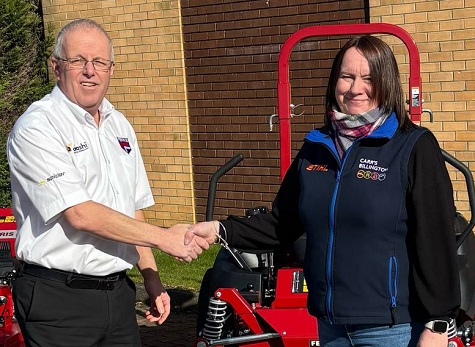
T H White Machinery Imports has announced that Carr’s Billington is expanding its dealer territory to cover Northern England and Southwest Scotland.


L-R; Douglas Jeffrey, area sales manager, T H White Machinery Imports and Amanda Smith, branch manager, Carrs Billington


This strategic expansion means they can now serve customers in these regions with brands including Ferris commercial mowers, Spider remote-controlled slope mowers and Ohashi compact tracked chippers.


Amanda Smith,branch manager at Carr’s Billington, Byers Green, Spennymoor, said, “At Carr’s Billington, we pride ourselves on delivering high-quality products and expert service to our customers. With Ferris, Spider and Ohashi, we can offer even more solutions to meet the diverse needs of professionals working in groundcare, forestry and landscaping across Northern England and Southwest Scotland.”


Douglas Jeffrey, area sales manager at T H White Machinery Imports, said of Carr's Billington, “Their expertise and strong local presence ensure that more customers will have access to industry-leading groundcare equipment, backed by exceptional service and support.”

DEALER HELPS ADAPT UTILITY VEHICLE
To restore customer's independence
 
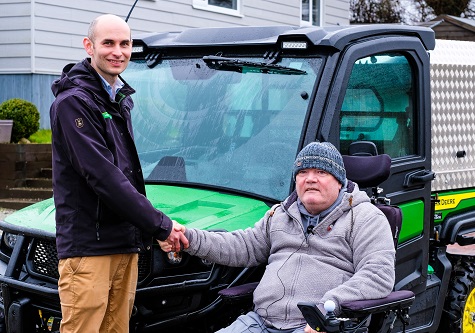
David Barnes with Paul Clemes

Local dealer has worked in collaboration with specialist to enhance the mobility and independence of a customer with an enthusiasm for outdoor life.


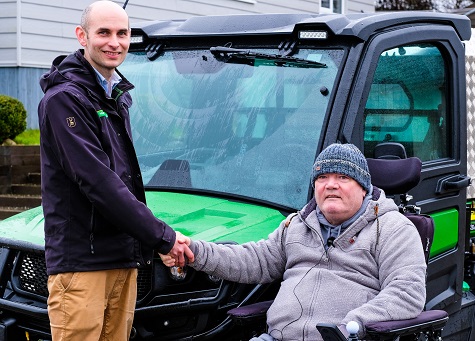
An adapted John Deere Gator has enhanced the mobility and independence of a St Austell resident with an enthusiasm for outdoor life. 


David Barnes from Masons Kings (left) with Paul Clemes in front of his adapted Gator


Agricultural and turf machinery dealer, Masons Kings, worked in collaboration with Adaptacar to restore Paul Clemes’ ability to doing what he loves best.

 
Mobility challenges have made it difficult for Paul, who is paralysed from the chest down, to access certain areas, so he approached Masons Kings for help. 


A XUV865M Gator was adapted to meet Paul’s specific needs with modifications providing increased accessibility and usability, enabling him to operate the vehicle safely and navigate varied terrain.


The modifications that were made include Adaptacar’s left hand push/pull driving controls and quick release steering wheel aid, a winch to lift Paul’s powerchair into the vehicle, a Perspex screen on the front and rear cage, a person lift, a four-point harness and single folding ramps for the powerchair when using the winch.


“This adapted John Deere machine will change parts of my life,” said Paul. “I now have the freedom to go where I want, and it shows that there are solutions for people with disabilities. Just because you’re disabled, you’re not isolated.


David Barnes, commercial sales consultant at Masons King explained, “We were committed to delivering a solution that would make a real difference for Paul. It has been a privilege to provide Paul with a vehicle that regains his independence.”

Sponsored Content
STIHL RMA 750 V, RMA 756 V, RMA 7 RV
STIHL launch new 7 Series battery-powered lawnmowers for professional use
 
STIHL RMA 750 V

An extension to the AP System, the new lawn mowers are equivalent in performance to the well-respected 7 series petrol models. 


STIHL is launching three new powerful and rugged professional battery-powered lawnmowers, perfectly suited to demanding lawn care in noise-sensitive areas. An extension to the AP System, the new lawn mowers are equivalent in performance to the well-respected 7 series petrol models. 


With a 48cm cutting width, the RMA 750 V is the smallest of the three new models. The RMA 756 V has a larger 54cm cutting width for faster working, while the RMA 7 RV is a dedicated mulching mower with no collection bag and a cutting width of 51cm.


The 7 series mowers are the first to feature in STIHL’s exciting new Double AP Platform. Drawing power from two AP batteries, the mower utilises a 72 V motor to significantly increase the power output of the machine. This results in a mower capable of cutting large areas of overgrown grass, with no compromise in collection quality. 


The mono-comfort handlebar is standard across all new models and is designed to improve access to the collection bag. The construction of the handlebar is extremely sturdy thanks to the aluminium console and steel upper section, ensuring reliable use in tough working conditions. It’s also height adjustable and neatly folds over for compact transport and storage too. 


All models benefit from variable speed transmission, adjustable in five steps from 0 – 6 km/h. The gearbox is protected by a sturdy cover, preventing damage and premature wear, and the soft start feature prevents the lawn mower from jolting forward, for a more comfortable experience.


For maximum durability, the models feature a powder coated aluminium deck with an abrasion resistant inner casing made from polymer, which is easy and inexpensive to replace. 


Three mowing modes are available to the operator, depending on the terrain being cut. Eco-mode automatically reduces the RPM when under light load to maximise battery working time. Standard mode can be used for day-to-day work, and Auto-Boost can be used to overcome particularly challenges patches of dense grass and vegetation. 


The power setting and drive speed can easily be adjusted thanks to the intuitive controls and electronic display. Other parameters such as the battery charge level and connectivity status can also be checked at a glance. With STIHL Connected built into the lawnmower as standard, it’s never been easier to monitor the working time and maintenance plan of your STIHL tool. 


For more information on the new 7 series battery-powered lawnmowers, visit www.stihl.co.uk

JOBS
SALES AND TECHNICAL SUPPORT – HYDROSCAPES
Reesink UK Ltd
 
Reesink UK Ltd

To cover the area from Birmingham to the South coast of the UK promoting/selling Toro Golf, Res Comm, & Perrot irrigation products and complete system sales.


MOBILE SERVICE TECHNICIAN - BURWELL
Reesink UK Ltd
 
Reesink UK Ltd

To provide practical, field, technical and repair support to end user customers of the brands enhancing their product satisfaction and experience.


AREA SALES – LONDON
Reesink UK Ltd
 
Reesink UK Ltd

To promote the sales and support services of all Reesink Turfcare products.


MOBILE SERVICE TECHNICIAN – SHEFFIELD PARK
Reesink UK Ltd
 
Reesink UK Ltd

To provide practical, field, technical and repair support to end user customers of the brands enhancing their product satisfaction and experience.


ADVERTISE YOUR JOBS HERE
Amazing success rates!
 
Advertise your jobs on TurfPro Weekly Briefing

Advertise your recruitment needs on TurfPro Weekly Briefing and reach our targeted audience of recipients every week.

Contact Nikki Harrison for details - 01491 837117


PREVIOUS FEATURES
EDITOR'S BLOG ARCHIVE
Catch up with Laurence Gale's recent blogs
 
TurfPro editor, Laurence Gale

Want to catch up with one of editor Laurence Gale's blogs? Here is the place to do so.


TURFPRO FEATURE ARCHIVE
Find our previous features here
 
TurfPro Feature Archive

If you want to catch up with any of TurfPro's previous features, here is the place to do so.


CRICKET MANAGEMENT THROUGH THE DECADES
Part two


CRICKET MANAGEMENT THROUGH THE DECADES
Part one


A LOOK AT THE OPTIONS
When implementing an integrated approach


50 YEARS OF FOOTBALL MANAGEMENT
Part two


50 YEARS OF FOOTBALL MANAGEMENT
Part one


57 YEARS & COUNTING!
My life in the industry


DEMONSTRATING AND APPLYING AN INTEGRATED APPROACH
New series of articles for 2025


IMPLEMENTING SUSTAINABLE PRACTICE
Examples from across the year


VINTAGE PUSH MOWER USE
Enthusiast maintains lawn the old fashioned way


SUSTAINABLE AMENITY MANAGEMENT
Principles and practises


PLACING URBAN GREEN SPACES AT THE HEART OF INFRASTRUCTURE
Midlands Parks Forum's annual conference


RAISING THE VOICE
At the Amenity Forum's annual conference


SUSTAINABLE PARKS
Parks For London case study


WHY GRASSROOTS RUGBY IS IN DECLINE
A steady drop off in participation.


SEEDS OF SUSTAINABILITY
Focus on a major supplier of grass seed and related products to the amenity sector


ON TEST
STIHL BGA 300 cordless leaf backpack blower


ON TEST
EGO Multi-tool


PUT THEM ON THE TOOLS!
Time for an attitude change


SUSTAINABILITY IN THE TRAINING SECTOR
Grasping the challenge of encouraging more sustainable practice


SUSTAINABILITY IN LOCAL AUTHORITIES
Lessons learnt and experiences


SKILL SETS NEED RECOGNITION
Turf professionals are underappreciated


GREATER RESPECT FOR GROUNDS STAFF MIGHT MAKE ALL THE DIFFERENCE
To the recruitment crisis


A COMPETITIVE SALARY
Why employers should advertise the salary when recruiting new staff


ON TEST
Makita XGT UV001G lawn scarifier


AN EXAMPLE OF SUSTAINABILITY IN MACHINERY SUPPLY
Focus on Kubota


MY PERSONAL GREENKEEPING PHILOSOPHY HAS NEVER CHANGED
I don't follow any set program


SUSTAINABILITY IN LANDSCAPING
A substantial element of amenity activity


IS IT TIME TO SAY NO TO 'NO MOW MAY'?
Any real benefits?


SUSTAINABILITY IN OUR PARKS & PUBLIC GREEN SPACES
Meeting the challenge


THE PATH TO WIMBLEDON
For groundstaff member, Conrad Cavil


ON TEST
EGO LBP8000E backpack blower


SUSTAINABILITY IN THE LAWN CARE SECTOR
A key consideration


BEEKEEPING IN COMMERCIAL ENVIRONMENTS
The current situation


SUSTAINABLE PRACTICE IN THE AMENITY SUPPLY SECTOR
Optimising land use through integrated solutions


SUSTAINABILITY IN THE GOLF SECTOR
Focus on BIGGA


THE SEARCH FOR SUSTAINABLE PRACTICE
Bringing together key points


DEVELOPING SUSTAINABLE SOLUTIONS FOR GOLF
R&A are supporting clubs


GETTING THE MOST OUT OF EVERY POUND OF BUDGET
A course manager's view


A NEWFOUND APPRECIATION FOR ALL VOLUNTEERS
Who look after grassroots pitches


SUSTAINABILITY & THE UK ACTION PLAN
For weed, pest and disease management


CONCERN FOR PARKS FOLLOWING COUNCIL BANKRUPTCIES
What does the future hold?


TAKING A GLOBAL LOOK AT SUSTAINABILITY
Is the rest of the world also driving towards sustainable practice?


RENOVATIONS, PLAY AND THANKS
On my mind this week


SUSTAINABILITY – IMPLICATIONS FOR TRAINING & EDUCATION
Set to play a crucial role going forward


TULIP TREE
Liriodendron tulipifera


LYDIA BROOM
Genista lydia


THE LAWN AND ITS VALUE
Changing attitudes


GIANT HOGWEED
Invasive and potentially harmful


LIFE-CYCLE ANALYSIS & SUSTAINABILITY
Considering every stage of the journey


NITROGEN USE EFFICIENCY
The most important nutrient


BERBERIS THUNBERGII
A shrub that has stood the test of time


ENSURING FUTURE PROSPERITY
Advice imparted at road shows


INNOVATION & SUSTAINABILITY
A key focus


PHOTINA RED ROBIN
A sensational flowering shrub


VALUING THE GRASSROOTS
We must not overlook those who maintain these grounds


MANAGING WEEDS SUSTAINABLY
In amenity spaces


DETECTING NUTRIENT DEFICIENCY SYMPTOMS
In turf plants


SPRING RENOVATIONS UNDERWAY
A crucial period


SUSTAINABILITY IN SUPPLY
A focus on those who supply essential inputs to our sector


CHANGING CLIMATE
Is a borehole the key for clubs?


SUSTAINABILITY AT THE SHARP END
How to put into practice when budgets are tight?


ANOTHER NAIL IN THE COFFIN OF GRASSROOTS RUGBY
Clubs are struggling


SUSTAINABILITY IN PRACTICE
Seeking transparent and robust supply chains is essential


TIME FOR ACTION
To reverse recruitment crisis


CONTROLLING COSTS
Planning is crucial


THE SEARCH FOR SUSTAINABILITY
What exactly does the term mean?


CARING FOR THE GRASSROOTS
From volunteers to contractors


DEFRA IS LETTING DOWN THE COUNTRY
Complete failure to address the plastic grass debate


WE CAN ALL DO MORE
To aid biodiversity


MY LIFE IN GREENKEEPING
With Bruce Cruickshank


LEVELLING UP, GETTING SMARTER & GETTING AHEAD
Parks require so much more funding


SWITCHED ON FOR HARD WORK
Putting trimmers through their paces


MACHINERY HIGHLIGHTS
At this year's show


MY SALTEX
Daniel Lewis​, Manchester City Football Club


AWASH WITH LEARNING OPPORTUNITIES
Two months till showtime


LOOKING BACK, LOOKING FORWARD
Priorities for the amenity sector


THE DECLINE OF ‘PARKITECTURE’
A symptom of the state of parks in 2022


DEVELOPERS SHIRKING GREEN SPACE RESPONSIBILITIES
Lack of financial commitment


TIME TO COME TOGETHER
For the good of the industry


THE DEATH OF GRASS ROOTS CRICKET
Gathering apace?


ROUTES INTO THE INDUSTRY MUST BE ENSURED
Q&A with David Fisher, Lantra’s head of industry partnerships


STRONG VIEWS ON CRICKET PITCH PERFORMANCE MARKING
A bone of contention


A PREMIUM PRODUCT
Delivered at Naas Golf Club


THE GREEN REVOLUTION
And Esker Hills


MAKING A CHANGE
Laytown and Bettystown Golf Links


A DAY AT THE RACES
Naas Race Course


WORKING TOGETHER AS ONE VOICE
How the industry needs to proceed


OVER 175 YEARS OF EDUCATION
Wesley College


ELECTRIC EXCITEMENT
Dennis's Ian Howard talks electrification


THE HOME OF CORK GAA
Páirc Uí Chaoimh


LONG POLE BATTERY HEDGE TRIMMERS TESTED
STIHL HLA 66 and HLA 86


OVER 800 YEARS OF HISTORY
Johnstown Castle and Gardens


A CLUB GONE WILD
Kilkenny Golf Club


A GOLF COURSE IN THE GARDEN OF IRELAND
Woodenbridge GC


80 YEARS YOUNG
Charleville Golf Club


AN UPLIFTING EXPERIENCE
Bunclody Golf & Fishing Club


GETTING BACK TOGETHER
Albeit gradually . .


GO WEST
Inishturk GAA pitch – one of the most westerly sportspitches in Europe


WORKING ON A TIGHT BUDGET
Nenagh Golf Club


ON A MISSION
Wrekin Golf Club aiming to enrich wildlife and fauna


WILD AND WONDERFUL
Design By Nature


LEARNING HOW TO SURVIVE
Abbey Par 3


TACKLING OBESITY
Vital that schools can provide sport


A LIFETIME OF LEARNING
Vital for turf professionals


CELEBRATING 125 YEARS
Tullamore Golf Club


UNIVERSITY CHALLENGES
At Trinity College Dublin


BLENDING THE OLD WITH THE NEW
Bray Golf Club


A WELL POLISHED COURSE!
Ierne Social And Sports Club


IDENTIFYING THE TRUE VALUES
Of grounds maintenance


THE INDUSTRY WILL CHANGE & ADAPT
But it will survive


WIRRAL GOLF COURSES SAVED
Renewed hope and optimism for the future


GREEN SPACE CONTRIBUTION TO WELLBEING IS UNDERVALUED
Parks invisible on national agenda


A SHINING LIGHT IN IRELAND'S SUNNY SOUTHEAST
Wexford Golf Club


GREEN SPACES DO NOT LOOK AFTER THEMSELVES!
Keith Kent says we must invest in people


WE SHOULD TELL THE WORLD ABOUT THE UK INDUSTRY
Right time for all sides to come together


SOIL LIFE IS PRECIOUS
Good-quality soil can help save the planet


MORE THAN JUST CUTTING GRASS
Encouraging the next generation


A BUZZ FROM DOING THE JOB
Wide experience of the turf grass industry


PAYING THEIR WAY
Low wages is the bane of the industry


AMENITY MANAGEMENT IMPACTS US ALL
Professor John Moverley


CARING FOR PARKS OF ALL TYPES
Mary Worrall


TOP FIVE FRUSTRATIONS FOR CRICKET GROUNDSMEN
What causes you the most frustration in your role?


PROFESSIONALS AT THE CUTTING EDGE
Vic Demain and Phil Sharples


BOWLS CLUBS IN PERIL
A sad decline


A VERY SPECIAL INDUSTRY
Loz looks back


SNEAK PEAK AT A ROBOTIC "GAME CHANGER"
Commercial model capable of covering 50,000 m2 teased


HALESOWEN PICK A BIG ROBOT UP FRONT
Invest in mowers


COMPRESSED AERATION
The new way


PARKS MATTER MORE THAN EVER
Recent sector developments


ON TEST
STIHL blowers


THREE CORE VALUES TO SHAPE OUR INDUSTRY
Real concerns for the future


ENGLAND'S GREEN SPACE GAP
A split along racial lines


ON TEST
EGO STX3800 strimmer with RTX2300 Rotocut head


A SECTOR FACING IMPORTANT TIMES
Review of the National Action Plan


PARKS MATTER
The role of public parks in the recovery: a discussion paper


A UNIQUE SPORTING VENUE
Wormsley private estate


A BTME OUTDOORS?
A good bet for the industry


PARKS NEED APPROPRIATE POLITICAL REPRESENTATION
Q&A with Philippa Reece, Parks and Foreshore Manager at Adur and Worthing Council


CRICKET LOAM
What does it mean?


A HERCULEAN EFFORT TO GET PARKS BACK TO NORMAL
Q&A with Chris Worman, Rugby Borough Council’s parks and ground manager


ON TEST
STIHL battery products


TURFGRASS STRESS MANAGEMENT
Reactive Oxygen Species (ROS) and antioxidants during biotic and abiotic stress in turfgrass plants


AUTUMN DISEASE MANAGEMENT
The coming months are going to prove very difficult


THE ABUSE OF PARKS . .
Is the abuse of society


WHY PARKS MATTER?
A statement from the Parks Management Forum to the Prime Minister


THE 21st CENTURY PARKS MANAGER
Innovative, creative and entrepreneurial


EAT, SLEEP, CUT, REPEAT!
Cricket under covid


TIME FOR A SINGLE SHOW?
Debate brought back into focus


A CHALLENGING TWO MONTHS
Running golf design projects from home


PRESSURE SITUATION
Cementing the reputation


A CLUB TO BE PROUD OF
10 years at the helm of Olton GC


GAME CHANGERS IN TURFCARE
The day the Lord's outfield reconstruction proved its worth


THE ESSENCE OF ESSENTIAL
Finding a sensible way forward on defining "essential maintenance"


THAT WAS THE YEAR THAT WAS
2001


HOW TO LOOK AFTER A GOLF COURSE WITH NO GOLFERS
Fundamental to the survival of almost all courses, if not of the game itself


RAIN STOPPED PLAY WOULD BE WELCOME
. . along with ‘lunch is being taken early’


PHYSICAL CONTROL OF TURFGRASS PESTS
An urgent problem


A DIVERSE & ENTERTAINING WEEK
Successful BTME 2020


INTEGRATED PEST CONTROL
Opportunity to embrace new methods


ENVILLE ON THE UP
Major investments taking place


GREEN FLAG AWARDS 2019
A great success


U.S PROFESSIONAL EQUIPMENT SHOW EXCELS
Buoyant GIE+EXPO


LEGACY OF THE SOLHEIM CUP
At Gleneagles


A DAY OUT WITH THE LADIES
Behind the scenes at the Solheim Cup


COVENTRY UNIVERSITY'S EDIBLE GARDEN SUCCESS
2006 - present


HAIL THE GRASS MASTERS!
Boorish media comments about pitch quality are wide of the mark


CONTRACTOR SEES MULTI-DISCIPLINE SUCCESS
360 Ground Care serving professional facilities


BUSY TIMES
Judging the Green Flag Awards


TAKING AN INTEGRATED APPROACH
What does it all mean in managing turf surfaces?


UNDER PRESSURE
Dry weather conditions continue to keep turf managers focused on moisture management


EDDIE SEAWARD
Death of Wimbledon’s influential grounds manager


MAJOR NEW IRRIGATION PROJECT
At Top 100 classic Berkhamsted Golf Club


NEW HORIZONS FOR THE HATTERS
Investment paying off at Kenilworth Road


ELIZABETHAN RESTORATION
At Castle Bromwich Hall Gardens


WHAT IS BIOPHILIA?
The vital impact of parks and green spaces on health and well-being


WORM CONTROL
Without carbendazim


THE TRUE COST OF PETROL
Battery-powered outdoor power tools are now turning the heads of professionals


SANDS OF TIME
Sand-based pitches are now the norm in professional sports


WHY DO WE DO THE RIGHT THING?
We must maintain industry standards


CHASING GRASS PERFECTION?
11 things you need to know . . .


MAINTAINING STANDARDS
Q&A with BASIS ceo, Stephen Jacobs


STRI RESEARCH DAY 2018
Hosted at research trial grounds in Bingley


THE MECHANIC
Leicester City FC invest in new role


LORD'S 'GRASS-GUVNOR' TO RETIRE
Mick Hunt bows out after 49 years


HOLLOW CORING & DEEP SCARIFICATION
Is it really necessary?

Side Advert Image


PARTNERS
CAMPEY
 
Campey Turf Care Systems
DENNIS
 
Dennis
Foley
 
Foley Company
HUNTER GRINDERS
 
Hunter Grinders
ISEKI UK & IRELAND
 
Iseki
Kubota
 
Kubota
LANTRA
 
LANTRA
SISIS
 
Sisis
Syn-Pro
 
Syn-Pro
MAJOR
 
Major
Garden trader
 
Garden Trader
PRODUCED BY THE AD PLAIN
The Ad Plain
 
TAP
SUSTAINABILITY FOCUS
DEMONSTRATING AND APPLYING AN INTEGRATED APPROACH
Reviewing the tools available


A look at chemical methods and plant protection products.


In addressing the need for sustainable practice, core to any actions is taking an integrated approach but what does that mean? Just as with the term sustainability, it is important to understand what is meant by an integrated approach and importantly what is not. This third in a series of four articles seek to address this topic in some depth, hopefully producing a simple guide to taking an integrated approach in any amenity situation. We are using primarily the example of weed management but the general approach is applicable to disease and pest management as next month’s article will demonstrate. 



Next month we will summarise the key components of an integrated weed management (IWM) plan for operational use but currently we are reviewing the various tools we might draw upon to create the most appropriate integrated approach in the given situation. These have been divided into the following categories:

  1. Manual & brushing
  2. Thermal
  3. Electricity
  4. Chemical Methods not including plant protection products
  5. Plant Protection Products

Last month we looked at the first three categories. This month’s article addresses the remainder.


CHEMICAL METHODS NOT INCLUDING PLANT PROTECTION PRODUCTS


Within this category of tools available for weed control, I am including the following:

  • Acetic Acid and salt
  • Biological Control

The term chemical is often misused in the context of managing weeds, pests and diseases. In such contexts, it can be given the narrow definition of pesticides but this is wrong. A chemical is any substance that has a defined composition. Chemicals occur in nature, in what we eat and drink, and, indeed, we are composed and exist because of chemicals. Other chemicals are manufactured as in pesticides and so when considering pesticides in weed, pest and disease management it is strictly accurate to refer to synthetic chemicals, or better, plant protection products. 


Acetic acid and salt


Acetic acid occurs in vinegar but the professional products available for weed control comprise acetic acid along with other ingredients to increase effectiveness of control. It can work very quickly, to eliminate small weeds and is highly effective against weeds that have not become established and do not have energy stores to regrow. The effect of acetic acid on weeds is variable. Much depends on the kind of weed being treated. Repeat applications are often needed to control weeds, and some may never be controlled using this material. It will only kill the parts of the weed it touches. It won't travel through the plant.  It can possibly impact upon wildlife that might be hiding under the leaves and, depending on strength, be corrosive to application equipment. 


The use of salt is very unlikely to be an option to choose. If it is, salt will be absorbed into the soil and prevent future growth, sometimes for a long time. Salt based weed treatments work by desiccating (drying out) plant cells and can be effective in slowly killing and eliminating weeds BUT salts will not biodegrade, and excess amounts kill earthworms, soil bacteria and other microorganisms. Salt-based products can also harm watercourses and soils.


Biological control


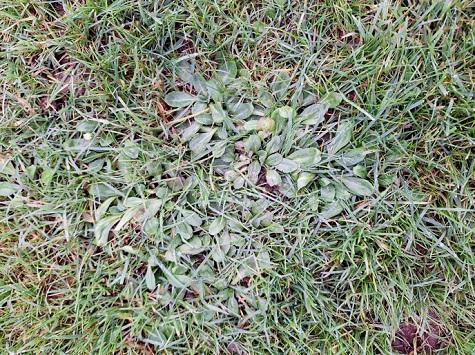
The use of biological control techniques is a rapidly expanding area. Initially its application was more related to controlling pests but it is developing quickly across all areas. Biological weed control aims to utilise insects, pathogens or even other plants to do the work of weed management for the land manager. Allelopathy can be regarded as a component of biological control in which plants are used to reduce the vigour and development of other plants. Biological weed control involves the release of organisms that attack the host weeds. The aim of biological control is to shift the balance of competition between the weed and the desired plants in favour of the desired plants and against the weed. The biological control agent, normally a fungus or insect, may not necessarily kill the target weed but should, at the least, reduce its vigour and competitive ability. From a practical point of view, the organism or agent should prevent the weed setting seed or producing other reproductive parts. There is considerable potential for encouraging the use of native biological control agents against weeds and substantial research effort has been put into biological control. Whilst initially seen as an alternative to synthetic chemicals in plant protection products, it is now being more advanced as part of an integrated approach.


Types of biological control includes:


classic biological control


Involves the release of exotic natural enemies to control weeds. It has been successful against weeds like thistles in the US and Australia where weevils (native to Europe) have been introduced onto the thistles. With appropriate developments, some introduced weeds like hogweed, Himalayan balsam and the Japanese knotweeds present ideal candidates for classical biological control. Currently plant protection products including glyphosate are the only really economic and effective solution in these cases.


inundative control


Involves the mass production and release of native natural enemies against native weeds. Work in this area has concentrated on fungal pathogens of plants as they can potentially be applied as sprays in the same way as conventional herbicides (hence their name myco- or bio-herbicides). Soil micro-organisms are often overlooked but are also important as plant pathogens. Several are identified as potential biological control agents, particularly for control of grass weeds such as soft brome, wild oat and foxtail. There is considerable potential for using micro-organisms to manipulate or deplete the soil weed seedbank. The persistence of weed seeds in the soil is the key to their success in continuing to emerge despite repeated control measures over many years. Greater predation or an increase in natural decay would reduce the soil seedbank and hence future weed populations. 


conservation control


Manipulates the habitat around the weeds with the aim of encouraging those organisms that attack the weed. This is a strategy that requires a detailed knowledge of the ecology of the weed habitat, the target weeds and the control agents. One example is the upsurge of interest in looking at encouraging the dock beetle on dock plants by creating conditions that favour the beetle.


allelopathy


Refers to the direct or indirect chemical effects of one plant on the germination, growth, or development of neighbouring plants through the release of allelochemicals, while the plant is growing, or from plant residues as it rots down. Allelochemicals can be released from around the germinating seed, in exudates from plant roots, from leachates in the aerial part of the plant and in volatile emissions from the growing plant. The art is to select the right plants to achieve the desired effect. Several weed species have also been reported to show allelopathic properties. They include couch grass, creeping thistle and chickweed. 


As the number of plant protection products available for weed, pest and disease management are reduced, the search for biological control continues to increase. Readers of this article will be aware of the challenge of leatherjackets and chafer grubs. Biological control in terms of the introduction of nematodes is widely available, albeit requiring a different skill set in application compared to plant protection products.


USE OF PLANT PROTECTION PRODUCTS


Plant protection products can often offer the only practical, cost-effective, sustainable and selective method of managing certain weeds in a range of situations. Because they reduce the need for cultivation, they can prevent soil erosion and water loss, and certain weeds may only be susceptible to one specific plant protection product. However, it is important to use the correct product and application rate for control in a particular weed situation and ensure all label and operator instructions are followed. The aim must be to minimise use by proper targeting of applications at correct dosage rates.


Key factors in using pesticides are:

  • Training - ensuring all operators have the required qualifications and, all involved, are kept updated ideally through recognised continuous professional development schemes and programmes. Organisations responsible for delivering control programmes are approved by a quality assurance scheme such as “The Amenity Standard” where they must demonstrate their commitment to best practice and compliance with requirements, minimising risk and ensuring optimum use of pesticides and the correct approaches to weed, pest and disease control.
  • Ensuring proper risk assessment - a large amount of amenity pesticide use has proximity to the public and proper, and thorough, risk assessment is essential. This will ensure full compliance with legislative requirements
  • Creating and implementing an integrated management plan. The UK National Action Plan requires all users to assess the options for control measures needed so that pesticide use is minimised.
  • Correct purchasing & storage of plant protection products. This includes ensuring products are supplied by reputable distributors with a commitment to quality and sustainable practice. Pesticide stores should be built/purchased/converted for the relevant quantities to be held and should follow the guidelines set out by HSE and other relevant bodies. Anyone using professional pesticides should be trained in the safety aspects of such use, required by law. 
  • Understanding fully label instructions and their implications in application
  • Minimising Use. Every effort should be made to minimise the use of pesticides. This starts with the production of an integrated management plan.
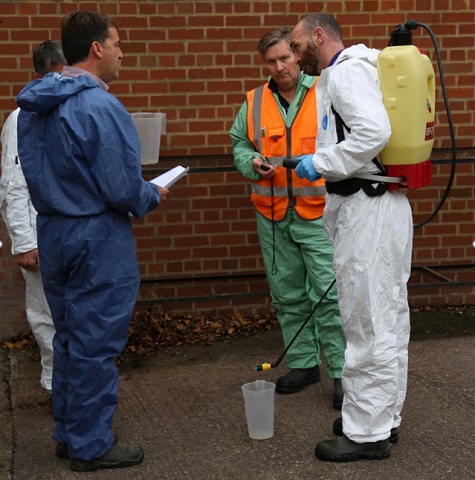
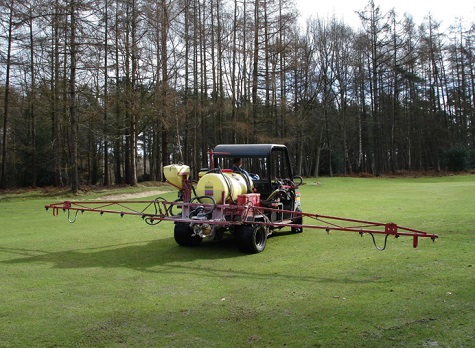
  • Properly protecting those involved and the public. The law requires you to make every effort to avoid off target contamination. When spraying in any public areas it is important to always work with due regard for bystander safety. It is very important to reduce spray drift to the absolute minimum. Always risk assess every situation – use the safest technique that will achieve the desired result.  When spraying in or around areas used by children such as schools and play areas, keep use to an absolute minimum. Sports facilities should be sprayed during periods of non-use. When spraying at a specific site, erect warning signs and wherever possible, carry out operations in periods of non-use or close the specific area or facility whilst spraying. Specific examples of sites where extra care is needed would be fine turf surfaces, sports facilities, ornamental gardens and small hard surface areas. 
  • Ensure protection of water. It is vital that pesticides are not allowed to contaminate water sources and to avoid any form of run-off at all times when applying pesticides. Know the location of drains, watercourses and vulnerable groundwater.  Site pesticide handling areas carefully away from water sources and drains and do not apply pesticides when it is raining or windy (greater than 4mph) or when rain is forecast within 24 hours to avoid run-off.


Right product at the right time


Where the decision is to use pesticides: - they must be the right product, at the right time - and at the right dose.


In determining the appropriate treatment programme, the key factors are:

  1. The right treatment for specific areas
  2. Level of control: Have you determined the level of control needed and discussed fully with all involved?
  3. Timing: Have you properly considered the timings of treatment to maximise effectiveness?
  4. Sensitive Areas: Have you properly identified sensitive areas, for example those close to water courses, boreholes, drains etc.?
  5. Pesticide use: Can you fully demonstrate why you need to use pesticides, that you have considered alternatives, and that any treatment programme will be properly targeted?

CONCLUSION


Throughout this process we need to keep coming back to what sustainability really means and its three core components. Taking a balanced and integrated approach to weed management is the best policy and indeed many are almost certainly adopting such approaches without knowing. Adopting sustainable practices need not involve a radical approach, small steps may be all that is needed. Whatever approach is taken to managing weeds needs to be economic, efficient and effective, minimising impact on the environment as much as possible. Managing golf fairways and greens demands proper control of weeds to ensure playing conditions are fit for purpose but, in the rough areas, more emphasis can be put on diversity and encouraging wildlife. Producing conditions which minimise weed problems is also important, all part of a fully holistic or integrated approach.


Next month in the last article of this series, we will seek to bring the information in the past three articles to consider the key practical steps involved in creating an integrated management plan for a specific situation.