In June I was invited to visit Leicester City Football Club’s new Sports Turf Academy (STA) by Jonathan Knowles the Head of Sports Turf Academy.
The visit was prompted in response to a recent article I wrote about the current state of the industry. Jonathan was keen to demonstrate to me the work he and some fellow colleagues had been doing to raise education standards for ground professionals and the work they are now doing at the academy facilities.
Our conversation revolved around various topics related to sports turf management including apprenticeships, impartiality in research, DNA analysis, fertiliser products, data-driven decision making in golf course management, and the evolution of apprenticeship programs in the UK.
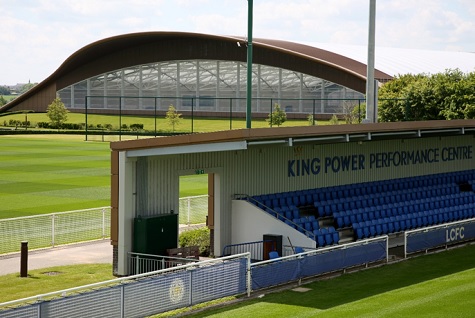
Jonathan said the STA aims are to inspire the next generation of sports turf professionals, with the LCFC facilities providing live environments for trials and research.
They have also developed a team of trained operatives to carry out contractual works for third parties, namely local sports clubs.
The Academy is built around four distinct pillars - Education & Training, Technical Services, Tournament Support and Trials & Research - to support the development, diversification and professionalisation of the sports turf industry.
The Training & Education pillar includes specialist provision of sports turf educational packages, ranging from short-courses to apprenticeships to degree-level internships.
The Academy seeks to add value to all those in sports turf education by utilising a blended learning experience of practical, online and classroom-based teaching. This flexibility in delivery means there are no fixed academic terms and provision is available throughout the year. Furthermore, the Academy looks to support the sports turf voluntary sector with their training needs too.
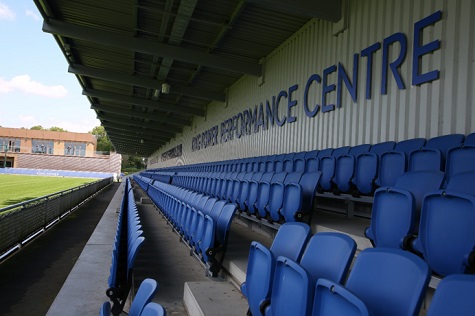
Through its Sports Turf Academy Technical Services pillar, improvements will be made to grassroots football pitches. With grassroots football set to receive almost £550M of Government funding over the coming years to make playing surfaces safer, the STA will say they will set a new standard in pitch improvement and offer tailored advice to grassroots clubs to maximise the potential of their funds.
Finally, tournament support will come in the form of highly skilled seasonal staff the STA will make available to venues hosting turf-based sporting events. As well as ensuring venues meet and exceed exacting standards set by governing bodies, the programme is aimed at enabling professional development and the cross-sport sharing of best practice.
Jonathan was keen to point out his role is to oversee the Sports Academy and the business that the Sports Academy does. He explained, ”We’re engaged with about 50 local football clubs, and to date have improved 200 plus football pitches.”
The money for this work has been generated by funding from Football foundation, Sport England, National lottery and the Premier League. It is utilised to upgrade, renovate provide new machinery for grass roots football facilities.
The club have three full time grounds staff dedicated to doing this external contractual work. It gives them the opportunity to learn many new skills involved with the renovation of pitches. The monies earned from these works are ploughed back into the academy for further investment in training courses, research and trial works.
As for the training ground there are around twenty full time grounds staff to look after all the facilities at the site.
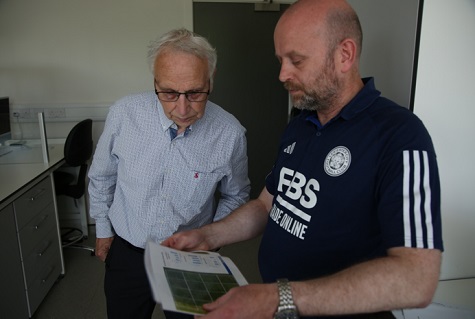
Laurence Gale with Jonathan Knowles
My tour of the site began with Jonathan showing me the training rooms and laboratory where they carry out testing and analysis of the performance and condition of the playing surfaces at both the training grounds and the stadium.
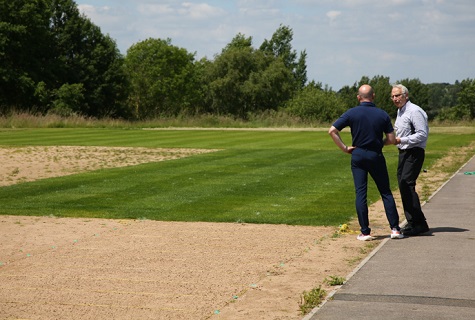
They have an on-site trial area, some 1000m2 in size, for trialling seed varieties, fertilisers and other turf products that enables them to monitor the health and performance of the sward. They also undertake glass house trials on new products that companies are recommending to them in the form of nitrogen-based products such as seaweed extracts and bio stimulants.
In the lab and out on the trial sites, they are able monitor the condition of the sward and soil using several different soil tests and vegetive DNA tests. Also, all the playing surfaces are analysed daily for consistency, performance and health using a plethora of testing apparatus such as artificial athlete, soil moisture meters, rotational traction meters, density scanning, root density, ball speed and roll tests and along with the use of drones.
The ability to now conduct DNA testing of grass samples takes micromanagement of pitches to a new level, meaning they are able to identify several issues that may be occurring. For example there may be two or three disease pathogens causing a problem and therefore they can be dealt with accordingly.
Collecting data is fundamentally important to find out better ways of managing the turf in terms of controlling weeds pest and diseases. Water management is key to having the right moistures levels. Within the sward anything between 18-25% is desirable as any other readings (drought or over watering) will have a bearing on performance, health and recovery of a pitch.
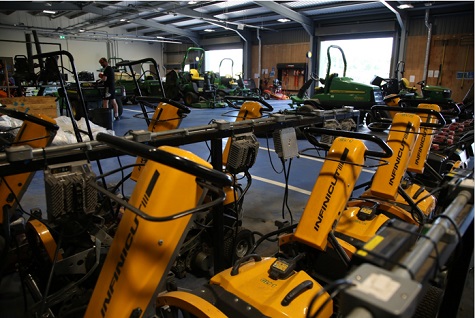
Over time this constant monitoring of the pitches has given them a valuable insight into the best practices they need to undertake, to keep these playing surfaces in the best condition to withstand the daily use they get.
We then briefly spoke about the work Jonathan and Daniel Ratling from Whitgift School have been doing with a number of other high profile grounds managers in improving and developing Sports Turf apprenticeships.
Over the last few years, this group of volunteers have been reviewing all sports turf apprenticeships including development of occupational profile, apprenticeship standard and end point assessment schedule. They work with the Institute for Apprenticeships and Technical Education (IFATE) in the development of the apprenticeships.
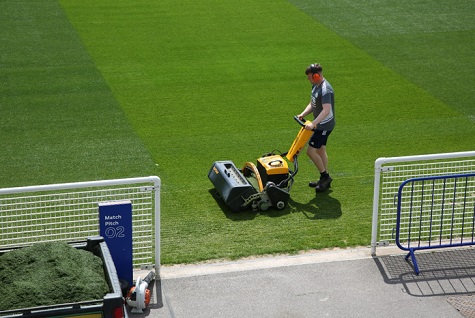
Essentially, they have now overhauled Level 2 Sports Turf Operative, Level 3 Advanced Sports Turf Technician and have begun the development of a degree-level 5 Sports Turf Technical Manager apprenticeship.
This overhaul was to ensure these apprenticeships give our industry parity with other industries and seek to provide an aspirational educational pathway from entry to degree level. Making them more in tune with the professionalism that employers expect.
The new format evolves around constant learning throughout the duration of the programme and at the end of the programme you are put forward for the final endpoint assessment by all three parties, (employer, training provider and the candidate, themselves).
Since 2020 over 30 apprentices have gone through the academy scheme. Jonathan said, “We usually get a high amount of interest with over 30 plus applying and, by the time we whittled them down, we may interview around seven who come in for a tour of the site. They are then told in no uncertain terms what the job involves, eg working in all weathers and walking in excess of 15,000 steps per day. We then conduct a full interview and ask them about themselves and then make a final decision on whether we take them on.”
Jonathan was keen to point out that they also visit a lot of schools to promote the work they do. They also invite schools to come and see for themselves the range of skills and opportunities there are for young people to come and work in the sports turf industry.
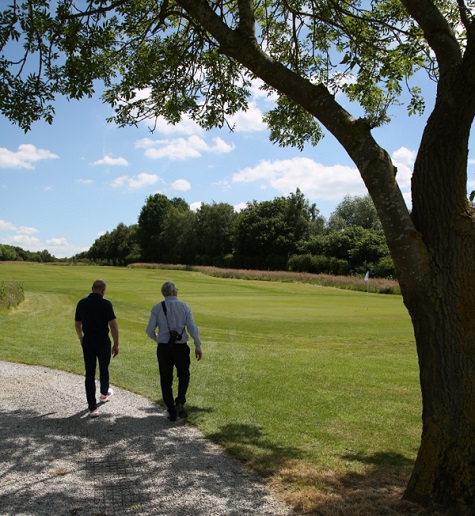
Hands-on experience can also be gained in building bird boxes, walking the golf course, doing some ecology work, washing down machinery, line-marking, visiting the workshops and playing some football.
“By inviting both teachers and pupils to see at firsthand the work we do at the training ground,” explained Jonathan, “it opens their eyes to the range of job roles there are in a professional sporting environment.”
Jonathan also believes that the industry has changed dramatically in the last 15 years, offering many new ways of working. “Using the latest technologies, management software and robotics we probably can attract a newer audience to come and work in our industry,” he said.
The Leicester City Football Club Sports Turf Academy is an exceptional facility and is at the forefront of the training of future professional grounds practitioners and managers. I would like to thank Jonathan for giving me the time to come and see the work they are doing to promote the skills, knowledge and work that goes into producing world class playing surfaces.