It was music to my ears.
Speaking to The Cricketer magazine, Rob Lynch, MCC Director of Cricket and Operations, said, "We can put in champagne bars all around the ground, but at the end of the day, it's about the 22 players competing on our pitches.”
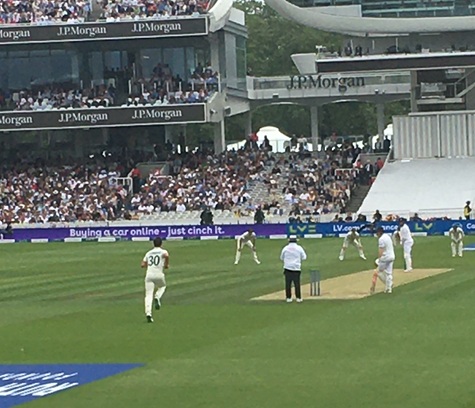
How true. The infrastructure of major sporting arenas receives the most publicity, including new stands, fine dining, bars and beverages, and seating and hospitality facilities, all of which are important to spectators' comfort and enjoyment.
But the focal point, the stage on which the players perform, often receives scant recognition. As do the ‘stage managers’, those charged with the preparation and upkeep of the playing surface, which can often influence the outcome of matches. Lynch is fulsome in his praise for head groundsman Karl McDermott, the man charged with overseeing the playing surfaces at Lord’s, widely regarded as the Home of Cricket.
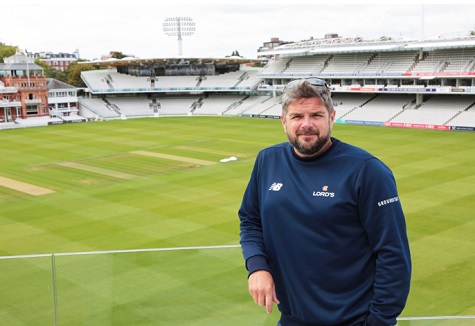
"Karl is a brilliant human being and, in my view, has the most important job on this ground and in this club," says Lynch. "I would go further to say that he has the most pressure. I would also say that many people in our industry and associated with cricket have no idea what they're talking about when it comes to cricket pitches."
The challenges are considerable. The weather, of course, and the shifting demands of long-form and short-form cricket. The former requires a durable surface that can change in character over the course of a match, whilst quantity (runs or wickets) is more important in the short form.
To play at Lord's often tops a player's bucket list, as does a visit for spectators. But there are major constraints on producing a consistent playing surfaces, a living, breathing organism.
In total, Lord's will host 62 days of cricket in 2026, two more than is considered ideal but two fewer than last year. There were 77 days' worth of requests, which is why the MCC is currently looking at second venues.
Tearing up a tired square is a multi-year process and therefore not an option. Peering down from his office overlooking the outfield, Lynch continues to explore ways to improve their own product by innovating.
The MCC have recently followed the lead of the All-England Lawn Tennis Club and adopted the practice of steaming their pitches. Using a custom-built, highly manoeuvrable steam unit, they deliver precise heat treatment directly to the playing surface. The system achieves a temperature of 85°C in the top 65mm of the soil profile for one hour, with temperatures of at least 60°C reached deeper into the rootzone - ensuring a clean, healthy foundation for the new grass crop.
Pitch farms?
Many stadiums worldwide have become multi-sport venues, capable of hosting both winter and summer sports. It is not unusual to switch on the TV and watch Aussie rules football at Sydney Cricket Ground, then see Test matches played at New Zealand’s Eden Park rugby stadium, courtesy of drop-in pitches grown and nurtured at another venue.
There is no likelihood (at the moment) that Lord's might become a multi-sport venue, but drop-in pitches are on Lynch’s agenda. In the 70-odd years I have visited Lord's, I have only seen two other sports played there. Many years ago, whilst I was at school, I attended an international hockey match at the ground. Fast forward to 2012, and Lord's was the venue for the archery at the London Olympics.
It was a strange experience sitting in a stand on the ‘hallowed turf’ of the Lord's outfield, watching competitors fire their arrows from the Pavilion End across a cordoned-off square to the targets beneath the Media Centre at the Nursery End.
No stranger than watching a Mexican and a South Korean walk down the steps of the historic listed pavilion, walking in the steps of Hobbs and Sutcliffe, Strauss and Cook to unleash the first arrows from the Pavilion End!
For several years, the MCC has trialled a couple of drop-in pitches in a corner of the Nursery ground. But they bring their own considerable challenge, notably portability.
Typically, the pitch sits within a steel frame roughly 24m long, 3m wide, and about 20cm deep, containing compacted soil, clay, and turf. They are seriously heavy, estimated to weigh around 30 tonnes.
Some years ago, when talking with one of Rob Lynch’s predecessors, he said it was impractical to transport a drop-in pitch across the outfield, given the constituent mix of today’s free-draining surfaces.
The option for Lord's appears to be a massive crane hoisting the pitch high above the Media Centre and into place on the square.
Rob Lynch acknowledges the problems but says "the only option that we have is to cultivate new types of cricket wicket".
It is hoped that, later this year, two or three new drop-in trays will be installed on the Nursery Ground, alongside the current squares, and will bed in over the next two years. "When we think it's appropriate," Lynch explains, "we'll pick one up and probably play a County Championship game on it first."
That is the first phase, with the second step contingent on the surface's performance. "All things going well, the first chance to do that would be in 2028. More realistically, we're looking at 2029.
"If we get this drop-in pitch technology right, you could go and play cricket in the middle of Shanghai," he says, while flagging the problems that cropped up during the last men's T20 World Cup in New York.
But get all this right, and Lynch sees the possibility of an agenda-setting, transformative "pitch farm" where MCC has multiple trays in a paddock, with multiple pitches cultivated year-round.
A quirk of the ground is the Lord’s slope. The outfield drops about 2.5 metres (8 ft 2 in) from the north (Grand Stand/Pavilion End) down to the south (Tavern/Mound Stand/Nursery End).
Get the transportation issue right, then the drop-in pitch contractors only need to work out how to drop a pitch in at a wonky angle!
Good luck with that.
Chris Biddle is a Life Member of the MCC, having been elected to membership in 1963.

