EDITOR'S BLOG
AUTUMN LAWN RENOVATION TIPS
September and October are ideal for vital works
by TurfPro Editor, Laurence Gale MSC, MBPR
 
Laurence Gale MSC, MBPR

Turf Professionals should now be planning, or even started, their autumn lawn renovations, having sourced the relevant materials and machinery to facilitate the works.


Grass growth is adversely affected by nature's wrath in the form of various biotic and abiotic stress factors. Water deficit is one of the major abiotic stresses, which adversely affects crop growth and yield. The recent period of hot sunny weather will have certainly had a detriment effect on many of our lawns.


Without water, they soon turn brown and in extreme cases can die. However, our UK climate tends to prevent this happening, due to the fact we are a small land mass surrounded by water - therefore it is often inevitable we soon see a change in the weather and receive a downpour, to revitalise our lawns (as recently clearly evidenced!)


A combination of watering, coupled with a selective weed and feeding regime will endeavour to keep our lawns in a good condition.


However, you should now be planning, or even started, your autumn lawn renovations, having sourced the relevant materials and machinery to facilitate the works.


The months of September and October are ideal times for this work. 
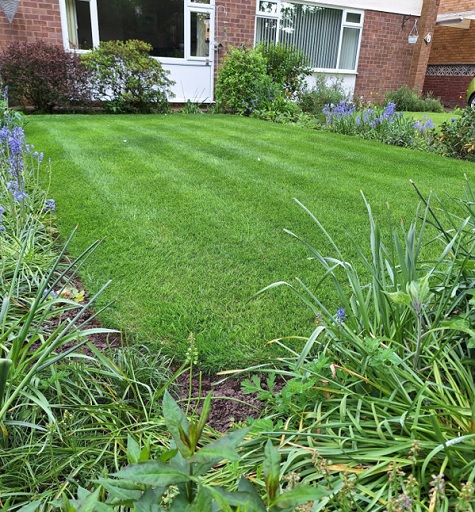


So what is a good lawn?


A good lawn in the UK is typically characterised by several key features that reflect its health, appearance, and functionality. Here are some of the main attributes that constitute a good lawn in the UK:


Lush green colour
A vibrant, deep green colour is a sign of a healthy lawn. This indicates that the grass is receiving the right amount of nutrients, water, and sunlight.


Even coverage

A good lawn has even grass coverage without bare patches. This means the grass is growing uniformly across the entire lawn area. Regular overseeding and proper maintenance help achieve a dense and evenly covered lawn.


Weed-free
Minimal or no weeds are a hallmark of a well-maintained lawn. Common weeds such as dandelions, clover, and daisies can compete with grass for nutrients and sunlight. Regular mowing, selective weed killers, and proper lawn care practices help in maintaining a weed-free lawn.


Healthy grass variety
The choice of grass species is important. A good lawn in the UK often includes a mix of grass species like perennial ryegrass, fescues, and bentgrass, which are suitable for the UK’s climate. Different grass types provide resilience, durability, and aesthetic appeal to the lawn.


Good soil health
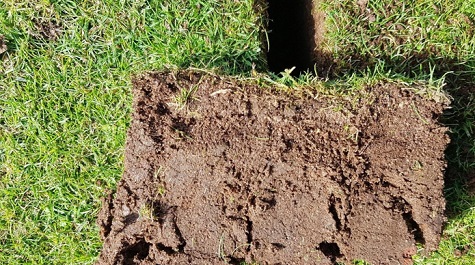
Healthy soil is crucial for a good lawn. It should be well-drained yet retain enough moisture to support grass growth. Regular aeration, top-dressing, and appropriate fertilisation improve soil structure and health. 
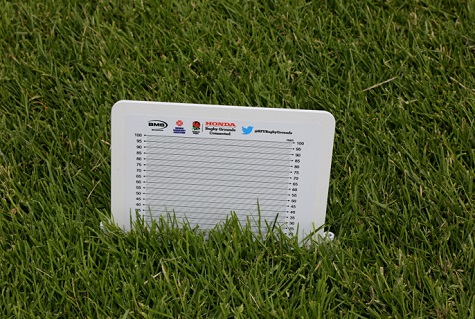


Mowing height
Regular mowing at the correct height encourages strong root growth and helps maintain the lawn’s appearance. For most lawns in the UK, a mowing height of about 2.5 to 4 cm (1 to 1.5 inches) is ideal, though this can vary depending on grass type and season.


Adequate watering
Even though the UK climate provides regular rainfall, there are periods when additional watering is necessary, especially during dry spells in summer. A good lawn is watered deeply and infrequently to encourage deep root growth.


Pest and disease management

A healthy lawn should be relatively free from pests and diseases. Common issues in the UK include fungal diseases like red thread and pests like chafer grubs. Regular monitoring, proper care, and appropriate treatments help keep these problems under control.


Proper Edging
Well-defined edges around the lawn enhance its appearance and help prevent grass from invading flower beds and pathways. Regular trimming and maintaining clear boundaries contribute to a neat, well-kept lawn.


In summary, a good lawn in the UK is one that is green, dense, even, and well-maintained, with minimal weeds, pests, and diseases. It should be able to withstand the UK’s variable climate and provide an aesthetically pleasing, functional outdoor space.


Renovations still necessary


However, having achieved all of the above it is still essential that you carry out an end of season renovation that includes the following tasks :-

  1. Mowing the sward, preparing surfaces for renovation.
  2. Weed & moss treatment.
  3. Scarification, removal of unwanted debris.
  4. Aeration, decompaction of soil, improving air and gas exchange in soil.
  5. Top dressing, restores levels and improves surface drainage.
  6. Overseeding, restores grass populations.
  7. Fertilising, provides nutrients for grass growth.
  8. Brushing to incorporate dressings and to help the grass stand back up.
  9. Watering / Irrigation.

Weed control may be dealt with prior to the renovation. Any accumulated moss growth should be dealt with by applying an approved moss killing chemical, wait for it to die, then remove by scarification.


A lawn may decline through a number of reasons - lack of cultural practices, drought, weeds, diseases, shade, poor soil, neglect, abuse and overuse. 


Mowing: 
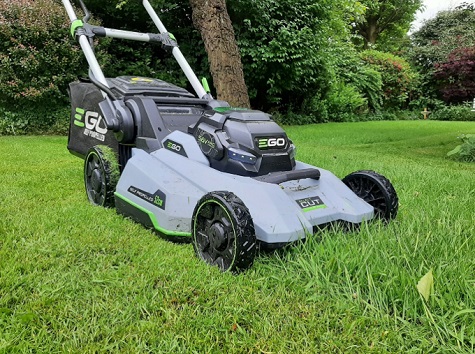


The grass is usually mowed prior to starting any renovation works. The objective of mowing is to clean and prepare the grass surface. Grass growth in spring can be uneven and varied. Mowing the grass to a uniform height will help prepare an even surface for scarification and topdressing operations. 


Cuttings should be boxed off, and the height of cut will depend on the type of surface you are preparing. For fine lawns the cut may be down to between 10-15mm Cylinder or rotary mowers can be used as long as they are able to collect the cuttings. 


Scarifiying: 
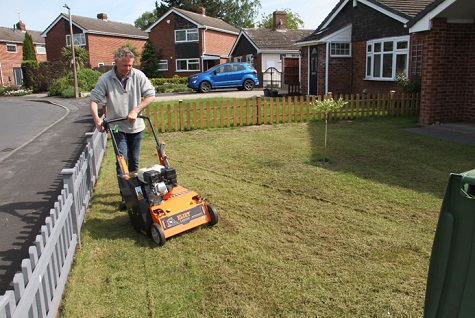


During growth the grass plant produces a lot of dead material above and below ground level. 


Above ground (Thatch layer): dead and decaying leaf and root material develops and accumulates to form a thatch layer of matted material. This layer of thatch can create a microclimate that is detrimental to turf, preventing water infiltration and providing ideal conditions for fungal and disease establishment. 


Below ground (Mat layer): root growth involves increased biomass of the root system and, like the grass shoots above the ground, some of this new matter dies back leaving a dead mass of root material which can often prevent and restrict new root growth and affect gaseous exchange in the soil. It is important to remove this debris. 


Scarifying is the term used to remove this unwanted vegetation. There are many different ways and methods of scarifying lawns and turf surfaces. The process usually involves a raking / cutting action to clean out the thatch debris, and can be done manually using spring tine rakes or mechanically using specially designed rotorakes, verticutters and knife action machines. 


There are many different types of machines designed and available for scarifying turf, all offering different cutting depths, with different power and speed variations, with and without collection boxes. Machines can come in many shapes and sizes, some are pedestrian, some tractor/ prime mover mounted. 

The depth of penetration for effective scarifying must be through the mat layer and into the soil. For an effective, vigorous scarifying, the blade should be at least 3 mm wide. Scarifying in two directions, at an angle of less than 90 degrees, gives the most vigorous working. Scarifying at right angles has the tendency to cause severe damage, with the small squares of turf being ripped from the surface. To restore the playing surface after vigorous scarifying will require an application of top dressing materials to restore levels and provide a seed bed for grass seed. 


Aeration:


Aeration is an important part of the renovation programme. Not only does aeration remedy any compaction problems by restoring and improving air movement in the soil profile, it also provides channels and openings for the top dressing materials to integrate, particularly if hollow coring or hollow tines have been used. 


Depth of tines can vary between 100-200mm depending on the type of aerator being used.


Top Dressing:


The application of a good quality top dressing, in combination with a suitable aeration programmes, will go a long way to counter the ravages of wear / play. 


Benefits of top dressing:-

  • Restores surface levels.
  • Stimulates new root and shoot growth.
  • To cover seed (soil seed contact to initiate germination).
  • Increases water holding capacity of the soil.
  • Improves soil structure.
  • Increases nutrient retention.
  • Improves surface drainage.

There is a wide range of materials available for top dressing, ranging from straight sands, clays, loams and local soils materials through to purpose mixed rootzones combining clays, loams and sands. These mixes can be tailored to suit customers’ needs, and can range from 80/20, 70/30 and 60/40 sand/soil percentage mixes.


The success of top dressing will also be influenced by the amount applied and how well it has been worked into the turf surface. Applying too much dressing will have a detrimental effect, smothering out the turf and increasing the likelihood of disease, slow grass growth and, in some cases, will kill the turf.


Overseeding:
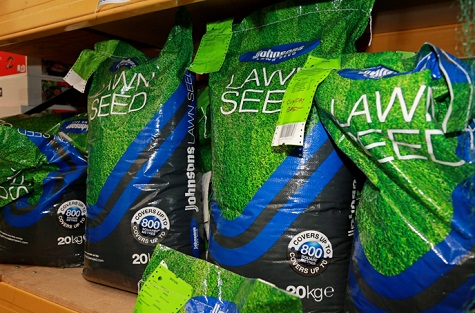


To re-establish grass cover, it is necessary to overseed the area with new grass seed. It is important to choose appropriate seed It is not cost effective to use cheap or old grass seed stock, as germination and establishment is likely to be poor. Buy your seed from a reputable company which specialises in developing and marketing quality grass seed mixtures. These seed varieties may be more expensive but they do guarantee quality and performance.


Most seed suppliers will recommend sowing rates but, as a rule of thumb, it will generally be about 35grams of seed per sq/m. Temperatures above 12°C, a moist, well-aerated seedbed, close seed/soil contact are primary requirements for rapid grass seed development. 


Fertilising:


Prior to applying any fertilisers it is essential to obtain the nutrient and pH status of the soil. This can be achieved by sending soil samples to a soil laboratory which will carry out a nutrient analysis of the sample. Once obtained you will be able to choose a product that offers you the correct N P K fertiliser ratio for your soil.


These fertilisers can be supplied in granular or liquid form. Granular products tend to be more widely used because they are easier to handle and distribute. Over dosing or applying granular fertilisers without enough soil moisture being present may result in the grass becoming scorched, resulting in scarring or death of the grass plant. Fertiliser application is only effective if you ensure uniform coverage. Granular fertilisers can be applied with either a drop (gravity) spreader or a rotary (centrifugal) spreader.


Brushing / Dragmatting / Luting:


Once all top dressings, grass seed and fertiliser materials have been incorporated into/onto the surface, it is important to work the material into the profile by brushing, dragmatting or luting. These operations ensure the materials are worked in evenly, and prevent any excess material remaining on the top. This operation is best done when the surface is dry, enabling the material to distribute itself easily. Irrigation / watering:


To renovate successfully, adequate water must be available from seeding through to completion of germination. Try not to allow newly overseeded areas to dry out once watering has commenced. Initially, maintain a constantly moist seedbed with frequent waterings of short duration. As newly germinated seedlings begin growth, decrease the frequency, and increase the duration of watering to encourage deeper rooting.


Conclusion: 


Lawn renovations is often a time consuming and expensive exercise. Successful renovation requires detailed planning and programming, to ensure the right materials and equipment are available and working throughout the renovation process. 

NEWS
WINNING STUDENT GREENKEEPERS REVEALED
Success celebrated
 
Daniel Parker and Jack Vowell

In our first WEB ONLY story, following regional judging earlier in the year, 10 finalists were selected to contest the prestigious awards recently.


DEALERSHIP BECOMES NEW OFFICIAL IMPORTER
Of Laski products in the UK
 
Louis Phillippo

In our next WEB ONLY story, new importer says they are committed to expanding the Laski dealer network and service centres across the UK.


STIGA SPONSOR HIGH PROFILE FOOTBALL CLUB
Become official groundskeeping partner
 
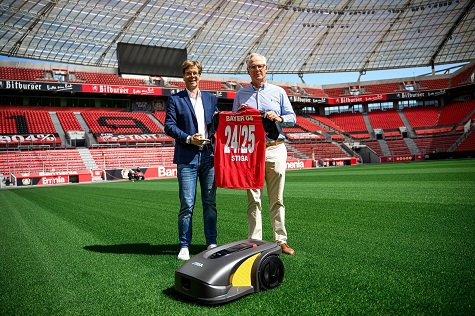
STIGA have announced new sponsorship

The manufacturer's autonomous robotic mowers will be now used on the club's training pitches.


STIGA has announced that they are now the official groundskeeping partner of Bayer 04 Leverkusen.


The manufacturer and the football club have signed a one-year contract. The sponsorship will run until the end of June 2025. 
 
STIGA will take care of Leverkusen’s training pitches, providing lawn care by using their autonomous robots.
 
Felix Duden, CEO of TecArena-Plus GmbH said, "With STIGA as a new partner in the Sponsors Club, we are extending our commitment to innovative solutions in ground maintenance. Through this partnership, we are backing innovative and environmentally friendly technology in maintaining our playing surfaces with modern mowers. We are looking forward to working together."
 
Marc Gerster, CEO of STIGA Germany and Switzerland added, "As a forward-thinking company we are always looking for exciting collaborations that benefit both sides - also in sponsorship. With their innovative style of play, Bayer 04 Leverkusen under coach Xabi Alonso have made their mark on football in Germany and shown how successful you can be with courage, enthusiasm and passion. These are values we live and breathe at STIGA every day. So we are looking forward to getting up to speed on the pitch together from now."

NEW ADVISORY SERVICE LAUNCHES
From golf course irrigation and water management expert
 
Stuart Tate

New business says it will assist clients with strategic planning for water usage.


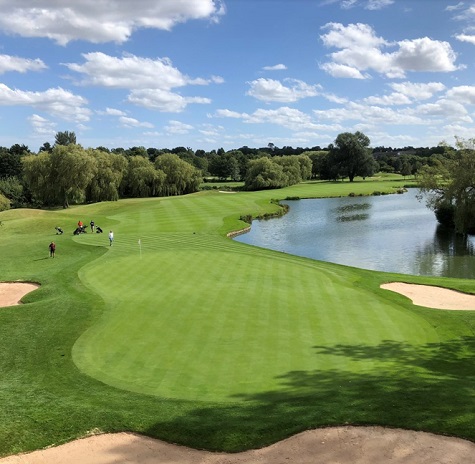
Stuart Tate, a well-known golf industry irrigation and water management expert, has launched a design engineering and technical advisory practice, Irrigation Professionals Limited.


Stuart Tate


Based in Ringwood, UK, Stuart says he and a number of specialist associates will assist clients with strategic planning for water usage, provide water sourcing and water engineering solutions, and deliver practical support and education for those operating, maintaining, upgrading and replacing golf course and sports turf irrigation systems.


Stuart has 35 years’ design engineering and specification expertise. In a career dedicated to the golf sector, he says he has a focus on sustainability and a hands-on approach to the management of individual projects. In his most recent role as European golf specification manager for Rain Bird, he also delivered greenkeeper education for a number of membership organisations.


Stuart said, “Water is essential for turfgrass health and performance and water scarcity is a pressing issue, yet irrigation remains a grey area in the golf and sports turf industry’s understanding. We will provide the links between water sourcing, efficient design, the latest water saving technologies and education, to give organisations and turf professionals clarity and confidence in their approach to managing this precious resource.”

STIHL SET FOR CHARITY RIDE
In aid of Perennial
 
STIHL's ride team

The team will be cycling 100KM across the Surrey Hills in aid of charity closely associated with the industry


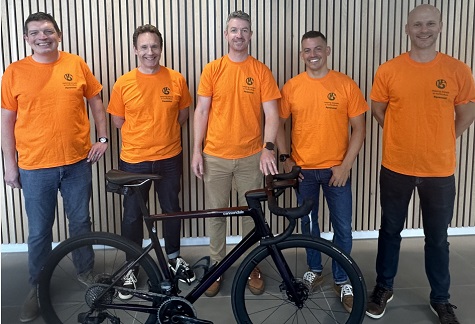
A team of five STIHL GB colleagues is undertaking a charity bike ride on Saturday 28 September in aid of Perennial - STIHL’s current chosen charity.


STIHL's ride team. L-R: Simon Hewitt, Gavin Hamson, Nathan Kelly, Tom Peacock, Ben Beamont
 
Perennial is the UK’s only charity supporting all those working with plants, trees, flowers or grass and people retired from these industries.  
 
The team will be cycling 100 KM across the Surrey Hills - starting and finishing at Denbies near Dorking.
 
“We’re really excited to working with Perennial, a charity so closely associated with our industry” said Simon Hewitt, head of ,arketing at STIHL GB.


“Raising funds for Perennial’s work is key to our aims. Donations of any size will be hugely appreciated and can be made directly to Perennial.”


The ride map

JOBS
ADVERTISE YOUR JOBS HERE
Amazing success rates!
 
Advertise your jobs on TurfPro Weekly Briefing

Advertise your recruitment needs on TurfPro Weekly Briefing and reach our targeted audience of recipients every week.

Contact Nikki Harrison for details - 01491 837117


PREVIOUS FEATURES
EDITOR'S BLOG ARCHIVE
Catch up with Laurence Gale's recent blogs
 
TurfPro editor, Laurence Gale

Want to catch up with one of editor Laurence Gale's blogs? Here is the place to do so.


TURFPRO FEATURE ARCHIVE
Find our previous features here
 
TurfPro Feature Archive

If you want to catch up with any of TurfPro's previous features, here is the place to do so.


ON TEST
STIHL BGA 300 cordless leaf backpack blower


ON TEST
EGO Multi-tool


PUT THEM ON THE TOOLS!
Time for an attitude change


SUSTAINABILITY IN THE TRAINING SECTOR
Grasping the challenge of encouraging more sustainable practice


SUSTAINABILITY IN LOCAL AUTHORITIES
Lessons learnt and experiences


SKILL SETS NEED RECOGNITION
Turf professionals are underappreciated


GREATER RESPECT FOR GROUNDS STAFF MIGHT MAKE ALL THE DIFFERENCE
To the recruitment crisis


A COMPETITIVE SALARY
Why employers should advertise the salary when recruiting new staff


ON TEST
Makita XGT UV001G lawn scarifier


AN EXAMPLE OF SUSTAINABILITY IN MACHINERY SUPPLY
Focus on Kubota


MY PERSONAL GREENKEEPING PHILOSOPHY HAS NEVER CHANGED
I don't follow any set program


SUSTAINABILITY IN LANDSCAPING
A substantial element of amenity activity


IS IT TIME TO SAY NO TO 'NO MOW MAY'?
Any real benefits?


SUSTAINABILITY IN OUR PARKS & PUBLIC GREEN SPACES
Meeting the challenge


THE PATH TO WIMBLEDON
For groundstaff member, Conrad Cavil


ON TEST
EGO LBP8000E backpack blower


SUSTAINABILITY IN THE LAWN CARE SECTOR
A key consideration


BEEKEEPING IN COMMERCIAL ENVIRONMENTS
The current situation


SUSTAINABLE PRACTICE IN THE AMENITY SUPPLY SECTOR
Optimising land use through integrated solutions


SUSTAINABILITY IN THE GOLF SECTOR
Focus on BIGGA


THE SEARCH FOR SUSTAINABLE PRACTICE
Bringing together key points


DEVELOPING SUSTAINABLE SOLUTIONS FOR GOLF
R&A are supporting clubs


GETTING THE MOST OUT OF EVERY POUND OF BUDGET
A course manager's view


A NEWFOUND APPRECIATION FOR ALL VOLUNTEERS
Who look after grassroots pitches


SUSTAINABILITY & THE UK ACTION PLAN
For weed, pest and disease management


CONCERN FOR PARKS FOLLOWING COUNCIL BANKRUPTCIES
What does the future hold?


TAKING A GLOBAL LOOK AT SUSTAINABILITY
Is the rest of the world also driving towards sustainable practice?


RENOVATIONS, PLAY AND THANKS
On my mind this week


SUSTAINABILITY – IMPLICATIONS FOR TRAINING & EDUCATION
Set to play a crucial role going forward


TULIP TREE
Liriodendron tulipifera


LYDIA BROOM
Genista lydia


THE LAWN AND ITS VALUE
Changing attitudes


GIANT HOGWEED
Invasive and potentially harmful


LIFE-CYCLE ANALYSIS & SUSTAINABILITY
Considering every stage of the journey


NITROGEN USE EFFICIENCY
The most important nutrient


BERBERIS THUNBERGII
A shrub that has stood the test of time


ENSURING FUTURE PROSPERITY
Advice imparted at road shows


INNOVATION & SUSTAINABILITY
A key focus


PHOTINA RED ROBIN
A sensational flowering shrub


VALUING THE GRASSROOTS
We must not overlook those who maintain these grounds


MANAGING WEEDS SUSTAINABLY
In amenity spaces


DETECTING NUTRIENT DEFICIENCY SYMPTOMS
In turf plants


SPRING RENOVATIONS UNDERWAY
A crucial period


SUSTAINABILITY IN SUPPLY
A focus on those who supply essential inputs to our sector


CHANGING CLIMATE
Is a borehole the key for clubs?


SUSTAINABILITY AT THE SHARP END
How to put into practice when budgets are tight?


ANOTHER NAIL IN THE COFFIN OF GRASSROOTS RUGBY
Clubs are struggling


SUSTAINABILITY IN PRACTICE
Seeking transparent and robust supply chains is essential


TIME FOR ACTION
To reverse recruitment crisis


CONTROLLING COSTS
Planning is crucial


THE SEARCH FOR SUSTAINABILITY
What exactly does the term mean?


CARING FOR THE GRASSROOTS
From volunteers to contractors


DEFRA IS LETTING DOWN THE COUNTRY
Complete failure to address the plastic grass debate


WE CAN ALL DO MORE
To aid biodiversity


MY LIFE IN GREENKEEPING
With Bruce Cruickshank


LEVELLING UP, GETTING SMARTER & GETTING AHEAD
Parks require so much more funding


SWITCHED ON FOR HARD WORK
Putting trimmers through their paces


MACHINERY HIGHLIGHTS
At this year's show


MY SALTEX
Daniel Lewis​, Manchester City Football Club


AWASH WITH LEARNING OPPORTUNITIES
Two months till showtime


LOOKING BACK, LOOKING FORWARD
Priorities for the amenity sector


THE DECLINE OF ‘PARKITECTURE’
A symptom of the state of parks in 2022


DEVELOPERS SHIRKING GREEN SPACE RESPONSIBILITIES
Lack of financial commitment


TIME TO COME TOGETHER
For the good of the industry


THE DEATH OF GRASS ROOTS CRICKET
Gathering apace?


ROUTES INTO THE INDUSTRY MUST BE ENSURED
Q&A with David Fisher, Lantra’s head of industry partnerships


STRONG VIEWS ON CRICKET PITCH PERFORMANCE MARKING
A bone of contention


A PREMIUM PRODUCT
Delivered at Naas Golf Club


THE GREEN REVOLUTION
And Esker Hills


MAKING A CHANGE
Laytown and Bettystown Golf Links


A DAY AT THE RACES
Naas Race Course


WORKING TOGETHER AS ONE VOICE
How the industry needs to proceed


OVER 175 YEARS OF EDUCATION
Wesley College


ELECTRIC EXCITEMENT
Dennis's Ian Howard talks electrification


THE HOME OF CORK GAA
Páirc Uí Chaoimh


LONG POLE BATTERY HEDGE TRIMMERS TESTED
STIHL HLA 66 and HLA 86


OVER 800 YEARS OF HISTORY
Johnstown Castle and Gardens


A CLUB GONE WILD
Kilkenny Golf Club


A GOLF COURSE IN THE GARDEN OF IRELAND
Woodenbridge GC


80 YEARS YOUNG
Charleville Golf Club


AN UPLIFTING EXPERIENCE
Bunclody Golf & Fishing Club


GETTING BACK TOGETHER
Albeit gradually . .


GO WEST
Inishturk GAA pitch – one of the most westerly sportspitches in Europe


WORKING ON A TIGHT BUDGET
Nenagh Golf Club


ON A MISSION
Wrekin Golf Club aiming to enrich wildlife and fauna


WILD AND WONDERFUL
Design By Nature


LEARNING HOW TO SURVIVE
Abbey Par 3


TACKLING OBESITY
Vital that schools can provide sport


A LIFETIME OF LEARNING
Vital for turf professionals


CELEBRATING 125 YEARS
Tullamore Golf Club


UNIVERSITY CHALLENGES
At Trinity College Dublin


BLENDING THE OLD WITH THE NEW
Bray Golf Club


A WELL POLISHED COURSE!
Ierne Social And Sports Club


IDENTIFYING THE TRUE VALUES
Of grounds maintenance


THE INDUSTRY WILL CHANGE & ADAPT
But it will survive


WIRRAL GOLF COURSES SAVED
Renewed hope and optimism for the future


GREEN SPACE CONTRIBUTION TO WELLBEING IS UNDERVALUED
Parks invisible on national agenda


A SHINING LIGHT IN IRELAND'S SUNNY SOUTHEAST
Wexford Golf Club


GREEN SPACES DO NOT LOOK AFTER THEMSELVES!
Keith Kent says we must invest in people


WE SHOULD TELL THE WORLD ABOUT THE UK INDUSTRY
Right time for all sides to come together


SOIL LIFE IS PRECIOUS
Good-quality soil can help save the planet


MORE THAN JUST CUTTING GRASS
Encouraging the next generation


A BUZZ FROM DOING THE JOB
Wide experience of the turf grass industry


PAYING THEIR WAY
Low wages is the bane of the industry


AMENITY MANAGEMENT IMPACTS US ALL
Professor John Moverley


CARING FOR PARKS OF ALL TYPES
Mary Worrall


TOP FIVE FRUSTRATIONS FOR CRICKET GROUNDSMEN
What causes you the most frustration in your role?


PROFESSIONALS AT THE CUTTING EDGE
Vic Demain and Phil Sharples


BOWLS CLUBS IN PERIL
A sad decline


A VERY SPECIAL INDUSTRY
Loz looks back


SNEAK PEAK AT A ROBOTIC "GAME CHANGER"
Commercial model capable of covering 50,000 m2 teased


HALESOWEN PICK A BIG ROBOT UP FRONT
Invest in mowers


COMPRESSED AERATION
The new way


PARKS MATTER MORE THAN EVER
Recent sector developments


ON TEST
STIHL blowers


THREE CORE VALUES TO SHAPE OUR INDUSTRY
Real concerns for the future


ENGLAND'S GREEN SPACE GAP
A split along racial lines


ON TEST
EGO STX3800 strimmer with RTX2300 Rotocut head


A SECTOR FACING IMPORTANT TIMES
Review of the National Action Plan


PARKS MATTER
The role of public parks in the recovery: a discussion paper


A UNIQUE SPORTING VENUE
Wormsley private estate


A BTME OUTDOORS?
A good bet for the industry


PARKS NEED APPROPRIATE POLITICAL REPRESENTATION
Q&A with Philippa Reece, Parks and Foreshore Manager at Adur and Worthing Council


CRICKET LOAM
What does it mean?


A HERCULEAN EFFORT TO GET PARKS BACK TO NORMAL
Q&A with Chris Worman, Rugby Borough Council’s parks and ground manager


ON TEST
STIHL battery products


TURFGRASS STRESS MANAGEMENT
Reactive Oxygen Species (ROS) and antioxidants during biotic and abiotic stress in turfgrass plants


AUTUMN DISEASE MANAGEMENT
The coming months are going to prove very difficult


THE ABUSE OF PARKS . .
Is the abuse of society


WHY PARKS MATTER?
A statement from the Parks Management Forum to the Prime Minister


THE 21st CENTURY PARKS MANAGER
Innovative, creative and entrepreneurial


EAT, SLEEP, CUT, REPEAT!
Cricket under covid


TIME FOR A SINGLE SHOW?
Debate brought back into focus


A CHALLENGING TWO MONTHS
Running golf design projects from home


PRESSURE SITUATION
Cementing the reputation


A CLUB TO BE PROUD OF
10 years at the helm of Olton GC


GAME CHANGERS IN TURFCARE
The day the Lord's outfield reconstruction proved its worth


THE ESSENCE OF ESSENTIAL
Finding a sensible way forward on defining "essential maintenance"


THAT WAS THE YEAR THAT WAS
2001


HOW TO LOOK AFTER A GOLF COURSE WITH NO GOLFERS
Fundamental to the survival of almost all courses, if not of the game itself


RAIN STOPPED PLAY WOULD BE WELCOME
. . along with ‘lunch is being taken early’


PHYSICAL CONTROL OF TURFGRASS PESTS
An urgent problem


A DIVERSE & ENTERTAINING WEEK
Successful BTME 2020


INTEGRATED PEST CONTROL
Opportunity to embrace new methods


ENVILLE ON THE UP
Major investments taking place


GREEN FLAG AWARDS 2019
A great success


U.S PROFESSIONAL EQUIPMENT SHOW EXCELS
Buoyant GIE+EXPO


LEGACY OF THE SOLHEIM CUP
At Gleneagles


A DAY OUT WITH THE LADIES
Behind the scenes at the Solheim Cup


COVENTRY UNIVERSITY'S EDIBLE GARDEN SUCCESS
2006 - present


HAIL THE GRASS MASTERS!
Boorish media comments about pitch quality are wide of the mark


CONTRACTOR SEES MULTI-DISCIPLINE SUCCESS
360 Ground Care serving professional facilities


BUSY TIMES
Judging the Green Flag Awards


TAKING AN INTEGRATED APPROACH
What does it all mean in managing turf surfaces?


UNDER PRESSURE
Dry weather conditions continue to keep turf managers focused on moisture management


EDDIE SEAWARD
Death of Wimbledon’s influential grounds manager


MAJOR NEW IRRIGATION PROJECT
At Top 100 classic Berkhamsted Golf Club


NEW HORIZONS FOR THE HATTERS
Investment paying off at Kenilworth Road


ELIZABETHAN RESTORATION
At Castle Bromwich Hall Gardens


WHAT IS BIOPHILIA?
The vital impact of parks and green spaces on health and well-being


WORM CONTROL
Without carbendazim


THE TRUE COST OF PETROL
Battery-powered outdoor power tools are now turning the heads of professionals


SANDS OF TIME
Sand-based pitches are now the norm in professional sports


WHY DO WE DO THE RIGHT THING?
We must maintain industry standards


CHASING GRASS PERFECTION?
11 things you need to know . . .


MAINTAINING STANDARDS
Q&A with BASIS ceo, Stephen Jacobs


STRI RESEARCH DAY 2018
Hosted at research trial grounds in Bingley


THE MECHANIC
Leicester City FC invest in new role


LORD'S 'GRASS-GUVNOR' TO RETIRE
Mick Hunt bows out after 49 years


HOLLOW CORING & DEEP SCARIFICATION
Is it really necessary?

Side Advert Image


PARTNERS
CAMPEY
 
Campey Turf Care Systems
Etesia
 
Etesia / Pellenc
Foley
 
Foley Company
Greenbest
 
Greenbest
ISEKI UK & IRELAND
 
Iseki
Kubota
 
Kubota
LANTRA
 
LANTRA
Price Turfcare
 
Price Turfcare
Garden trader
 
Garden Trader
PRODUCED BY THE AD PLAIN
The Ad Plain
 
TAP
SUSTAINABILITY FOCUS
SEEDS OF SUSTAINABILITY
Focus on a major supplier of grass seed and related products to the amenity sector


Choice of grass seed is a key component in an integrated approach to the management of amenity and sports surfaces, but one that can sometimes be overlooked.


In this series of articles, I am taking the opportunity each month to look in more depth at individual organisations. How are they seeking to be more sustainable and, importantly, how are they seeking to advise and support members or customers?  


This month we focus on DLF, major suppliers of grass seed and related products to the amenity sector. 


In these articles, I have often referred to the need to take an integrated approach to the management of amenity and sports surfaces, particularly in terms of weed, pest and disease control. In that, choice of grass seed in establishing new, or restoring and maintaining existing, is a key component but one that can sometimes be overlooked. The correct choice can not only reduce incidence of future problems, but also very much contribute to delivering sustainable practice across all three pillars of economic viability, environmental impact and social considerations. This article looks at a global business with its key area of activity being the supply of grass seeds and operating alongside others in the UK in serving the amenity sector.


DLF is owned by Danish grass-seed farmers and its headquarters are in that country. However it provides locally adjusted products to more than 100 countries and has over 2000 employees. Alongside its supply network, it invests heavily in research and development and a key focus is on sustainability. This is set to further increase going forward. The grass seed business is divided into three main sections by DLF, namely forage & agriculture, sport & landscape and lawn & garden. It is the latter two of course which are within the amenity sector.


The professional turf market is constantly looking for improved varieties to meet the high demands of professional turf managers. Exceptional wear tolerance, a fine dense appearance, improved genetics, and tolerance to disease and drought are key benefits modern landscapers, groundsmen and greenkeepers are looking for. R & D at DLF seeks to provide varieties which can offer environmentally friendly mixtures and single varieties to safeguard turf against climate changes and the delivery of sustainable practice. Similarly in terms of lawns and gardens, finding the right grass for a lawn depends on the circumstances. Is the lawn in the shade of trees? Or perhaps it’s bathed in sunshine with no irrigation? In such circumstances choice of seed is crucial.


A responsibility for sustainability


Geraldine Bagger is a vice president at DLF with responsibility for Sustainability and Corporate Communication based in Denmark and I had an interesting discussion with her. She starts by stating that, aiming to be more sustainable as a company and in serving its customers is not new at DLF. However, clearly it has become more in demand and become the focus for discussions recently. A key element in driving their research and development is the use of data. They have put great emphasis on data collection so they can model more precisely customer requirements in different parts of the world so as to meet local needs and conditions. This is the driver of all their research and development and breeding trials. They are also shortly to announce new initiatives focused upon supporting their global customers and helping them directly to adopt sustainable practice.


Everything in DLF’s view starts with genetics and nature’s own code to make sustainable changes. The constant search is for varieties which are more disease resistant, more nutrient efficient, and of higher quality. The key is to reduce the level of inputs needed. A major objective within the company is to reduce carbon footprints but there is also a need to protect the environment and secure the genetic diversity of plants and fauna.  They state on their website that ‘’ to preserve biodiversity our grasses and legumes are innovated to perform well in multi-species mixtures where each variety contributes with certain benefits and, at the same time, do not outgrow the other species’’. It is clear that seed companies such as DLF are embracing the sustainable agenda rapidly.


At the sharp end


It was very useful to follow up my discussion with Geraldine by meeting up with Ian Barnett as a regional technical sales manager. This allowed a look at how it is at the sharp end in interacting with customers. Ian is keen at the outset to state that in his view, sustainable practice is good practice. He also emphasises that in meeting practitioners across the sector, discussing sustainable practice has become very much the norm. The drivers lie within local targets, especially in local authority situations, but also in response to growing national requirements and user pressure to demonstrate sustainability.  Taking an integrated approach is very important to management of grass and turf situations and the impact of the correct choice of seed and its management is a key component. As example, Ian mentions the substantial growth in demand for wildflower seed, but choosing the right mix and maintaining it properly is crucial. Too often wildflower areas are not properly managed and invasives take over.  


Ian believes that what he can offer is based upon the major DLF investment in research and development leading to extensive trials. Interacting direct with customers allows him to feedback to the research team changing requirements and disease issues. The UK trial plots are a very important element of the interaction with customers and creating ever developing knowledge. Sustainability is a key theme – breeding more resilient cultivars, choosing varieties to meet local climate challenges and those requiring less inputs.


Our discussion also referred to sustainable practice in staff operations. There are about 120 employed directly in the UK by DLF. Fleet cars are now all electric and careful planning of journeys cuts down on travel and hence carbon footprint. Virtual meetings are now commonly used but Ian emphasises that, in interaction with existing and potential clients, often face to face is required not least to allow direct inspection of turf and landscaping situations. Ian clearly enjoys his work and his enthusiasm for it shines through, He believes it highly important for all in the amenity sector to work together and DLF are strong supporters of both the UK Amenity Forum and recognised assurance schemes.


Choosing seed requires an integrated approach


In considering choice of seed and its maintenance, another key factor emphasised is soil management and again in producing this article I have had several discussions with soil professionals and researchers. Those in the business of managing turf have much to consider and evaluate including water quality and quantity, shade issues, budgets, drainage, thatch, layering, pests and aeration scheduling, in addition to adopting sustainable practice. Although people have different interpretations of what a balanced soil is, perhaps it can best be described as one with a balance among its chemical, physical and biological properties. All are important and cannot be considered in isolation.


Maintaining and nourishing a healthy soil with a strong food chain has numerous advantages. Beneficial microbes form a barrier around healthy roots, which many pathogens cannot penetrate and some of the beneficial bacteria and fungi produce toxins to kill pathogens. Some microbes eat pathogens and the plant, and beneficial microbes send biochemical signals to each other when the plant is attacked to encourage the plant to activate its own defence mechanisms and produce plant hormones called phytoalexins to help fight disease. Thinking about the biology of surfaces we manage in respect to soil quality and choice of grass seed and its future management help us to manage them more sustainably. Managing that surface correctly requires optimum compromise between turf quality and sustainable soil quality. 


Conclusion


Taking an integrated approach requires multi-faceted consideration of many issues. All will impact upon the correct choice of individual components not least the seed choice. Much existing good practice already delivers sustainability but, as this series of articles has sought to show throughout, there are other actions needed to further deliver on the objective. Adopting sustainable practice at whatever level is based upon a series of small steps and, as always, I urge anyone involved in managing amenity and sports surfaces to start with an audit of current practice and build from there. This article has principally focussed upon seed. There are many considerations required but it is clear that much development is on-going and support is available. 
While sustainability is on everyone’s lips nowadays, it has been at the core of good practice in amenity for decades.


"Every choice you make is a seed you plant. If you wish to harvest for the future, you must plant wisely today." - Gavin Nascimento


Previous articles in this series


SUSTAINABILITY IN THE TRAINING SECTOR


SUSTAINABILITY IN LOCAL AUTHORITIES


AN EXAMPLE OF SUSTAINABILITY IN MACHINERY SUPPLY


SUSTAINABILITY IN LANDSCAPING


SUSTAINABILITY IN THE GOLF SECTOR


SUSTAINABLE PRACTICE IN THE AMENITY SUPPLY SECTOR


SUSTAINABILITY IN THE LAWN CARE SECTOR


SUSTAINABILITY IN OUR PARKS & PUBLIC GREEN SPACES