I recently had the opportunity to judge Stonefield Park, near Stone in Staffordshire, for the 2026 Green Flag Awards scheme.
The scheme recognises and rewards well managed parks and green spaces, setting the benchmark standard for the management of recreational outdoor spaces across the United Kingdom and around the world.
The Borough of Stafford has some outstanding green spaces that everyone can be proud of. One of their principal parks is Victoria Park in the town centre opposite the railway station -one I have judged on several occasions over the years.
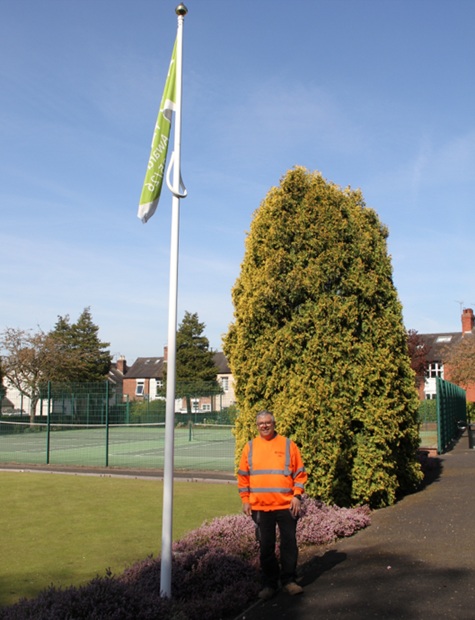
A fine example of a well-maintained park by Stafford Council, I was looking forward to visiting this, one of their smaller ‘pocket parks’.
I met up with Iain Holland, a parks officer, as well as some members of the Thursday Club, a group that volunteer to help maintain the park most weeks throughout the year.
The park was opened in 1928 as an adult’s only park by the former Stone Urban District Council which was amalgamated into Stafford Borough Council in 1974. The park has changed very little since its opening day and has escaped the whimsical and often ad-hoc improvement trend that many parks still suffer from today.
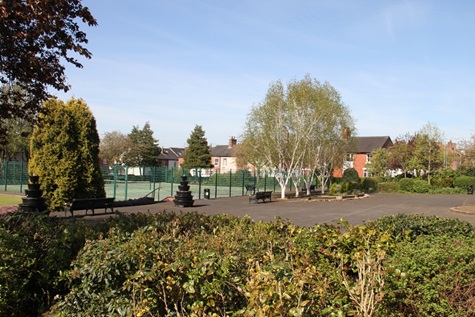
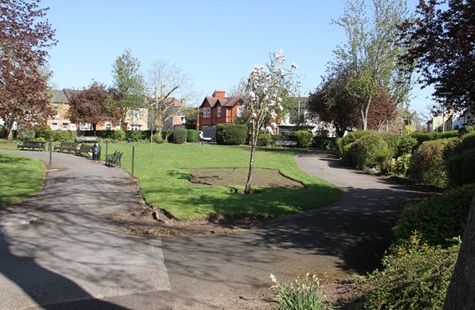
Today the park is no longer adult’s only and is enjoyed by all ages. Stonefield Park makes a valued contribution to the environment, nature conservation and biodiversity, and the economy of Stafford Borough - not forgetting to the vital physical and psychological well-being of the local park users.
Stonefield Park is a traditional pocket park based on the principles of the Edwardian Squares. The park covers an area of two acres tucked away in the heart of a traditional residential neighbourhood which is predominately constructed of terraced houses, located 10 minutes’ walk north of the town centre.
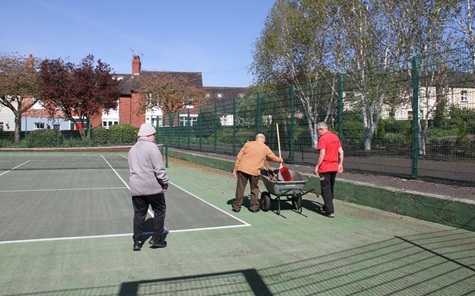
Because the park is overlooked by terraced housing on all four sides, it tends to be self-policing along with having a daily presence of parks warden staff.
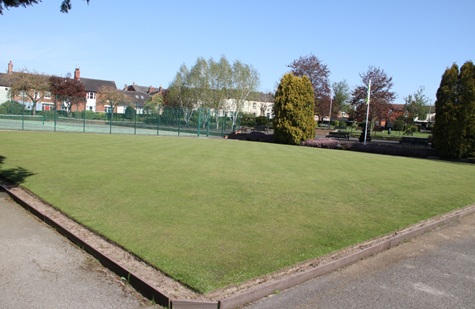
The park offers a plethora of attractions, including a bowling green and pavilion, children’s play area, two all-weather tennis courts and a bird aviary. It is planted with assortment of shrub beds, ornamental trees, perennial and annual bedding displays.
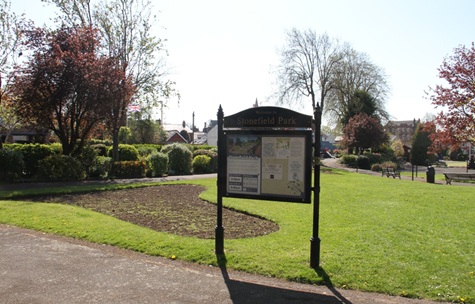
The maintenance of the park is exceptional, very well presented, with no litter seen anywhere due to the daily staff presence and the fact that the bins are emptied daily.
Over the past 30 years Stafford Borough Council has developed the site into a park for all ages without compromising the integrity and design layout of the park, with facilities improved and added to over recent years. For example, a rose garden on the edge of the park has been replaced with an under 8’s play area (1980’s), the grass tennis courts were replaced with green tarmac (2010), the bandstand base has been removed, and a bird aviary was added in 2013.
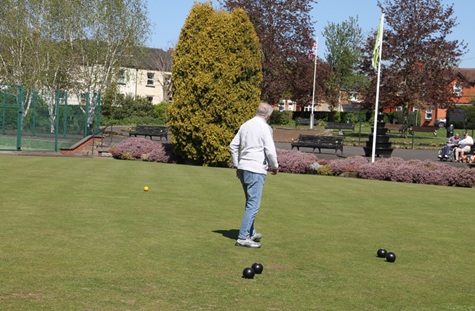
It was extremely pleasing to see such a well-maintained park, especially during these challenging times, where many local authorities are currently facing extreme budgetary cuts to their parks’ services.
For me, it is all about the character of the people in charge and their commitment to working under difficult constraints. If this park is anything to go by, then their parks staff should be congratulated for their endeavour to maintain this amazing pocket park in the current economic climate.
Parks funding
Which brings me on to another subject: where and how are we going to find the next generation of parks professionals in the coming years? Increasingly, parks staff like Iain will in the next ten years be likely to be retiring. Iain, like many his age, are now the last of a line of parks professionals who began their careers working on the tools and worked their way up into parks management.
When I started as a parks apprentice in 1972, local authorities had their own designated parks departments where they propagated all their own flowers, bedding plants and trees. They boxed mowed formal grass areas, you were taught plant ident and people worked in various aspects of the park’s services. Unfortunately, the Local Government Act 1988, particularly the part that introduced Compulsory Competitive Tendering (CCT), had a noticeable impact on parks and other public services.
This Act forced competition for park maintenance. Local councils were required to open services like grounds maintenance, landscaping, and cleaning to competitive bids. Private contractors could compete against in-house council teams. This ended the old model where councils simply ran parks themselves.
Cost-cutting became the priority, because contracts were often awarded to the lowest bidder, budgets for parks were squeezed. This frequently led to reduced staffing levels; to less frequent maintenance and to cheaper materials or planting schemes.
It also led to a further decline in quality (in many areas). In the early years especially, many parks saw a drop in standards. Skilled gardeners and long-term staff were sometimes replaced by lower-cost labour, which affected horticultural quality and local knowledge.
This also led to a fragmentation of services, instead of one unified parks department, services could be split across multiple contractors. That made coordination harde. For example, different companies handling grounds, trees, and facilities. It even led to job losses and changes in working conditions.
CCT set the stage for later policies (like Best Value in the late 1990s) and normalised the idea that public services, including parks, could be delivered by private or external providers.
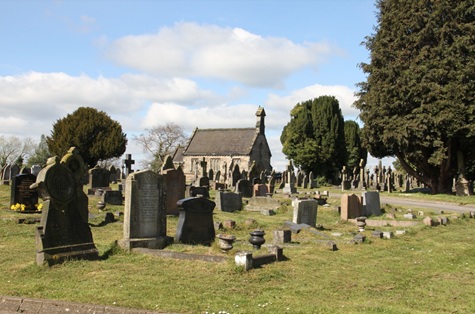
However, for me this 1988 Act pushed parks services away from being publicly run, community-focused services toward a more market-driven model. While it sometimes improved efficiency, it often came at the expense of quality, workforce stability, and long-term investment in public green spaces.
And since then, we have seen many councils’ parks and opens paces departments amalgamated and now run and managed by the larger street scene and highways departments.
So, in the 38 years since the Local Government act of 1988, parks services have gone through some monumental changes. However, thanks to some dedicated parks managers some of the horticultural skills and practices have managed to be retained. And we can still see some Local Authorities that are able to deliver well maintained parks.
For me, it was a pleasure to meet up with Iain and to be shown that there are some local authorities that aspire to delivering well-kept and managed bastions of horticultural excellence.
The difficulty facing local authorities is the sheer fact that maintenance of public open spaces is not a compulsory service. And the future of these priceless facilities is generally down to some dedicated parks managers who understand the value of parks and have found ways to secure much needed funding via Lottery / heritage funding schemes.
As far as I am aware, we are now struggling to attract the next generation of horticulturalist due to several factors; no national apprenticeship scheme is in place; local colleges have difficulties in delivering courses; and they often do not have the expertise, facilities or even demand to teach horticulture courses.
This is compounded by low pay, poor conditions and a lack of desire by young people, which is primary driven by the fact they simply do not know what career prospects they would have if they chose to come and work in this diverse industry.
With over £3.5 billion annually sitting in some government apprenticeship pot funded largely by the Apprenticeship Levy (a 0.5% payroll tax on big employers).
The UK (mainly England) apprenticeship budget is roughly £2.5–£3.1 billion per year and I believe a fair amount of this money goes unused each year.
Would this money, not be better spent investing back into our parks and public services giving local authorities the resources and money to properly train and employ the next generation of parks managers?
Surely investing £2-3 billion a year for the upkeep of parks would be a game changer? Not only for the local authorities but the general public would see many benefits in their health and welfare. We would also be securing the sustainability and environment for all the local wildlife that relies on these valuable green open spaces.