As an ex parks professional, current Green Flag judge and in my capacity as editor of TurfPro, I am keen to promote the importance of maintaining these vital community assets. Only last week I was privileged to judge Victoria Park in Stafford. I met up with three of their parks professionals to ascertain if they were meeting Green Flag criteria.
Opened in 1908 it has served the community well making a valued contribution to the environment, nature conservation, biodiversity, education and the economy of Stafford Borough. A welcoming park that still provides many of the traditional attractions many parks once provided.
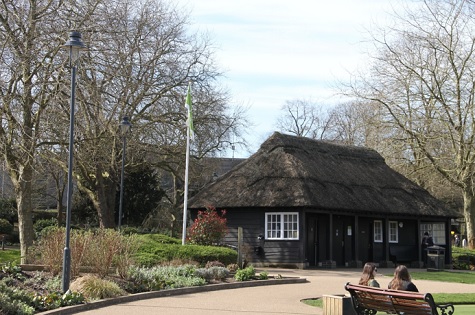
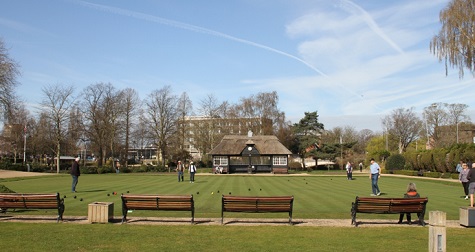
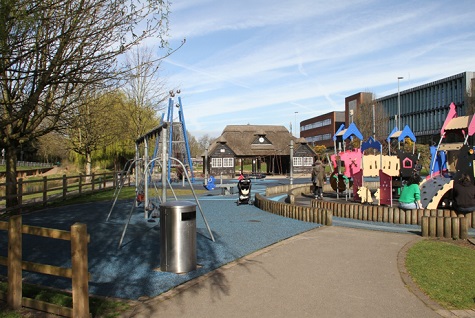
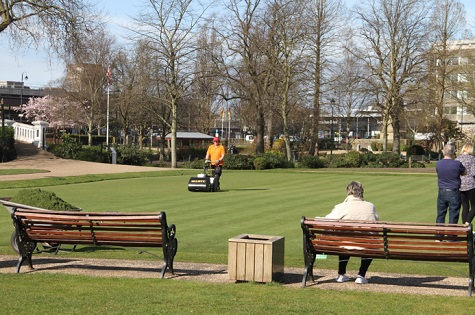
Within the there’s a well-used crown bowling green, bird aviary, café, public toilets, green house, training centre, children’s play areas, Bandstand, splash pool, skateboard park, bedding schemes, amenity shrub beds and mature trees.
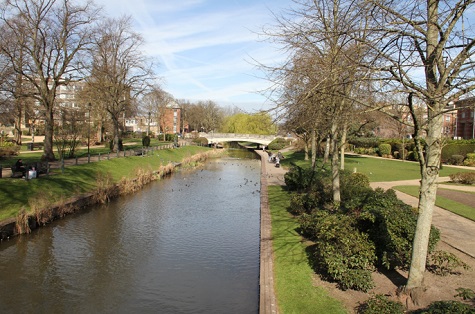
All nestled in a 2HA site with the river Sow running through, for me it’s one of the few remaining parks that retains a plethora of attractions that for many parks have disappeared over the years.
Back in the 1970s most if not all premier parks offered many of the above facilities listed. However, under the provision of the Compulsive Competitive Tendering act of 1988 all this changed. The origin of Victoria Park though, date back to the Local Government, Planning and Land Act 1980, which first required local authorities to put certain services out to tender.
While CCT achieved some financial savings and increased private sector involvement in public services, it was widely criticised for prioritising cost-cutting over service quality, reducing workforce conditions, and limiting local government autonomy. The shift to Best Value in 1999 reflected an attempt to address these shortcomings by taking a more holistic approach to public service provision.
Unfortunately, this act for many local authorities forced the decline of parks services because of the constant cutbacks and the fact that parks are not a statutory service. We have continued to see the gradual eroding of parks services over many years.
Many park professionals now working in local government are facing difficult times in terms of safeguarding with declining budgets, the difficulties in obtaining capital funding and the torture of writing grant applications. Everything is becoming much harder.
The Parks Management Association has identified that whilst it is important to lobby politicians in central Government about the need and value for parks and suitable associated national funding, it is clear that most budgets are set at the local level, by our local councillors. However, today we are having to compete against other departments and service areas.
So how do we become “Parks Influencers”? How do we influence politicians, cabinet members, council leaders, portfolio holders, chief executives and Directors of Finance and make the case for parks?
A tough, challenging subject for local authority parks officers. And one that the Parks Management Association (PMA) hosted a webinar on recently, featuring speakers from various sectors. Key points included the importance of data and evidence in influencing public policy, the need for local government to balance central and local funding, and the disproportionate funding cuts to parks.
Manchester City Council's initiatives, such as investing £15 million in parks and engaging 55 friends groups, were highlighted. The session emphasised the significance of building relationships with councillors, understanding community needs, and leveraging social media and campaigns to promote parks.
Mo Baines who is currently APSE’s Chief Executive gave an interesting insight in how things might pan out regarding funding for parks. She said, “I think it's worthwhile pointing out that despite the change of government, we are still very much in a state of conflict between what we can deliver locally and what we can deliver at a central level.
“And in some senses, local councils, quite rightly, have always riled against being seen as just the delivery agents of central government. But we are seeing quite a big conflict now that's starting to emerge. Clearly, we've got devolution in Scotland, Wales and Northern Ireland, but still limited taxation raising powers there, and in terms of the devolved nations and English regions very much dependent on what we get from the Treasury in Westminster, and that's in spite of efforts to allow more income to be raised locally from local councils.
“It's not always been an easy journey. So we do continue to see these conflicts in public policy, and particularly now, as I referenced at the start, mission based government, it's very much about the center saying this is what we want to achieve across the UK.
“However, in terms of local powers, we are likely to see some many local reorganisations, the growth of strategic authorities, or combined authorities, and with that saying, can we reorganise local government in a way that would deliver more for local people?”
Devolution and Local Government reorganisation
It ironic that during my Green Flag judging at Victoria Park, their staff mentioned the recently announced plans for both Cannock Chase and Stafford Borough councils.
The government set out plans in December 2024 which would see all the district, borough, county and city councils in Staffordshire abolished and be replaced with larger unitary authorities. This is part of wider plans for devolution.
The government want ‘strategic authorities’ created - which would be groups of local councils working together to cover larger areas. And they want to see elected Mayors leading these new ‘strategic authorities.’
The elected Mayor would have more control over how money was spent locally, and greater powers over key areas such as housing, transport and economic development. Mayoral-led strategic authorities can expect more funding from central government.
It will see an end to the current ‘two-tier’ authorities. At the moment Cannock Chase District Council (CCDC) and Staffordshire County Council deliver different services and functions to our communities.
For example, CCDC is responsible for the household waste collection service, planning, and parks. Whereas Staffordshire County Council deals with education, roads and social care.
The new unitary council would be responsible for all local government services within their area.
The Government has invited Councils to submit proposals setting out what would work best in their area. Initial proposals have been submitted - with final business cases due by 28 November 2025.
The Parks Management Association say they will be engaging with local communities and partners before a final business case is submitted.
The new unitary councils for Staffordshire are due to go live in 2028.
So, there’s clearly interesting times ahead for local authorities. For me, it’s just another raft of changes to the way local authorities are run. Yes, it may make sense to amalgamate smaller councils to become more effective, but it is down to the quality and dedication of the person in the park carrying out the maintenance and the resources they have to hand, that delivers a vibrant well maintained park.

The success of Victoria Park is purely down to the fact they have a dedicated team of park professionals who are keen to support the skilled operative Les, who has been in the park for 37 years and takes pride in looking after it.
He, along with two other members of staff, undertake all aspects of the park’s maintenance requirements which you can see from the list above are wide ranging.
My concern for the council is what happens when Les retires in a few years’ time? Do any of the younger staff have the relevant skill sets and work ethic to look after this unique park?
It was also mentioned during my visit that the council is finding it harder to recruit staff, particularly trying to encourage the younger generation to come into this industry. Many are not interested in working outside or getting their hands dirty.
A sign of the times! Which goes back to the many conversations I have been having with many fellow professionals over the last few years. Is it not time our industry came together and loudly championed the career opportunities that our turf and amenity industry has to offer?
We need a national campaign to go into schools and promote the vast opportunities this industry has to offer. And then provide a brand-new pathway for them to enter the industry and be educated.
We must act now. With many established industry professionals working in this diverse outdoor industry about to retire in the next five to ten years, we need to find a way to attract new blood into the industry.