With over 57 years of experience in our industry, I’ve been blessed to witness many innovations in machinery designed to make the turf professional’s job easier.
We’ve had motorised and self-propelled mowers, tractors, and vehicles for many years now - all of which have significantly sped up working regimes, particularly grass mowing.
Since the 1960s, when ride-on mowers were first introduced to golf courses, we’ve seen an explosion in the availability of ride-on and tractor-mounted mowers. These machines have helped greenkeepers maintain large grassed areas such as greens, tees, surrounds, fairways and roughs.
Other notable labour-saving tools like chainsaws, strimmers, and hedgecutters have also made our work far easier over the decades.
However, we now face a fresh opportunity for saving even more time and effort through the increasingly popular use of robotic devices - primarily robotic mowers - which have come a long way since their initial development in the early 1990s.
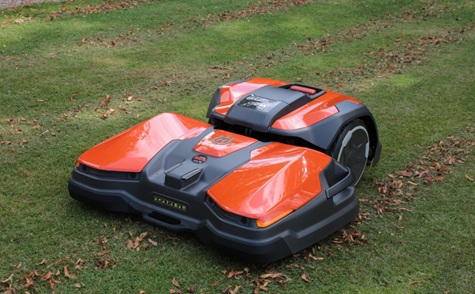
One of the latest Husqvarna robotic mowers
One of the first commercially successful robotic mowers was the Husqvarna Solar Mower, released in 1995. Solar-powered, it helped pave the way for modern robotic lawn care. Husqvarna remains a leading name today with their Automower line.
Around the same time, Israeli company Friendly Robotics - later rebranded as Robomow - launched their first robotic mower, aiming to bring autonomous mowing to domestic gardens.
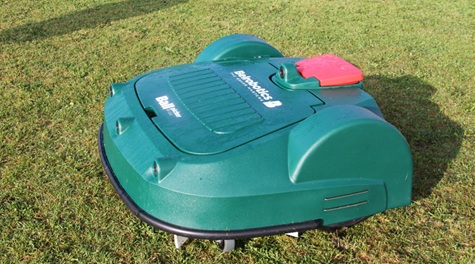
BigMow robotic mower
Since then, the market has expanded dramatically. A wide range of manufacturers now offer robotic mowers, including STIHL, Kress, Segway, EGO, Honda, AMS Robotics - to name but a few.
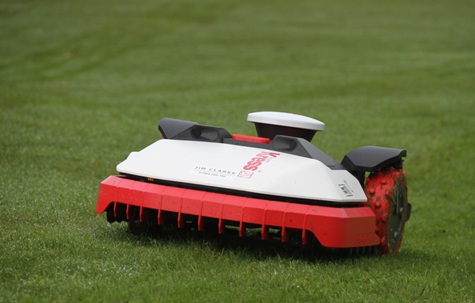
Kress robotic mower
Robot mowers can work 24 hours a day, enabling larger areas to be mowed more quickly. GPS RTK technology allows for precise strip mowing without overlapping, saving energy and time. Even the most complex golf course layouts can benefit from this level of precision.
We also now have machines capable of mowing slopes and banks - and the fact that they can all be managed via smartphone or tablet makes setup and operation even simpler.
Robotic golf ball collectors are also now in use on golf ranges, offering significant time and labour savings.
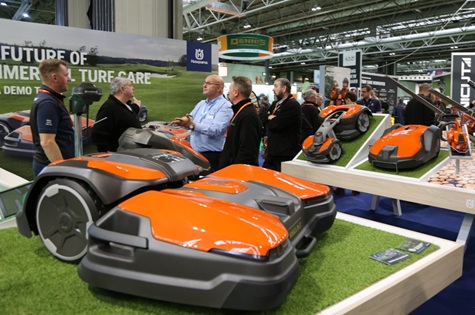
Husqvarna robotic products on show
Thanks to continuous advances in robotic technology, we’re seeing increasing uptake of these devices for both domestic and professional use. For several years now, local authorities have been using robotic mowers in parks and amenity areas. More recently, a growing number of golf courses have adopted them for mowing fairways, ranges, and roughs.
Traditionally, golf clubs relied on tractor-drawn gangs and ride-on mowers to keep fairways and roughs in check, often mowing these areas two or three times a week.
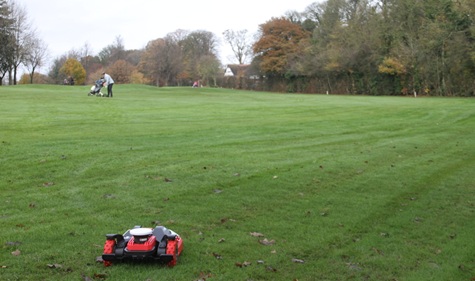
Kress Mower being trailed at Lilleshall GC
Now, by embracing robotic mowers, clubs can free up labour hours for other important course work. The software in these machines has advanced to the point where a whole course can be managed using just 4-7 robots, depending on size and complexity. They can navigate varied terrain, learn optimal routes, and allow adjustments in cutting height - all tailored for golf course requirements.
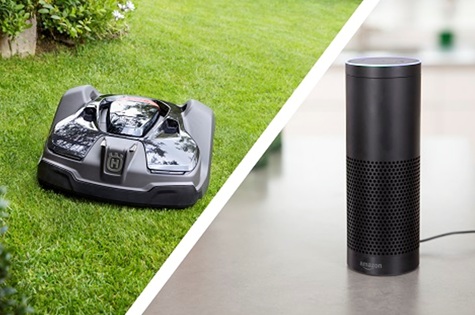
Alexa voice commands
Newer models boast even more features, such as automatic height adjustment, cutting as low as 15mm, direct navigation to different zones, advanced safety and tracking, and even voice control via Alexa.
Because robotic mowers are designed to run continuously, they can increase mowing frequency without the need for additional human resources.
Environmental concerns are rightly a high priority for many facilities, and robotic mowers can help here, too. Fully electric, they can cut carbon emissions by up to five tonnes per year - while also reducing noise and air pollution out on the course.
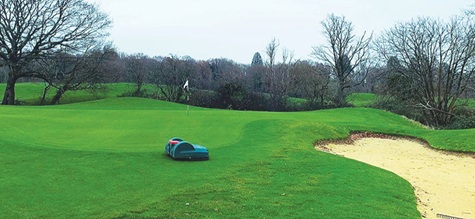
BigMow on course
There’s also clear potential for cost savings. Robotic mowers have lower maintenance requirements, no fuel costs, and reduce the demand on manual labour.
In my opinion, we’re still in the early stages of a full transition to robotic mowing on golf courses. But the shift has begun. My local club, Lilleshall, has invested in five Kress robotic mowers, currently being used on some fairways and roughs, with the aim of redeploying staff to other vital tasks on the course.
The proof, as they say, will be in the pudding. In 12 months or so, we’ll be able to see whether these machines have helped the club achieve its goals - making savings while retaining staff and maintaining turf quality.
It will also be interesting to observe how the fairways themselves hold up over time.
Over the coming months, I’ll be conducting a series of interviews with golf courses that have invested in robotic mowing. I’ll be sharing my findings in TurfPro, covering a range of different manufacturers and exploring how their machines are coping with the ever-changing, challenging world of golf course maintenance.