EDITOR'S BLOG
DEALING WITH SATURATION
On natural grass sports pitches
by TurfPro Editor, Laurence Gale MSC, MBPR
 
Laurence Gale MSC, MBPR

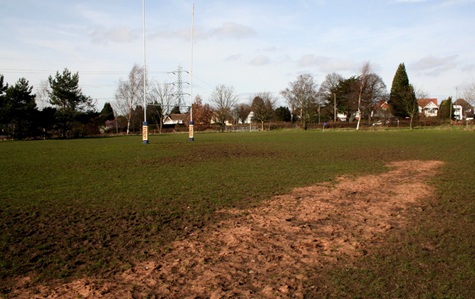
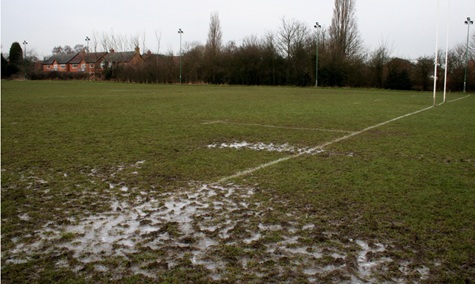
This spell of prolonged wet weather has not only caused local flooding in some parts of the country, but has over time caused saturated ground conditions on many grass roots sports facilities, often rendering them unplayable. 


I recently read Mark Hunt's weather blog - always a good catch up on what’s happening with the weather fronts in the UK.


Mark said “January 2026 will go down alongside December and November 2025 as a truly dull and dreary month with very high amounts of rainfall. In particular the south coast, southwest of England, Wales and The North West have been in the firing line. Further north there has been a significant amount of winter snow. The only positive I can draw on is that at least we have recovered a significant % of depleted water reserves from last year’s drought.” 


The UK experienced well above-average rainfall in January, with parts of the UK recording exceptionally high totals. Northern Ireland saw about 195.6 mm - around 70 % above its long-term average. While the UK as a whole had significantly higher than normal rainfall, with southern England among the wetter areas. 


This spell of prolonged wet weather has not only caused local flooding in some parts of the country, but has over time caused saturated ground conditions on many grass roots sports facilities, often rendering them unplayable. 


Managing saturated sports fields is about protecting turf health, maintaining playability, and preventing long-term soil damage. Best practice combines immediate controls, short-term remediation, and long-term drainage/soil strategies.
It often beggar’s belief that we are still seeing poor groundsmanship practices being carried out during inclement weather conditions. It often comes from people not understanding the consequences of their actions. 


Many of these postponements could be prevented if clubs were to invest more into their pitches, both during the construction phase and post construction, and having a robust maintenance regime in place. 


However, for many natural soil-based pitches it is more about the lack of maintenance and understanding about the type of pitches being managed. Understanding your soils, and how to manage them, will go a long way to producing a decent playing surface. 


Understanding soils and an understanding of the soil’s physical properties has always been important for professional turf managers when making decisions about maintenance operations and when carrying out reconstruction works. 


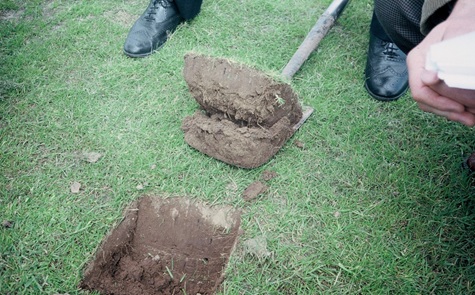
Soils can vary in many ways, both physically and chemically, on a local or regional scale. This soil variability gives rise to all the different types, universally classified by soil texture composition. Soil composition (soil texture) is determined predominantly by mineral particles and organic matter content and can be classified by the percentage of sand, silt and clay mineral particle content. The Soil Texture Triangle, as shown on the image above, helps us classify the soil type, these percentages are determined by undertaking a PSD, particle size distribution analysis. 


The definition of soil texture is the relative proportion of sand, silt or clay in a soil. Most soils contain a mixture of different soil particles. The particles and the soil's structure determine the pore spaces. A soil with a high proportion of coarse sand will contain large pore spaces and drain quickly, whereas a soil having finer sand, silt or clay particles will contain smaller pore spaces, and therefore will drain more slowly. 


The strength and permeability of any soil is determined by its structure, soil type, drainage capacity and how well it is managed. Soils will perform differently, governed by the amount of water, root mass and air there is in the soil matrix. Most pitch problems are caused when soils are saturated and compacted. When saturated, a soil is said to be at its maximum retentive capacity; that is, all soil pores are filled with water. 


Saturation usually occurs for short periods of time, either during heavy rainfall events or when soil is being irrigated. Firstly, we need to understand what problems are facing turf professionals when pitches become flooded and remain saturated for long periods of time. 


Once a pitch becomes saturated, that is to say all the pore (air) spaces in the soil profile remain filled with water, then we are in a situation of the pitch being in a poor state and will be prone to damage. 


However, the main contributing factor that reduces and damages pore spaces in soil is compaction - caused by compression forces, normally associated with play and use of machinery, particularly during wet weather periods. 


Over time, these compression forces reduce the pore spaces so that air, water and nutrient flow through the soil profile is restricted, leading to many problems associated with compaction. The heavier the soil the longer it will take for the pitch to dry out; sandy soils are more free draining than heavy loam or clay soils and, therefore, will dry out more quickly. 


Drainage 


Having an effective pitch drainage scheme will help. Most modern pitches tend to have primary and secondary drainage systems installed. These systems aid the removal of surface water quickly and tend to keep the pitches playable in periods of wet weather. 


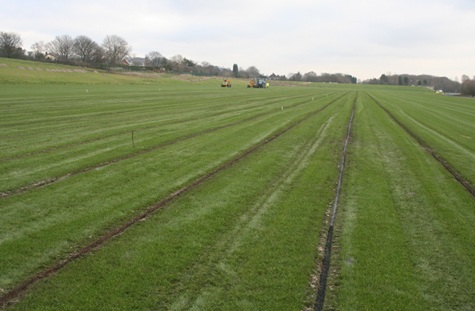
However, the effectiveness of any drainage system can be compromised over time when the drain runs become capped; it is important to retain a link between the drains and the playing surface. This will be achieved by regular aeration work and the application of topdressings. 


Ideally, clubs should be putting on at least 40-60 tonnes of sand per pitch each year. This not only keeps the playing surface free draining, but also helps to restore levels. 


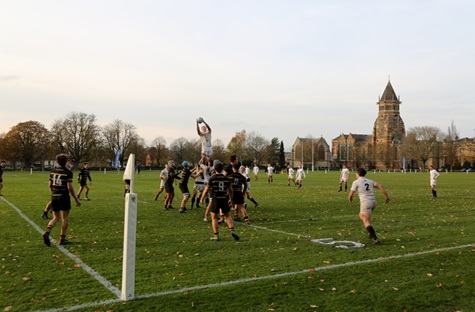
Playing on saturated pitches will bring disastrous results. It is often better to postpone a fixture rather than ruin the playing surface for the rest of the season. Scrummage and line out play are the main causes of damage on rugby pitches during wet weather periods. 


The severity of the damage will be dependent upon the soil type and the ability of the top 100mm to drain quickly. It is important that, once the game has finished, remedial work is carried out to repair divots and stand the grass back up. 
Care should be taken not to further damage the pitch by trying to get machinery on when it is wet and saturated. Brain Sandals in his Turfcare Blog has recently produced an article that gives good advice on Maintaining winter pitches


Aeration should be carried out on a regular basis when weather and soil conditions allow. You may contribute to surface deterioration if you aerate during bad weather when the surface is saturated and likely to smear; timing is the key to successful aeration. 


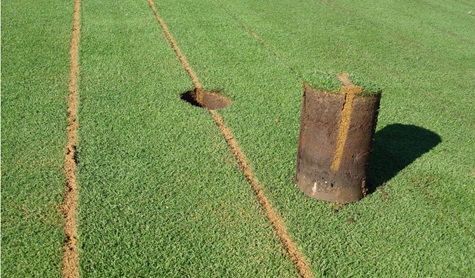
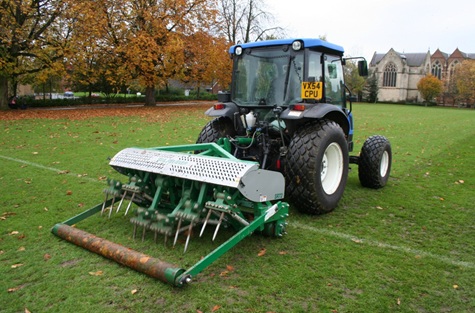
There is a wide range of professional aerators for use on winter turf pitches, available as walk-behind, ride-on, trailed or tractor mounted. To alleviate these compacted layers, we need to consider a range of different techniques and equipment that can encompass the different types of playing surfaces. The main aim of aeration is to penetrate the soil profile to create new macro pore space. 


This is achieved by several methods:

  • Solid tine – Verti drain type vertical punch aerators
  • Hollow/coring tines that remove soil cores from the soil
  • Trailed outfield Multi tine spikers (knife / solid tines)
  • Disc/blade implements (linear aerators / Soil recyclers.
  • Compressed air aerator systems

It is essential to use a variety of aeration techniques to prevent pan layers being created. 


This usually happens if you continue to use the same aeration technique set at the same depth, resulting in a compacted layer forming at the base of the tine or core depth. Most turfgrass managers will, therefore, vary the methods of aeration by changing the depths, size and diameter of tines. 


To help grass roots sports clubs with potential funding to improve their facilities or buy essential machinery the GMA launched The Pitch Advisory Service, formerly the Grounds and Natural Turf Improvement Programme, that was originally launched in 2014 and is funded by Sport England and the Football Foundation, working in association with the ECB, RFL and RFU. 


The aim of the Pitch Advisory Service is to raise the standards of sports surfaces as well as the understanding of sports turf management practices among grassroots sports clubs across England. 


Some tips and maintenance regimes to help restore and prevent damage to saturated sports pitches 

  • Immediate / In-Season Management to prevent compaction and surface damage will include postponing matches/ fixtures when standing water is present. 
  • Refrain from trying anything to get the match on, keep off your pitches until the surface water has drained away.
  • Rotate activities to less-used areas (sidelines, warm-up zones). Use portable goals and movable training grids. Rope off chronically wet areas. There are several aids to remove surface water, Squeegees, pumps, or slit drains to move water off the surface.
  • Short-Term Agronomic Actions to aid recovery will be centred on aeration work to help drain water away, relieve compaction and restore oxygen to the rootzone.
  • Sand topdressing, Light, frequent applications will help to dilute organic matter and improve surface porosity.
    Maintain a healthy sward, the grass plant is one of the most efficient water pumps, keep on top of weed growth and regular overseed to maintain a dense sward.  
  • Medium–Long Term actions are centred around improved surfaceand sub surface drainage techniques, regular deep aeration with either a linear or solid tine spiker.
  • Reduce thatch and organic matter via controlled hollow-tining and application of sand dressings.
  • Install lateral drains (pipe and gravel) tied into an outlet. Slit drains can be effective where full reconstruction isn’t feasible.


Let’s all hope we get some better weather soon, longer daylight hours, some Easterly winds and some late winter sunshine to dry up these saturated pitches.

NEWS
PROFESSIONAL LEADERSHIP PROGRAMME TO LAUNCH
In September this year
 
Professional leadership programme

In our first WEB ONLY story, the trade association says the scheme marks a significant step forward in their commitment to developing confident, capable leaders.


COMMERCIAL MOWER BRANDS REACQUIRED
By original founder
 
Mowers reacquired

In our next WEB ONLY story owner says reacquisition allows them to react to changing market requirements and accelerate the next phase of its evolution.


JENKINS GROW COMMERCIAL OFFERING
Add new brand to portfolio
 
Emyr and Howell Jenkins with Adam Butler

Dealership says they have actively been seeking out a quality franchise to allow them to service the requirements of the golf market.


Baroness UK have appointed Jenkins Garden Machinery to their dealer network.


L-R: Charlie Wilson (Jenkins GM), Paul Watson (Baroness), Emyr Jenkins (Jenkins GM), Howell Jenkins (Jenkins GM), Adam Butler (Baroness)


From their depot in Llanelli, the family-run firm will be responsible for the sales, service and support of the full Baroness professional range to customers in the Swansea (SA) postcode. 


Founded in 2010, Jenkins Garden Machinery offer a comprehensive range of ride-on and hand-held equipment for both the professional and domestic market. Baroness becomes the latest in a growing list of brands within their expanding commercial portfolio, bringing the full range of pedestrian and ride-on mowers and maintenance implements to golf courses and sports venues from Port Talbot and Llandovery in the east, to Pembroke and Aberystwyth on the west coast. 


Emyr Jenkins, managing director of Jenkins Garden Machinery, said, “Our strategy over the last few years has been to grow our commercial offering. As we have moved more and more into this area of the market, we have actively been seeking out a quality franchise to allow us to service the requirements of the golf market in South and West Wales. We have been in talks with Baroness for a while and following our visit to their facility in Basingstoke we were convinced that this was the right move for us.” 


He added, “Their attitude to aftersales and quality mirrors our own business giving us confidence that this will be a solid partnership for the future.”


Echoing the positive sentiments, Baroness area sales manager Paul Watson said, “We are delighted to welcome Jenkins Garden Machinery to the Baroness dealer network. From the first meeting they impressed us all with their professional attitude and enthusiasm to provide the right solution for their customers. With the expert support of Emyr and the team, we are excited to bring our product to an area where Baroness haven’t had specific coverage for some time.”  

SOMERSET FA AGREES NEW PARTNERSHIP WITH LOCAL DEALER
To improve county’s football facilities
 
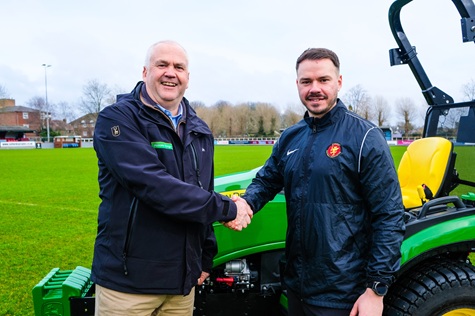
Dan Eustice with Jon Funnell

The partnership will see the company support improvements to football facilities across the county.


Somerset FA has agreed a new partnership which will see Masons Kings become the organisation’s new trusted machinery partner.


Dan Eustice from Somerset FA pictured with Jon Funnell from Masons Kings at Taunton Town’s Cygnet Health Care Stadium. 


The partnership will see the dealership support improvements to football facilities across the county. Alongside clubs being able to select the right equipment for their pitches, all machines will be security-protected by tagging, or by fitting Thatcham-approved devices.


Clubs will also benefit from site surveys and recommendations, as well as workshops and demonstrations from Masons Kings. Support will be provided for grant applications and aftercare services to get the most out of their machinery. 


Dan Eustice, marketing and commercial lead at Somerset FA, said, “We are excited about our new partnership with Masons Kings and are confident that it will deliver real value to clubs, ensuring their grounds are well-maintained, their investment protected, and their teams fully supported. Masons Kings is already working with several clubs, including Taunton Town.”


Jon Funnell, area sales consultant for Masons Kings, said, “We are delighted to be part of this flourishing partnership. We are both committed to providing high-quality, safe, and sustainable playing surfaces across the county. We are excited for the future of this partnership and to work with more clubs across Somerset.”

TWO CITY ROTATION PLAN
Announced by trade show
 
Equip '25

Organisers say the new pattern gives attendees and exhibitors the ‘best of both worlds’ for access, experience, and programming.


Organisers of the Equip Exposition, the international landscape, outdoor living, and equipment trade show, have announced plans for a two-city rotation beginning in 2029 - that they say will "expand global access with direct international air traffic and new venue choices for attendees and exhibitors as well as enhancing outdoor demonstration opportunities in its longtime host city."


Equip Exposition will be held at the Orlando County Convention Center in Orlando, Florida, October 10-12, 2029, with shows in 2031 and 2033. The trade show will be in Louisville in 2028, 2030, and 2032.


“This rotation gives our exhibitors and attendees the best of both worlds,” said Kris Kiser, President of the Outdoor Power Equipment Institute, which owns and manages Equip. “Orlando has space for our members to host dealer meetings, provides additional co-location opportunities, and offers expanded venue choice for exhibitor and attendee programming. The rotation also allows us to work with Louisville on enhancing their unique outdoor demo area - the only venue of its kind in the country.” 


The 2025 show expanded to 1.2 million square feet and drew nearly 30,000 registered attendees from all 50 states and 52 countries, marking an attendance and net square footage record for the fourth year in a row. You can watch plenty of video coverage from last year's show in Service Dealer's Digital Special Report.


“This planned two-city rotation builds on Equip’s tremendous growth trajectory. Our transformation of Equip has unlocked enormous value for both attendees and exhibitors,” said Kris. “We’ve created a platform where industry professionals can see thousands of products, test real-world equipment, and make critical business connections.” 


Equip 2026 will be held October 20-23 in Louisville. OPEI and Equip have already initiated conversations with local partners, including Louisville Tourism and Kentucky Venues, about enhancing and expanding the show’s Outdoor Demo Yard experience at the Kentucky Exposition Center (KEC).


“Louisville has been our home for 42 years - this is where Equip began. We’re proud of that history, and the extraordinary Southern hospitality the city has shown our attendees over four decades,” Kris said. “We’re excited about the changes coming to the KEC that will ultimately make the event better for attendees and exhibitors. The outdoor space truly is a one-of-a-kind experience.” 

JOBS
ADVERTISE YOUR JOBS HERE
Amazing success rates!
 
Advertise your jobs on TurfPro Weekly Briefing

Advertise your recruitment needs on TurfPro Weekly Briefing and reach our targeted audience of recipients every week.

Contact Nikki Harrison for details - 01491 837117


SPONSORED CONTENT
YOUR PRODUCT OR SERVICE COULD REACH THE UK TURF PROFESSIONAL SECTOR
Promote to our readership
 
Take out an Sponsored Product Announcement

Highlight your product or service to the people that matter by taking out a Sponsored Product Announcement in TurfPro.


Contact Nikki Harrison for details - 01491 837117


PREVIOUS FEATURES
EDITOR'S BLOG ARCHIVE
Catch up with Laurence Gale's recent blogs
 
TurfPro editor, Laurence Gale

Want to catch up with one of editor Laurence Gale's blogs? Here is the place to do so.


TURFPRO FEATURE ARCHIVE
Find our previous features here
 
TurfPro Feature Archive

If you want to catch up with any of TurfPro's previous features, here is the place to do so.


DROP IN TO LORD'S
Steaming at the Home of Cricket


AUTOMATION CHANGES THE MODEL COMPLETELY
Says David Withers, retired md of Iseki UK & Ireland


WE ARE GOING TO HAVE TO DEAL WITH EXTREMES IN WEATHER
Says Ian Smith of St Alban's School


GREATER RECOGNITION OF THE INDUSTRY'S IMPORTANCE IS REQUIRED
Says chairman of The Amenity Forum


THE MOST CHALLENGING ISSUE IS RECRUITMENT
Jim Buttar offers his thoughts


A UNIFIED GROUP WOULD BE INCREDIBLY POWERFUL
Gary Barwell of Edgbaston offers his thoughts


REFLECTING ON THE SAD DECLINE OF SPORTS IN SCHOOLS

The root cause


A REMARKABLE ACHIEVEMENT

Incredible Equip show last week


ONE OF THE GREATS

Sad passing of Stephen Bernhard


NEW STRATEGY

BASIS commits to amenity sector


RECRUITMENT & CAREER PROGRESSION IN GROUNDS MANAGEMENT
How the GMA is tackling the key issues


ON TEST
Segway Navimow


SUSTAINABLE PRACTICE IN THE SUPPLY OF FERTILISERS

To the amenity sector


50 YEARS OF GOLF STEWARDSHIP
Part four


REFLECTIONS ON A CAREER
A lifetime of dedication


CREATING AN INTEGRATED MANAGEMENT PLAN
Key steps


50 YEARS OF GOLF STEWARDSHIP
Part three


50 YEARS OF GOLF STEWARDSHIP
Part two


50 YEARS OF GOLF STEWARDSHIP
Part one


DEMONSTRATING AND APPLYING AN INTEGRATED APPROACH
Reviewing the tools available


CRICKET MANAGEMENT THROUGH THE DECADES
Part two


CRICKET MANAGEMENT THROUGH THE DECADES
Part one


A LOOK AT THE OPTIONS
When implementing an integrated approach


50 YEARS OF FOOTBALL MANAGEMENT
Part two


50 YEARS OF FOOTBALL MANAGEMENT
Part one


57 YEARS & COUNTING!
My life in the industry


DEMONSTRATING AND APPLYING AN INTEGRATED APPROACH
New series of articles for 2025


IMPLEMENTING SUSTAINABLE PRACTICE
Examples from across the year


VINTAGE PUSH MOWER USE
Enthusiast maintains lawn the old fashioned way


SUSTAINABLE AMENITY MANAGEMENT
Principles and practises


PLACING URBAN GREEN SPACES AT THE HEART OF INFRASTRUCTURE
Midlands Parks Forum's annual conference


RAISING THE VOICE
At the Amenity Forum's annual conference


SUSTAINABLE PARKS
Parks For London case study


WHY GRASSROOTS RUGBY IS IN DECLINE
A steady drop off in participation.


SEEDS OF SUSTAINABILITY
Focus on a major supplier of grass seed and related products to the amenity sector


ON TEST
STIHL BGA 300 cordless leaf backpack blower


ON TEST
EGO Multi-tool


PUT THEM ON THE TOOLS!
Time for an attitude change


SUSTAINABILITY IN THE TRAINING SECTOR
Grasping the challenge of encouraging more sustainable practice


SUSTAINABILITY IN LOCAL AUTHORITIES
Lessons learnt and experiences


SKILL SETS NEED RECOGNITION
Turf professionals are underappreciated


GREATER RESPECT FOR GROUNDS STAFF MIGHT MAKE ALL THE DIFFERENCE
To the recruitment crisis


A COMPETITIVE SALARY
Why employers should advertise the salary when recruiting new staff


ON TEST
Makita XGT UV001G lawn scarifier


AN EXAMPLE OF SUSTAINABILITY IN MACHINERY SUPPLY
Focus on Kubota


MY PERSONAL GREENKEEPING PHILOSOPHY HAS NEVER CHANGED
I don't follow any set program


SUSTAINABILITY IN LANDSCAPING
A substantial element of amenity activity


IS IT TIME TO SAY NO TO 'NO MOW MAY'?
Any real benefits?


SUSTAINABILITY IN OUR PARKS & PUBLIC GREEN SPACES
Meeting the challenge


THE PATH TO WIMBLEDON
For groundstaff member, Conrad Cavil


ON TEST
EGO LBP8000E backpack blower


SUSTAINABILITY IN THE LAWN CARE SECTOR
A key consideration


BEEKEEPING IN COMMERCIAL ENVIRONMENTS
The current situation


SUSTAINABLE PRACTICE IN THE AMENITY SUPPLY SECTOR
Optimising land use through integrated solutions


SUSTAINABILITY IN THE GOLF SECTOR
Focus on BIGGA


THE SEARCH FOR SUSTAINABLE PRACTICE
Bringing together key points


DEVELOPING SUSTAINABLE SOLUTIONS FOR GOLF
R&A are supporting clubs


GETTING THE MOST OUT OF EVERY POUND OF BUDGET
A course manager's view


A NEWFOUND APPRECIATION FOR ALL VOLUNTEERS
Who look after grassroots pitches


SUSTAINABILITY & THE UK ACTION PLAN
For weed, pest and disease management


CONCERN FOR PARKS FOLLOWING COUNCIL BANKRUPTCIES
What does the future hold?


TAKING A GLOBAL LOOK AT SUSTAINABILITY
Is the rest of the world also driving towards sustainable practice?


RENOVATIONS, PLAY AND THANKS
On my mind this week


SUSTAINABILITY – IMPLICATIONS FOR TRAINING & EDUCATION
Set to play a crucial role going forward


TULIP TREE
Liriodendron tulipifera


LYDIA BROOM
Genista lydia


THE LAWN AND ITS VALUE
Changing attitudes


GIANT HOGWEED
Invasive and potentially harmful


LIFE-CYCLE ANALYSIS & SUSTAINABILITY
Considering every stage of the journey


NITROGEN USE EFFICIENCY
The most important nutrient


BERBERIS THUNBERGII
A shrub that has stood the test of time


ENSURING FUTURE PROSPERITY
Advice imparted at road shows


INNOVATION & SUSTAINABILITY
A key focus


PHOTINA RED ROBIN
A sensational flowering shrub


VALUING THE GRASSROOTS
We must not overlook those who maintain these grounds


MANAGING WEEDS SUSTAINABLY
In amenity spaces


DETECTING NUTRIENT DEFICIENCY SYMPTOMS
In turf plants


SPRING RENOVATIONS UNDERWAY
A crucial period


SUSTAINABILITY IN SUPPLY
A focus on those who supply essential inputs to our sector


CHANGING CLIMATE
Is a borehole the key for clubs?


SUSTAINABILITY AT THE SHARP END
How to put into practice when budgets are tight?


ANOTHER NAIL IN THE COFFIN OF GRASSROOTS RUGBY
Clubs are struggling


SUSTAINABILITY IN PRACTICE
Seeking transparent and robust supply chains is essential


TIME FOR ACTION
To reverse recruitment crisis


CONTROLLING COSTS
Planning is crucial


THE SEARCH FOR SUSTAINABILITY
What exactly does the term mean?


CARING FOR THE GRASSROOTS
From volunteers to contractors


DEFRA IS LETTING DOWN THE COUNTRY
Complete failure to address the plastic grass debate


WE CAN ALL DO MORE
To aid biodiversity


MY LIFE IN GREENKEEPING
With Bruce Cruickshank


LEVELLING UP, GETTING SMARTER & GETTING AHEAD
Parks require so much more funding


SWITCHED ON FOR HARD WORK
Putting trimmers through their paces


MACHINERY HIGHLIGHTS
At this year's show


MY SALTEX
Daniel Lewis​, Manchester City Football Club


AWASH WITH LEARNING OPPORTUNITIES
Two months till showtime


LOOKING BACK, LOOKING FORWARD
Priorities for the amenity sector


THE DECLINE OF ‘PARKITECTURE’
A symptom of the state of parks in 2022


DEVELOPERS SHIRKING GREEN SPACE RESPONSIBILITIES
Lack of financial commitment


TIME TO COME TOGETHER
For the good of the industry


THE DEATH OF GRASS ROOTS CRICKET
Gathering apace?


ROUTES INTO THE INDUSTRY MUST BE ENSURED
Q&A with David Fisher, Lantra’s head of industry partnerships


STRONG VIEWS ON CRICKET PITCH PERFORMANCE MARKING
A bone of contention


A PREMIUM PRODUCT
Delivered at Naas Golf Club


THE GREEN REVOLUTION
And Esker Hills


MAKING A CHANGE
Laytown and Bettystown Golf Links


A DAY AT THE RACES
Naas Race Course


WORKING TOGETHER AS ONE VOICE
How the industry needs to proceed


OVER 175 YEARS OF EDUCATION
Wesley College


ELECTRIC EXCITEMENT
Dennis's Ian Howard talks electrification


THE HOME OF CORK GAA
Páirc Uí Chaoimh


LONG POLE BATTERY HEDGE TRIMMERS TESTED
STIHL HLA 66 and HLA 86


OVER 800 YEARS OF HISTORY
Johnstown Castle and Gardens


A CLUB GONE WILD
Kilkenny Golf Club


A GOLF COURSE IN THE GARDEN OF IRELAND
Woodenbridge GC


80 YEARS YOUNG
Charleville Golf Club


AN UPLIFTING EXPERIENCE
Bunclody Golf & Fishing Club


GETTING BACK TOGETHER
Albeit gradually . .


GO WEST
Inishturk GAA pitch – one of the most westerly sportspitches in Europe


WORKING ON A TIGHT BUDGET
Nenagh Golf Club


ON A MISSION
Wrekin Golf Club aiming to enrich wildlife and fauna


WILD AND WONDERFUL
Design By Nature


LEARNING HOW TO SURVIVE
Abbey Par 3


TACKLING OBESITY
Vital that schools can provide sport


A LIFETIME OF LEARNING
Vital for turf professionals


CELEBRATING 125 YEARS
Tullamore Golf Club


UNIVERSITY CHALLENGES
At Trinity College Dublin


BLENDING THE OLD WITH THE NEW
Bray Golf Club


A WELL POLISHED COURSE!
Ierne Social And Sports Club


IDENTIFYING THE TRUE VALUES
Of grounds maintenance


THE INDUSTRY WILL CHANGE & ADAPT
But it will survive


WIRRAL GOLF COURSES SAVED
Renewed hope and optimism for the future


GREEN SPACE CONTRIBUTION TO WELLBEING IS UNDERVALUED
Parks invisible on national agenda


A SHINING LIGHT IN IRELAND'S SUNNY SOUTHEAST
Wexford Golf Club


GREEN SPACES DO NOT LOOK AFTER THEMSELVES!
Keith Kent says we must invest in people


WE SHOULD TELL THE WORLD ABOUT THE UK INDUSTRY
Right time for all sides to come together


SOIL LIFE IS PRECIOUS
Good-quality soil can help save the planet


MORE THAN JUST CUTTING GRASS
Encouraging the next generation


A BUZZ FROM DOING THE JOB
Wide experience of the turf grass industry


PAYING THEIR WAY
Low wages is the bane of the industry


AMENITY MANAGEMENT IMPACTS US ALL
Professor John Moverley


CARING FOR PARKS OF ALL TYPES
Mary Worrall


TOP FIVE FRUSTRATIONS FOR CRICKET GROUNDSMEN
What causes you the most frustration in your role?


PROFESSIONALS AT THE CUTTING EDGE
Vic Demain and Phil Sharples


BOWLS CLUBS IN PERIL
A sad decline


A VERY SPECIAL INDUSTRY
Loz looks back


SNEAK PEAK AT A ROBOTIC "GAME CHANGER"
Commercial model capable of covering 50,000 m2 teased


HALESOWEN PICK A BIG ROBOT UP FRONT
Invest in mowers


COMPRESSED AERATION
The new way


PARKS MATTER MORE THAN EVER
Recent sector developments


ON TEST
STIHL blowers


THREE CORE VALUES TO SHAPE OUR INDUSTRY
Real concerns for the future


ENGLAND'S GREEN SPACE GAP
A split along racial lines


ON TEST
EGO STX3800 strimmer with RTX2300 Rotocut head


A SECTOR FACING IMPORTANT TIMES
Review of the National Action Plan


PARKS MATTER
The role of public parks in the recovery: a discussion paper


A UNIQUE SPORTING VENUE
Wormsley private estate


A BTME OUTDOORS?
A good bet for the industry


PARKS NEED APPROPRIATE POLITICAL REPRESENTATION
Q&A with Philippa Reece, Parks and Foreshore Manager at Adur and Worthing Council


CRICKET LOAM
What does it mean?


A HERCULEAN EFFORT TO GET PARKS BACK TO NORMAL
Q&A with Chris Worman, Rugby Borough Council’s parks and ground manager


ON TEST
STIHL battery products


TURFGRASS STRESS MANAGEMENT
Reactive Oxygen Species (ROS) and antioxidants during biotic and abiotic stress in turfgrass plants


AUTUMN DISEASE MANAGEMENT
The coming months are going to prove very difficult


THE ABUSE OF PARKS . .
Is the abuse of society


WHY PARKS MATTER?
A statement from the Parks Management Forum to the Prime Minister


THE 21st CENTURY PARKS MANAGER
Innovative, creative and entrepreneurial


EAT, SLEEP, CUT, REPEAT!
Cricket under covid


TIME FOR A SINGLE SHOW?
Debate brought back into focus


A CHALLENGING TWO MONTHS
Running golf design projects from home


PRESSURE SITUATION
Cementing the reputation


A CLUB TO BE PROUD OF
10 years at the helm of Olton GC


GAME CHANGERS IN TURFCARE
The day the Lord's outfield reconstruction proved its worth


THE ESSENCE OF ESSENTIAL
Finding a sensible way forward on defining "essential maintenance"


THAT WAS THE YEAR THAT WAS
2001


HOW TO LOOK AFTER A GOLF COURSE WITH NO GOLFERS
Fundamental to the survival of almost all courses, if not of the game itself


RAIN STOPPED PLAY WOULD BE WELCOME
. . along with ‘lunch is being taken early’


PHYSICAL CONTROL OF TURFGRASS PESTS
An urgent problem


A DIVERSE & ENTERTAINING WEEK
Successful BTME 2020


INTEGRATED PEST CONTROL
Opportunity to embrace new methods


ENVILLE ON THE UP
Major investments taking place


GREEN FLAG AWARDS 2019
A great success


U.S PROFESSIONAL EQUIPMENT SHOW EXCELS
Buoyant GIE+EXPO


LEGACY OF THE SOLHEIM CUP
At Gleneagles


A DAY OUT WITH THE LADIES
Behind the scenes at the Solheim Cup


COVENTRY UNIVERSITY'S EDIBLE GARDEN SUCCESS
2006 - present


HAIL THE GRASS MASTERS!
Boorish media comments about pitch quality are wide of the mark


CONTRACTOR SEES MULTI-DISCIPLINE SUCCESS
360 Ground Care serving professional facilities


BUSY TIMES
Judging the Green Flag Awards


TAKING AN INTEGRATED APPROACH
What does it all mean in managing turf surfaces?


UNDER PRESSURE
Dry weather conditions continue to keep turf managers focused on moisture management


EDDIE SEAWARD
Death of Wimbledon’s influential grounds manager


MAJOR NEW IRRIGATION PROJECT
At Top 100 classic Berkhamsted Golf Club


NEW HORIZONS FOR THE HATTERS
Investment paying off at Kenilworth Road


ELIZABETHAN RESTORATION
At Castle Bromwich Hall Gardens


WHAT IS BIOPHILIA?
The vital impact of parks and green spaces on health and well-being


WORM CONTROL
Without carbendazim


THE TRUE COST OF PETROL
Battery-powered outdoor power tools are now turning the heads of professionals


SANDS OF TIME
Sand-based pitches are now the norm in professional sports


WHY DO WE DO THE RIGHT THING?
We must maintain industry standards


CHASING GRASS PERFECTION?
11 things you need to know . . .


MAINTAINING STANDARDS
Q&A with BASIS ceo, Stephen Jacobs


STRI RESEARCH DAY 2018
Hosted at research trial grounds in Bingley


THE MECHANIC
Leicester City FC invest in new role


LORD'S 'GRASS-GUVNOR' TO RETIRE
Mick Hunt bows out after 49 years


HOLLOW CORING & DEEP SCARIFICATION
Is it really necessary?

Side Advert Image


PARTNERS
CAMPEY
 
Campey Turf Care Systems
DENNIS
 
Dennis
Foley
 
Foley Company
HUNTER GRINDERS
 
Hunter Grinders
ISEKI UK & IRELAND
 
Iseki
Kubota
 
Kubota
LANTRA
 
LANTRA
SISIS
 
Sisis
Syn-Pro
 
Syn-Pro
Turfcare Blog
 
TurfCare Blog
Garden trader
 
Garden Trader
PRODUCED BY THE AD PLAIN
The Ad Plain
 
TAP
STATE OF PLAY
GOLFERS' EXPECTATIONS ARE THE MAIN CHALLENGE
Says Damian Wormald of Silkstone Golf Club
 
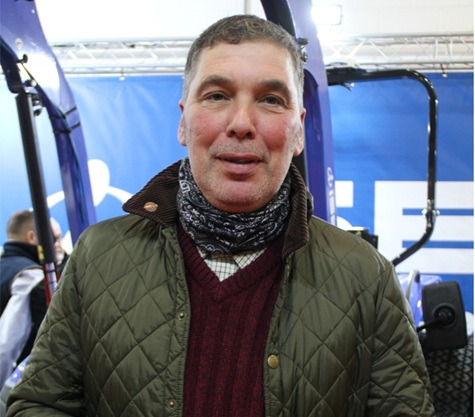
Damian Wormald

In our next State Of Play interview we hear from Damian Wormald of the prestigious golf destination in South Yorkshire renowned for its meticulously maintained parkland course and year-round playing conditions.


To kick off 2026, TurfPro has asked a series of prominent figures to offer their thoughts on the industry's current State Of Play.


Damian Wormald serves as a dedicated greenkeeper at Silkstone Golf Club, a prestigious 18-hole championship golf destination in South Yorkshire renowned for its meticulously maintained parkland course and year-round playing conditions.


Damien’s greens team is recognised for delivering course presentation that meets both member expectations and championship-level standards. 


With a strong commitment to turf quality and sustainable course management, Damian plays an integral role in the daily care and conditioning of all turf surfaces across the golf course. His responsibilities include the precise mowing and presentation of greens, tees and fairways, the implementation of irrigation and drainage programmes, bunker and rough maintenance, seasonal aeration and top-dressing operations, and the careful monitoring of turf health. He consistently applies agronomic best practices to ensure optimal playing conditions in all seasons, balancing traditional greenkeeping techniques with modern approaches to turf management.


Damian’s professional ethos centres on attention to detail, respect for the playing surface, and a passion for outdoor work. He is committed to ongoing professional development in sports turf management and regularly engages with industry best practice, complying with environmental and agronomic standards in modern course maintenance.


Q1. What has been the product, machine or innovation that has helped you most in your career?


Machinery-wise I would say the Vertidrain. All we had when I first started was a tractor-mounted slitter to aid drainage and ease compaction. The Vertidrain was a revelation. Product wise the introduction of soil biology. This has no doubt helped in thatch reduction and promotion of perennial grass species. 


Q2. What are the most challenging issues facing the industry?


Firstly, the main challenge is the expectations of the golfer with the definite change in climate, the reduction in resources and the fight for new members. Secondly, the lack of suitably qualified and experienced greenkeepers actually wanting to properly greenkeep. 


Q3. What are your thoughts on our current trade show scene?


Trade shows are adequate. The seminars are the star, with some real quality speakers these days.


Q4. What would you like to see in terms of collaboration across industry organisations?


I would like more interaction between different organisations, but sadly I don't believe it will happen. There is still the Greenkeeper vs Groundsman divide.


Q5. What changes would you like to see made to improve the industry?


In the golfing press I personally would like to see more articles on the forgotten and smaller golf clubs which struggle every year for members, using old machinery, surviving on small budgets but yet again delivering fantastic playing conditions. Following on from that, giving greenkeepers from these types of clubs chance to go on volunteer work at Open Championships and a chance at R&A scholarship and FTM programmes. These places are unfortunately usually filled by greenkeepers from the more upmarket golf courses.


Give these greenkeepers a chance. You maybe surprised.