EDITOR'S BLOG
GETTING ON WITH THE JOB
As best and as safely as we can
by TurfPro Editor, Laurence Gale MSC, MBPR
 
Laurence Gale MSC, MBPR

This past week I thought it would be helpful to find out how some of our respected industry professionals are coping with the current restrictions and what work they are able to carry out at their sports facilities. 


It looks like this Covid -19 lockdown is likely to continue for a few more weeks before we see some sort of gradual return to normality. This will certainly test our patience and resilience in the coming weeks. I am just glad that the weather has been so good allowing us to enjoy our time isolating and getting on with our changed lifestyle.


Following on from last week’s blog, I thought it would be helpful to find out how a few of our industry professionals are coping with the current restrictions and what work they are able to do at their given sports facility.


First to set the scene is Vic Domain, Head Groundsman at Durham CCC


Vic said, “The current state of professional cricket is that we are closed until 28th May.


My belief is that the governing body, the ECB, have put in place measures for if we start in June, July, August or September. Priority is being given to Internationals, the 100 and T/20 competitions as these are the big money spinners. The Championship and 50 overs competitions may well be lost. As for recreational cricket it seems that the hope is to start at the mid-point of the league season so that teams would play each other once. There is also some thought that pro games could be played behind closed doors.
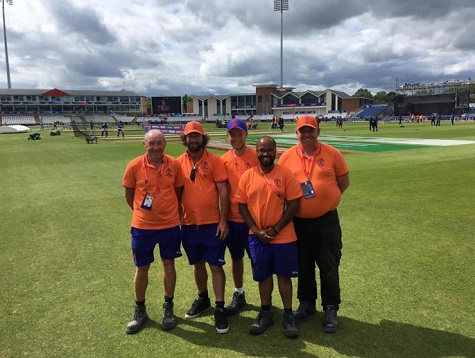
 

Durham CCC staff picture Vic Domain Head Groundsman left of group


Behind every consideration of course will be maximising income. The recreational game will be hugely affected as no game, means no income. With bars shut there is nothing coming into the clubs. It’s also difficult to ask for a subscription with no games. Facilities, grounds and fittings all need maintaining at a cost. For the pro game it is equally bad news as many grounds use their facilities to generate income through concerts, meeting space and other lettings. No people coming in results in no bar or catering sales, no shop sales, no memberships.


Perhaps when this is all over, we will have sadly lost a few clubs and perhaps a complete season. Yet a nation’s health must be placed before any sporting fixtures, for more sadly, the likelihood is that we may also have lost a few groundsmen, players and supporters. The great game however will survive.


Covid 19 has divided the groundsman's community with some people deciding that it is necessary for them to continue to drive to work and maintain the facilities, whilst others prefer to think that grass is not as important as a life.


In my working environment, all staff except three (two groundstaff) have been furloughed. Of the three still working, two live on site and one travels. We are keeping a maintenance plan of work going over our two grounds. This basically involves cutting and watering the grass so as to keep it in a condition whereby once it is deemed safe to work, we should be able to get pitches out within two weeks.


For me, I would have preferred the government to come out earlier and say either our work is considered necessary or not. If not, all grounds should have been shut down, with no exceptional circumstances. As is usual in sport, there have been too many grey areas. Everyone will have different opinions but a lot of it will come down to personal circumstances - are you healthy, do you have pre-existing medical conditions, do you go home everyday to someone who would be at great risk if they contracted the virus?


I then managed to speak to Adrian Kay, Head Goundsman at York Racecourse to see how he was coping the effects of this pandemic.


Like all UK race courses, all racing has been in lockdown since the 23rd March with a current review date set for the 30th April.

Adrian Kay at York Racecourse.
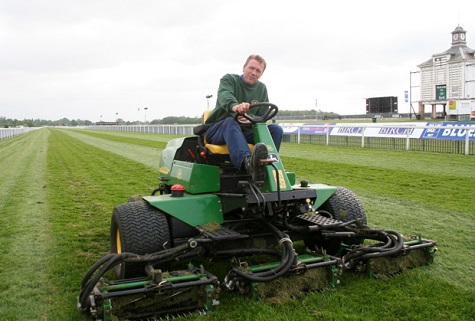
 

Adrian Kay


As for getting on with any work, Adrian has had to reduce what he can do under the present circumstances. He has completed a number of risk assessments, especially due to the fact large areas of the racecourse are open to the public.


Adrian is currently lone working (which he seems happy about). All the rest of the staff have been furloughed. With no racing imminent a reduced programme of essential work has been implemented - basically cutting the grass and watering.


Usually at this time of the year, the maintenance of the course is in full swing with the grass being cut 2-3 times a week, and depending on the weather, fertilised, aerated and watered to maintain the much preferred growing conditions and pushing growth along on the renovated areas.


However, now it is the complete opposite - doing the bare minimum, cutting once a week and watering during this hot dry spell of weather to maintain minimal growth. Adrian told me it is a strange experience working alone and getting some respite of not being bombarded with hundreds of calls and emails.


For Adrian 2019/20 has been an unprecedented season. A lot of track renovation work was completed last autumn, with all the home straight Koro-ed off, deep tine de-compaction, top dressed and overseeded and North bend have inserted excavated slits. Then came an extremely wet winter, with many parts of the course flooded, and all the track has remained saturated throughout the Winter. Just before the lockdown Adrian says they were able to aerate the majority of the course.


Adrian is keen to ensure he is only carrying out the bare essentials during this pandemic and by following the strict government guidelines he feels he is able to look himself in the mirror every morning and be content that he has done his bit to assist in suppressing this horrifying pandemic virus.


I then called Dean Gilasbey, Director of International Pitch Management who stated “The life of an International Pitch Consultant has unfortunately taken a turn for the worst during this period, we at Sportslabs/Propitch have opted to follow the governments advice and exercise a policy of staying at home.


It is impossible for us to travel abroad at this time anyway, so working in normal mode is impossible. This is the most sensible thing to do to ensure all the vulnerable around us are protected and keyworkers are supported as much as possible. I would like to think that I am fit and healthy enough that I would not be badly affected. That said, we would encourage everyone to follow the stay at home advice.

 

Dean Gilasbey (right)


Our offices have voluntarily closed with 75% of the company being furloughed. This also includes myself as I am unable to work/travel therefore it’s impossible for me to earn any revenue for the company. Not being able to work is not good for me and that is no understatement. I need to work, all my life I have spent over 70 hours a week doing what we as groundsmen love doing. This also applies for a large majority of professional groundstaff. Therefore I have adapted to the environment, which means looking at ways to improve.


Over the next couple of months, we are going to conduct webinars to educate groundstaff on the essentials of groundsmanship. This is aimed at the younger generation, the budding grounds people that I once was, always keen to learn. I have also been attending training webinars which we are running on all aspects of the services we provide, some of these being opened up to external delegates. As I always say, we will never stop learning in this industry, so hopefully we can get like-minded people into sharing knowledge too. I need a ‘busmans’ holiday (Holiday is what I class as work, something I love and enjoy meeting new people and learning from others). Being home is torture for someone like me, this is no lie. Being stuck in lockdown at home is seriously driving me insane just like the majority of grounds staff!”.


Next up was Adam King Grounds manager at Radley College who said, “I think we are in the same boat as all schools. We are working on a skeleton staff, just doing essential stuff. The real challenge lies ahead when mother nature kicks in and we really will have to let some parts go downhill - which will be sad but unavoidable. We have not done any pre-season work on the squares. My thoughts are by the time we start playing, or if we start playing, we will probably just need a bit extra rolling.
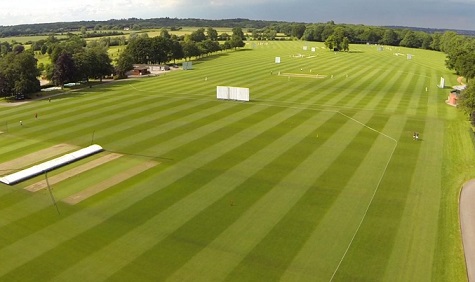
 

Radley College playing fields


As a school we start next week as a virtual school which will be a big challenge to the teaching staff and pupils.


We as a department have had 13 staff furloughed and as a school around 270 staff furloughed. Like all businesses, we will take a big financial hit and that will put pressure on budgets going forward. I have been part of a WhatsApp group with other grounds managers which has been great for information sharing and a nice bit of banter!


I spoke to Steven Nixon, Director of Bernhard Company who explained to me, “At this present time nobody knows how long this crisis will last, but clearly it has become much more difficult to continue to trade in the usual way until this pandemic is over. However, we will keep customers and partners up to date with developments and will review the situation weekly, always observing the latest UK government advice.

 

Steve Nixon


Looking to the future, the business will return to normal. The needs of the world will not change in the long term. Bernhard’s approach to helping customers deliver excellent playing conditions will be as relevant then as it was yesterday. We are asking our customers to please be confident that at Bernhard Company we will continue to be as passionate as ever in the pursuit of excellence in turf maintenance.”


Derek Smith DLF Amenity Sales & Marketing Manager told me, “Thankfully as we speak, DLF and Johnsons sports seed remain able to supply customers with seed. We have carefully followed the government guidelines to put the health and safety of our workforce and customers first. We are lucky in that as a business we went fully digital some time ago so all of our sales and administration staff are able to relocate and work from home with no interruption to our ability to answer calls and service customers.
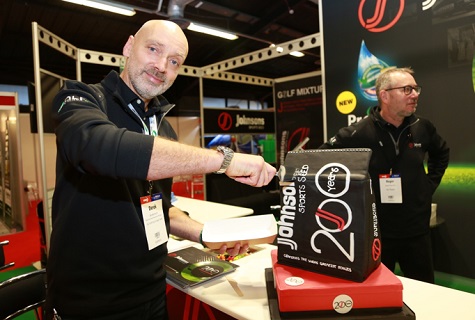
 

Derek Smith at BTME


Operationally we have taken on board the latest best practice guidelines with regard to social distancing and appropriate PPE for the production teams, this has meant that whilst we are working with a reduced capacity we are still able to supply and deliver seed to ensure those contractors and turf managers that are able to work safely can continue to do so. Like everyone else we hope for a speedy end to the crisis but right now the focus is on everyone’s health and safety.


I think the GMA have done a great job with the latest guidelines which I’m sure will not only help turf managers work safely but also give them the confidence that it is officially ok to carry out necessary the turf maintenance operations including seeding, required to ensure the quality of the turf as and when we get back to normal.


“I also think that this lockdown has shown the real value and importance of our parks and public open spaces and the fact that once this pandemic is over and we starting getting the economy back on track, I personally think more money should be made available to preserve and maintain these priceless assets.”


In last week’s blog I reported on the various guidelines and notifications from a plethora of organisations and sport’s governing bodies.


I have since received an interesting article from respected industry colleague, Dr Tim Lodge, RIPTA - who has produced some thoughts for those working on golf courses.


Entitled How To Look After A Golf Course With No Golfers, it can be seen as this week’s TurfPro feature article.


Bare in mind this information may be subject to industry and government approval or modification as seen in the BIGGA Covid-19 Esssential maintenance guidelines and the Grounds Management Association Covid-19 guidelines.

NEWS
BRINGING PARKS TO PEOPLE
Initiative by Fields In Trust
 

This week's WEB ONLY story is whilst we’re all less able to get out to enjoy our nation’s parks this spring, green space charity Fields in Trust are bringing parks to people with a virtual tour of the UK.


KARL MCDERMOTT FEATURES ON BBC
Major article on 'groundsman isolation'
 
Karl McDermott with TurfPro editor Laurence Gale at SALTEX

Good Friday saw BBC Sport publish a major article focusing on Lord's head groundsman, Karl McDermott, and his current lock-in at the Home Of Cricket.


Good Friday saw BBC Sport publish a major article focusing on Lord's head groundsman, Karl McDermott, and his current lock-in at the Home Of Cricket.


Karl, who took up his post last year and lives within Lord's, has been documenting his days of 'groundsman isolation' on his social media


The BBC Sport article spoke to Karl who talked about the work he's currently carrying out, the network of UK groundstaff he keeps in touch with and his top tips for amateur turf professionals.


Read the article here.

NEWS
BIGGA LAUNCH MEMBERS' CHOICE SURVEY
Opportunity to shape education
 
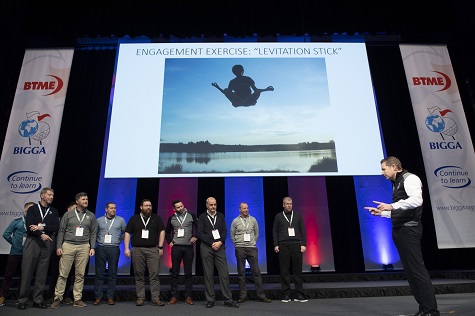
Gleneagles' Craig Haldane with an interactive presentation at the Turf Managers' Conference in January

Survey offers BIGGA members the opportunity to shape the education that is on offer at the Continue to Learn 2021 education programme.


BIGGA has launched the Members’ Choice survey for 2021.

The survey offers BIGGA members the opportunity to shape the education that is on offer at the Continue to Learn 2021 education programme, which is due to return in January as part of the BIGGA Turf Management Exhibition.


Gleneagles' Craig Haldane with an interactive presentation at the Turf Managers' Conference in January

The link to the Members’ Choice survey will be sent to all greenkeeper members of BIGGA. Prospective topics have been gathered through the association's annual ‘Proposal to Present’ system, where individuals and companies can submit their ideas for future programmes.

The Members’ Choice survey distinguishes the job role of the respondent, thus enabling BIGGA to create programmes suited to their members, wherever they may be on their career journey.

BIGGA describe Continue to Learn at BTME as the most comprehensive education programme for greenkeeping professionals outside of the USA and attracts in excess of 3,000 attendees each year.

Sami Strutt, BIGGA’s head of member development, said: “In these strange times we are living in, it is all the more important to focus on the future. Planning for Continue to Learn at BTME 2021 is in full force, but needs the help of our members to shape the programme content. We want the learning to be relevant and to further enhance the knowledge and professionalism that is demanded by greenkeepers and we can only do this by asking our members what they want to see from the Continue to Learn offering.”

Continue to Learn at BTME 2021 will take place at Harrogate Convention Centre from Sunday 17 to Wednesday 20 January 2021, running alongside BTME, which runs from Tuesday 19 to Thursday 21 January 2021.

The Members’ Choice survey is available here

AUTOMOWER TAKES UP RESIDENCE
At the Tower Of London
 
Husqvarna Automower at The Tower of London

Husqvarna Automower has been deployed at the Tower of London to ensure the capital’s oldest lawns are well maintained as we head in to spring.


Husqvarna Automower has been deployed at the Tower of London to ensure the capital’s oldest lawns are well maintained as we head in to spring.


Husqvarna Automower at The Tower of London


The first battery powered machine was installed last year, and due to its success, its fleet was expanded earlier this year to include three new residents.


Purchased by The Tower of London’s ground’s maintenance contractor, Ground Control, two robots have been installed on the lawns surrounding the castle moat, and will be deployed each morning, come rain or shine.


Husqvarna Automower 535 AWD has also been installed on the lawn of the White Tower and will work throughout the night to avoid disturbing the resident ravens. 


Made in the UK, the robotic mowers will replace the ride-on diesel mowers previously used by Ground Control.


Husqvarna say they will provide head gardener, David Williams, with a more environmentally friendly way of keeping the prestigious lawns in outstanding condition and contributes to Ground Control’s Green strategy of 50% of all of hand tools being battery operated by 2025.


Husqvarna UK Professional manager, Kevin Ashmore said, “It’s fantastic for us to showcase Husqvarna Automower at such a prestigious and prominent attraction in our country’s capital. Lee Squires, David and his team will see huge benefits from the installation, not only environmental but in time saving, allowing his team to spend their time on other tasks.”


To mark the installation, the Tower of London has challenged followers to name their new resident. To put your suggestion forward, visit the Tower of London’s Twitter page.

MARTIN LISHMAN JOIN FORCES WITH BFS
For nozzles for amenity market
 
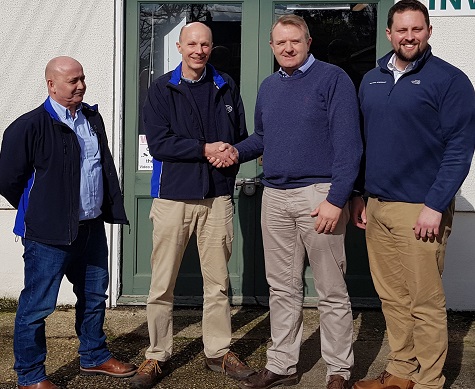
From left to right Mark Stanbridge and Simon Nichols of BFS mark the union with Martin Lishman Ltd with Ian Clayton-Bailey and Joel Capper

Collaboration between Martin Lishman and Billericay Farm Services to provide amenity sector with Air Bubble Jet Nozzles.


Martin Lishman have announced a new collaboration with Billericay Farm Services (BFS) to supply exclusively to the amenity market their Air Bubble Jet Nozzles.


From left to right Mark Stanbridge and Simon Nichols of BFS mark the union with Martin Lishman Ltd with Ian Clayton-Bailey and Joel Capper


This partnership means that Martin Lishman can now supply any of their sprayers already fitted with BFS air induction nozzles but also provide spares packs of each nozzle type, with the aim of providing the amenity market with a choice of highly rated nozzles.


Manufactured in Britain, these precision made LERAP 3 star rated nozzles are suitable for most sprayers including VLV, HV applications and knapsacks.


Ten nozzle variations are available with application rates ranging from 20 - 905 litres per hectare.


Simon Nichols, director of Billericay Farm Services said; “With a firm hand in the agricultural market, selling into amenity is a new adventure for us. Our new established partnership with Martin Lishman will help combine the knowledge of our products and their industry experience to offer new and existing amenity customers our high-quality sprayer nozzles.”


Martin Lishman say they are thrilled to be able to add the full range to their spare parts portfolio which will allow them to provide groundsmen with everything they need in one transaction. With an online portal coming soon, allowing customers to purchase sprayer parts online, the company say they are entering a new chapter for themselves in eCommerce.


Martin Lishman’s sales director Ian Clayton-Bailey said, “With our amenity sprayer division growing stronger each year, we feel that offering our customers high quality parts such as BFS nozzles shows we have put thought into the after sale of our sprayers”.

RIGHT PLACE, RIGHT TIME
For Selby Golf Club
 
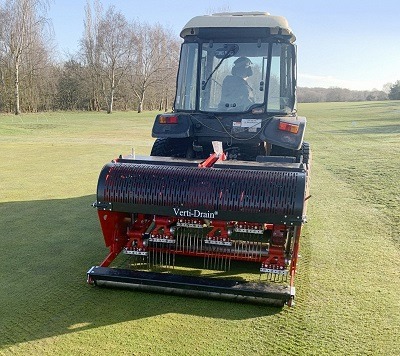
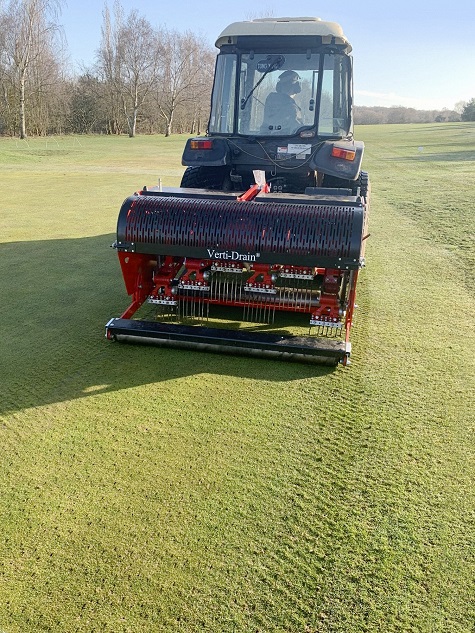
The Verti-Drain 7416 in action at Selby Golf Club

Course manager at Selby Golf Club, Chris Goodall, says the arrival of their new Charterhouse Verti-Drain in November 2019 couldn’t have come at a better time.


Course manager at Selby Golf Club, Chris Goodall, says the arrival of their new Charterhouse Verti-Drain 7416 in November 2019 couldn’t have come at a better time.


The Verti-Drain 7416 in action at Selby Golf Club


The heathland course is very sandy meaning it is playable all year round and, in turn, makes it one of the busiest clubs in Yorkshire. This level of traffic has seen the Verti-Drain in high demand over the winter period, tackling compaction on some of the high footfall areas.


“We previously had two separate aerators - one of which was proving too heavy for our ageing tractors, and the other was smaller so only really suitable for work on the greens,” explains Chris, who has been at the club for five years. “When the time came to replace them, we wanted a good all-rounder - capable of site wide aeration.” Having been impressed with the Verti-Drain at a previous club, Chris was keen to go down the Charterhouse road this time and spoke with local dealer F G Adamson and Sons.


“The size of the 7416 model was a perfect fit for our requirements and fleet of tractors. It’s super easy to set up, quiet in operation and covers the ground at good speed. The timing of its delivery meant it was out straight away and every couple of weeks after that, relieving compaction on pathways, walkways and fairways which kept us free of any waterlogging over the very wet winter months.”


Chris purchased his Verti-Drain with solid tines, and additional hollow tines for year-round flexibility. “In a regular year, we would equip the Verti-Drain with pencil tines to aerate the greens through the summer then as we head towards the back end of the year we’d then look at hollow coring and using bigger tines on the fairways and other areas.”

MUIR-OF-ORD INVEST IN TORO
For first time
 
Muir-Of-Ord Golf Club

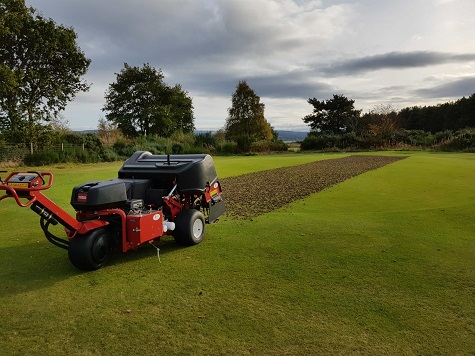
ProCore 648 pedestrian aerator purchased to enable aeration across the whole course.


Muir-Of-Ord Golf Club, located a few miles north of Inverness in Scotland, has chosen to invest in Toro for the first time, purchasing a ProCore 648 pedestrian aerator to enable aeration across the whole course.


Head greenkeeper, Darren Hexley, explains, “We’ve never had Toro at the club before, but once our old aerator was reaching the end of its life, we seized the opportunity to improve the course. We’d been working with a tractor-mounted aerator and were keen to get a pedestrian aerator so we could access more areas of the course."


Darren continued, “We noticed a difference from just the demonstration. Staff and golfers have commented on the improvement that can be seen already. As a pedestrian aerator, we no longer have to drive over greens, and with no tyre tracks it’s a much cleaner job. But the biggest thing is that we’ve been able to cover areas of the course we weren’t able to before, such as slopes and the backs of bunkers."


Darren has previous experience with the brand, saying, “I’ve used Toro before at previous clubs, and indeed the ProCore 648, so it was no surprise that it proved itself here. We could instantly see the benefits over our old kit.”


It’s not just the improvement to the course that matters though, says Darren. As a club with only three permanent staff members working on the course maintenance, having efficient and reliable machinery is vital. 


“With only three of us on the greenkeeping team, having efficient and reliable machinery is very important and goes a long way,” says Darren. “The ProCore 648 will allow us to get out first thing in the summer and cover more ground than we could with our tractor-mounted aerator in the same time.”

JOBS
ADVERTISE YOUR JOBS HERE
Amazing success rates!
 
Advertise your jobs on TurfPro Weekly Briefing

Advertise your recruitment needs on TurfPro Weekly Briefing and reach our targeted audience of recipients every week.

Contact Nikki Harrison for details - 01491 837117


PREVIOUS FEATURES
EDITOR'S BLOG ARCHIVE
Catch up with Laurence Gale's recent blogs
 
TurfPro editor, Laurence Gale

Want to catch up with one of editor Laurence Gale's blogs? Here is the place to do so.


TIME TO REFLECT
Our pace of life has changed dramatically


TESTING TIMES AHEAD
Grasping the effects on our industry


UNPRECEDENTED TIMES
Covid-19's impact on our sector


SWITCHED ON TRADE DAY
Makita launch 30 new products


WHO SAID WE ONLY CUT GRASS?!
It takes years to acquire all the turf professional skills


TIME MARCHES ON
New month to hopefully bring much needed sunshine and drying winds


RAIN, RAIN GO AWAY
Come again another day!


THE PLIGHT OF THE BUMBLEBEE
What can we do to help?


SPRING HAS SPRUNG
Essential renovations


CELEBRATING 2020
Amenity Forum making plans


A DIVERSE & ENTERTAINING WEEK
Successful BTME 2020


TIME TO GET FIT
Our industry can help tackle the growing obesity crisis


WINTER WORKS AND SHOWS
Plenty to occupy in January


LOOKING AHEAD
What might 2020 hold in store?


View all of 2019's blogs here


View all of 2018's blogs here

TURFPRO FEATURE ARCHIVE
Find our previous features here
 
TurfPro Feature Archive

If you want to catch up with any of TurfPro's previous features, here is the place to do so.


RAIN STOPPED PLAY WOULD BE WELCOME
. . along with ‘lunch is being taken early’


PHYSICAL CONTROL OF TURFGRASS PESTS
An urgent problem


A DIVERSE & ENTERTAINING WEEK
Successful BTME 2020


INTEGRATED PEST CONTROL
Opportunity to embrace new methods


ENVILLE ON THE UP
Major investments taking place


GREEN FLAG AWARDS 2019
A great success


U.S PROFESSIONAL EQUIPMENT SHOW EXCELS
Buoyant GIE+EXPO


LEGACY OF THE SOLHEIM CUP
At Gleneagles


A DAY OUT WITH THE LADIES
Behind the scenes at the Solheim Cup


COVENTRY UNIVERSITY'S EDIBLE GARDEN SUCCESS
2006 - present


HAIL THE GRASS MASTERS!
Boorish media comments about pitch quality are wide of the mark


CONTRACTOR SEES MULTI-DISCIPLINE SUCCESS
360 Ground Care serving professional facilities


BUSY TIMES
Judging the Green Flag Awards


TAKING AN INTEGRATED APPROACH
What does it all mean in managing turf surfaces?


UNDER PRESSURE
Dry weather conditions continue to keep turf managers focused on moisture management


EDDIE SEAWARD
Death of Wimbledon’s influential grounds manager


MAJOR NEW IRRIGATION PROJECT
At Top 100 classic Berkhamsted Golf Club


NEW HORIZONS FOR THE HATTERS
Investment paying off at Kenilworth Road


ELIZABETHAN RESTORATION
At Castle Bromwich Hall Gardens


WHAT IS BIOPHILIA?
The vital impact of parks and green spaces on health and well-being


WORM CONTROL
Without carbendazim


THE TRUE COST OF PETROL
Battery-powered outdoor power tools are now turning the heads of professionals


SANDS OF TIME
Sand-based pitches are now the norm in professional sports


WHY DO WE DO THE RIGHT THING?
We must maintain industry standards


CHASING GRASS PERFECTION?
11 things you need to know . . .


MAINTAINING STANDARDS
Q&A with BASIS ceo, Stephen Jacobs


STRI RESEARCH DAY 2018
Hosted at research trial grounds in Bingley


THE MECHANIC
Leicester City FC invest in new role


LORD'S 'GRASS-GUVNOR' TO RETIRE
Mick Hunt bows out after 49 years


HOLLOW CORING & DEEP SCARIFICATION
Is it really necessary?

Side Advert Image


PARTNERS
CAMPEY
 
Campey Turf Care Systems
Charterhouse Turf Machinery
 
Charterhouse Turf Machinery
Garden trader
 
Garden Trader
PRODUCED BY THE AD PLAIN
 
OPINION
HOW TO LOOK AFTER A GOLF COURSE WITH NO GOLFERS
Fundamental to the survival of almost all courses, if not of the game itself
by Dr Tim Lodge, RIPTA
 
How to look after a golf course with no golfers

Dr Tim Lodge was asked by several golf clubs what they should consider doing during this unprecedented lockdown of golf courses.


Below is a fascinating brief on the management of golf courses, written by Dr Tim Lodge, who was asked by several golf clubs what they should consider doing during this unprecedented lockdown of golf courses.


The piece is written with safeguarding the fundamental agronomy requirements of the golf course in mind, while all care should of course be taken to observe the guidelines of the Sports governing bodies BIGGA / R&A - Laurence Gale, TurfPro editor.


Introduction


It is particularly ironic that this has suddenly become a very serious question facing all of the golf courses in the UK and probably the rest of the world. On how many advisory visits has it jokingly been said that looking after the golf course would be very easy were it not for the golfers! It would seem that the answer to this question is now fundamental to the survival of almost all courses if not of the game itself. Greenkeepers are a hardy lot however, and they are unlikely to abandon their profession because of a disease affecting mere mortals. So, I have decided to pen some initial thoughts on how the very many golfing businesses throughout the UK might ride out the current storm.


A fundamental component of the question is for how long the situation will in fact be necessary, something which is quite unknowable at the present time. I have therefore considered the situation in the face of 3 increasingly severe scenarios. These are golf ‘down-times’ of one month, three months and six months or longer starting from now, late March 2020. The intention is to identify the minimal maintenance requirements for golf courses that will allow the restoration of playing surfaces of suitable quality as quickly as possible when golfers are willing and able to play once again.


One month down-time


Starting from the rough and working through progressively diminishing mowing heights to the greens, maintenance policies in relation to the rough and semi-rough need not be altered during April. In practice, very little activity would normally be necessary here in any case. The abandonment of semi-rough mowing over this period is unlikely to have any detrimental consequences.


Anticipating a downtime of just 4 or 5 weeks through April is similarly unlikely to affect most fairways. Over this period the continuation of the established mowing regime, cutting as required between say 15 and 25 mm depending upon the circumstances (or more accurately on the sward composition) should be all that is required.


During April it is likely that a spring fertiliser would normally be applied to tees and this should go ahead as intended. Mowing weekly at 12 to 15 mm should be all that is required, preferably boxing off clippings unless this is not your normal policy.


On greens, there is no urgency to reduce the mowing height over this period and so the winter cut should be retained. Adequate control should be achievable mowing at 6 to 8 mm up to 3 times a week depending on how much growth takes place. Here again a spring fertiliser may well normally be applied and this should go ahead as intended. Irrigation is unlikely to be required and so there is no need to charge up the system in readiness for this.


Many golf courses might have been looking at this period with a view to undertaking a renovation or over-seeding operation. This down-time period may prove to be a very useful opportunity in these cases. Since playing quality in the immediate aftermath of the treatment would be less of a concern, scarification may be particularly brutal which would create space in the sward for successful new grass establishment following the incorporation of a copious quantity of seed. A generous application of top dressing would also be advantageous, though probably not essential.


Three months down-time


Over this period mowing frequencies generally may be relaxed. The management of fairways is very much dependent upon the general composition of the sward. Those dominated by perennial ryegrass, probably the majority of parkland courses, would require up to weekly or even fortnightly mowing at around 25 mm in order to maintain their quality beyond the down-time period. For fairways dominated by finer grasses, typically heathland and links courses, the comparatively elevated mowing height of 18 mm would be suitable. In these cases, growth will generally be slower and so even less frequent mowing may well be possible without detriment. The operation might be carried out when the sward reaches say 150 % of the mowing height.
It is unlikely any fairways will require fertiliser input under these circumstances. Indeed, such input is not normally to be recommended anyway. Although this down-time period will be extending into the summer months, irrigation should also be unnecessary mainly due to the relaxed mowing regime.


On tees it should only be necessary to continue the relaxed mowing regime described for the one month down-time period. Boxing off, if normally undertaken, should continue mainly to prevent weed ingress. Irrigation and further fertiliser applications should not be necessary. The opportunity might be taken at the height of the growing season, and assuming resources are available, to intensively hollow core tees, perhaps those on which levels in particular might be less than ideal. The cores may be allowed to dry at the surface before being broken up and matted back in. This operation would also be an excellent precursor for the incorporation of a generous quantity of suitable seed.


On greens, the extraordinarily policy of mowing at 8 to 10 mm just once or twice a week, boxing off of course, should be all that is required. There should be no necessity to irrigate or fertilise even on high sand content rootzones. Top dressing will also be unnecessary unless there is a particular intention to build up the sand content in the surface and sufficient resources are available to do this.


Six months or more down-time


The strategies adopted here become especially interesting because very far-reaching alterations in the nature of the various surfaces could be brought about. Significant improvements, most particularly in terms of sward composition, would be achievable.


It will continue to be necessary to mow fairways throughout the growing season, albeit under the relaxed regime described above. However, simply to walk away would result, in the majority of cases, in the development of meadows that would ultimately exhibit such a reduction in shoot density that extensive over-seeding would be essential. A significant time delay would therefore be experienced before suitable playing conditions could be restored.


The application of irrigation and fertiliser would be unnecessary. In the case of fescue/bent-dominated fairways the upshot would be the almost complete removal of any annual meadow grass. This would be a welcome outcome but, depending on how much was present previously, there may be a need to extensively over-seed simply to restore the areas of lost ground cover.


This downtime period would span all of the 2020 growing season. In this eventuality there would be no need to continue distinguishing tees from fairways in terms of their management. It would be appropriate, however, to adopt the policies described above for the one and three month periods before moving to the fairway regime.


In this particularly terrifying scenario, it will no doubt be essential to keep maintenance costs to the absolute minimum. To maintain anything resembling a golf green at the conclusion of this period however, some regular maintenance work will still need to be undertaken on an ongoing basis. I would recommend that weekly (or fortnightly, depending on the extent of growth taking place) mowing at between 10 and 12 mm should be undertaken, boxing off clippings as usual. No fertiliser or water need be applied, even on sand-based greens. Under this regime most annual meadow grass will die. On those lovely surfaces where this is considered a weed this will be a very desirable outcome. Unfortunately, this is not the case on the majority of greens. In most cases it will be necessary, therefore, to undertake an extensive over seeding operation. This should be preceded by a vigourous scarification to ready the surface and remove any dead grass. The work should be timed for the optimum period for grass seed establishment which is late July to mid August, depending how far north in the British Isles you are located. In Suffolk we would be looking at early August. In Aberdeen late July might be more appropriate. With the extremely relaxed mowing regime that will span the germination and establishment period, it will continue to be unnecessary to fertilise or irrigate following this treatment.


Concluding remarks


When the nightmare is eventually over, and golfers are able to return to the course it will be necessary to restore the playing quality of the surfaces. With careful planning those surfaces could very well be superior to those that exist at present. Reductions in mowing height must, however, be undertaken on a gradual basis reducing by no more than 25 % with each successive cut. Thus heights would need to drop from 12 to 8 mm, 8 to 5.5 mm, 5.5 to 4 mm in the case of greens for example. Reduction should only be undertaken if the overall health of the sward appears capable of accommodating it.


Every golf course is different and so none of these recommendations should be taken as gospel. We hope to be on hand to provide advice to all of the industry throughout this extremely challenging time. I wish you all the very best of luck during the months ahead.


Dr Tim Lodge


Agrostis Sports Surface Consulting


01359 259361


info@agrostis.co.uk