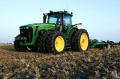
IN a fascinating case proceeding through the Copyright Office in the US, John Deere is arguing that farmers do not actually own their tractors, they merely licence them.
According to Wired magazine, they are saying that because computer code snakes through the DNA of modern tractors, farmers receive “an implied licence for the life of the vehicle to operate the vehicle.”
Deere are joining the likes of General Motors in submitting their case to the Copyright Office under the Digital Millennium Copyright Act (DCMA), a 1998 copyright law that (among other things) governs the blurry line between software and hardware.
In the modern, digital world, there are a whole lot of things you buy but still technically don’t own. Nearly all entertainment, for example: digital books, video games, music, and so on. Other software, too. But as basically everything continues to become some kind of computer in a specialized body, plenty of other goods are starting to be subject to licensing, copyright law, and non-ownership problems, too. Like tractors.
The Copyright Office, after reading the comments will decide in July which high-tech devices we can modify or repair, and whether John Deere tractors come under its scope.
In a recent letter to dealers in the US, Deere admits that this issue is ‘not surprisingly generating concerns and questions’ adding that “Of course, Deere customers own the equipment that they purchase”. But then go on to compare the tractor’s software system to a book that they may own that they might not copy or modify.
At the heart of the issue is who can, or cannot repair a modern piece of machinery.
More and more, and because of the complexity, manufacturers don’t like people trying to fix their machines – even if they were able to. Changing something could be construed as a violation of copyright law.
Deere says that allowing people to alter the software—even for the purpose of repair—would “make it possible for pirates, third-party developers, and less innovative competitors to free-ride off the creativity, unique expression and ingenuity of vehicle software.”
So on one side the logic of only letting authorised and trained dealers with the correct equipment fix complex machinery – on the other, the eroding of freedom to tinker with a piece of owned machinery.
Whatever, it promises to be to an interesting debate as computerised equipment takes over more and more of the machinery we sell and service.
Read the full Wired article