The 50,000th LEXION has rolled off the
CLAAS assembly line in Harsewinkel.
The 50,000th model with its jubilee design will be seen at many fairs and exhibitions across Europe during the coming months.
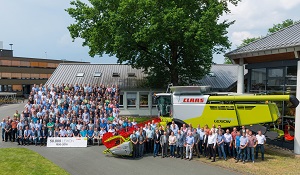 CLAAS celebrate their 50,000th LEXION: Shareholders, employees from Technical Development , Assembly and other involved departments in front of the jubilee machine
After almost one decade of development, CLAAS introduced the first LEXION combine harvester in 1995. The 400 series offered farmers new high levels of performance. The APS threshing system, with its threshing drum which was expanded to 600mm, was for the first time combined with the ROTO PLUS residual grain separation system. This combination resulted in the proven APS HYBRID system. Drivers could now work in a comfortable cab, equipped with the integrated on-board CEBIS computer. In addition, the GPS PILOT and LASER PILOT steering systems made steering the combine easier.
Six years after its introduction to the market, the 10,000th large combine harvester – a 415 h.p. LEXION 480 with rubber tracks and a potential harvesting capacity of 40 t of grain per hour – rolled off the assembly line.
In 2003 the LEXION 500 series represented the further development of the combine harvester. Larger harvesting capacities and refined technical systems, such as adjustable rotor flaps for adapting the separation area and a quick stop for front-mounted attachments, made the operator’s work easier. Two years later CLAAS launched the 600 series which, with a harvesting capacity of up to 70t of grain per hour, provided farmers with a further increase in efficiency.
In 2010 production of the largest LEXION 700 combine harvesters commenced. These can travel at a maximum speed of 40 km/h on the road, work with cutterbars up to 12.30 m wide in a soil- and resource-friendly manner, and have high-performance software.
With the LEXION 780, CLAAS set a new milestone in the history of combine harvesters in 2013. Besides a grain tank with a capacity of 13,500 litres, it is equipped with the integrated CEMOS AUTOMATIC driver assistance system. The software controls specific default values set by the farmer, and after a short period of time it finds the optimum settings for the threshing systems. By taking into consideration the changing harvesting conditions during the course of a day, these optimum settings are checked on a per-second basis and adapted continuously. The LEXION 700, which now features a 4D cleaning system and an automatic crop flow control system, received the 'Machine of the Year 2016' award at the world’s largest agricultural technology fair Agritechnica.