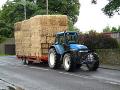
WEIGHT INCREASE MUST GO FURTHER
Tractor & trailer limits still not enough says NFU
The Department for Transport (DfT) will cut outdated regulation to allow higher tractor speeds and heavier tractor and trailer combinations from spring 2015. The government has also committed to develop detailed proposals for a roadworthiness test for tractors and trailers. Under the changes, the maximum combination weight limit for tractors and trailers will increase from 24.39 tonnes to 31 tonnes and will set a new effective speed limit of 25mph (40km/h), up from 20mph - saving time and money. Tractors allowed to exceed 25mph will continue to be subject to tighter design and regulatory requirements.The increase in combined weight means bigger tractors can pull trailers without sacrificing cargo to meet the top weight limit of both tractor and trailer. This will maximise the amount of produce transported in each journey. These changes will also result in farmers having to make fewer journeys on our roads and so reduce the risk of accidents. The second phase of changes will see a further consideration of increases in weight and speed limits and a roadworthiness test for some agricultural tractors and trailers by summer 2016. In response, the NFU has said that weight increases proposed by DfT are a step in the right direction but need to go further in the next phase to realise the maximum improvement in farm transport efficiency.
NFU Vice President Guy Smith said: “The NFU has been campaigning for tractor and trailer weights to increase for a number of years, and I’m sure many people who’ve found themselves caught in a queue of traffic behind a tractor will have sympathy with our calls to reduce the number of tractors on the road by increasing their effective payload.
“While an increase in speed limit to 25mph is welcome news, the benefits will not be as great as a meaningful increase in the effective payload. While an increase to 31t is a step in the right direction - keeping the specific limit of 18.29t on the trailer will continue to restrict many trailers from being used at anywhere near their safe engineered design capacity.
“The proposed changes remove the £62m cost to the industry of having to comply with limits set in 1986. Because the overall weight limit for the tractor and trailer has remained static, the tonnage that can be carried in trailers has actually decreased as tractors have become bigger and safer. To achieve a change which fully reflects improvements in technology, including those that improve safety, it is essential that weight limits are increased further to the level suggested by the industry. “
“If weights had been increased to 33t this wheat harvest, journeys could have been reduced by roughly 46 per cent. Farmers had to drive an extra total 5.8 million miles on average to bring in the harvest legally. This undoubtedly adds to rural road congestion affecting safety, and adds an additional 20,000 tonnes of CO2 to the environment. Maintaining the current trailer weight limit will still leave UK agriculture at a significant disadvantage to other European Member States where weights are significantly higher.
“It is essential Government provides a further increase to tractor and trailer weights and recognises the unique role that tractors play transporting our food from field to farm. We welcome the commitment to increasing the weights further for the 2016 harvest, but we are disappointed that such an increase was not deemed possible at this stage given the extensive consultation that had been undertaken.”
|