This week I had the pleasure of visiting the UK headquarters of Kubota UK in Thame, Oxfordshire, alongside fellow members of the trade press. The aim was to get an overall picture of where the business sees itself in 2026, hear about the expansion of its machinery range and, perhaps discuss some of the wider market trends currently shaping the sector.
We were welcomed by Henry Bredin, division manager, UK & Ireland, agriculture and groundcare, who spoke about the importance of the dealer network and the role the UK operation plays in supporting it. It was a point that came up repeatedly through the visit that, regardless of how advanced machinery becomes, customers still want reliable local back-up when something goes wrong. Clearly for a manufacturer such as Kubota, they want that relationship between dealer and end user to remain absolutely central.
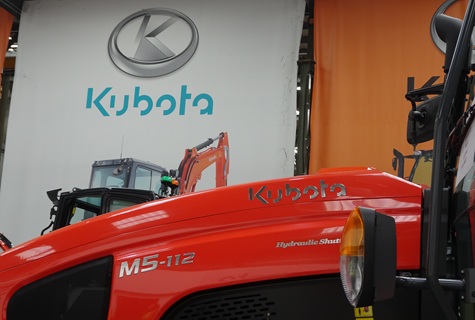
The theme of range expansion was picked up by groundcare product manager Matt Wilson, who explained that the company’s approach is less about simply adding more models and more about responding to very specific customer demand. The emphasis here was very much on identifying gaps in the market and evolving accordingly.
One area currently seeing significant attention is the zero-turn mower sector. Of course, these machines have long been hugely popular in the United States. I saw that first-hand during Service Dealer’s visit to Equip Exposition in Louisville last October, where zero-turns seemed to dominate every other stand. What was interesting to hear this week, is that professional demand in the UK is also steadily increasing. It’s still nowhere near American levels, naturally, but there does appear to be growing acceptance of the format here, particularly as commercial users are always looking to up their productivity levels. Electric models are also beginning to attract increasing interest.
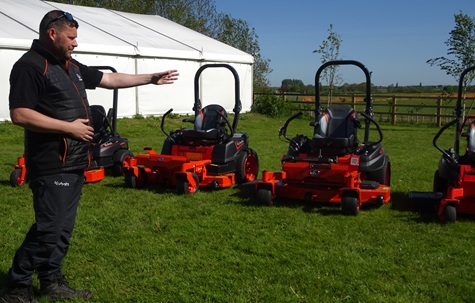
Matt Wilson
Another notable talking point was the growth of the entry-level compact tractor market. Customer priorities are clearly changing. Rising fuel prices and wider economic pressures are making buyers far more conscious of value and operating costs, which in turn is influencing purchasing behaviour. The sub-£10,000 tractor sector, we were told, has grown rapidly in recent years, with particular interest coming from grassroots sports clubs and organisations working within tighter budgets.
That ties into a wider trend that many in the industry are seeing of customers increasingly wanting flexibility, both in machinery choice and ownership options. The old “one size fits all” approach no longer really applies, we heard.
The response, according to Matt, has been for Kubota to develop a broader and smarter range across compact tractors and zero-turns, while maintaining multiple power sources. Petrol, diesel and electric all have their place depending on the application, while future hydrogen possibilities are also being explored. The message was clear: electric is growing, but it won’t necessarily suit every professional user.
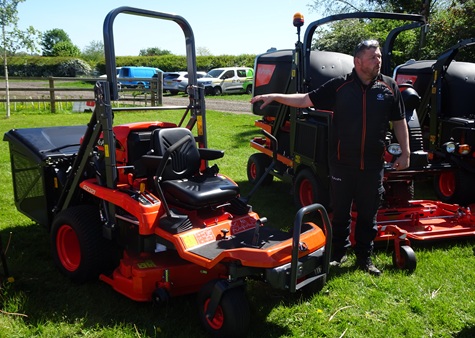
From a customer perspective, the thinking behind the expanded range is straightforward, we were told. It means greater choice, easier progression between models and more familiarity across product lines. From a dealer standpoint, the company intends that a wider offering helps appeal to a broader range of customer types while also improving retention and creating clearer upgrade paths over time.
Once the presentations were though, our hosts were brave enough to let the decidedly amateur journalist operators have a go driving some really expensive machinery! At Chinnor Rugby Club, the local team who the company sponsor, we had the opportunity to try several zero-turn models, including a zero-turn collector that was described as a “unicorn” machine, alongside a number of out-front centre-collect machines.
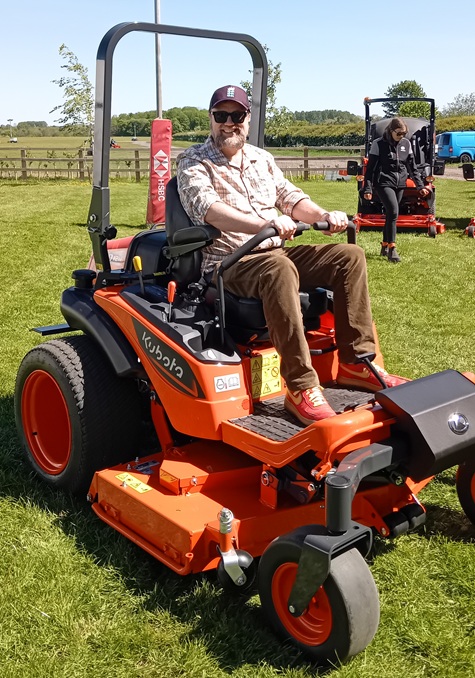
Steve Gibbs
Overall, it was an informative and worthwhile event for myself and the trade press in attendance. From Service Dealer’s perspective, it was encouraging to hear just how integral the dealer network remains to decision-making. That partnership between manufacturer, dealer and customer is fundamental and underpins all that the company is about.
And, stepping away from thinking about any one manufacturer specifically, it was equally interesting to hear some of the broader trends being discussed. I suspect many of our valued dealer readers, regardless of which groundcare brands they represent, will recognise similar patterns: the growth of entry-level compact tractors among smaller sports clubs, the increasing acceptance of zero-turns in the UK market and the continuing debate around future power sources. All of which underlines what an ever-evolving, never dull and consistently fascinating sector this remains.