Over the course of the next twelve months, I will be delving into many of my memories, and excursions undertaken, to highlight the management and maintenance our unique sports turf and amenity and landscape sectors.
This time I look at cricket management through the decades.
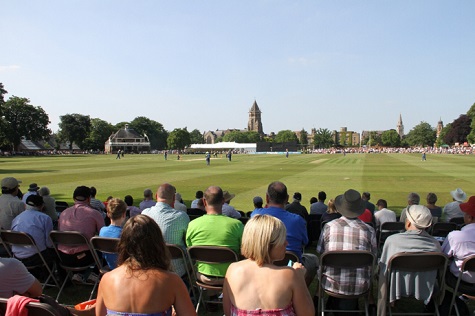
County game played at Rugby School
My own first-hand experiences of being involved with the maintenance of cricket pitches began when I was working for the PSA, MOD as grounds maintenance officer (GMO) in 1985, in Hampshire looking after military sports facilities.
HMS Dryad was blessed with the opportunity of using Hambledon cricket ground. Founded in 1750, the club was once the most powerful club in the country and earned its reputation as the “cradle of cricket”.
The club now plays at the idyllic Ridge Meadow - its home since the 1780s. So what a baptism of fire for me, to manage this unique ground.
Luckily, I was able to utilise a professional sports turf contractor to manage the grounds for navy matches. My other association with cricket was preparing pitches for a number of local authority venues when working for T&WC.
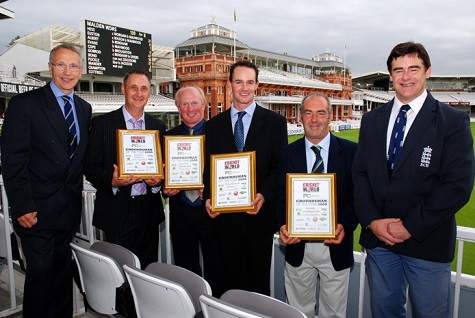
Me, left, with award winners at Lord’s
However, my role of editor and especially being a judge for the prestigious Cricket Groundsman of the Year Awards run by Cricket World and Pitchcare, offered me the opportunity to visit hundreds of clubs up and down the country. I visited most county and test match grounds, along with many high profile and village cricket clubs, gaining a lot of knowledge from talking to the grounds staff.
In my years, I have witnessed some great moments and innovations that have changed the way we manage and maintain cricket facilities.
Without a doubt for me, this is one of the hardest turf surfaces to manage. It takes way more time and effort to produce consistent and safe pitches. It has always been a tough challenge to produce a wicket that is good for both the bowler and batsman.
Cricket players more than other sportspeople, can have the tendency to moan a lot more, especially if they have been bowled out or hit for a six, They can blame the wicket or the grounds staff for not producing a decent pitch.
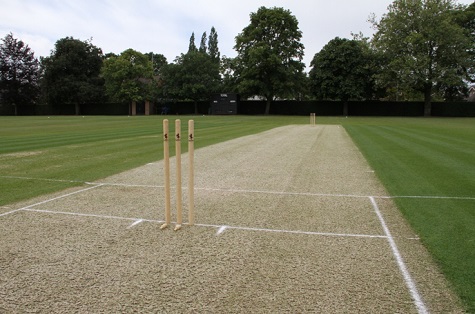
Pitch prepared by Andy Johnson at Bluecote School, Edgbaston
Having spoken to many turf professionals, it is all part of the job. A they say themselves, they do not know how the wicket will perform until the day of the match. There are too many variables that can influence the condition and playability of the wicket in any given day or time of the year.
Also the quality of the pitch is influenced by what regimes are carried out and how well the preparation of the wicket has gone, Generally it is expected that most grounds staff like to have a 10-14 day prep programme to prepare a pitch, thus giving them enough time to carry out the necessary rolling, watering and grooming to bring the wicket down from 12mm down to 4mm. Also, in recent years, we have seen turf professionals leaving more grass on and rolling less.
No two cricket groundsmen prepare their wickets in the same way. Each preparation sequence can be dictated by the resources, equipment and time they have to get the job done. Also, the underlying soil type will heavily influence the way the pitch must be maintained and managed. Clay loams can also vary much in clay content.
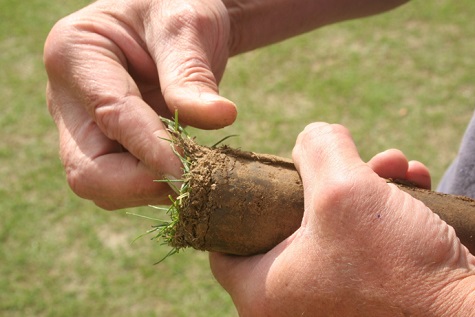
Soil sample
Soil strength is important when selecting clay loam dressings for cricket pitches. The potential success of the wicket is directly related to the percentage of clay content found in the soil profile of the cricket pitch.
There are several clay loam suppliers in the UK who specialise in blending and mixing loam soils for use in the turf grass industry. The clay content in these products can vary immensely, ranging anything between 22-32%. The larger the percentage of clay content in your soil, the stronger the binding strength will be. However, having the highest clay content is not always the criteria that produces the best pitch.
The extent and quality of work carried out as part of your end of season renovations will have a bearing on how well the wickets will play the following season. The main aims of end of season renovations on a cricket square are to repair damage, remove excess thatch, restore levels and reseed the square.
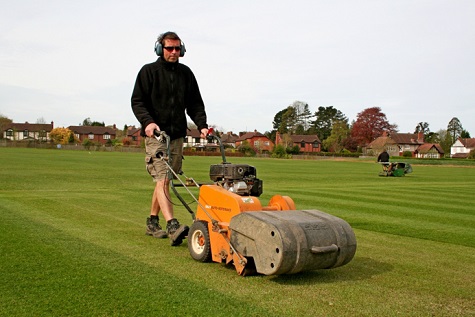
Verti-cutting with Sisis Scarifier
And finally, several underlying issues could be affecting the performance of the pitches, often caused by excess thatch layers, soil breaks, compaction, levels, dips and hollows, and depth of clay soil in the square.
Pre-season works programmes will also have a bearing on how well the wickets will play during the season. Quite often the spring weather will dictate what can be achieved.
The machinery we have today far exceeds what was available in the 1970s. Cricket clubs require some specific machinery or equipment to achieve the appropriate preparation of the square and pitches.
The square and outfield needs to be cut with a cylinder mower - with a roller required to consolidate the playing surface and a rake/ scarifier to clean out surface debris when preparing a wicket.
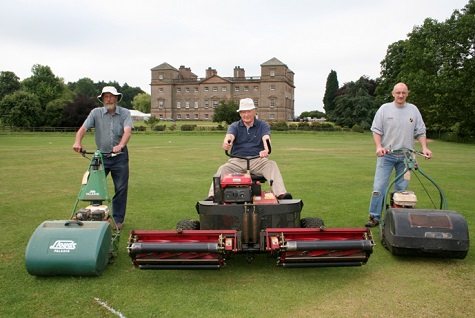
The biggest problem cricket ground staff have is the time they get to prepare and repair wickets between games. The pressures are exacerbated at the professional level, especially with the knowledge that your work is going to be scrutinised heavily for televised matches.
Clubs that seek funding through the sport’s governing body, the ECB, must ensure they have enrolled on the ECB Clubmark accreditation scheme. This demonstrates the club is well run and sustainable and provides the right environment for its members.
Clubmark accreditation also means your club is recognised as a safe, rewarding and fulfilling place for participants of all ages, as well as assuring parents and carers that they are choosing the right option for their young people.
However, because of having this accreditation, it means that clubs need to fulfil certain briefs depending on the type of funding they are applying for.
In most cases the club will need to ensure its facilities are used to generate a larger programme of matches to meet the needs of junior sections, senior men’s and women’s cricket.
This without doubt puts a lot of additional pressure on the ground staff to produce enough quality pitches to fulfil these needs. At county levels we are already seeing the pressure being placed to find time and pitches to fulfil not only matches, but practice facilities for these additional fixtures. This can mean county clubs having to utilise out grounds to accommodate this rise in matches. A given size facility can only accommodate so much wear and tear.
These problems are now filtering down to grass roots clubs, whereby many are struggling to accommodate the demand for cricket pitches.
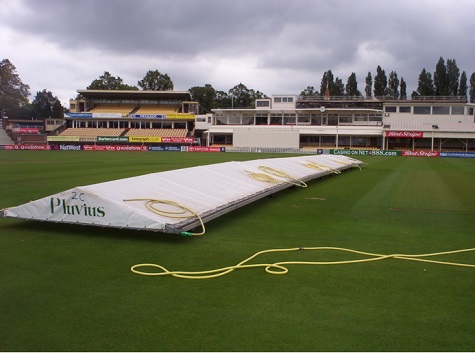
Roll-on and off covers
At professional level expectations are vastly higher and there is a specific skill in preparing pitches when using covers and sheets knowing how much to allow the pitch to dry out, or how much water to give it, to ensure the right moisture levels are in the profile to achieve maximum rolling affects.
Too little or too much rolling can be influential in how the pitch plays. Also, the amount of grass cover you leave on will influence the bounce and carry of a cricket ball.
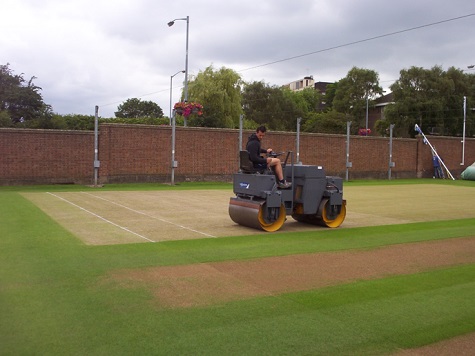
Rolling net areas
When I was at Cranfield University doing my master of science, one of my fellow students, Peter Shipton, went on to research and help write a published paper on guidelines for rolling in cricket.
All of the above, and the personality and experience of the head groundsperson, set the standards of what type of pitch you can produce.
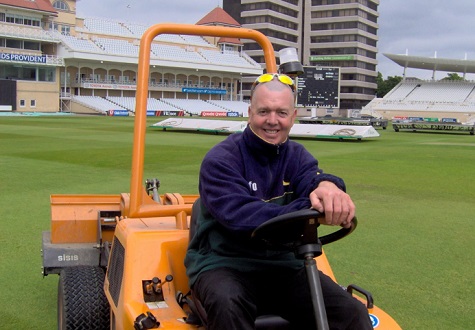
Steve Birks, Trent Bridge
I have been fortunate to meet many head county groundsmen during the years I have been associated with the industry. These include the likes of Phil Frost, Somerset, since retired; Simon Tremlin, Wormsley CC; Tim Packwood, ex Worcestershire; Vic Domain, Durham; Gary Barwell, Edgbaston; Jim Mead, Rugby School; Karl Mcdermot, Lord’s; Steve Birks, Trent Bridge; Andy Forgaty at Headingley; Will Relf, Loughborough University; Steve Rouse, retired Edgbaston; as well as some industry legends who are no longer with us such as Harry Brind, Pete Marron and Mick Hunt.
A number of them are renown for producing certain types of pitches in terms of their performance traits, Back in the late 1970s and 80s, grounds were said to be of a certain type - turning , fast, hard , slow. However, today there seems to be more consistency in the construction and maintenance practises carried out in top class cricket.

Andy Mackay
This has mainly come about because all the HG at county level meet regularly and discuss work practices, and are policed and inspected by Andy Mackay, ECB Pitch inspector. Andy recently took over from Chris Woods who was responsible for bringing many of the testing criteria to the table in terms of monitoring pitch performance. Chris worked closely with Dr Alex Vickers and Dr Iain James at Cranfield University.
Andy’s role is to support the first-class counties and their head grounds managers; to oversee turf management practices at all levels of the game; and to generally provide technical support with respect to pitches and turf for the first-class game and Team England. He is also there to support the National Cricket Performance Centre at Loughborough University and direct research projects on future innovations for the game.
I was also pleased to read that The Grounds Management Association and the England and Wales Cricket Board have joined forces to launch the ‘Apprenticeship Support Scheme’, designed to enhance the experience of grounds people apprentices in First Class Counties.
Without a doubt there has been a significant change in work practises over the years driven by better understanding of soil science and because we now have a plethora of machines, equipment and aids to help deliver better, consistent and safe pitches.
Mowers are more efficient and we now have a choice of both rotary and cylinder type mowers. We also have powered scarifiers and, one of the biggest game changers for cricket especially at domestic club level, the development of the cassette mower - which a number of manufacturers (Dennis, Allett, Infinicut) have perfected of the years. These types of mowers offer a range of cassettes enabling one machine to multitask.
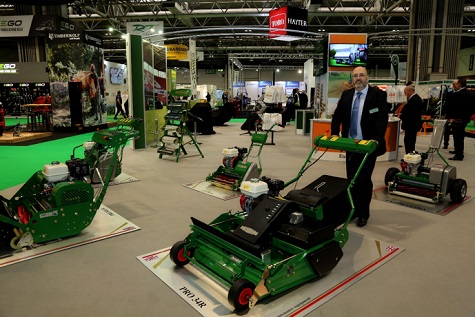
Roger Moore on Dennis' stand
For example, Dennis offers 16 different cassettes for both their FT510 and FT610 mowers delivering professional-level cutting, scarifying, brushing, vertical-cutting, sorrel rolling, slitting and raking. You can have a range of 5-10 bladed cylinder cassettes, several types of brush attachments and different width scarifying blades.
We have also seen the development of self-powered scarifiers with both the Graden and SISIS being a popular choice with grounds professionals.
Scarifiers are a key machinery requirement for end of season renovations, There are a plethora of machines to choose from with the SISIS Rotorake Mk. 5 I a popular self-propelled heavy duty scarifier and de-thatcher for removal and control of thatch on fine and other quality turf.
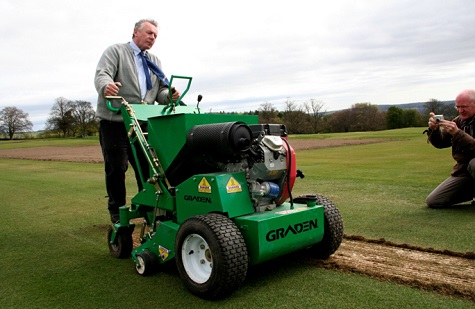
Keith Kensett with the Graden
The Graden GS04 Verticutter was also a game changer when it was first introduced to the UK market by Keith Kensett . This tried and tested machine has proven to be extremely durable while providing excellent results.
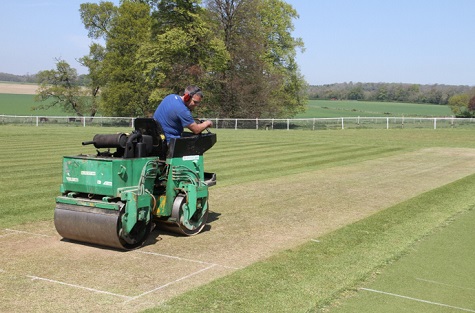
Cricket roller
As for rollers, they come in all sorts of shapes and sizes. There are a few companies that specialise in bespoke cricket roller production including Auto -Roller who have been trading since 1921, and Power Roll whose first roller came off the production line in 1997. Other established manufacturers of roller include the likes of Stothert & Pitt, Vibroll and Swillinton Rollers.
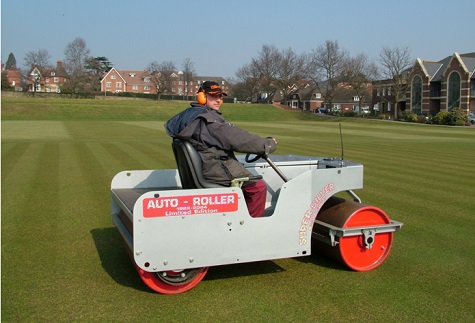
Auto Roller rolling at Tonbridge School
We also have a wide range of roll-on and roll-off covers to protect pitches. There are also grow lights and in recent years we have seen clubs investing in the use of heated tents to allow early use of practice net areas. There are even mobile heated tents that can be used out on the square.
As in football, several cricket clubs are now investing in sown in cricket pitches, where artificial fibres are stitched into the soil profile to help stabilise it. This has been another game changer in that pitches are lasting a lot longer, allowing more games to be played.
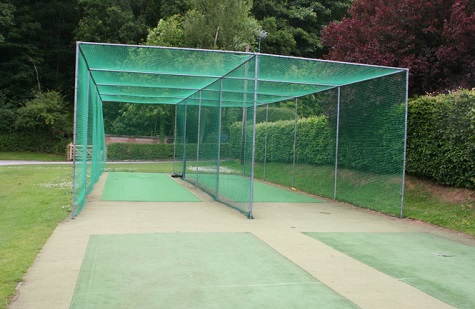
Artificial net practice areas
The first trials of these pitches were at Loughborough University and once they proved to be a success, many clubs including Lord’s are now investing in these sown in cricket pitches.
Speaking of artificial pitches, for many years cricket clubs have been utilising complete all weather artificial grass pitches. The development of better materials has allowed manufactures to develop some great systems, which are used in practice net areas and as wickets out on the squares.
And like football, the use of lighting rigs and covered tents areas are being used to encourage grass growth at difficult times of the year, particularly to aid pre-season preparations during the months of February and March.
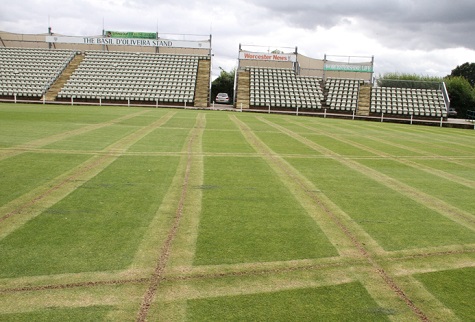
Outfield drainage improvements at Worcester CCC
As for other major investments seen at the county grounds, there has been the vast improvement in the drainage of outfields. The use of modern drainage techniques has helped improve the porosity of these areas, ensuring they remain playable after a downpour. In fact, Lord’s went to the extent of building the largest golf green construction of their outfield in 2002, removing all the existing soil and replacing with a sand / rootzone construction. Also, in recent years we have seen major investment in floodlighting at all county grounds, with the aim of increasing the number of games that can be played.
You can read part one of my 50 years of football here
And part two of 50 years of football here.

